
In Perfection, Vincenzo Latronico captured the definitive portrait of millennial expat life and the lifestyle signifiers—digital nomad visas and Danish armchairs—that come with it. The book sold in 42 countries and, with its iconic Fitzcarraldo Editions blue cover, became a status symbol in its own right.
What do you think is your biggest contribution to culture?
I wouldn’t say it’s mine alone, but I feel part of a moment that Italian literature is having internationally. It started with Elena Ferrante and led to the success of, among others, Claudia Durastanti and Veronica Raimo, both of whom are among my closest friends, and eventually to me. And it’s continuing: Matteo Melchiorre’s The Duke has just been longlisted for the International Booker Prize. This collective dimension, to me, feels more rewarding and more true than any supposedly individual accomplishment.
Name an influence of yours that might surprise people.
Mathematics. It was my passion much earlier than literature, and I didn’t pursue it only because it eventually became unavoidable that I wasn’t talented enough.
However, its very specific concept of beauty still remains with me. Every now and then I go over a famous proof as one might do with a beloved poem. I see traces of it in my writing, or delude myself into thinking I do.
What’s been the hardest part of your career so far?
For almost a decade, I have been trying and failing to find some holy grail of writing—a form halfway between nonfiction and novel, allowing me the former’s rigor and the latter’s invention. I can’t explain it better than this, which is probably why I never found it. I started so many different books and dropped them for no specific reason other than a dim awareness that they didn’t sound right. This eventually led me to writing Perfection, so in retrospect, I can cast it as a fruitful pursuit of sorts. But retrospect is easy.
What’s one work of art that got you through an important moment in your life?
Emmanuel Carrère’s The Kingdom, whose first part is itself about how he got through a crisis in his life at the same age I was when it first came out. I happened to be in Paris that day, and I spent a whole morning reading it and crying on a park bench near the Invalides, which, of course, is pathetic but also somehow sweet.
What question do you ask yourself most often while you’re making work?
Why would anyone spend hours, days, reading this? In good times, listening to this concern is key to making honest work. It constrains your freedom by just the right amount. In bad times, it’s an endless spring of insecurity, but in bad times, everything is.
What keeps you up at night?
A lifelong insomnia, which by this point has become entirely tautological: I’m kept up at night by the thought that something keeps me up at night.
When you were little, what were you known for?
I was an excellent Magic: The Gathering player. I still remember many of my deck lists by heart.
What would you wear to meet your greatest enemy?
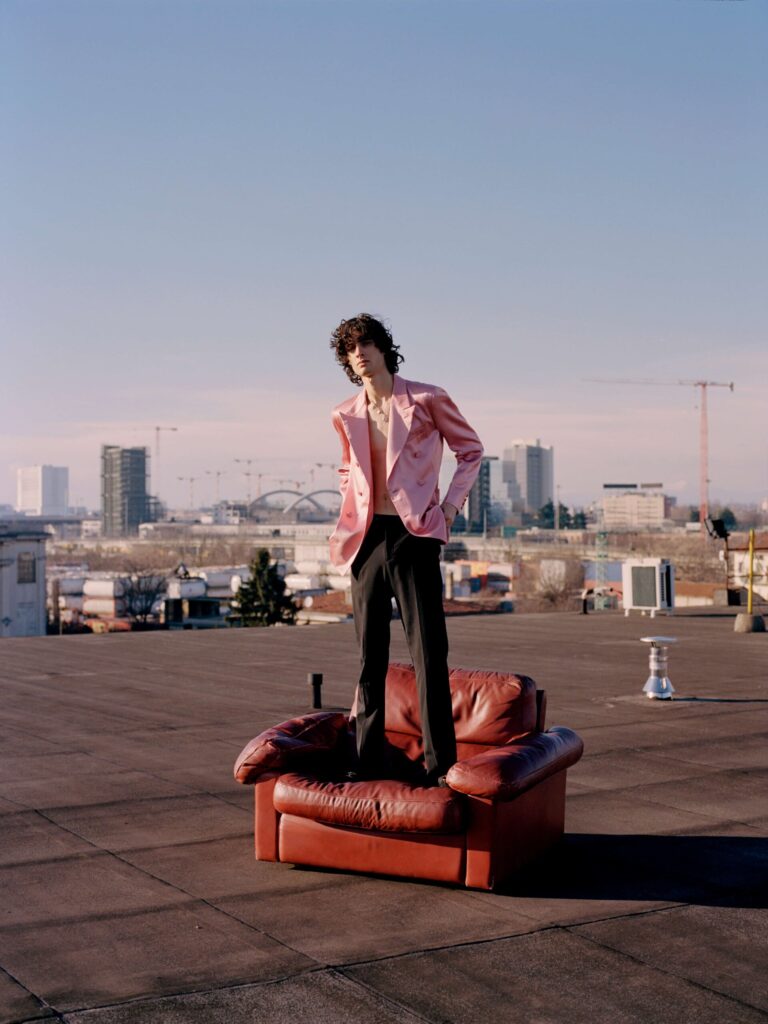
A double-breasted suit with a shawl collar and beautifully wide lapels. I answered this instinctively before realizing it’s also what I wore at my wedding. I don’t know what to make of this insight.
What would you be doing if you weren’t working in your field?
Before publishing my latest novel, I had worked in construction for over a year and I was considering retraining as a carpenter. I’m sure there was a measure of romanticizing on my part, but I enjoyed it immensely.
When’s the last time you laughed hysterically?
It doesn’t happen to me very often—not because I’m composed, but because I’m secretly shy. However, I giggle a lot.
To read more from the 2026 CULT100 honorees, see the full list here.



 in your life?