

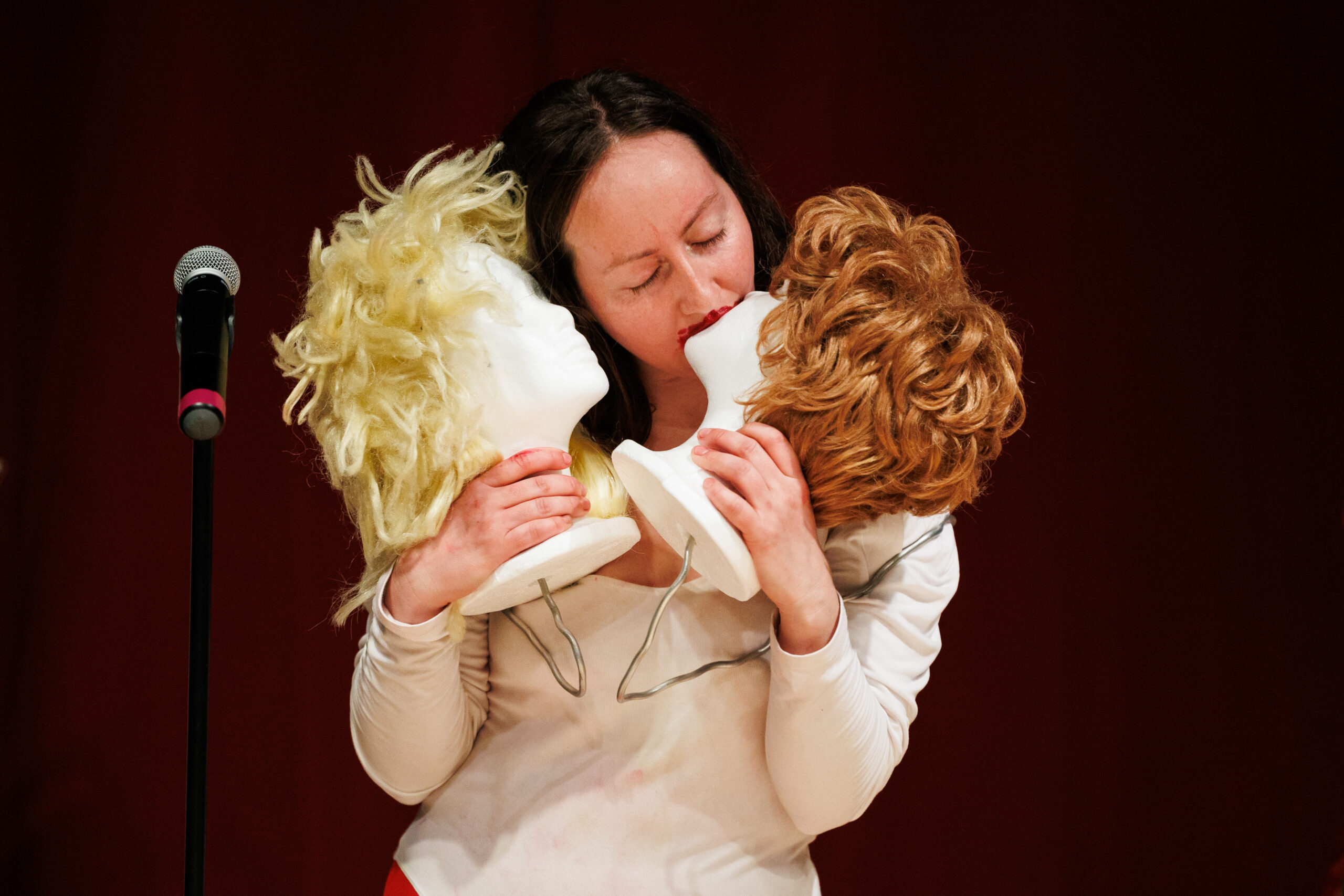
Anyone who loves me has seen me do a spit take. Guffaws, gasps, sighs, sweat: these honest, sonic, viscous leaks catalyze a sense of communion that language alone cannot. Perhaps it’s this yearning for a togetherness unafraid of abjection that explains why clowns are undeniably having a moment. Long overshadowed by less carnivalesque forms of comedy, clowning—utterly vaudevillian, earnestly desperate, childishly physical—is bewitching and bewildering audiences tired of nihilistic tirades, who are instead in pursuit of catharsis and connection. Remember when desire was not painful, but fucking funny? Clowns do.
Once confined to children’s birthday parties and circus tents, clowns are now alluring the culturati: Puppet shows are taking over prestigious theaters, clowns are starring in steamy romantic dramas, and psychoanalysts are enrolling in clown school. In some ways, this is nothing new: When I told a friend I was writing this, he offered to connect me to a stunningly beautiful woman who supposedly attended France’s most prestigious clowning institution “as an intellectual experiment.” Another friend (rightly) insisted I include the viral video of Hillary and Chelsea Clinton interviewing a 100-year old French clown with absurd gravitas.
Even Miuccia Prada once trained as a mime. Municipal governments in Bogotá and Caracas have employed mimes and clowns to prevent traffic jams. The Elysian Theater in Los Angeles hosts increasingly packed clown workshops, and longtime denizens of the city’s radical clown scene like Natalie Palamides and Courtney Pauruso are bringing their goofily philosophical acts to major streaming services. This year’s breakout heartthrob, Heated Rivalry’s Connor Storrie, credits his come-up to his arduous, electrifying years clowning.
Clown is a performance mode predicated on “making offers to the audience,” Storrie told Vulture recently, while recalling his time onstage blowing raspberries at a rapt crowd. To accept or reject an offering, one has to recognize what it symbolizes: in clown, audience members are not just viewers and judges, but crucial participants in a role play: riled-up conversation partners, fellow children building flimsy castles in a sandbox. If a classic stand-up teases the audience, gassing them up to break them down, a clown pours gasoline all over the stage, inviting the audience to gather round and tend the fire with them.
This increased visibility is a sign of the times. On a recent panel about comedy at the New Orleans Book Festival, Danzy Senna posited that satire might not be a useful comedic mode in apocalyptic circumstances. Sartre famously distinguished between rebels, who want the system to remain the same so they can continue rebelling against it, and revolutionaries, who are willing to risk their own obsolescence in the service of genuine change.
Where a satirist might rebel, clowns—the ultimate failure artists—manage to enjoy getting flamed by the society that their revolution galvanizes. Alex Tatarsky’s solo show Sad Boys in Harpy Land, which recently took over LA’s Roy and Edna Disney CalArts Theater (Redcat), is a demented spiral of an anti-bildungsroman that poses the question, Do you really want to be functional in a totally dysfunctional world? “Maybe we should find ways to resist the linear arc of development, and the expectation that we all become productive members of a really dysfunctional society,” they told me recently. “It is the jester’s privilege to speak the truth through humor and failure.”
This resistance functions on the level of the body as well. “Corpsing” is a phenomenon in which a performer falls into fits of laughter while playing dead, their corporeal forms unconsciously showing off their survival impulses, a phenomenon running parallel to the insurrectionist clown’s “refusal to become an instrument in the production of a system that is invisible and indifferent to us,” as Nuar Alsadir writes in her culty, psychoanalytic literary history of laughter Animal Joy. In clowning, crying, play, and poetry, Alsadir sees opportunities to resist the spiritual death demanded of us by a conformist, immoral society. Commitment to the bit becomes proof of moral conviction. Between jestergooning and jestermaxxing, might there be a sliver of space for the Holy Fool, the clown-hero our decadent and decaying society deserves?
Next month, Dopamine Books, through the independent press Semiotext(e), will release an anthology entitled Clowns, edited by poet, memoirist, and editor Michelle Tea. The collection veers from oral history to illustrated memoir, cultural criticism, and nonsense poems, with contributions from literary legends and emerging voices alike. Ahead of its publication, I called Tea to spill the tea on the jester’s privilege, the humor inherent in mourning, resistance, and more.
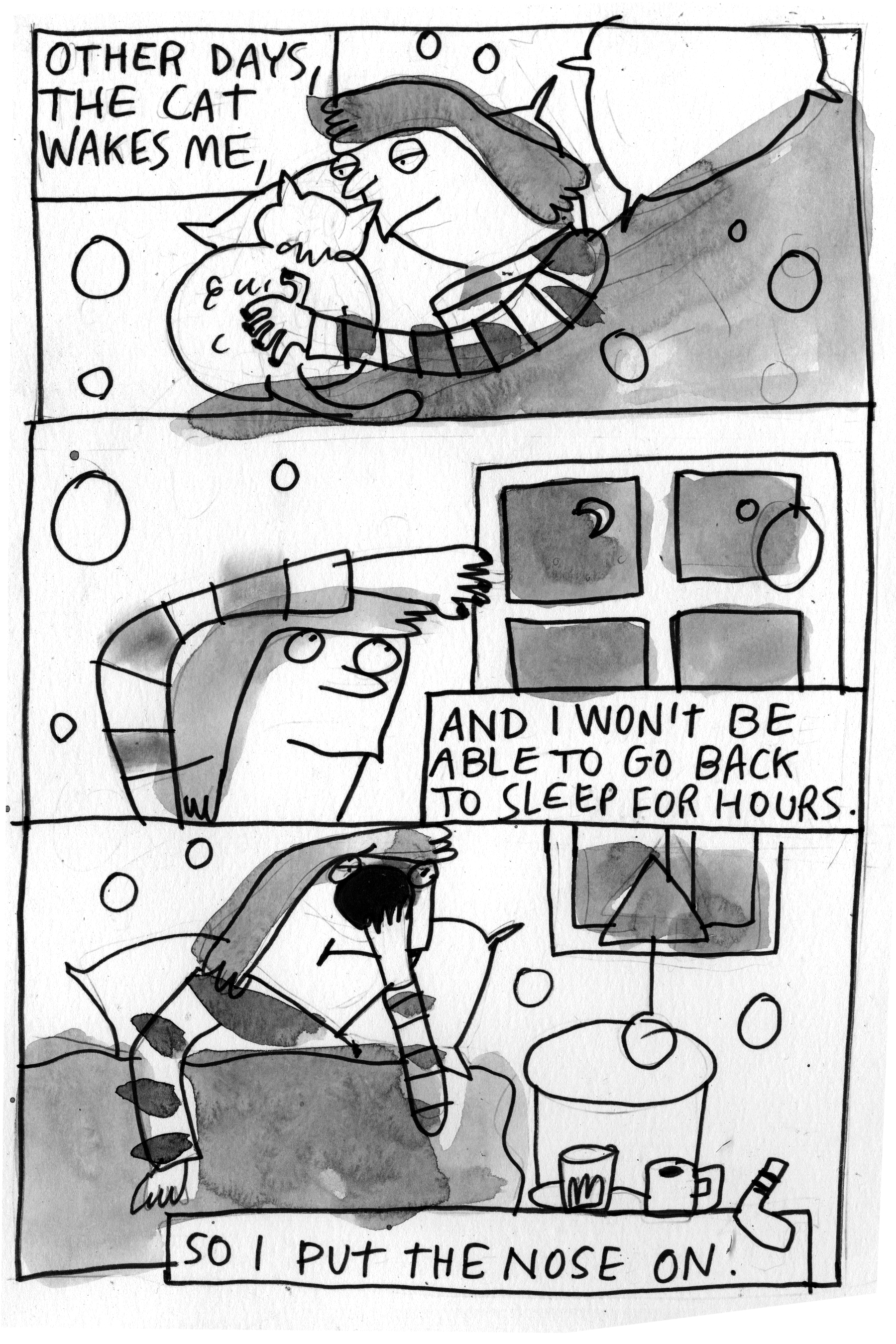
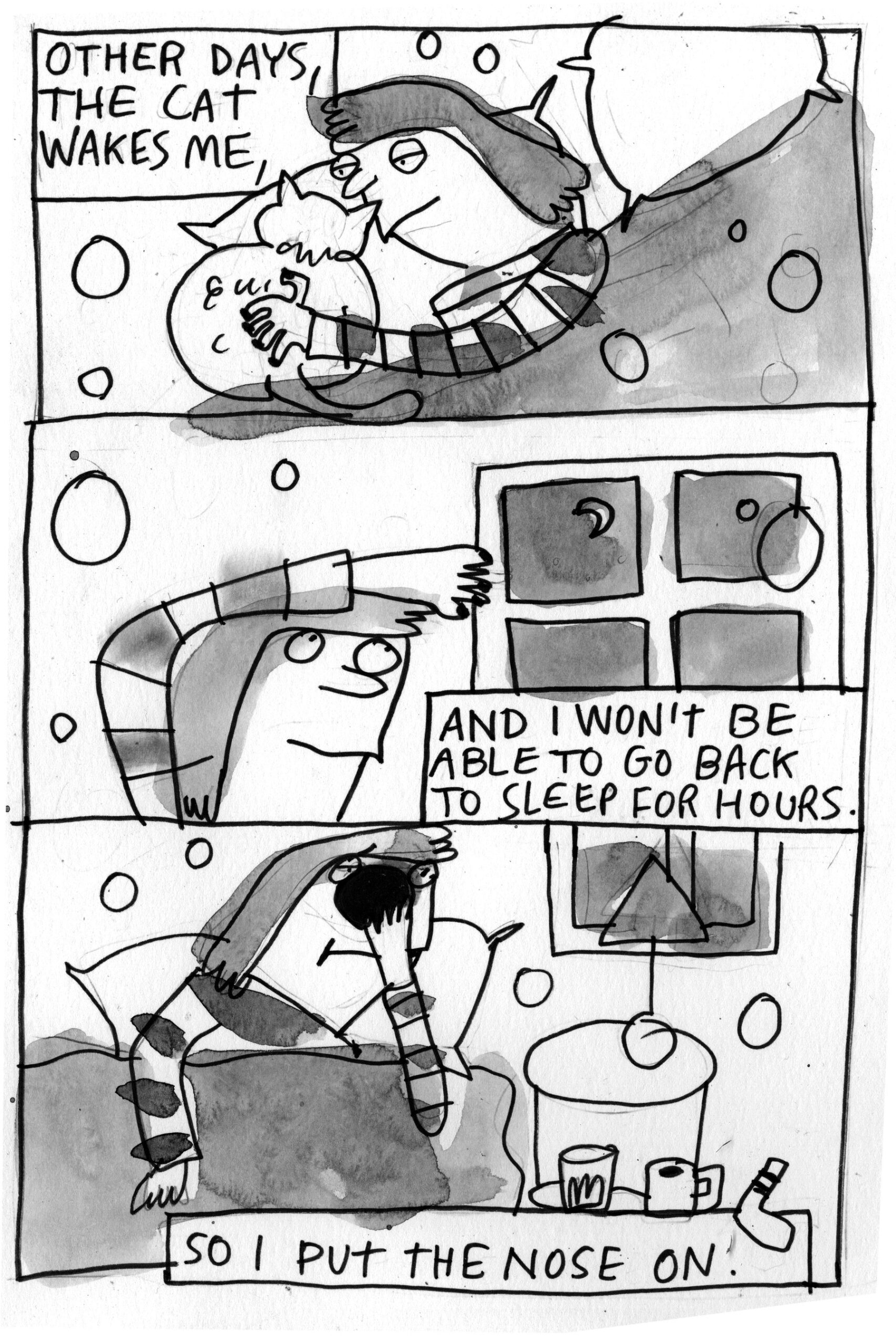
Tell me about the genesis of this project. Why choose clowns?
I started Dopamine Books with an idea of releasing an edited anthology on a different theme each year. I came up with archetypal themes—words I could throw around that would provoke something. The first two were Sluts and Witches, and now we’re at Clowns. I’ve always loved the clown—for its abjection and patheticness, to be honest. Being queer in the ’90s, clowns were a symbol of putting on the brave face, putting on the smile. They’re on the fringes of so many subcultures. I briefly had a clown persona called Goldie the Bingo Clown. I wore really tacky gold clothing and jewelry, smoked, and hosted bingo. Clowning is a very available form. Not that it can’t be elevated, but it’s right there, at its lowest rungs, for people to pick up and perform without any sort of pretense towards art theory or education.
There’s an amateur sensibility to the clown—the arcs of many of these contributions read like bildungsromans that resist or question maturity. Did you expect that?
I didn’t know what I would get. I expected some pathetic work, and I also expected funny work. A lot of my literary community is other queer people, and the clown encapsulates a strain of abjection that the queer community is very familiar with—the sense that it’s not possible for us to achieve whatever it is we’re supposed to in the United States of America, or perform adulthood in the expected way. The clown is a failure who’s silly about it, a really great North Star. The holy fool or the court jester are also iterations of the clown. I love the idea of the figure who does the reckless thing to see what happens, or speaks truth to power. It’s humor that protects him from being murdered by the king.
That idea of the “jester’s privilege”—speaking truth to power—offers an opening for revolutionary speech, but it can veer into complicity relatively easily. To remain in the court, the jester might avoid indicting the powers that rule over them. How does that tension exist in this anthology?
Vivek Shreya’s piece speaks to that. It’s called “How Did The Suffering of Marginalized Artists Become So Marketable?” and accompanies a photo essay of self-portraits. An archetype she came up with is the “trauma clown”—as a trauma clown, you are rewarded with grant money or a strange status by performing your trauma in an exquisite way, whether that’s engaging in an oppression Olympics, or miming your formative traumas for professional gain. When you do that, you feel complicit in a system that appears not to care about causing trauma but is very interested in consuming it for entertainment.
There are ghost stories in this anthology, a genre that often riffs on trauma. How do you see fear functioning here?
It’s funny, honestly, because clowns have become horror figures now. I finally went to the Clown Motel in Nevada a few years ago, and I was really disappointed. I thought it would be exaggerated, goofy circus motifs, but it was a horror film set. We have an existential terror of the clown. The way that manifests in this anthology is through work about being a loser, being cringe, the clown as a figure that is willing to be the scapegoat. The fool is laughed at, not always kindly. But who’s the joke really on? By identifying ourselves with the clown or the pathetic-ass-loser, by finding the part of ourselves that feels like an imposter or is simply dejected by what the world expects of us, we are free to admit that we can’t deliver those things, and shouldn’t have to.
These pieces are often hilarious, but they’re not traditionally satirical or parodic. How would you describe the difference between clownish prose and satire or parody?
Satire makes fun of something, and I’ve never been that interested in making fun of things. It’s fun to pithily cap on the deserving sometimes, but for longer pieces, it’s hard to sustain that without feeling mean. The writers I sought out for this have a lot of joy, and explore very joyless stuff in their work. It’s two sides of the same coin. A clown pantomimes massive sorrow or manic glee. These writers are fearless in approaching the scale of their own emotionality—they have dark senses of humor and aren’t afraid to lampoon themselves. If you’re going to make fun of someone, make fun of yourself—you’ll have the most material. Hopefully, you love yourself too, so you can get the nuance. These thoughts and feelings live right alongside each other inside us.
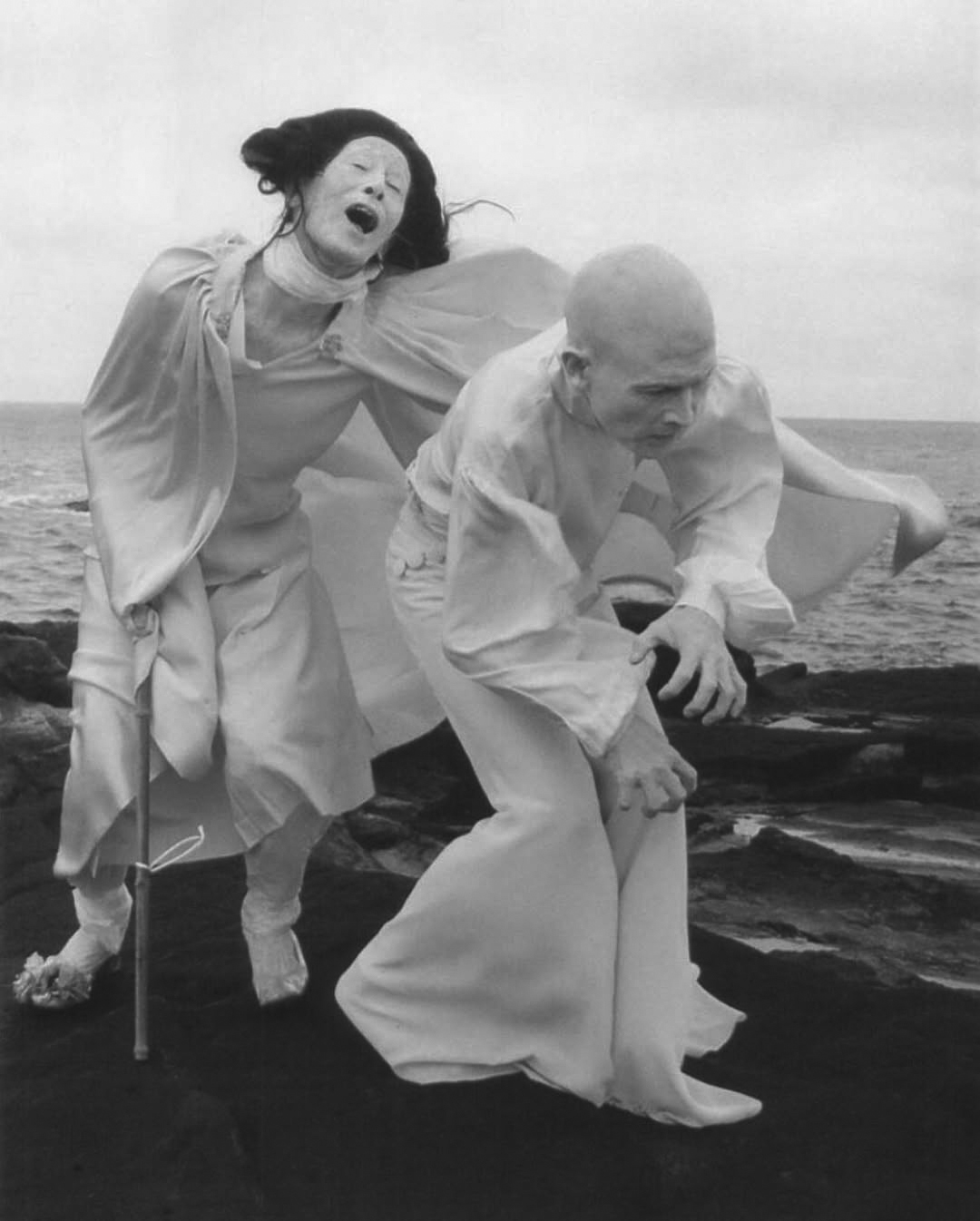
Many contributions to this book are grief-stricken, reckoning with deathbed experiences or recently passed loved ones. Why is clown such a fertile modality for writers in mourning?
I was initially surprised by the number of pieces on mourning. It gets at the idea of life as some cosmic joke, and that we hurt ourselves by taking it too seriously. There’s this Hindu idea that we’re all actors who’ve sewn ourselves into our costumes. We’ve forgotten that we’re performing. The clown is legibly in that costume. If we meditate upon the clown as the book’s death texts invite us to, we can think more deeply about questions like what is the nature of this reality? What is life? We don’t know any of this, and in that sense we’re total clowns, goofing our way through an existence that I suspect is actually much, much more dazzling and rich than we can fathom.
The majority of the contributions could be defined as memoir. As a sometime memoirist myself, I do feel like it is a clownish category, riddled with a goofy melancholy. You’re a memoirist who has written a book called Against Memoir. How do you see memoir and clown interplaying?
As a memoir writer, getting up to read from yet another memoir and putting on this Michelle Tea show certainly feels clownish. It is real, but there’s an element of performance—because writing is performative and I’m on a stage. You come face to face at moment with a double of yourself that you’ve written into existence.
This series is interested in the relation between the archetypal and the “real.” Another archetype you’ve written about is the hag, who feels like an existential cousin to the clown to me. How do you see the two existing in relation to each other?
I should do a Hags anthology. They’re both fearsome figures. We don’t want to be them, and we are scared of what they might want from us. Maybe they both want to kill us. In our culture, clowns have come to represent the uncanny and death, and a hag is a woman who’s close to death. When we see her, we know that she’s no longer a fit for this world, which requires women to be youthful and beautiful. But there’s also wisdom—she knows things we haven’t allowed ourselves to know. We’ve maybe not yet been courageous enough to shuck off vanity, ego, and the opinions of others in order to become old and haggard, or put on a red nose.
Tell me about your hardest laugh in recent memory.
I just spent a weekend in Tucson, Arizona with my kid, who’s 11. He’s fucking funny. The way a child looks at the world, sees that it’s absurd, and calls it out is hilarious.
What is something our culture considers funny that you find underwhelming?
Almost everything the culture puts forth as funny, I do not think is fucking funny. I’m constantly disappointed. I can’t see a rom-com because it will offend my sensibilities. Sometimes I feel like I’m one of those humorless feminists who can’t laugh at anything, but my sense of humor is so dark and perverse that it flips. I love when you find yourself making anti-feminist jokes to another feminist. In general, my stance is: make better jokes, people. Life is so ridiculous, we should be cracking up all the time.
More of our favorite stories from CULTURED
Legendary Art World Deviant Paul McCarthy on Santa Claus, Trauma, and the Rise of Fascism
Gabby Windey Shares Her Book Recommendations for the Manosphere and Depressed Women Everywhere
15 Collectors Offer Their Best Advice For Getting Started
Bryan Stevenson on What Social Justice Movements Can Learn From March Madness
A Guide to the Real-Life New York Restaurants Where Characters Eat on TV
Sign up for our newsletter here to get these stories direct to your inbox.




 in your life?