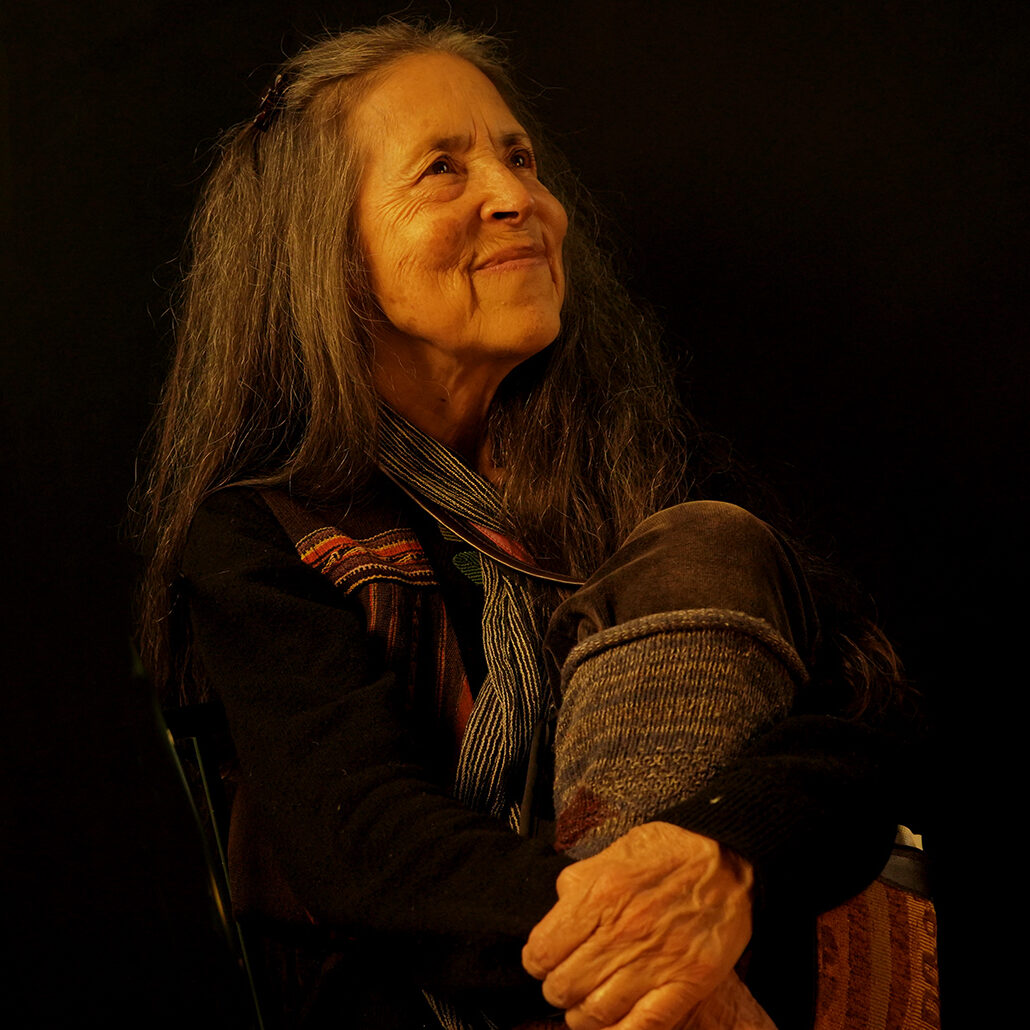
Cecilia Vicuña dies multiple times a day. The artist, whose work serves as both a record and a reminder of the pain and precarity of our rapidly collapsing world, has a habit of taking to the carpet in her living room and sinking into a Shavasana, or corpse pose, every few hours. She will probably head there after our interview, which she notes has run over our allotted 30 minutes, or to the Hudson River blocks away from her Tribeca home for a walk, another cleansing ritual. At 77, Vicuña is hoping that her getting older will help people respect the boundaries she sets around her time and energy more effectively.
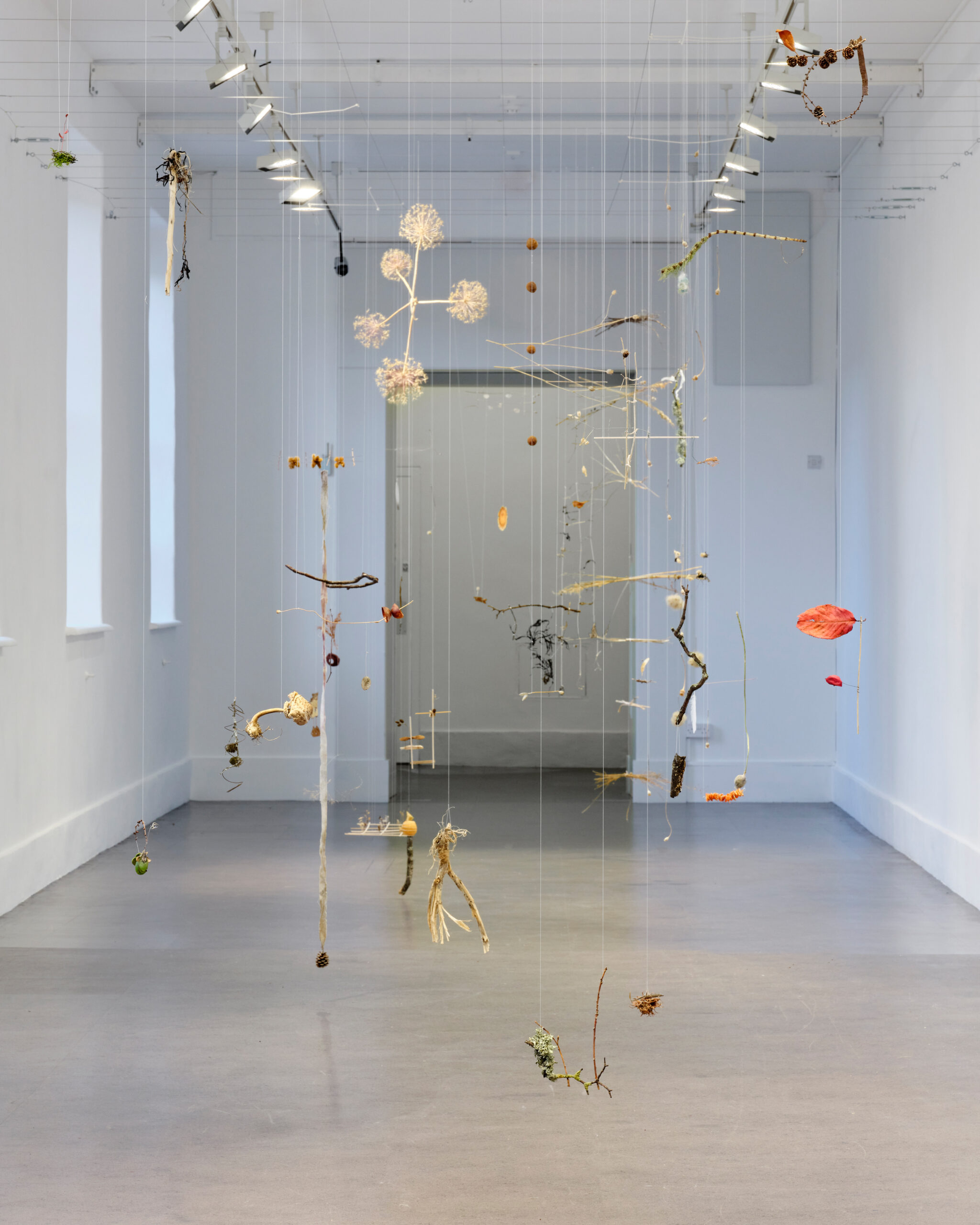
Those limits are acts of preservation for an artist whose practice is among the most generous of the last century. Vicuña’s art looks outward, less interested in itself than its impact, and involves the beholder, reminding us that ecological devastation will catch up to all of us. This comes through often monumental yet strikingly delicate sculptural installations, dubbed “quipus” or “precarios,” that highlight ancestral Indigenous knotting traditions and materials others might dismiss as debris; dreamscapes of paintings that feature everyone from Karl Marx to Buddhas stranded in the Andes; incantatory and improvisational performances of care and collectivity; and poetry that’s ended up on protest signs. (Her line, “Tu rabia es tu oro”—your rage is your gold—circulated widely during Chile’s “October Revolution” in 2019.)
The artist hasn’t lived permanently in her native Chile since she left the country to study at the Slade School of Fine Art in the early ’70s. The Pinochet coup d’état kept her in London in 1973 and she has remained in exile ever since. International recognition has snowballed over the past decade—Vicuña was awarded the Golden Lion at the Venice Biennale in 2022 and the inaugural Icon Artist Gold Medal at last year’s Art Basel Miami Beach. A major solo show of hers is currently on view at the Irish Museum of Modern Art through July, and in November MOCA Los Angeles will unveil a newly commissioned project and exhibition, “Quipu of Encounters: The Dream of Water,” following her selection as the inaugural recipient of the Eric and Wendy Schmidt Environment and Art Prize.
In the midst of it all, I caught up with the artist in her Tribeca home. Below, we talk about freeing ourselves from phones, her frustration with our self-improvement culture, and the importance of not knowing.
I wanted to start by centering us in the present. What are you sitting with these days in the studio? What’s on your mind? What are you surrounding yourself with?
I always work in a number of simultaneous areas. So my studio is, from my perspective, the human condition. The funny thing is that that’s how I felt when I was a little girl. I always felt that we were sort of planetary beings, and I was really surprised. Why do people think that we’re Chileans? That this is Chile? I really remember those thoughts, and those thoughts have never left me.
I have two studios: including this studio, my home. I surround myself with these little note pads, so all over the house they are ready to receive. What is the language of this moment? This tragic situation in which, unless we change culturally the direction of where we’re going, we’re headed completely to collapse and extinction. All my projects are connected with that. If we’re speaking of painting, I’m painting the microorganisms that give life. I am painting the threat to the Amazon rainforest. And simultaneously, I am working with the Atacama communities that are trying to preserve the salt flats that are being destroyed by lithium extraction, because the people and the creatures are going to be gone if we continue to destroy the few sources of water. So that’s what I’m sitting with: how to work with this period of this Earth, which is in all of us. I’m working with an extraordinarily large group of people: musicians, artists, scientists. So I’m also sitting with this living web of friendships and collaborations.
I love the image of all of these little pads around your studio that are ready to receive ideas or thoughts at any moment. Are there any other rituals you follow to open yourself to those ideas?
You see that carpet—that’s the place where I die regularly. That is the sort of physical manifestation of the ritual I practice. If I can, every few minutes or every hour, I do the corpse pose in yoga, where you go down into emptiness and simply become like a little stone lying on the ground. If I don’t do it, then I get completely disturbed. My rituals consist in absolute love. I have a partner, every few minutes I have to touch him, kiss him, caress him, smell him. I take long walks by the river; I’m very lucky to live a block and a half away from the river. It is my life-giving source. Then I have a little forest inside the house, and this forest trembles with the wind. It’s an old building from 1960. I keep these loving relationships. My mother is 101 years old. We speak by WhatsApp regularly.
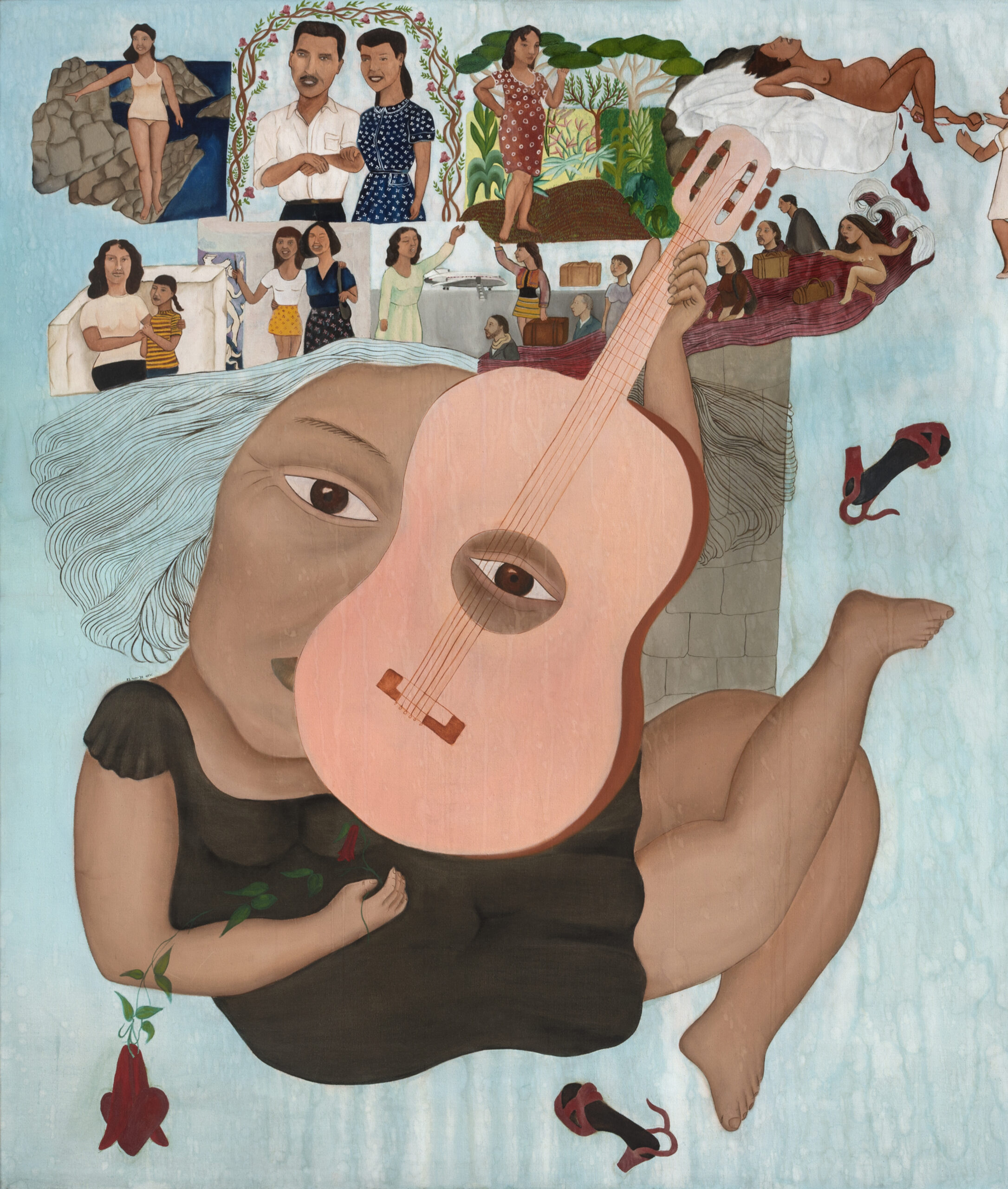
Your work has to do with ecological collapse, human rights, and through it you give out so much empathy and compassion. Is going into this void or abyss a way of recharging before going back out into the world?
Shavasana is a release. These little creatures [points to phone] are really an enslaving machine. The image is an enslaving machine. We are in an enslaving society where we’re all appendices to this machine that’s ruling us. How do we free ourselves from that? By remembering who we really are. I am lucky to be old enough to have existed before these machines took over our lives.
I wrote a poem when I was a teenager, in Spanish of course, and I remember so vividly the time when I wrote it. I was still living in Chile. I had a little typewriter, and my bedroom was at the foot of the glaciers. There I wrote this poem that translates to “to be alive is impartial.” This impartiality is freedom. It’s what Americans call “flowing.” I don’t like that word so much, because it’s been so misused by a culture that is so individualistic and so selfish, where you have to do your own self-improvement, like that would do something for the world. It does, but it’s not the only thing. There’s no point in self-improvement unless you practice the ability to love completely and accept each other. And accept ourselves. So this emptying is really opening myself to the fullness.
Have there been moments in your career where you feel like it’s been too much? Where you’ve felt too vulnerable? I know you stopped painting for decades before coming back to it in 2013.
This idea that exists in the West, that being busy is a sign of success, I think the opposite. Being busy is the sign of being enslaved. And such a moment is exactly now. All of a sudden I am asked to do zillions of things, and there are very many wonderful reasons to accept doing exhibitions, performances, talks, even this interview. Out of respect for most of the people who still believe that art and poetry have a place, and that this place is crucial for the survival of humanity, I comply. I do it. But in truth, my body, my soul want to escape.
What is your relationship to saying no and setting boundaries? Do you find yourself saying no more or less than you used to?
I find that it’s never enough. To say no is self-defense. This year is the most outrageous year of my life in terms of the many things that I have to do, and I am becoming a very frail, old woman in the process. I hope that my old age will help me to say no in a better and more consistent way. I hope people will respect that. I haven’t figured out yet the way in which to keep a balance between what’s doable and what is my recharging space and time. So that’s why I do the shavasana. Since I cannot really stop so many of these commitments, I can at least stop several times during the day.
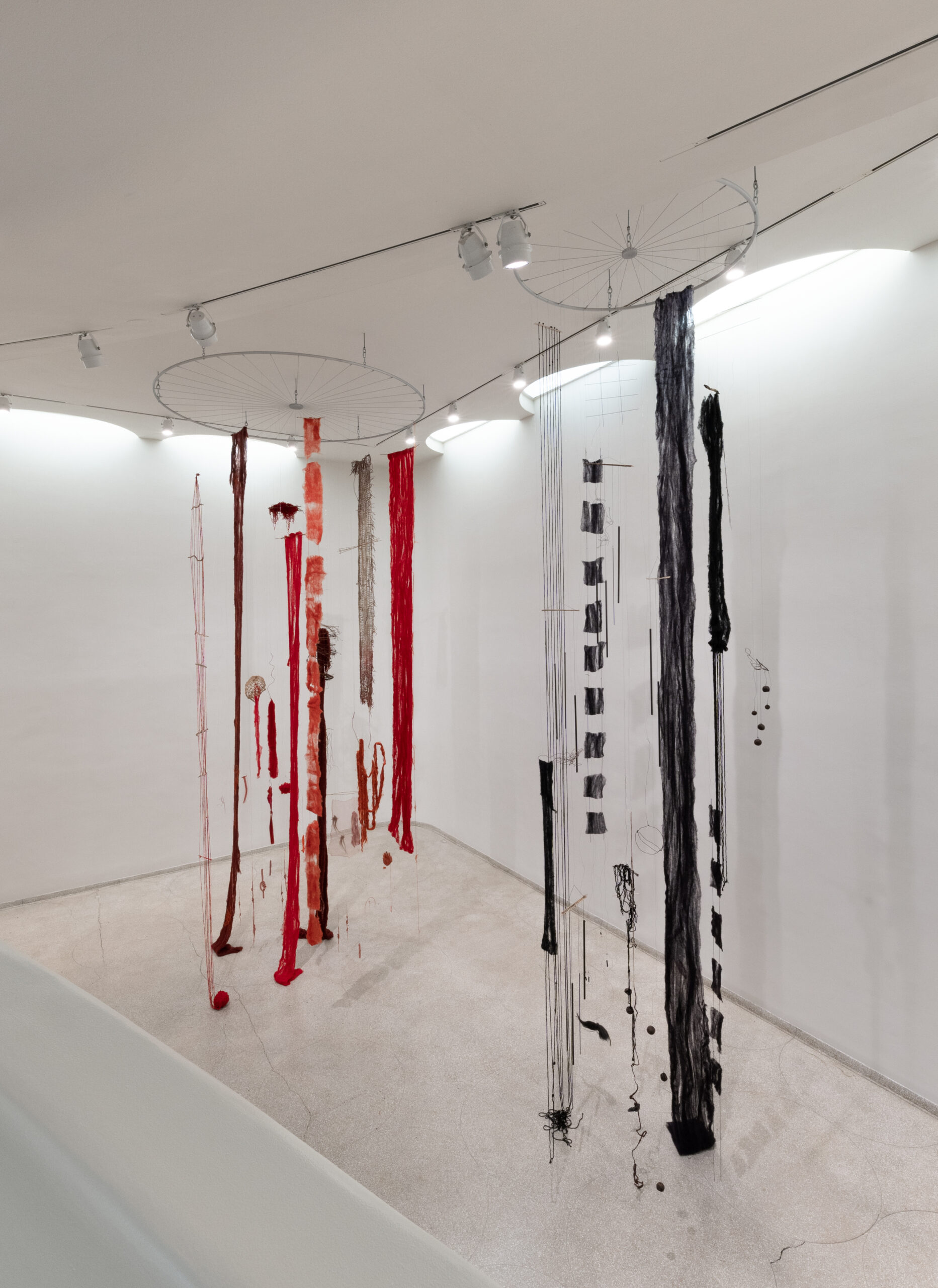
I want to go back to the beginning, or at least the beginning of your artistic life, to talk about your first experiences or encounters with art in Chile. You come from a family of artists and you began to draw and write at a very young age. I read that your father built a studio for you in your garden at home as a teenager. I wonder if you can tell me about those early years and what it felt like as you were becoming a person.
The truth is that I was living art constantly without knowing that that was art. I have vivid memories of being a toddler and crawling in my grandmother’s studio. She would hand me little pieces of clay, because she was a sculptor in clay, and I would play with clay as if I was a creature of that underworld that exists way below where the adults are. My other grandmother was a musician, so she would be playing the piano constantly and I would also be crawling under the piano. By the time I became aware I was a writer when I was 9—not because I started to write at 9 because I had been writing and drawing all my life without thinking—I suddenly realized that there was something called “art” and “artist.”
But it was all around me. My father was a lawyer and a lover of art. One day he arrived home with a thick book that I still have in my library about Pablo Picasso. He placed the book on the coffee table and he started talking about the book, leafing through it. The entire family had to accompany him while he’s speaking about this art. I have the feeling that that is a moment of awakening, in the sense of, If my father has such devotion for this, this is something that has meaning beyond. I felt my father’s emotion. I was 10 when my father made a pilgrimage to visit the sacred art centers of Europe, with half of our family. I didn’t go, I stayed in Santiago with my mom. He sent me postcards, and through them I went along with my father visiting the map. It was like a cellular transmission of art.
There’s no documentation of your earliest “precarios” installations, you were making them and only your family or friends were seeing them—these “few citizens of the world” as you’ve put it. In a way those only exist in your memory and their memories. I wonder how you think about the longevity of traditions, because if we think about the cathedrals and sites your father was visiting in Europe, they’ve been there forever. Some of your installations only exist ephemerally. What does “lasting” mean to you?
Poetry is everlasting. The oral tradition is also everlasting. And the memory of the land is everlasting. When I began doing my first “precarios” installations, I did them on the beach in Concón. As I was doing them, I realized, This is a new kind of art. It is new because it has not just been described as art in the Western world, but it is absolutely ancient and has been taking place for thousands of years. I am the continuity of a really ancient, ancient tradition. Where is beauty? It is in our eyes, in our reverence, in our emotion, in how you are touched by the way I was touched. There is an endurance of the way of seeing and feeling that is so deeply human that no artificial intelligence or capitalist society can even touch it.
I wake up with an idea, I’m going to do this. And I don’t wake up as an old woman; I’m still that little girl who’s looking out for the little birds that are ready to play with me. So what can I say? I can say that as we are dying, we are also being born. That is the vision of poetry. I believe that what I do, even though we call it art, is completely grounded in poetry. Poetry is the core of how it is possible to even feel this way, see this way, and assign meaning to the way we feel. We live in a society where feelings don’t matter.
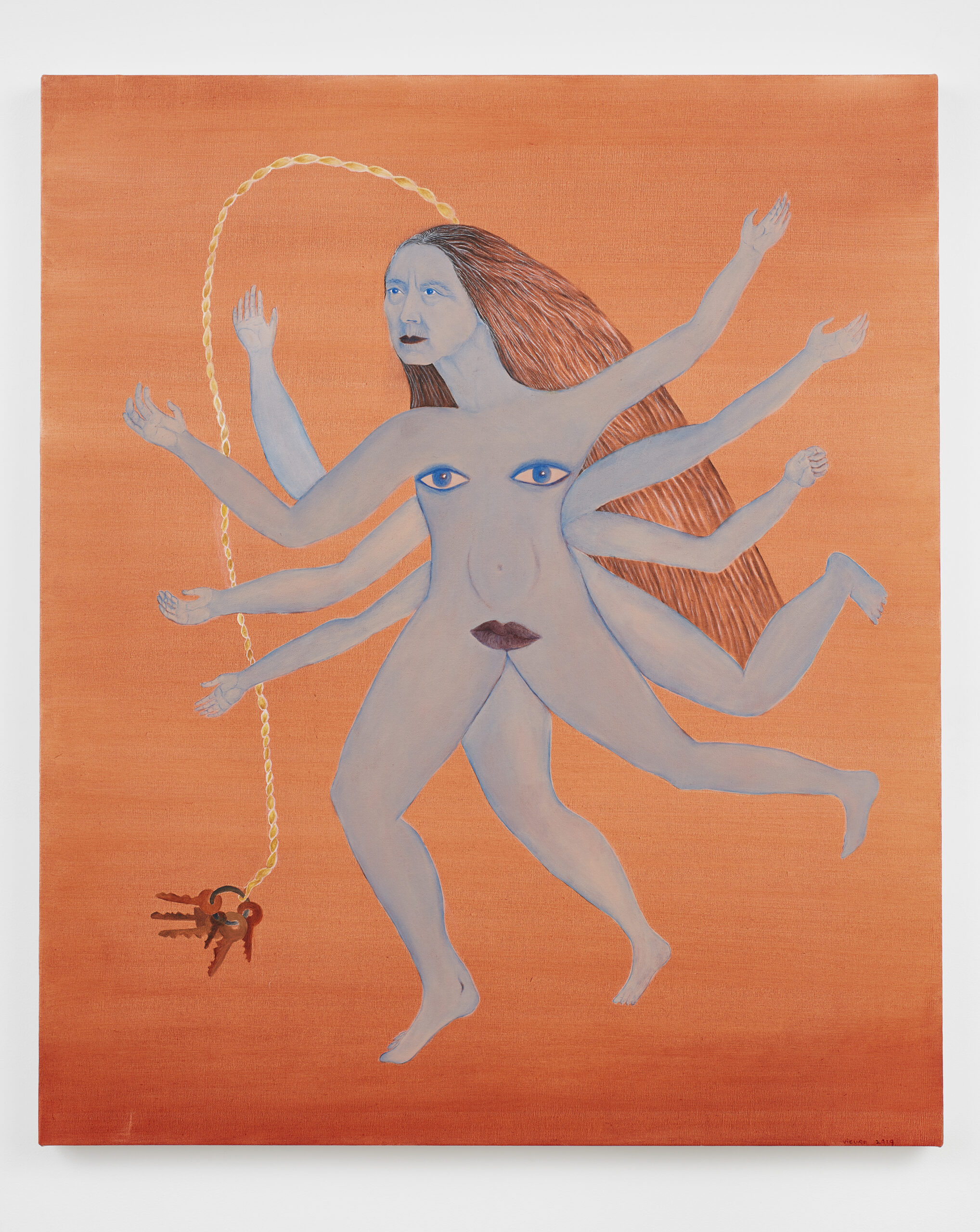
You made a documentary in the ’80s where you asked people in the streets of Bogotá what poetry meant to them. It seems to me that what you’re saying about poetry and your art—whether it’s installation or performance—is that it’s a frame for feeling, or an invitation into a communion of feelings. But maybe you can tell me a bit more about what poetry is to you today?
It’s never the same, and it’s always the same. I have said in the past that if I knew what poetry was, I probably could not care for it. It is the fact that even though we don’t know it, something in me feels it in such a way that it really runs my life. A feeling is not such a perfect word. I [use] a verb, sentipensar, which is a feeling that realizes it’s there. A feeling really should encompass a kind of awareness of the feeling because if you just feel, it sounds like something irrelevant. But if you are feeling and you’re aware of that feeling, and that awareness guides you, and that understanding frees you, all of that is poetry. Poetry is a form of feeling-knowing that we cannot quite name, but it wants to be known.
How do you make space for this “feeling-knowing”? In a way there is less and less space for poetry today. You’re speaking about this quote-unquote enslavement to the machine, and people are feeling very cluttered.
When you see the cluttering thoughts and the cluttering commitments, somehow you have to know that there’s a limit. For example, now we’re past our half hour. So the minute we finish, I’m off to my walk. The walk is a cleansing, not thinking is a cleansing, cleaning up the room is a cleansing. There are many rituals that we can do to remove this noise that wants to keep us imprisoned.
I was watching this video that Lehmann Maupin did of you before your 2024 show at the gallery. And there’s a moment when you’re caressing your paintings and, in a way, saying goodbye to them, or imbuing them with your own physicality because you don’t know whether they’re ever going to come back to you. There was something in that that was incredibly moving because you’re sending something off and you don’t know exactly where it’s going to land. Can you tell me how you feel about letting your work go into the world? You don’t know what collections it’s going to land in or what homes, who its neighbor is going to be, will it be in storage, etc. Letting work go into the world also means letting it go in terms of interpretation.
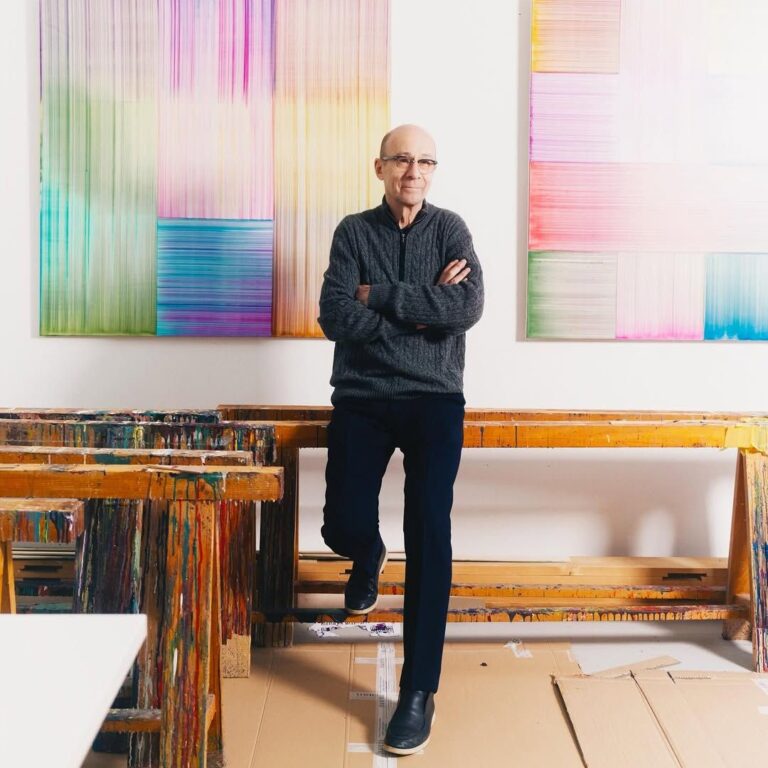
Usually my paintings take many months to be made because they proceed slowly by layers that have to dry before you continue, and also by knowing them. I have set out a system where I don’t know exactly what’s going on, and that is for me a very sacred space of not knowing. It’s something else that makes those mysterious decisions that cause the work to have a life of its own. The respect we need to have for that which is being created through us is really paramount, and it’s not an easy thing to do, because our mind wants to intervene. We want to control, we want to know. But we also have to know that it’s not a good idea. My relationship to the painting is a relationship of respect and reverence too.
There are many works that I think are really bad works. And then suddenly, through the eyes of other people, I start to reconsider. I have learned, especially from my partner, my supporter, James O’Hern, who says, “You don’t really know what this painting is, what it wants to say.” I have realized that he’s very, very right. Even when you think that something is rubbish, what do we know in the end? Whose work is it? It’s not really yours, even if you have a part in making it. I certainly caress and kiss my paintings goodbye because I can become very attached to them because they have this life of their own. But the counterpart is to think first of all that I may never see them again, but if other people can relate to them in a way that gives them some gift of wondering, of questioning, of discovering something, what do I know? I enter, for example, the studio of another artist, and I know that I am falling in love with some work that they themselves disregard. I often have that experience. Art is art because it is a mystery.
More of our favorite stories from CULTURED
Legendary Art World Deviant Paul McCarthy on Santa Claus, Trauma, and the Rise of Fascism
Gabby Windey Shares Her Book Recommendations for the Manosphere and Depressed Women Everywhere
15 Collectors Offer Their Best Advice For Getting Started
Bryan Stevenson on What Social Justice Movements Can Learn From March Madness
A Guide to the Real-Life New York Restaurants Where Characters Eat on TV
Sign up for our newsletter here to get these stories direct to your inbox.


 in your life?