
Dia was founded in 1974 with the deceivingly simple aim of making artists’ biggest dreams come true.
Within its first decade of existence, the art foundation had already proven its willingness to see wild projects through, no matter the scale or site. Walter De Maria filled Dia co-founder Heiner Friedrich’s gallery space on Wooster Street with 250 cubic yards of dirt in 1977 to make his New York Earth Room. The foundation helped Donald Judd acquire the 340-acre property in southwest Texas he would turn into his temple for art in 1978. And in 1983 Dan Flavin tapped Dia to renovate a firehouse-turned-church to house a permanent display of his works and rotating exhibitions. (The space was baptized Dia Bridgehampton in 2020.) As it has grown the stable of 20th-century monuments it cares for, Dia has become an art-world monument itself, its Akzidenz-Grotesk font and reclaimed industrial exhibition spaces a shorthand for the minimalist and Land Art movements it annotates.
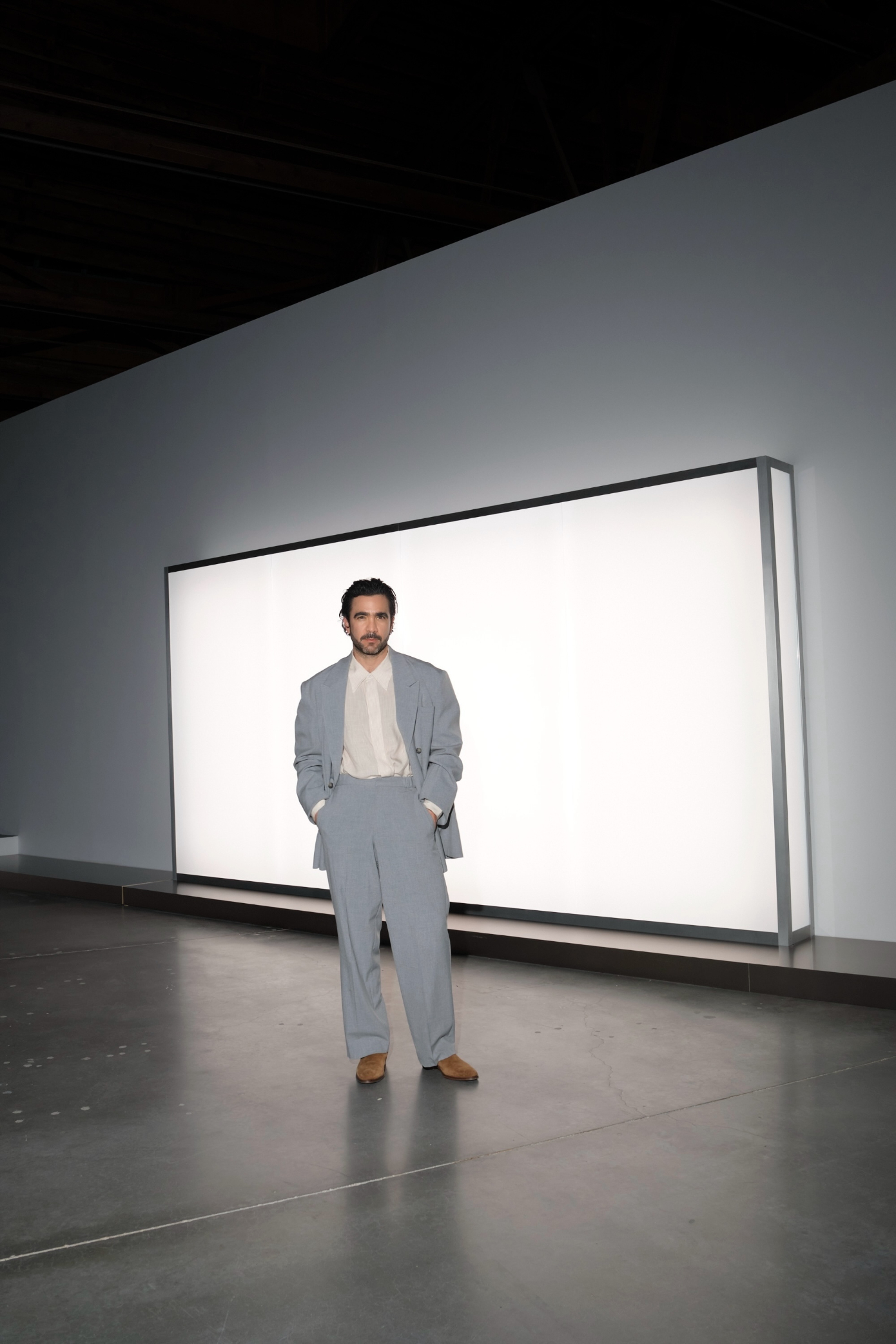
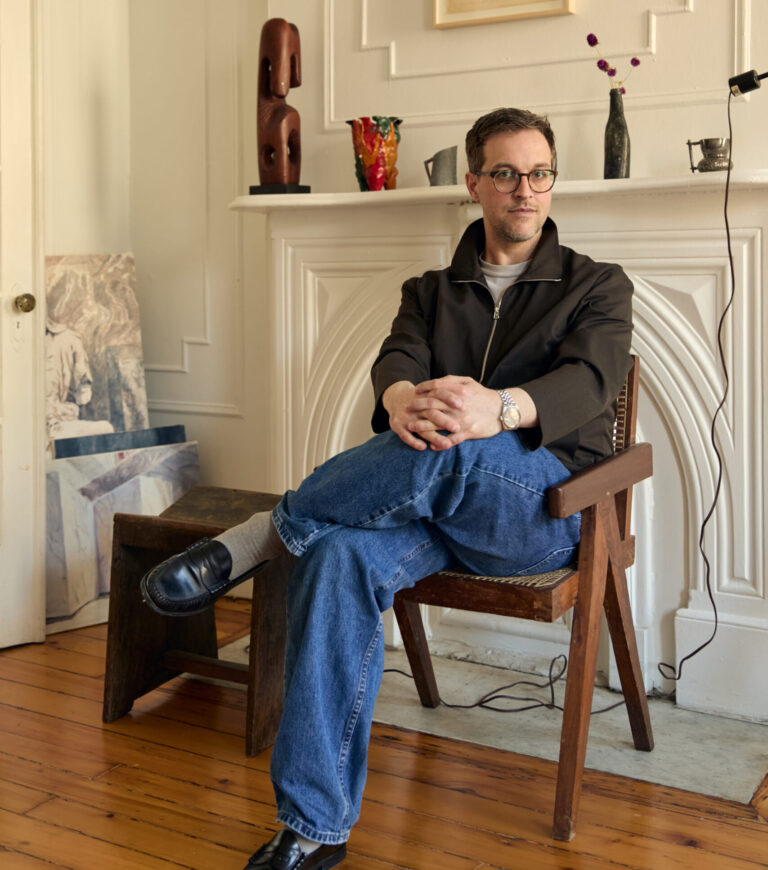
“It’s a very exciting liquid to swim in,” Humberto Moro, who joined the foundation as deputy director of program 48 years into this story, tells me. After leaving behind his own early artistic pursuits as a painter, Moro cut his teeth at Museo Tamayo and Museo Jumex in his native Mexico, SCAD’s Museum of Art, and the Park Avenue Armory. At Dia, he has been instrumental in bringing Latin American voices (Liliana Porter, Delcy Morelos, and the prolific Argentinian artist David Lamelas, whose major survey he just curated, among them) into the decades-long conversation Dia has moderated, and in reframing the institution’s relationship to accessibility and community, in partnership with director Jessica Morgan, who’s been at the helm of Dia since 2015.
As the Lamelas show closes out its first few weeks on view (it will stay up through next January), Moro took a moment to discuss why he’s still a believer in the power of an exhibition—and what organizing this one taught him.
Where and what have you been looking at or listening to these days that’s giving you joy?
It’s hard, you know, because there’s a very thin line in our field between work and leisure and professional engagements and entertainment. That membrane is so permeable—what we read, what we watch is always informing what we do and the other way around. But I do like a pop culture moment. I love playing with high and low all the time. There’s a lot of trash television that is kind of a palate cleanser for me.
But I guess the thing that I enjoy the most is science fiction. I crave ideas that are new and that I’ve not seen before, and that is something that I’ve been able to find in science fiction. Ted Chiang is an author that I love; he’s published a couple of books of short stories. Many people have compared him to Borges, who I also adore. And I don’t know if you’ve seen this series, 3 Body Problem? The writer Cixin Liu, who’s also Chinese, has this massive amount of volumes. I’ve read those religiously over the past couple of years. They’re imagining other futures, different possibilities.
Another thing I’ve been obsessing about the past year is this Argentinian author Mariana Enriquez. She wrote this book, Our Share of Night. Some critics have called the book the 21st century One Hundred Years of Solitude, and I do agree with that. It’s a story that speaks about the rural areas in Argentina and the dictatorship and forced disappearances and the accumulation of wealth in that area. It’s the story of a father who’s trying to protect his son in this magical realism scenario that obviously has moments that are dark, but it’s a very human, raw novel. So books are a place that I love and within which I find space to imagine new things and apply them to my own life and practice.
Can you trace your curatorial impulse back to a place or time in your life? I know you studied visual art and started your career as an artist before founding an influential artist-run space in Mexico. But maybe it starts even earlier, in childhood?
We have a saying in Spanish, “childhood is destiny.” I was always fascinated with space. I would spend tons of time rearranging books and moving furniture and rearranging my room, and building parking lots for my little cars. I was really preoccupied with an environment, and that has not changed. Obviously, I was a practicing artist for many years. They say that the best curators are the worst artists. My painting was more related to people. I did a lot of portraiture. I was thinking less about space and more about the body as a space and the body is architecture. I had a short career as an exhibiting artist. But there was something that never felt right to me. It was until I started working with other people and to have really intense dialogues about what it meant to interpret the work … I started working with artists that I still see today. I was having dinner with my friend of mine from Guadalajara, who also lives here in New York, who has a show at Proxyco Gallery here in the Lower East Side. I made his first show ever, and he had a work hanging in his living room from that show.
I’ve been lucky to always work with institutions that are either founded by artists or incredibly artist centered. And being an artist myself for some years, my practice was also very centered in letting the artist’s voice guide and thinking, What is it that I can do for an artist, for their practice, for the conditions in which the works are exhibited? What is it that I can bring to the table in this conversation? I see myself very much as an exhibition maker. I’m a believer in the power of the exhibition. I mean, museums are like secular temples, right?
How do you think about rhythm and pacing when you’re putting together a show? As a curator at Dia, you work within existing architecture. How do consider the limitations of the space—what it brings out, keeps out?
There is so much beyond sight that is at play when you are in an exhibition space. You apprehend the space with many things, with your intuition, with your tact, with your smell, with your hearing. All those senses are being utilized to understand your position, your distance, the way in which the light behaves in a space, the height, the relationship of your body to a work or empty space. We’re literally these multisensorial mechanisms that are absorbing thousands of markers and information cues from the world, so I try to be really sensitive to that, to think about forms of apprehending the world that are not normative or that we don’t expect. People understand the world from different heights, whether they’re kids or in a wheelchair or very tall. People come from different backgrounds. There are people that have heightened sensitivities. How do you approach that?
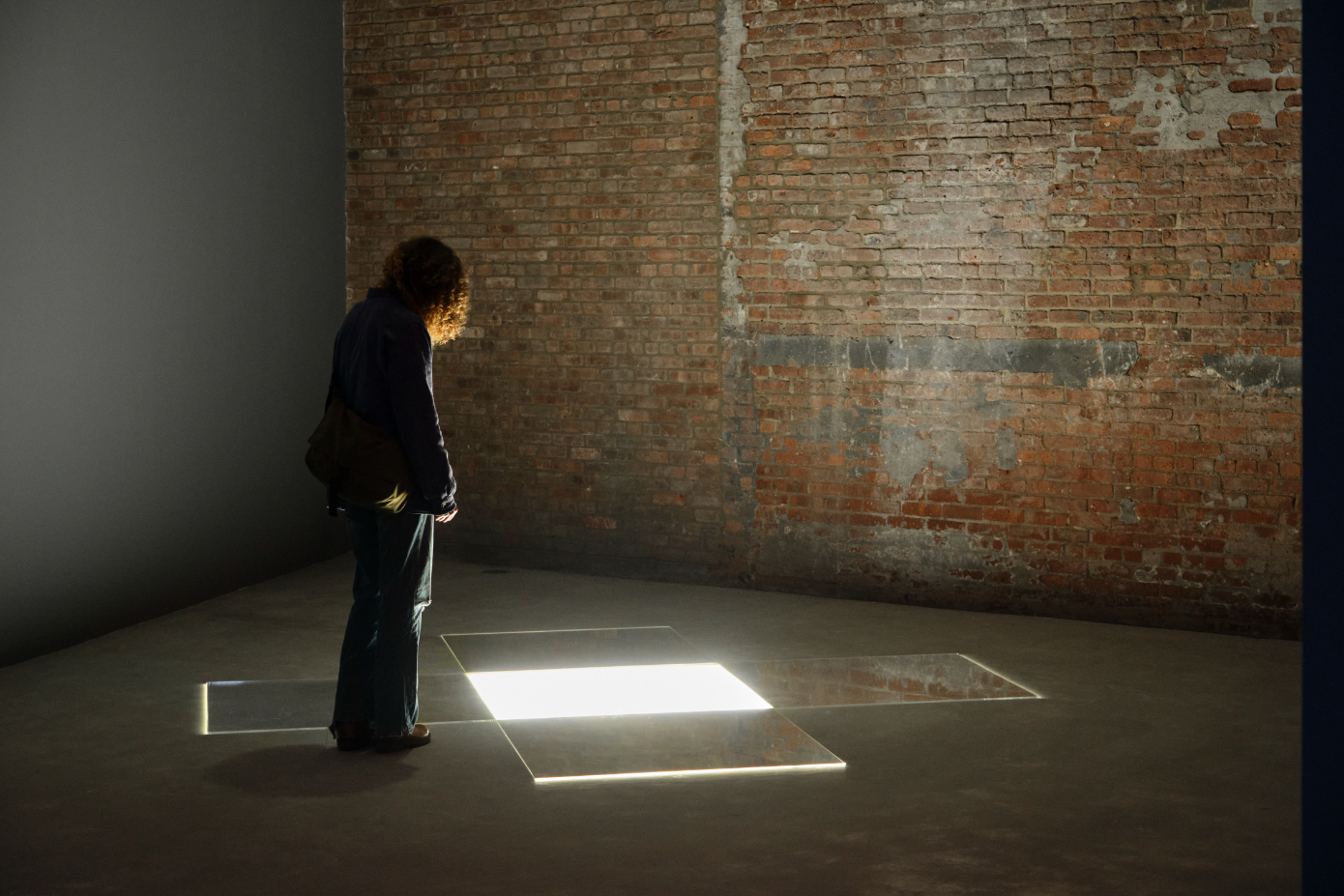
I feel an obligation to think as much as possible about offering many ways of connecting with the work. That sounds very complicated, but in reality it might be enacted by very simple gestures in the space, in the way that the text is positioned or the choice of words that you use in mediation. There’s ways in which an institution expresses their values and their priorities. That’s related to limitations. Dia is an institution that works with a very specific historical framework that has to do with art from the ’60s and the ’70s. And obviously, limitations are the substrate of conceptual art. I think it’s incredibly exciting. The world is full of constraints, of spaces you take in consideration. And if you think about an institution like Dia, we have not built anything. Every space that we inhabit is architecture that has been reused or repurposed. That also expresses something institutionally, right? Dia Beacon was a Nabisco factory from 1929 that was printing boxes. They have these beautiful skylights so they could see the color in the boxes. Here in Chelsea, we’re a consequence of industrial times in New York. The ceiling that we have in one of our galleries goes back to the time when these were all piers. There’s these layers of histories that make the space almost like palimpsests. There is never the fantasy of neutrality.
Institutionally, we have a lot of discussions about what that means regarding our mission, our collection, the artists that we work with. We’re a very different institution. We have shows that run for a year or longer. That relates to this idea that we respond to a very specific temporality, which is the long run. We’re never a one-off. We’re always durational. We’re always in conversation with artists. We have had many shows with a single artist or a lifetime of commitment through a site with a single artist or one work by a single artist, but it’s the biggest work they ever made. These ideas of scale, depth, and time are so specific to who we are as an institution.
You mentioned the artist-centered approach earlier. It can often be used as a buzzword, can you speak to what it translates to for you? Perhaps through the lens of this major exhibition you’ve just organized with David Lamelas.
I spent time at Museo Tamayo in Mexico City, which was founded by an artist who believed that Mexico City needed to be a hub for international art. In the years that I spent at that institution, we were true to that mission to bring the best of international art there. I spent some years at the SCAD Museum of Art in Savannah, which is an arts university that creates hundreds and hundreds of artists every year. The primary public there is students who are in the process of becoming artists themselves. Then Dia’s core tenet in 1974 was to help artists realize art is a project that wouldn’t otherwise be possible and to provide infrastructure and care for them.
Specifically for David Lamelas, it’s really hard to think about artists whose career encompasses what has happened in the past five decades. You could really tell everything that’s happened in contemporary art through David’s practice. And David had a gallery in New York, but he never had the breakout show that he deserved here. He was hanging out with Joseph Beuys, Sol LeWitt, Stanley Brouwn—all these artists that have been part of the canonical art history book. David, for many other reasons that are environmental, systemic, or that have to do with his own path, has been left out of that history. At Dia–again with this notion that we can’t be everything for everyone—we have been very intentionally placing attention to where our program should go and what we should represent. We have been doing a lot of research in very specific strands, like Black conceptualism, global Indigeneity, African, Asian, Latin American diasporas, and we have been focusing on understanding what resonances certain figures have with our program and how we can include artists that are problematizing or commenting on our own history.
For David, it’s a survey with a retrospective nature. We’re not presenting works from every decade, but we have very specific points of his career that are relevant for this show. The ’60s and the ’90s are very well represented in the show. And there’s a new commission that he made for the show, which is quite exciting, as well as a performance series and a film series. There’s all these elements that can give you a more integral vision of who he was and who he is as an artist.
Can you speak to why it felt urgent to show David’s practice now, and how you contextualized it? Dia is a custodian of many works that people know well, whereas some of his works will be seen for the first time by New York audiences.
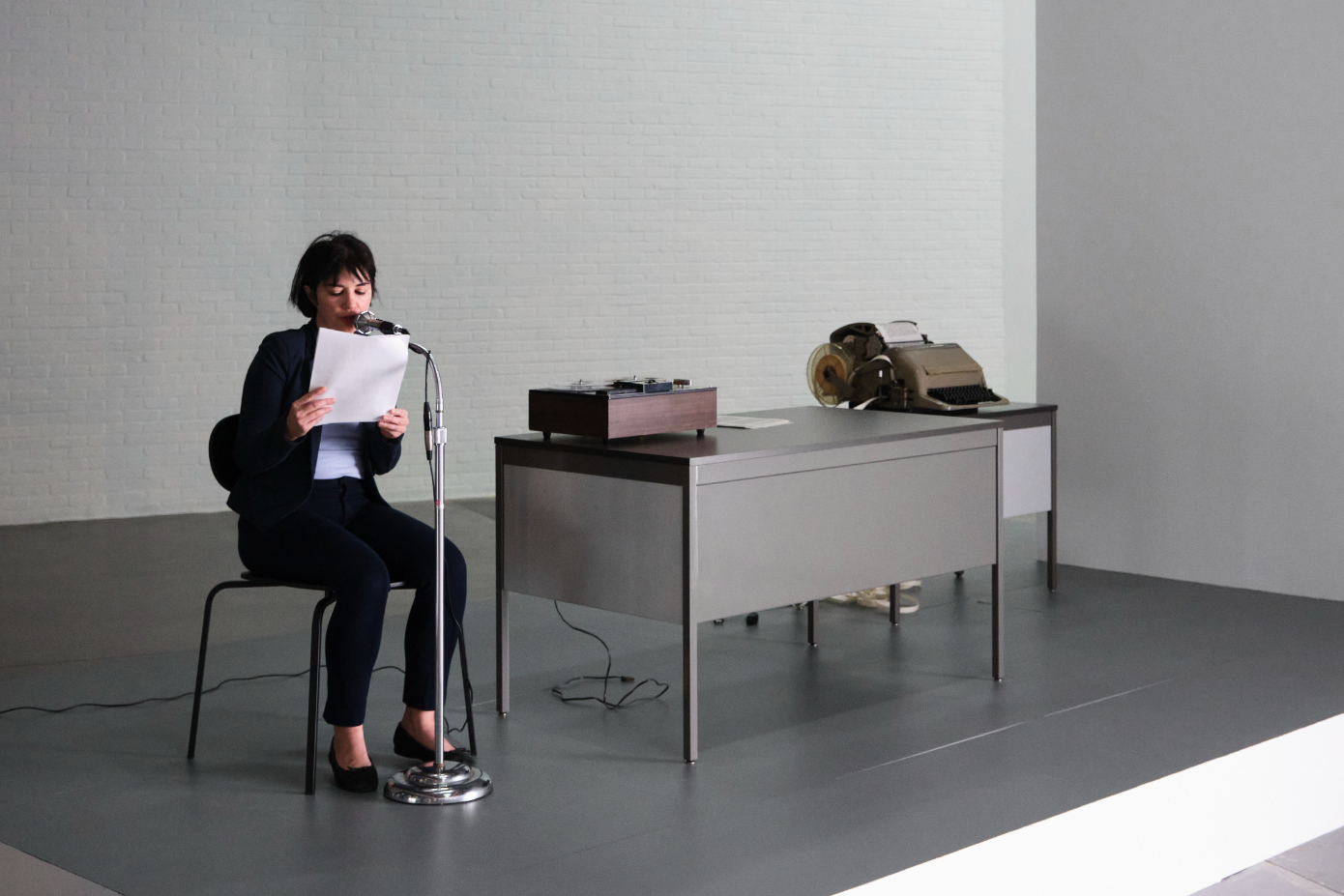
I think time here is the key. Time both moves very slowly and then incredibly fast. Those two things are true at the same time. Think about Duchamp, right? Think about this new thing, the ready-made, and how controversial that was a hundred years ago. Today we still have people that are saying, “My kid could do that.” It’s a conversation that’s been had for a hundred years. I’m just summoning this to understand kind of like the elasticity of time and how it expands and contracts in ways that are surprising. With David, it’s kind of the same. He was a very curious artist from a very young age. He represented Argentina in the Bienal de São Paulo in 1967 and then showed in the Venice Biennale in ’68. In Venice, he didn’t do a work; he played one of these old telex machines that was collecting a stream of information from an Italian newsfeed about the Vietnam War. And there was a person who was reading the news. That was his work. If you think about today’s world and the way in which our political reality is shaped by the way in which information circulates in the world, I cannot think of something that’s more relevant than that.
He’s been pointing at the ways in which information is shaped and how the way in which it’s shaped is almost more important than the content itself. When you see the show, these ideas of the container and what’s contained, of technology and the transmission of information, as well as these more art historical ideas of dematerialization, are all incredibly relevant. We’re still digesting and chewing on most of the same concepts. In a way, David’s work feels way more relevant aesthetically, historically, politically, socially, than ever.
And the show was organized in partnership with ISLAA, right?
Yes, the Institute for Studies in Latin American Art. I started a collaboration with them many years ago when I did a Liliana Porter show at El Museo del Barrio in 2018-19. They supported the exhibition and the book I did with Liliana then. Then here at Dia, we partnered to present a multi-year partnership with three projects. The first one was Delcy Morelos. That was kind of a revelation for many people and set the stage for Delcy to jump into the international mainstream. She’s everywhere now. The second project that we did was “Echoes from the Borderlands,” a sonic essay that we presented here in our talk space downstairs. And that is a collective with three Mexican artists Valeria Luiselli, Ricardo Giraldo, and Leo Heiblum. They went to do field work in the Mexico-U.S. border and collected hours and hours of sonic archival material then did this rendition of the border through sound. And then the third installment is David Lamelas. It has been an incredible opportunity to connect with them. They’re specialists in the field; I’m also a Latin Americanist by speciality. It’s been amazing to have them as interlocutors.
Is there a work in the David Lamelas show that you’ve most enjoyed spending time with, or maybe seen with new eyes?
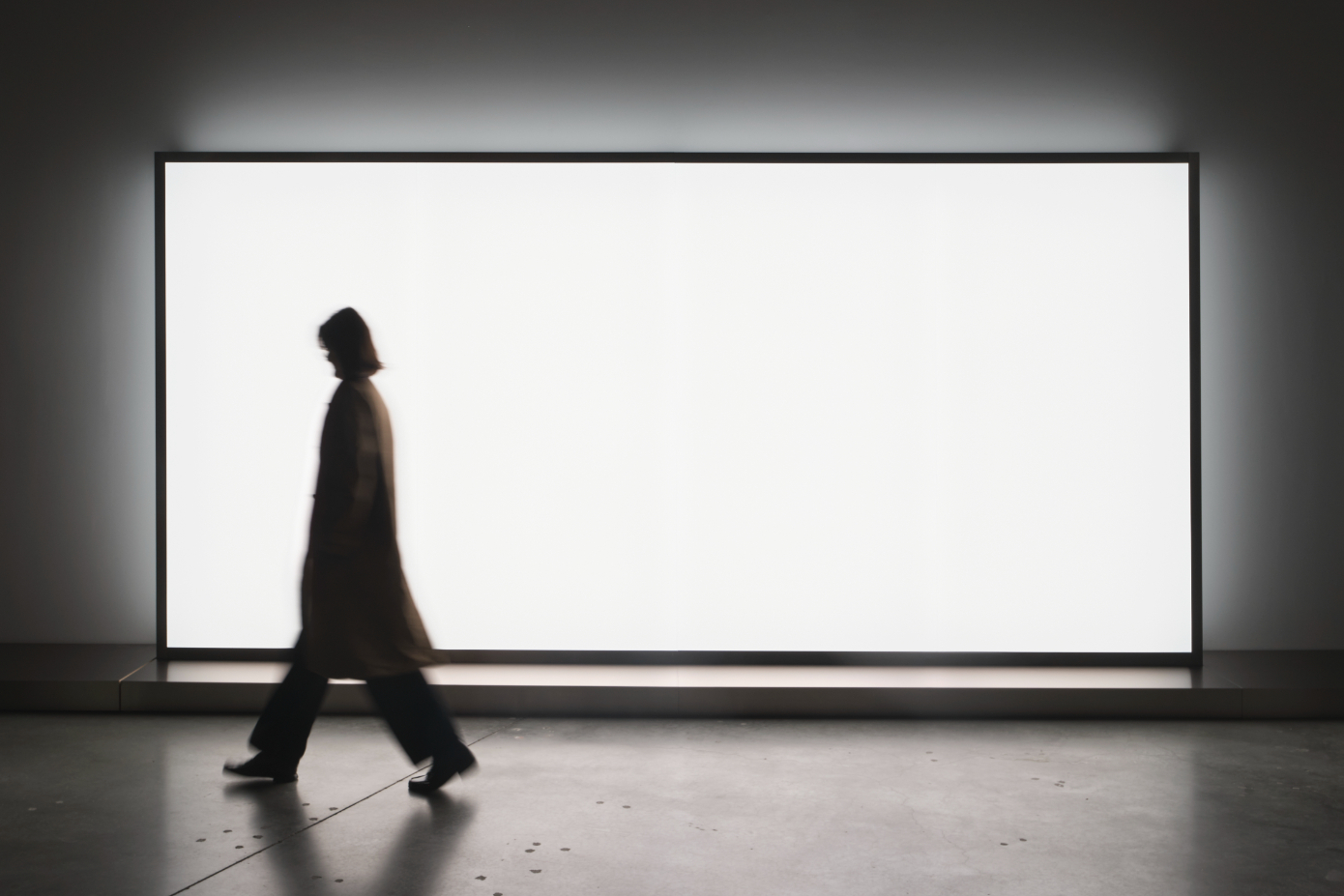
We have the original furniture from Office of Information about the Vietnam War at Three Levels: The Visual Image, Text and Audio, 1968, from MoMA. It’s just such an incredible opportunity to see that work. We’ll have a performer who once a month will be reading the news in the galleries. And we have three more site-reactive works. One is Untitled (Falling Wall) from 1991, which is this gigantic wall that’s falling and supported by these wood beams. That’s been quite special to understand and to feel in the space. But you know, what’s been really special to see is the light. The show has a very specific light design that changes in the rooms. To feel that with the works in the space has been incredibly special. I hope the visitors really can identify and enjoy the nuances of light that our galleries offer.
You did an interview with Frieze two years ago where you were speaking about your love for institutions. The journalist at one point asks about your reverence for institutions and you instead speak about love. Love isn’t really a word we expect to associate with an institution, but I think that in love there’s also accountability. You’ve worked with such a range of institutions from SCAD to Museo Tamayo to the Park Avenue Armory and Expo Chicago. Do you feel they’ve loved you back? How have you and your idea of what you want art to do also been shaped by them?
I always say that art institutions cannot change the world, but they can change the way in which one person can see the world. I am a firm believer in that idea. I think the temporality of institutions is quite problematic, too, because we’re always working towards and in the future, right? We’re working for the kid that is going to come and whose life is going to be changed, like we were, like I was. That problem of being in the present but doing work that’s only going to manifest in the future is quite a beautiful dichotomy. Institutions are people—the people that inhabit them, that embody them, that compose them. We have gone through many generations of institutional critique, and if we learned something from them is that we are the institution. It’s inside of us and it manifests through us. Dia might not be public in the strict sense of the word, but we’re open to the public and for the public and because of that we have a responsibility. Love and kindness and hope have to be factored in. You have to encode your environment in the institution with those modes of thinking and emotions.
We’re also living in a time where institutions are crumbling left and right. Some of them should crumble for sure. I’m not blind to the idea that some things just need to disappear to evolve. But I’m also super committed to the format of the museum as a place that still has so much to give. Like love, it’s problematic, it’s fulfilling, it’s discontinuous, but it’s very profound.
More of our favorite stories from CULTURED
James Cahill Saw the Best and Worst of the Art World. His Latest Novel Exposes It All.
Marc Jacobs Doc ‘Marc by Sofia’ Makes the Designer Look Cool. But Is That It?
Margaret Cho Grew Up in a Gay Bookstore. Of Course Her Reading List Is Incredible.
20 Years and $720 Million Later, Michael Govan Takes Us Inside the New LACMA Galleries
Revisit 5 of the Late Legend Calvin Tomkins’s Most Essential Art-World Profile
Sign up for our newsletter here to get these stories direct to your inbox.


 in your life?