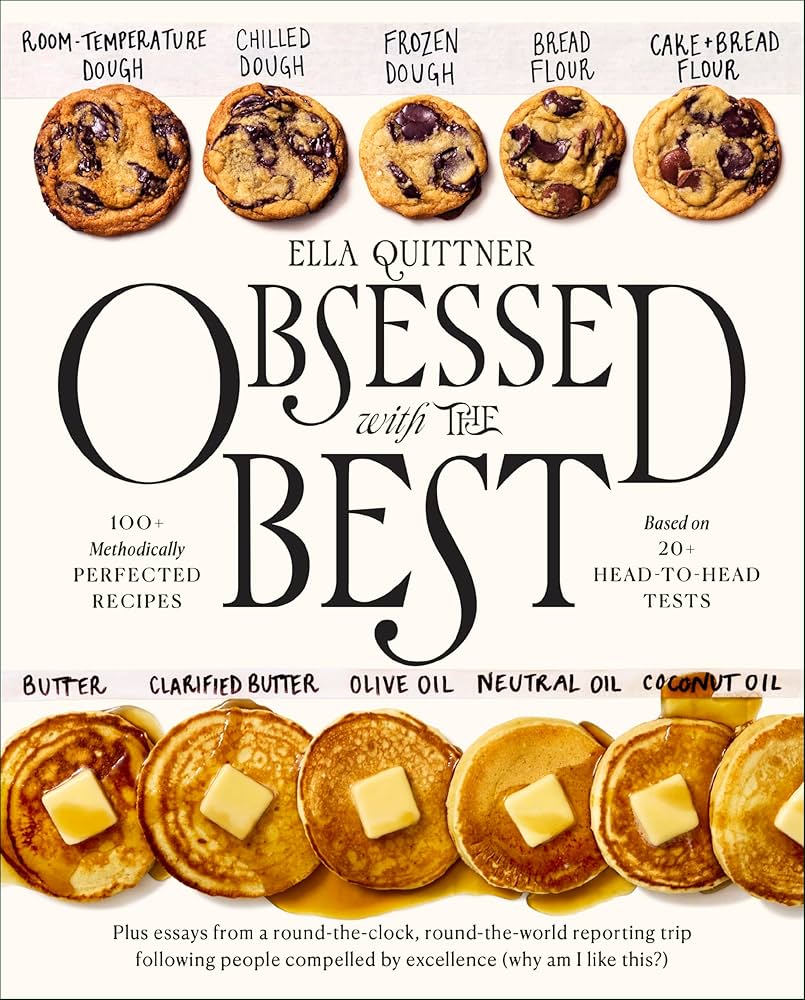
America’s first all-you-can-eat buffet was never intended to sate appetites, but to reignite waning ones. Around the middle of the 20th century, a canny casino owner noticed that hunger was driving his gamblers out the door, towards diners bathed in dawn light. His $1 buffet—offering cold cuts and snacks instead of a full meal—kept gamblers just nourished enough to remain on the betting floor. This is merely one of the remarkable historical alleys Ella Quittner puckishly guides us down in Obsessed With the Best, her cookbook in cultural-historical essays.
Too often, culture writing—food media included—treats “viral pop culture set pieces as though they are novel or shocking instead of merely accessible and gratifying in a way that pleases the algorithmic overlords,” as Quittner puts it. A veteran of the Bon Appetit test kitchen-era viral food wars, she is a sardonic, self-deprecating documentarian. Her reckoning with her own compulsive pursuit of “the best” reveals the inherent instability of the word itself. Essays balancing memoir, reportage, and cultural criticism—from a work trip to a Japanese “Porktober” festival that also functions as a poignant father-daughter adventure to a history of the buffet that becomes an existential meditation on American (mis)conceptions of value—punctuate an array of alternately utilitarian and decadent recipes. The title might imply that the book promises a scorecard, but Quittner sees the sublime in a stranger’s messy kitchen far more often than in a highly designed tablescape. The “best” becomes a “tool for reinvention.” Your taste changes as your life does, as the people you learn to love pique unexpected appetites, indelibly altering your palate.
Similarly, Little Egg pastry chef Tanya Bush’s bildungsroman of a cookbook, Will This Make You Happy, traces one high-octane year in her early 20s, as she learns to trust her evolving palate in lieu of chasing simple sugar highs. Her sweet tooth functions as a third eye, propelling her out of a depressive fugue state and into an apron, an internship, a polycule, and eventually, a layered sense of self. Her taste—in cuisine, prose, and affairs of the heart—is a trusty compass readers can cup in their own flour-coated hands.
What is it about cookbooks that lend themselves so fluidly to self-reflection and experimentation alike? Exploring the remarkable staying power of the food diary in The New Yorker recently, Hannah Goldfield wrote that while the form “pushes its practitioners toward solipsism, or showing off, its popularity also evinces something encouraging: a curiosity about how other people live, the texture of their days.”
That inquisitive spirit might provide a portal for physical connection in an Ozempic-saturated, exsanguinated era. Turning my phone off, getting my hands dirty, and forcing a friend to eat a disturbingly malformed biscuit (my ill-fated attempt at one of Quittner’s recipes) might at the very least make us laugh. Imagine the improvisational intrigue you could get into, cobbling together a smorgasbord with someone you barely know.
Experiments in gastronomic game play have been published for decades, from Salvador Dalí’s hedonistic, surreal Les Dîners de Gala to Alice B. Toklas’s memoiristic, modernist recollections of life with the literary legend Gertrude Stein, composed of vignettes that veer suddenly into recipes mid-sentence. Bush and Quittner’s entries into this eccentric pantry-cum-canon startle as often as they instruct, forging a convivial, vulnerable rapport with readers. As both of their books hit shelves, I sat down with Quittner and Bush to talk taste tests, virality, finding pockets of intimacy under late capitalism, frictionmaxxing, and more.
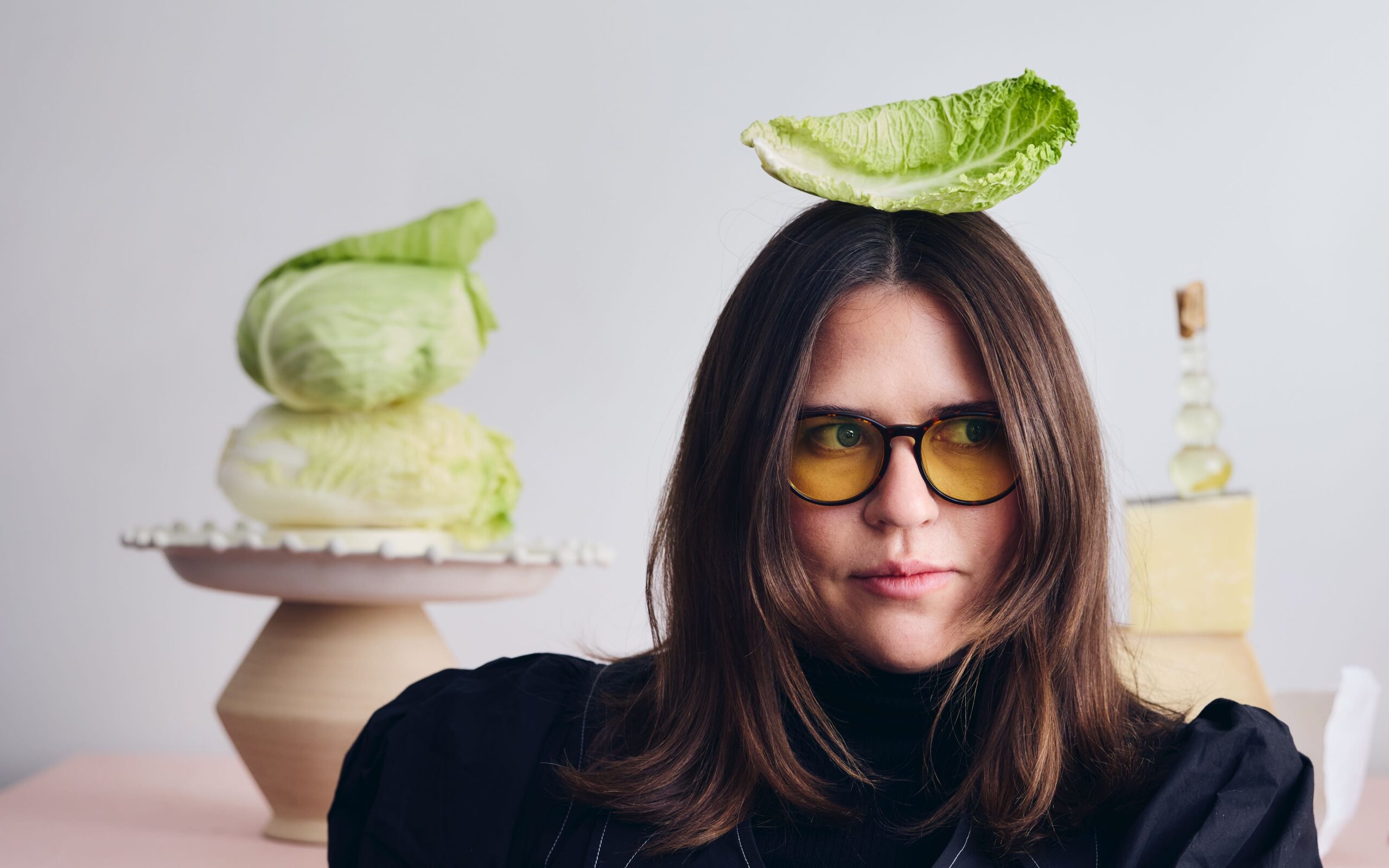
Ella Quittner of Obsessed with the Best
Early in this book, you mention your “attraction to genres without existing forms of structure.” This book collages cultural anthropology, travel writing, and recipes—what would you call the genre? How do you feel about the current profusion of so-called narrative cookbooks?
Collage is a good term, or stitching together. I was inspired by Calvin Trillin, an approach to investigative storytelling that becomes personal—with, of course, a dash of Nora Ephron humor. People talk a lot about genre-bending cookbooks as novel these days, but I was raised on them. For me, an early and influential genre-bending cookbook was Ephron’s Heartburn. I bake her mashed potatoes all the time.
The energy on the page combines a craft project ethos with scientific experimentation, punctuated by reported narrative. How did you land on that ratio of recipe to storytelling?
I wasn’t interested in making a traditional cookbook of recipes on the topic of “the best” because so much of the fun of that topic is that it becomes very introspective very fast. And I could do an entire book of reported essays about people who have bizarre culinary obsessions. There’s also a version of the project that would have focused exclusively on the virality culture fostered by the Internet.
Tell me about the tension between the gamified, competitive pursuit of the best and a more capacious, roving sense of play that also motors this book.
The visuals are surrealist-inspired and whimsical because this project is tongue-in-cheek. It’s called Obsessed with the Best, and the first sentence announces that there’s no such thing as the best. I got you to buy this book, now let’s talk about why you bought it. I don’t take myself seriously as a person or as a writer, and I try very hard to stay away from navel-gazing. This project is about recognizing that I have blind spots. Of course, there’s no such thing as best because if you flip to any page, you’re going to see there’s 40 ways to approach any dish, and one of them might be the best to you, but to a stranger in the comment section, another one is.
The personal portions of this book explore the realization that you aren’t in touch with what you call your personal mythology. You come to see the ephemeral nature of what the best might mean to you at any moment as a “tool for reinvention.” Can you elaborate on that notion?
Part of the reason humans are attracted to the idea of the best is because it allows us to imbue a meaningless experience with meaning. You can actually make my best biscuit, or you can use it as a more meditative exercise and think about what the best means to you. Who are these characters who are going to bizarre and extreme lengths in pursuit of evangelizing Iowa pork or winning a vegan eating contest in Kofu?
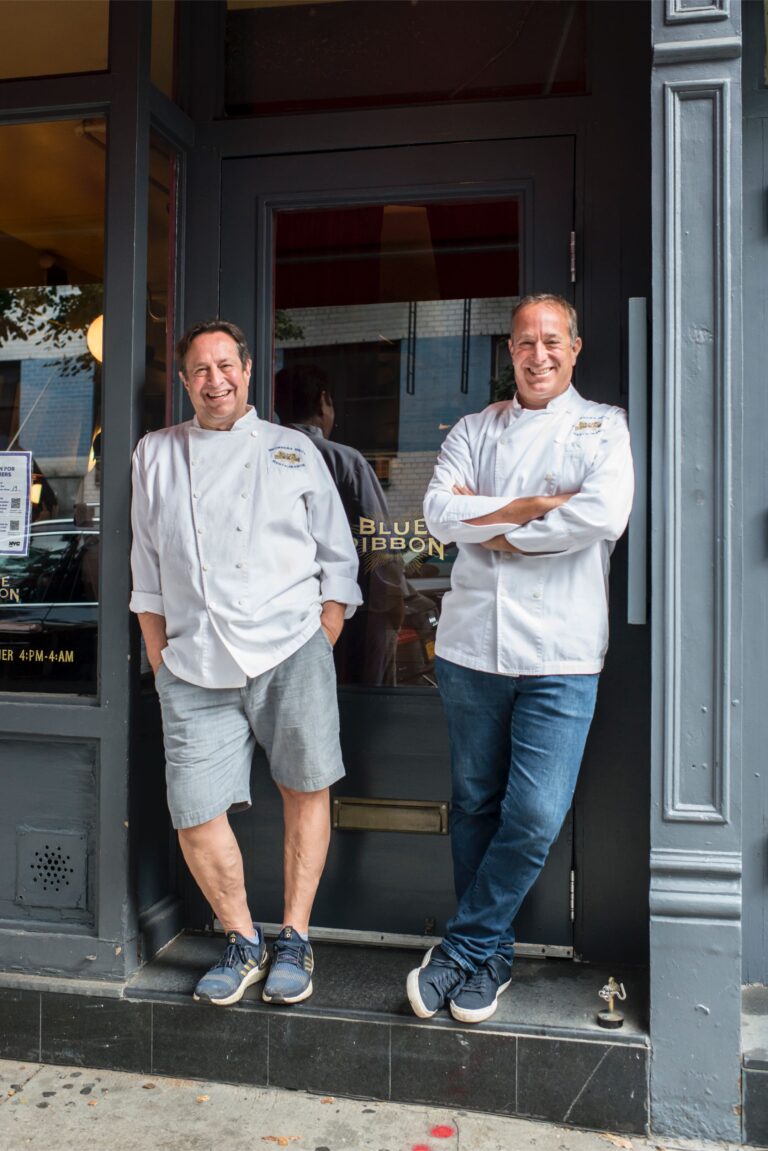
I was particularly intrigued by the “Bacon Queen” pageant at the Des Moines Blue Ribbon Bacon Festival, an annual bacon carnival involving taste tests and bacon history lessons, attended by thousands. How does that performance of femininity feel related to the feminized archetypes associated with cooking, mothering, and feeding others?
What was so funny about that was: they weren’t even cooking. It was just the spectacle of bacon hanging over these women’s heads. They were performing femininity. They tried to have a Bacon King competition one year, and it petered out. What people really want to see is women getting up on stage, singing about bacon and doing cartwheels. It felt like a beauty pageant, which I found hilarious because bacon is, if I had to gender meat, masculine. It felt almost like a distraction spectacle—the weekend I was there, a watershed Supreme Court decision had just been passed that affected pork farmers. The spectacle of the bacon queen provided a quintessentially American distraction from what sort of havoc that [decision] may or may not wreak on this state.
While we’re talking feminine performance, the memoir genre often demands women expose themselves emotionally, a confessional mode that has crept into the cookbook and recipe space. Was your focus on cultural reporting to introduce these recipes an intentional attempt to resist that genre drift?
I’ve never felt like my approach to writing has been traditionally gendered; it has taken me a long time to feel comfortable opening up about my true thoughts and feelings. As a home cook and a host, I also feel very detached from traditional gender roles. The way I host is not in a Martha Stewart, 1970s housewife way where I’m xanned out trying to please the guests. I think of myself as putting on a show. You guys all come over and I’ll make up some crazy theme that makes no sense, like Tall and Wide, or Frenchgiving. I want you to wonder, What the fuck is she even talking about? It feels like my art project. I’m going to serve you, but I will serve what I want with very little regard for your taste.
That approach to hosting feels so aligned to your writing style, which often takes on an enlightened jester tone, joking quite earnestly about the labor and performance inherent to cooking that gets elided in the Instagram age.
Girls on Instagram are building skis out of 300 heads of cabbage, or Christmas trees out of butter, and it’s all supposed to look very effortless. That is more traditionally gendered, tied to the subjugation of self. We’re not supposed to see the behind-the-scenes, but that’s the most interesting part. This project was really labor-intensive and created a lot of waste. I’ve been really aware of that aspect of culinary production since I entered the industry when the Bon Appetit test kitchen was peaking. Molly Baz and Alison Roman were making it look so easy—red nails, which are never chipped, and they’re skinny and blonde. I got to Food52, and I was like, What in the fresh hell? Everyone’s getting fired and ushered out in silent tears all the time. There can be really ugly moments, and I think that makes the whole process more beautiful. I don’t want to go to a dinner party that seems like it just arrived from a DoorDasher and feel so out of touch with the labor required to produce it. I don’t like generative A.I. art. I like art where you can see the brushstrokes.
That feels related to the recent interest in frictionmaxxing as a form of resistance to the tech industry’s attempt to sell us a frictionless existence.
In our algorithmically optimized existence in 2026, I’m interested in these analog, riskier, inefficient ways of cooking. I’m interested in the things that take a long time. The reality is that we’re all so overstimulated. You can be reached by your boss at any time. And by the way, you have 30 bosses because we live in the gig economy. I understand that the three-ingredient, 15-minute meal rode in on a white horse to save humanity and busy moms. But I think the occasional, intentional commitment to pursuing a very lo-fi, analog, inefficient culinary project could be one antidote to the malaise and burnout a lot of us feel. Which is not to say we need to go back to 2011 Brooklyn, where there’s a record player in every bar for no reason.
There’s an incredible anecdote in this book about a British Egg Council report “gauging people’s personalities by egg predilection.” Where do you see our food preferences reflecting personality traits most clearly?
The way you order anything says a lot about your personality. Your diner order and your diner preference says a lot about you. Are you going to the yassified $20 tuna melt diner? I know a guy from college who will order a whole branzino at a diner. How do you approach grocery shopping? Every choice you make in a culinary sense is extremely telling about your aptitude for risk, your propensity for pleasure, your expectations about what life might provide and where you are on the optimism/pessimism spectrum.
You write that the American obsession with maximizing can be both “a community organizing principle or an algorithmic output.” There’s something quite poignant in the communal orientation and whimsy you bring to an idea that can feel nihilist, and driven by a fear of being left behind.
We exist on a knife’s edge. On one side of the edge, we fall off and our language becomes the exact same. It’s Babel, but algorithmically presided over, so we risk losing everything unique about being a person. On the other side of the knife’s edge is this real resistance to technology. I hope we continue to teeter on that knife’s edge, because that’s what makes both sides of the coin so interesting: say, uniting TikTok brain rot era culture and slow food, Alice Waters, brine a chicken for three days and laugh around some sort of fire. What unites those seemingly disparate experiences is that human beings want to belong, to feel like we’re understood. Being a human is so fucking lonely. I don’t think it’s necessarily sinister if the way that you feel seen in part comes from participating in algorithm culture and adding -maxxing to every other word or saying, I fear I found the best protein whipped cream at Wegmans. If we had had TikTok when I was a friendless child, I could have gone online and been like, I’m lonelinessmaxxing, and found someone who felt the same, and I would have been less isolated.
Can you tell me what you find overrated, underrated, and accurately rated these days?
Cheeseburgers are overrated. They’re really good, but there is a ceiling. Perfectly rated: companionship. Underrated: the sense of structure and meaningfulness that taking a shower can provide when you’re having a bad day.
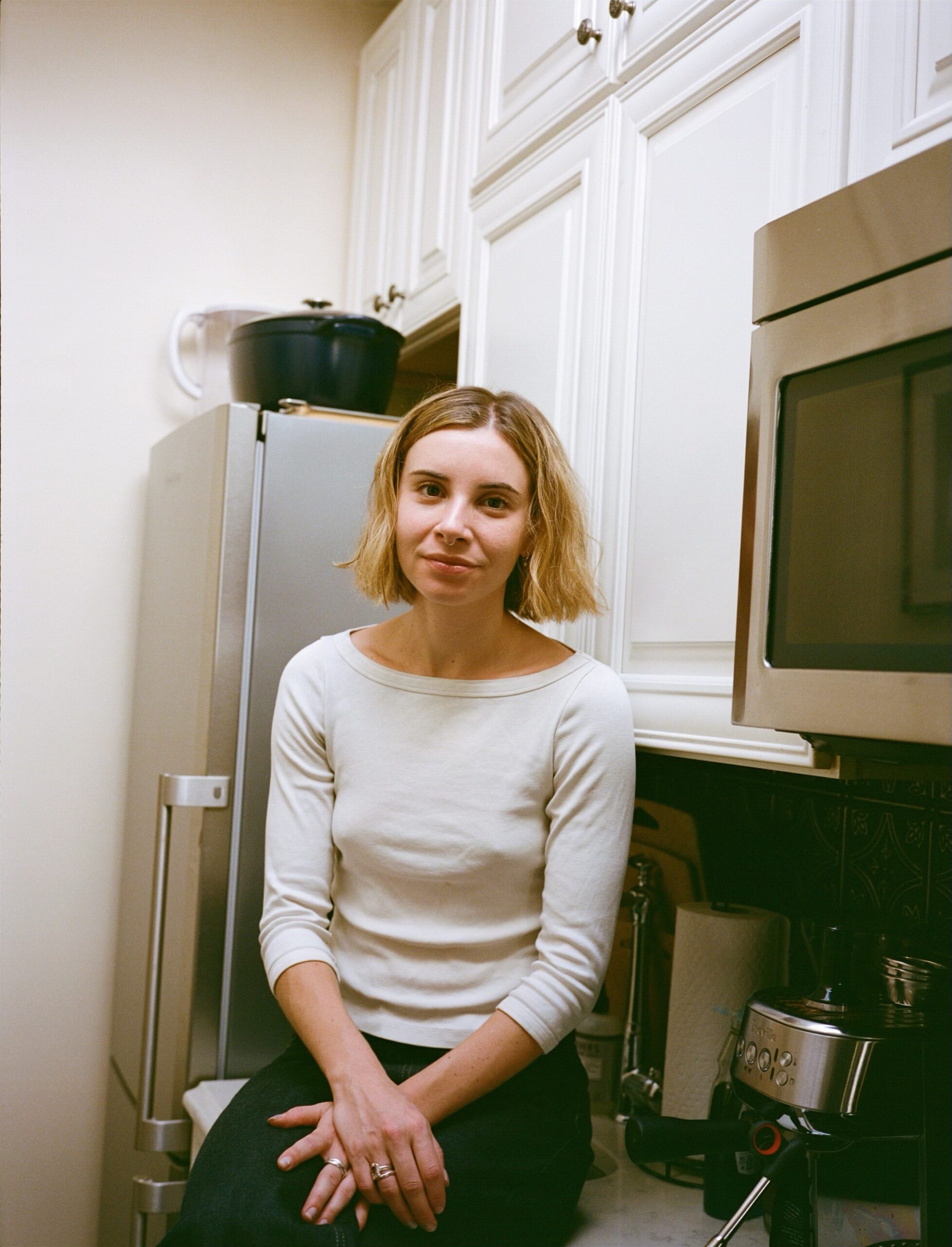
Tanya Bush of Will This Make You Happy
Cookbooks and memoirs are both familiar forms, genres you bring together in service of cracking them open—an intriguing recipe for storytelling, if you’ll pardon the pun.
A narrative cookbook is a form in which the recipes and the story meaningfully intersect. Food and storytelling go so beautifully together, but genre has bifurcated the two. When I was teaching myself how to bake at home I was encountering all of these glossy tomes that present the perfect finished product and are not rendering the world around the recipe: the failure, humiliation, and pleasure associated with learning something new. I treat food as an intellectual arena ripe for probing. Memoir often demands total disclosure of the self. I put constraints in place to retain privacy: I was only telling the story of a single year in my life.
This book is broken into seasons, with stretches of prose ahead of sets of recipes. How did you come to that structure?
I think there was a massive cultural backlash to the idea that a recipe would have a story one has to read to get to the instructions. That was optimization culture, and now as we’re all increasingly alienated, atomized and hyper-online, we are hungry for intimacy. So it makes sense for storytelling to be a robust part of the way that we share recipes. Utility and function have been the predominant mode. That is not to say there isn’t a robust history of narrative cookbooks, but the past few years has been about 50 sheet pan dinners in under 10 minutes.
There’s a sense of intimacy that builds between the reader and the narrator; her emotional vulnerability renders her a gentle teacher. How do you see the roles of educator and narrator-protagonist interacting?
I didn’t grow up reading cookbooks. I was oriented toward narrative. So to me, if you care about this narrator, that’s going to galvanize you into the kitchen. You’ve watched her humiliate herself, fail, and triumph. So you can be gentler on yourself and more excited to play with the instructional elements of the book. Still, I knew I needed a tight structure in the same way that I like having constraints in baking.
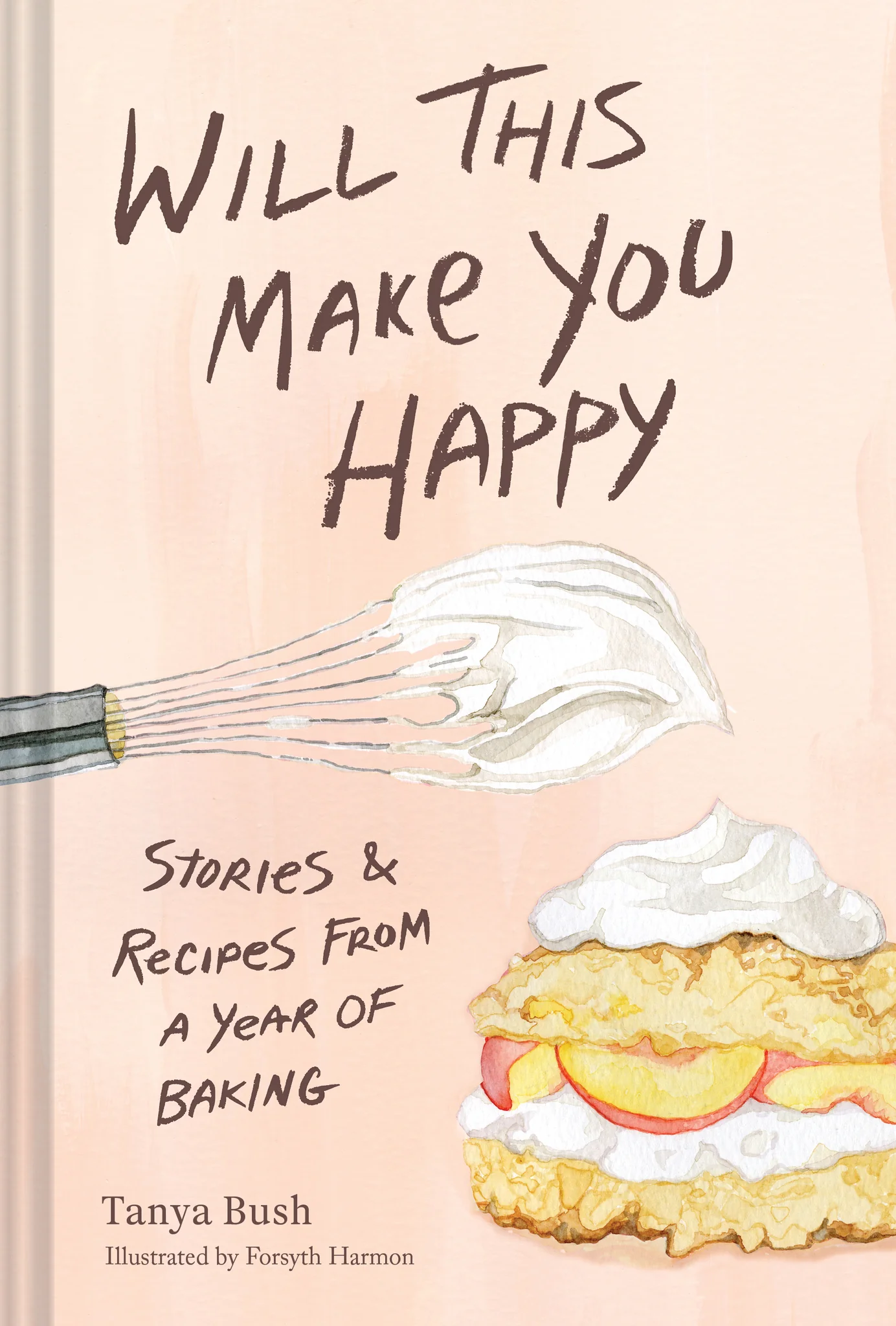
You describe an apron as “a new identity to shrug on in the kitchen.” I’m intrigued by your verb choice—there’s an inspiring insouciance to shrugging that feels in tension with the high-stakes way our culture likes us to think about choosing a career, and in turn an identity. Tell me a bit about how you see this experimental ethos informing your writing, both about an existential concept like identity and a more logistical operation like baking.
I had been inculcated with this idea that baking is chemistry, and you have to assiduously adhere to every step of the recipe or it’s going to fail spectacularly. I realized that there was actually a lot of room in the margins for play. When the narrator is in Italy ostensibly to learn traditional Italian baking techniques, she realizes that dairy can be a canvas. She can put any flavor she wants into it. It can be malt, it can be mint, it can be bay leaf! Of course, there are ratios to adhere to and techniques that are constant, but there’s so much room to be extemporaneous. There’s a lot of room in the margins to get a little funky, which parallels the way I feel about writing. Take an Eat, Pray Love narrative and make it perverted and unfortunate. [Laughs.]
There’s an arc in which the guardrails almost start to melt, and become a bit more pliable as the oven temperature rises. At first, this narrator seems driven purely by appetite, but as the year unfolds, she seems to pivot towards developing her palate, trusting not just her hunger but her taste as she matures.
At first, the narrator is in a very early-20s, frenzied mode of throwing caution to the wind, and having one North Star: living the goddamn most pleasurable life available. Millennials were indoctrinated into a YOLO and FOMO mentality. You can track how the narrator is doing based on her appetite. In the winter, she’s not hungry for herself—she’s desperately vying for affirmation from her boyfriend or the neighbors with her baking. In Italy, she’s experiencing the torturous feeling of being overfed, the embodied horrors of having to gorge oneself on gourmet food as one’s job. At first she thinks, I can comply. I can eat my way to your approval. But she realizes that there’s never going to be enough plates she can finish to get what she wants out of the experience, so she starts to exert her own sense of agency and stops playing the dutiful role. You also see that in the moment when she meets the crush and realizes, I want that. I haven’t really known what I’m hungry for, but I know I’m hungry for that.
You are a writer, an editor at Cake Zine, and a pastry chef. Kitchens are communal spaces, whereas writing can be quite solitary. Can you tell me a bit about the different, or perhaps parallel, forms of solidarity and collectivity you find in the writing and cooking worlds?
Cake Zine publishes interdisciplinary writing from people who have never written publicly before, alongside writing by household names. To me, the pastry world and the creative world have a very similar camaraderie, and a shared commitment to cross-pollination. There is a shared sense of the import of the work we’re all doing alongside an acknowledgment of the unpleasantness and precarity of these fields. These forms of labor still have their unique textures—I feel very embodied and exhausted after a long shift on my feet, donning an apron alongside a team of people who have gotten up in the wee hours of the morning, versus spending four hours working on a freelance piece alone in my apartment. Ideally, I try to bring the same ethos to both arenas—I’ll ask friends, “Will you taste this cookie I’m working on? Does this need more salt?” Just as I’d ask a friend to read a draft of an essay.
More of our favorite stories from CULTURED
James Cahill Saw the Best and Worst of the Art World. His Latest Novel Exposes It All.
Marc Jacobs Doc ‘Marc by Sofia’ Makes the Designer Look Cool. But Is That It?
Margaret Cho Grew Up in a Gay Bookstore. Of Course Her Reading List Is Incredible.
20 Years and $720 Million Later, Michael Govan Takes Us Inside the New LACMA Galleries
Revisit 5 of the Late Legend Calvin Tomkins’s Most Essential Art-World Profiles
Sign up for our newsletter here to get these stories direct to your inbox.


 in your life?