
Theater seasons can tell us something about our collective unconscious. While the biggest Broadway plays might have multi-year long development cycles like film or TV, theater has a quicker turnaround time. Drama is always about, at its very basic level, the community. Theater is always on some level ancient Athens, reflecting back, through myth, the deepest traumas and preoccupations of the relative present. A theater season in a major city like New York or London gives us a picture of what the last year (or maybe two years) have felt like.
In this light, this year’s New York theater season reveals a return to the existential rather than the political, or the existential level of the political: the very deep fear of collapse, of being struck down by the gods, of civilization teetering and cracking open, among other things. As I argued in a recent issue of CULTURED, dramatic writing and performance is well positioned to flourish in the age of A.I.; but this year’s slate of major plays is also clearly responding to the unsettling presence of artificial general intelligence, as well as to the general tenor of the 2020s, which began with Covid and has only gotten weirder (most recently with the release of the Epstein files, the war in Iran, and even the rumored disclosure of alien life). The trend within the trend shows small groups—families, friends, cohorts, coworkers—trying to maintain or find solidarity despite encroaching instability on the outside. And that feels about right. That’s what I’m doing. That’s what you’re doing. That’s what we’re all doing: maintaining 2016-era lives in an era that no longer seems suitable for it, or compatible with it. So there’s reason to think that these plays have something to say, and something to show.
Finally, the ancient themes present in Antigone—we might say the antagonisms of Antigone—run through almost all of the plays below (including an adaptation of Sophocles’s classic): the conflict between moral or inward law and the laws of the land, between private duty and public duty. Great plays, and arguably Antigone as the greatest of all plays, are never didactic (even when we sense the playwright has an answer to the questions they pose). The plays that, this spring, are striving to be great, are striving along those lines: to animate the knotty and impossible questions that torment, lend beauty, and hint at transcendence in equal measure.
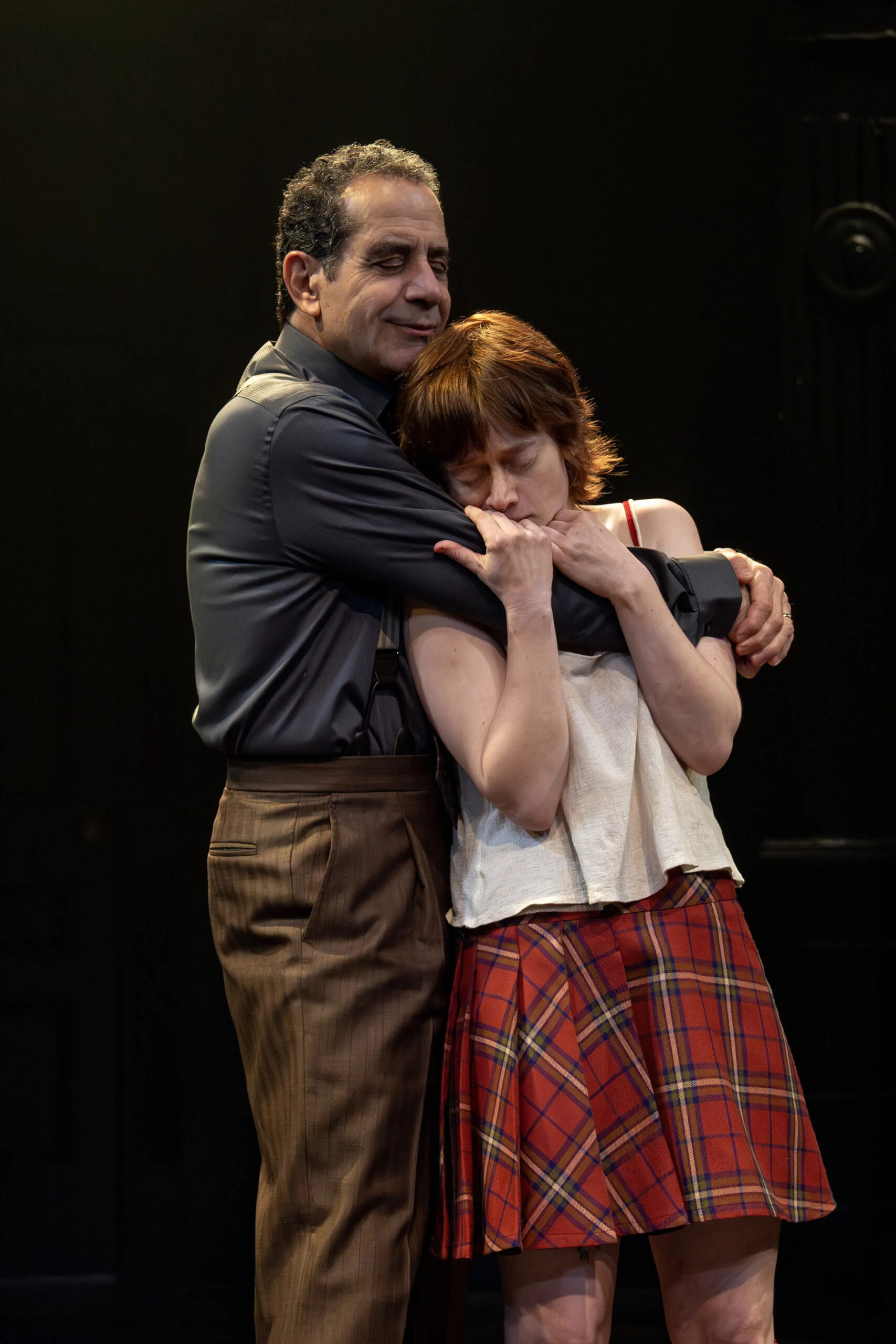
Antigone (This Play I Read in High School)
Where: The Public Theater (Barbaralee Theater)
When: Through April 12
What It Is: Anna Ziegler’s adaptation of Antigone, directed by Tyne Rafaeli, starring Tony Shalhoub, Susannah Perkins, and Celia Keenan-Bolger.
Why It’s Worth a Look: Ziegler’s adaptation collapses and conflates the ancient and the ultra-contemporary, bringing Thebes together with modern America. Antigone (This Play I Read in High School) proves again the late literary critic George Steiner’s adage that Antigone is always Antigone’s plural: Antigone stories are very fundamental to Western civilization; the conflict between individual duty and the law is painfully universal (appearing in every civilization and empire, like natural disasters).
You Got Older
Where: Cherry Lane Theatre
When: Through April 12 (extended)
What It Is: Clare Barron‘s 2014 lyrical dramedy, directed by Anne Kauffman, starring Alia Shawkat and Peter Friedman.
Why It’s Worth a Look: The Cherry Lane revival, starring Shawkat in her theatrical debut, is made up of fundamental stuff: eroticism and death (the mortality of not only one’s parents but ultimately oneself—even more disquietingly, an underlying awareness that all of us are always decaying a little bit every day).
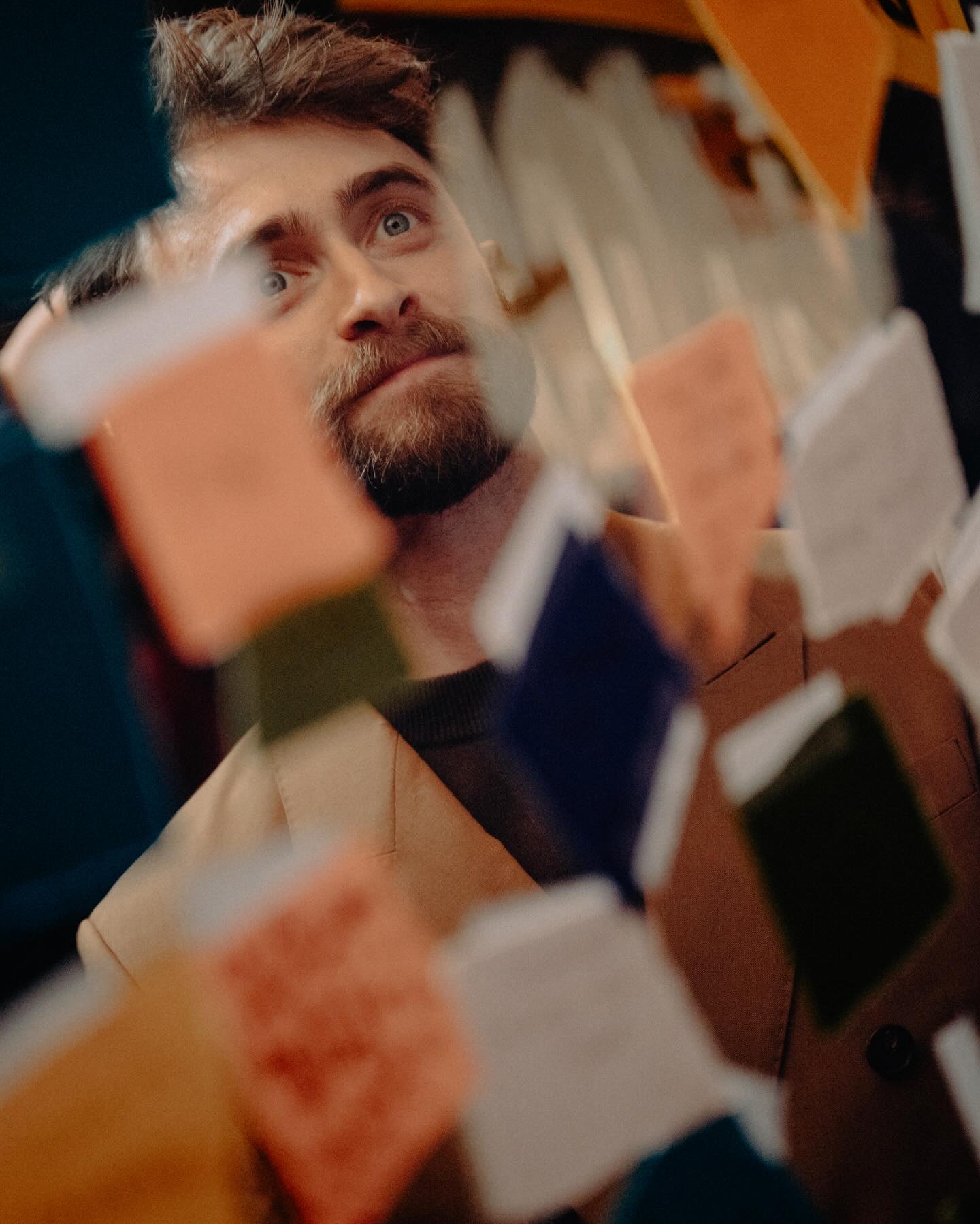
Every Brilliant Thing
Where: Hudson Theatre (Broadway)
When: Through May 24
What It Is: Duncan Macmillan and Jonny Donahoe’s one-man show, directed by Jeremy Herrin and Macmillan, starring Daniel Radcliffe.
Why It’s Worth a Look: Radcliffe returns to Broadway in a show which draws on audience responses to develop a collective response to the fundamental question: Is life worth living? And the related question: Is it better to die than to be alive? The incredible worldwide popularity of this play makes the inarguable case that audiences want more than broad entertainment, and, instead, want the fundamentally uncomfortable or terrifying to be made entertaining.
Cold War Choir Practice
Where: MCC Theater (Newman Mills Theater)
When: Through April 5
What It Is: Ro Reddick’s quasi-musical, featuring 13 original songs, winner of the 2026 Blackburn Prize, directed by Knud Adams. Set in 1987 in Syracuse, New York.
Why It’s Worth a Look: In equal measure, it draws on the apocalyptic mood of the very late Cold War era (still beset by fears of nuclear war), as well as the absurd Americana of the ’80s. (It is not hard to feel that the weird mixture of cultural bravado and nihilism that marked the late ’80s also marks our own American moment.)
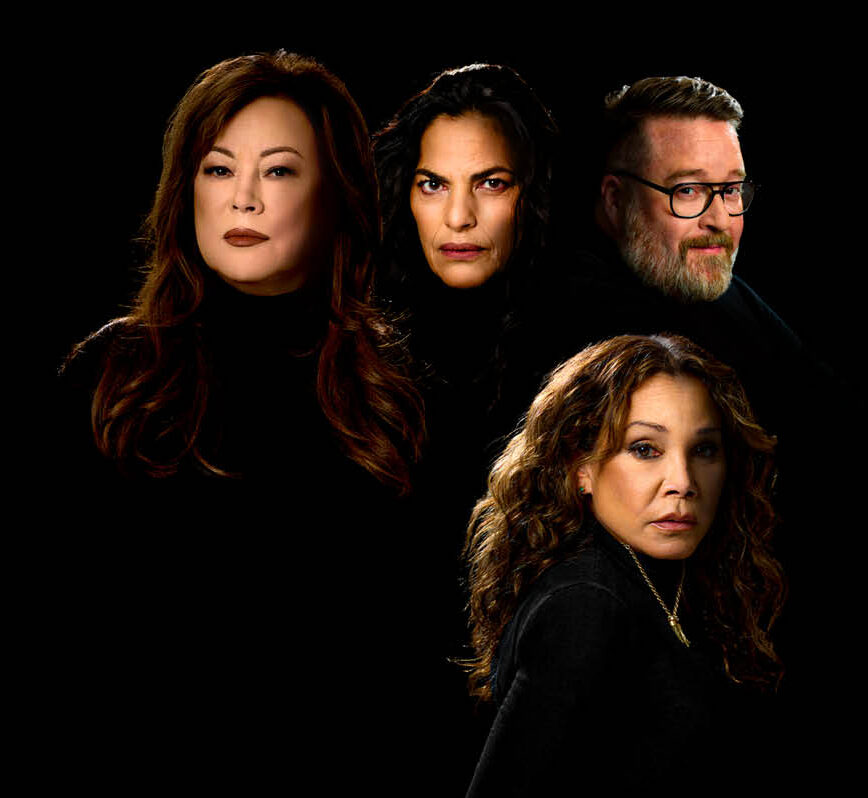
The Adding Machine
Where: The Theater at St. Clement’s (The New Group)
When: Previews begin March 24; opens April 14
What It Is: Elmer Rice’s 1923 play as revised by Thomas Bradshaw, directed by Scott Elliott, starring Sarita Choudhury, Michael Cyril Creighton, Daphne Rubin-Vega, and Jennifer Tilly.
Why It’s Worth a Look: The Adding Machine reimagines Rice’s play, in which an employee directs a berserk anger at the machine that threatens to replace him (the contemporary resonance of which almost does not need to be named).
The Receptionist
Where: Irene Diamond Stage at The Pershing Square Signature Center (Second Stage’s Off-Broadway venue)
When: Previews begin April 15; opens May 7
What It Is: Adam Bock’s corporate satire, directed by Sarah Benson, starring Katie Finneran, Mallori Johnson, Will Pullen, and Nael Nacer.
Why It’s Worth a Look: The Receptionist frames and makes legible questions about how much moral responsibility cogs in larger machines—human cogs, I should say—bear on the consequences of those machines. Does the receptionist bear some responsibility for the evil of the corporation? Yes and no…
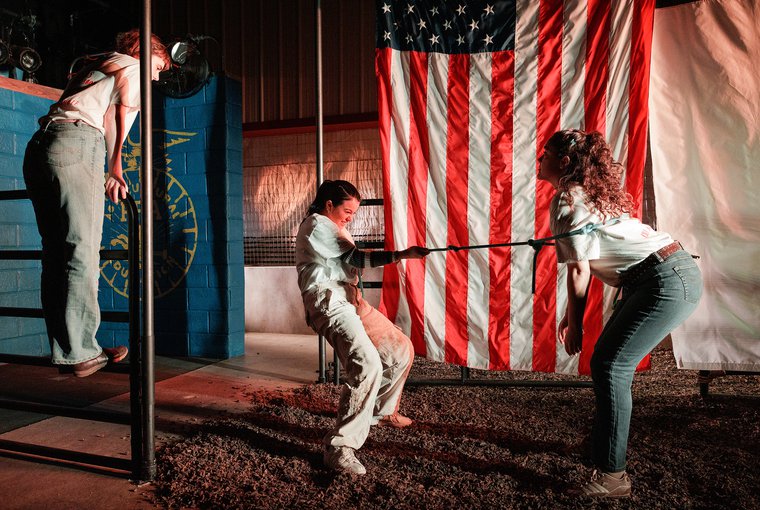
Calf Scramble
Where: 59E59 Theaters (Off-Broadway)
When: Through April 12
What It Is: Libby Carr’s world premiere, directed by Caitlin Sullivan, produced by Primary Stages. Five teenage girls try to raise prize-winning calves in Huntsville, Texas.
Why It’s Worth a Look: Calf Scramble suggests that taking responsibility for any life form, including a calf, is an occasion to rethink one’s own relationship to oneself, to family, to community, and in the case of this play, to God.
The Last Days of Downtown
Where: 13 W 17th Street, Manhattan
When: Previews begin March 27; opens April 17
What It Is: My own new play, the sequel to my 2022 underground satire Dimes Square. Produced by The Center for Theatre Research.
Why It’s Worth a Look: In this piece, Terry—the indie filmmaker character who first appeared in Dimes Square—is turning 40 and trying to figure out a way to leave behind the scene that he helped create (the scene which is in some ineffable way killing him off in spirit if not in body). Unlike Dimes Square, in which I was content to show the scene turning in a nihilistic, tail-eating circle, The Last Days of Downtown ends with something else: a touch of sweetness, a touch of hope, and the possibility that one might eke out some kind of meaningful moral and artistic dignity from decadence and bohemia.
What We Did Before Our Moth Days
Where: Greenwich House Theater (Off-Broadway)
When: Through May 24 (extended)
What It Is: Wallace Shawn’s new play, directed by André Gregory, starring Hope Davis, Maria Dizzia, John Early, and Josh Hamilton.
Why It’s Worth a Look: Shawn’s play, in collaboration with his creative partner Gregory, is astoundingly honest—almost painfully so—grappling with the difficult, maybe even embarrassing ways that we waste, or threaten to waste, gently waste, our days before death deprives us of real resolution.
More of our favorite stories from CULTURED
Our Critic’s Favorite Show This Month Is Hidden in a Subway Station
James Cahill Saw the Best and Worst of the Art World. His Latest Novel Exposes It All.
If We’re in the Golden Age of Documentaries, Why Are All These Documentarians So Worried?
Sign up for our newsletter here to get these stories direct to your inbox.







 in your life?