
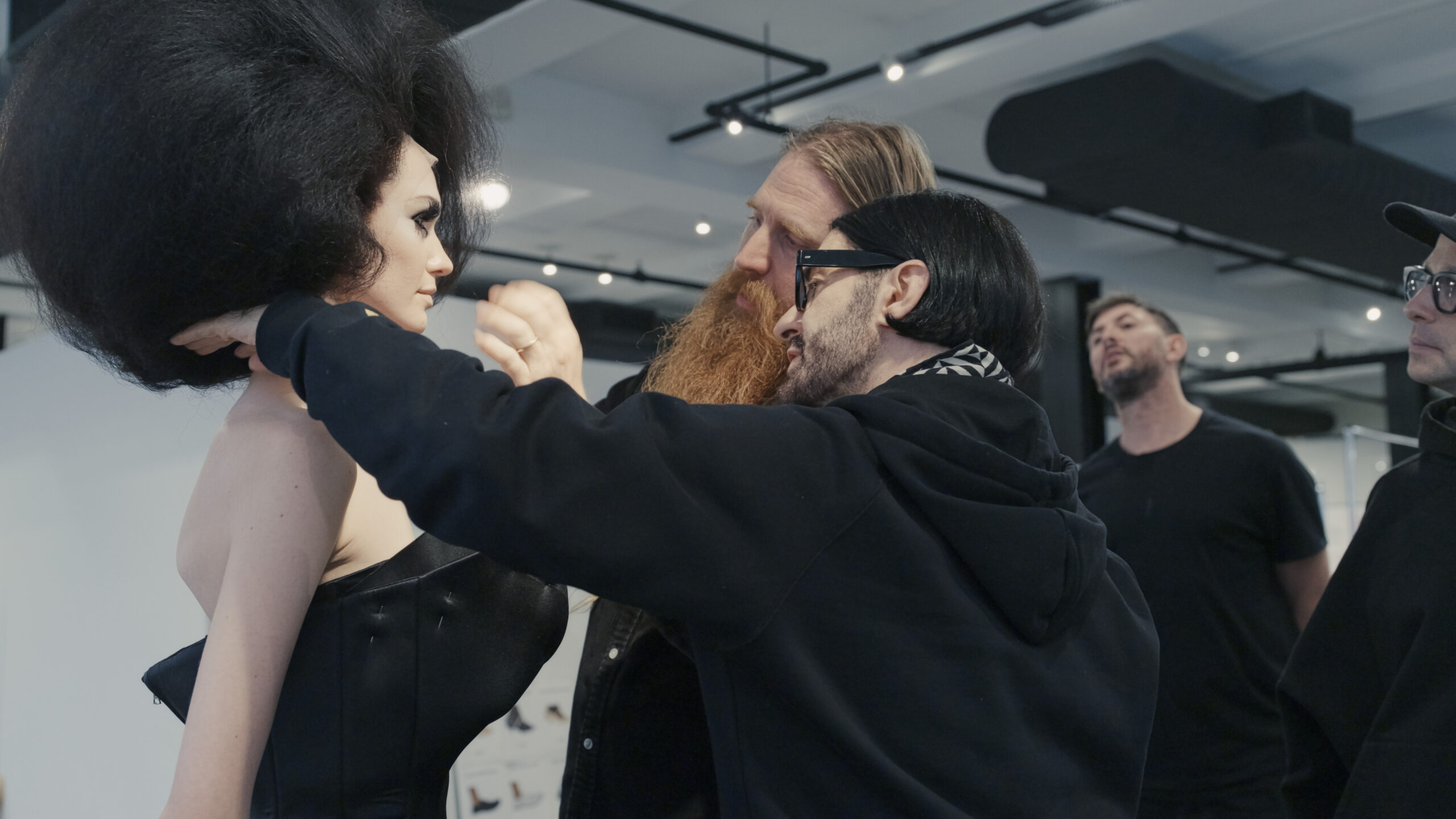
In Marc by Sofia, Marc Jacobs is preparing a runway show. By the time the film premieres in theaters across the U.S. next week, he will have presented four more. His latest, staged just last month, was pinned taut with documentary-worthy tension. It was his first outing since a billion-dollar deal meant to move the Marc Jacobs brand from the world’s largest luxury conglomerate, LVMH, to a mall-tier sportswear portfolio, Authentic Brands Group, fell through.
Jacobs is credited with making the LV of LVMH ultra-relevant when he was Louis Vuitton’s creative director from 1997 to 2013. Now that his namesake brand hangs in the balance, the question is whether LVMH is willing to keep reinvesting in him. That question, to be clear, is not answered in Marc by Sofia—Sofia Coppola’s first documentary feature.
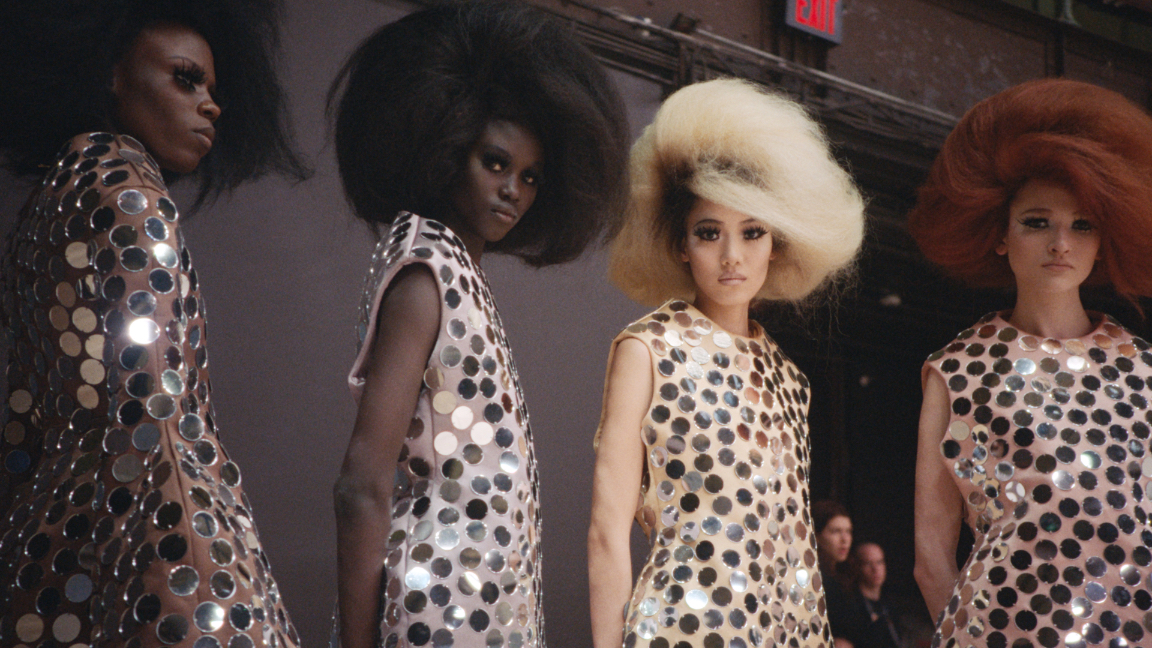
Here, Jacobs is designing his Spring/Summer 2024 collection, which would sell exclusively at Bergdorf Goodman and Isetan in Japan. A far cry from his super-wearable 1980s smiley face sweaters, the clothing is outsized and stiff, paper doll-like on models with high, Betty Boop heels and even higher bouffant hairdos. In other words, it balks at any higher-ups’ plans to return Marc Jacobs to the mass market.
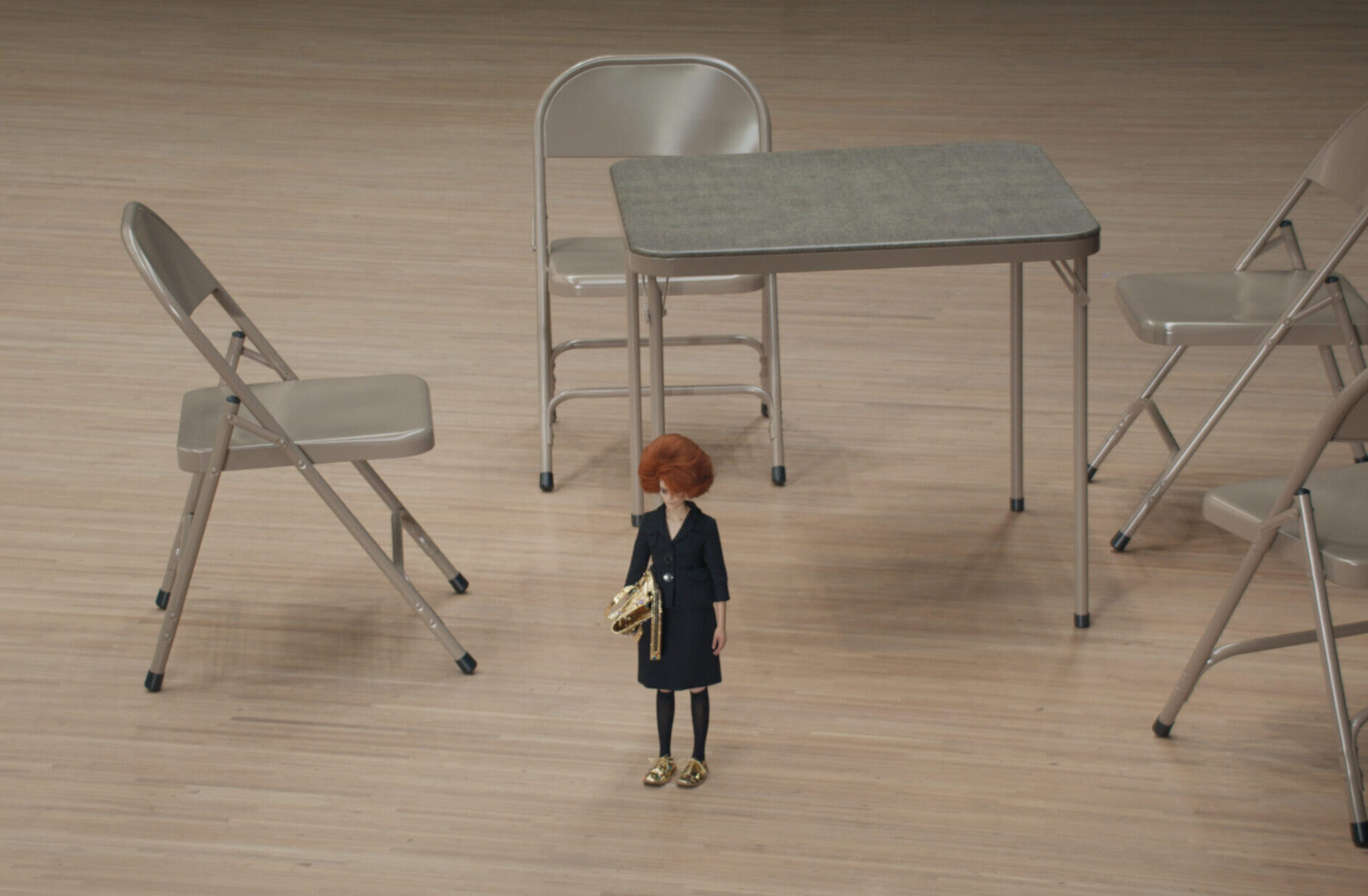
These looks, says the designer, are exaggerated nods to some of his most enduring obsessions: the paillette-spangled Supremes performing “Reflections” on a variety show stage, 1967; Mrs. Robinson’s seduction scene in The Graduate, 1967; the ratty-wigged taxi dancers in Sweet Charity, 1969; Liza Minelli’s wet lashes in Cabaret, 1972; Elizabeth Taylor, “always.” The first film he remembers seeing in a theater, Jacobs says, is Hello, Dolly!, 1969.
“Why is it always Barbra Streisand?” Coppola asks her longtime friend and sometimes collaborator. The question is meant rhetorically, yet, in December of 1969, when Hello, Dolly! was screening in New York, Jacobs would have been 6. A few months later, his father, a talent agent at WMA, suddenly died. Jacobs eventually became estranged from his mother and siblings, moving in with his fashionable grandmother on the Upper West Side as a young teen. He immediately went to work at boutiques and to the High School of Art and Design, then Parsons, where he excelled. By his mid-20s, he was already creative directing the womenswear collections for Perry Ellis. He met the younger Coppola at one of those shows, they now agree.
Was the 1993 “grunge” runway show his first for the brand? she asks. “No, it was my last,” he laughs. It’s widely believed that backlash from that infamous collection got him fired. This isn’t the case, Jacobs explains, but that’s a better story than the truth, so he’ll take it.
Coppola is still stuck on the backlash. “Really?” she repeats, searching her own memory. Yes, the collection was not only panned by critics such as Cathy Horyn (“Grunge is anathema to fashion,” she wrote in The Washington Post), but it was derided by the scene it appropriated. “Courtney and Kurt,” says Jacobs, with raised eyebrows. “Ah,” says Coppola, offscreen. They move on.
In my own assessment, Jacobs, who is the same age as Hole’s Courtney Love, had, like her and like her husband, Nirvana’s Kurt Cobain, successfully escaped an unhappy childhood and found solace, then acclaim, in art. He was a genuine fan of their style, feeling his collection paid it homage. They didn’t take it that way. “Marc sent me and Kurt his Perry Ellis grunge collection,” Love recalled in a 2010 interview with WWD. “Do you know what we did with it? We burned it.”
So, when director Nick Egan approached Jacobs about using backstage footage from the “grunge” show for a Sonic Youth music video, the designer hesitated. “I was intimidated,” he says to Coppola. “I didn’t want to be the butt of their joke.” To the contrary, the video, for “Sugar Kane,” was the start of a long, reciprocal collaboration with the band, including a live runway set, tour dressing, and campaigns. Singer Kim Gordon, a close friend of Coppola’s from that time, was the east to Love’s west in the grunge girl clique, validating Jacobs’s place in it. He’d gone from poseur to provocateur.
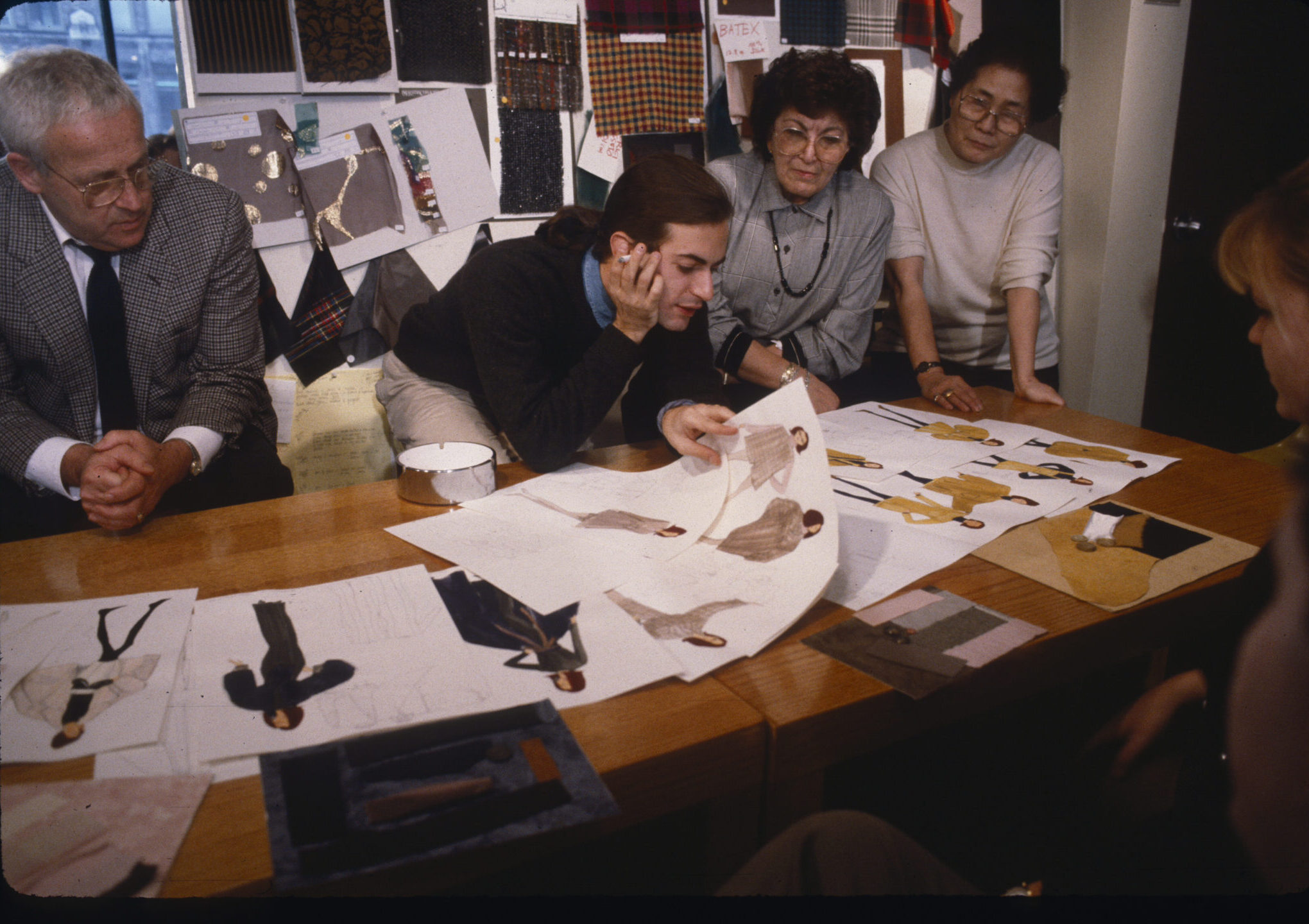
A few years later, he was hired at Louis Vuitton. In the 16 years he spent rebranding a stuffy luggage label, he grew Marc Jacobs, too, developing multiple lower-priced lines, specialty stores, and popular fragrances—delighting a younger clientele with an attainable entry point. He created sub-brands upon sub-brands, poking fun at the sub-brand format, which culminated in the now-meme-ified “Jacobs by Marc Jacobs for Marc by Marc Jacobs in collaboration with Marc Jacobs for Marc by Marc Jacobs” tag. I mention this because it isn’t mentioned in the movie outside of a cheeky title. One thing about Sofia Coppola films is that they are cool; meaning, they are above explaining things. This may not lend well to the typified fashion documentary format.
Marc by Sofia does follow the now well-trodden framing of draping all its action over the suspense of a collection coming together, from fabric swatch selection to backstage safety pinning. Something feels missing, though. In Unzipped, 1995, a young Isaac Mizrahi is marking his industry territory, allowing his work to erode relationships. Dior and I, 2014, rides on the high stakes of Raf Simons’s Haute Couture debut. Martin Margiela: In His Own Words, 2019, is breaking a career-long silence, after retirement. Jacobs, on the other hand, is not trying to prove he can level up, nor is he giving in. Neither is he starting over, fresh out of rehab, like John Galliano was in High & Low, 2023. He is, in a sense, going big, if only literally: making blown-up versions of what first got him interested in fashion. It’s a tricky choice, to make unwearable things, knowing LVMH is closely watching the company for its viability. Coppola either hasn’t noticed this paradox or would rather not point it out.
What else is not discussed: Jacobs’s husband of six plus years, Charly Defrancesco; his business partner of over 40, the co-founder of the Marc Jacobs brand, Robert Duffy; the absence of his immediate family; most of the celebrities who were at his wedding. In a montage of runway bows, we’re confronted with the morphing image of Jacobs himself, from slight hipster to tatted gym rat to gel-manicured luxury shopper. Whatever prompted the bodily transformations and lifestyle changes, such as leaving the European heritage house merry-go-round, is not broached here, either.
Marc by Sofia is less an interview than it is a conversation between friends—which is, yes, entertaining. One senses that Coppola doesn’t want to offend Jacobs by bringing up anything too sensitive, like the business, while Jacobs, a showman, offers up ideas of friction, if not friction itself. While we’re immersed in Coppola’s signature atmosphere, like a dress-up scene from Marie Antoinette, 2006, or Priscilla, 2023, Jacobs lingers on the word “problematic”—as in, even parts of his favorite collections have problematic pieces.
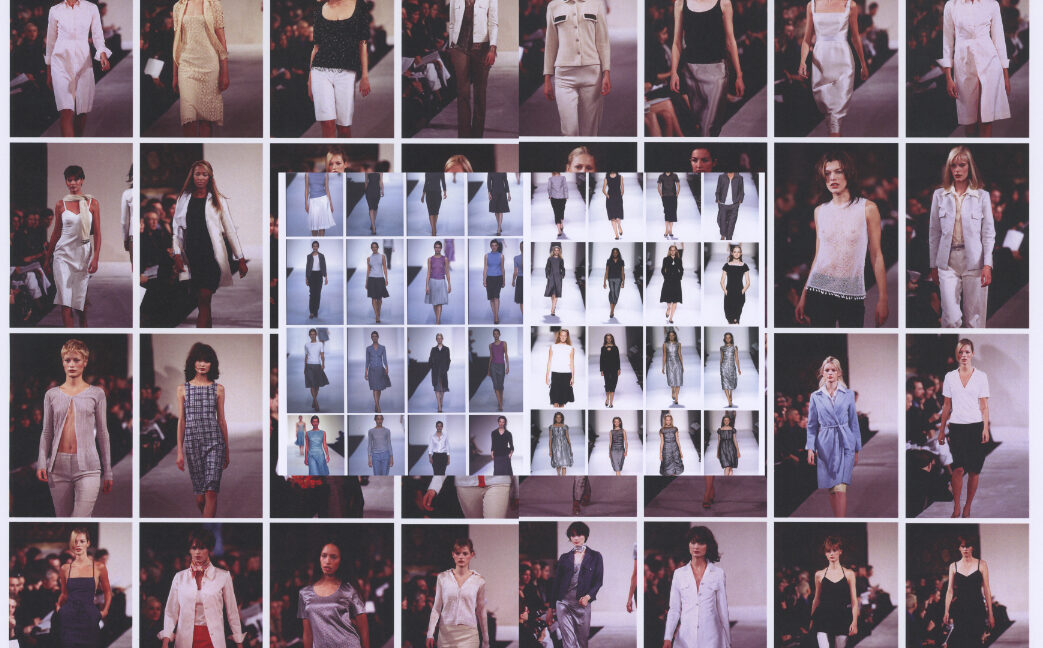
Maybe he’s daring her to bring up a more scandalous subject, like when the Spring/Summer 2017 show was called “problematic” because of dreadlock-like wool hairpieces on models of multiple races. Coppola was there, sitting front row. That collection isn’t represented in Marc by Sofia, though, other than with a photo montage of its iconic shoes.
Or perhaps Jacobs wants to keep discussing his last Perry Ellis collection, which he partially reissued for a capsule called Marc Jacobs Redux Grunge 1993/2018. Before that, Love dug her heels in, telling the Fashion Law that Hedi Slimane’s decidedly grunge-inspired Fall/Winter 2013 collection for Saint Laurent was “genius,” adding, “No offense to MJ but he never got it right. This is what it really was. Hedi knows his shit. He got it accurate, and MJ… did not.” By the Fall/Winter 2016 season, though, Love featured in a Marc Jacobs campaign—a full-circle moment that, in the film, didn’t quite close.
Instead, we see Love wearing Marc Jacobs to a 2003 hearing for drug possession charges. Over footage of that and of Winona Ryder’s and Lil’ Kim’s respective 2001 and 2005 courtroom looks—provided by Jacobs himself—he says, “I think I’m gonna always look at it as a costume,” before joking, “Go to Marc, he’ll dress you for your trial.”
This is the punchline in the trailer and the clip shown on the talk shows Jacobs and Coppola are currently circuiting. It lands, but the part about costuming feels more poignant. Jacobs sees fashion as melodrama: larger than life, like the talents his father represented, like the tragicomic movies from the time just preceding his father’s death. When Jacobs was a kid, his Bergdorf Goodman-shopping grandmother distracted him from an unstable, widowed mother. A widowed Love, facing drug charges in one of his ladylike pink tweed jackets, might be the perfect visual metaphor for a kind of Freudian determination.
For Jacobs, fashion was an escape from the difficulty of life, well before it made him rich. His business, now, is facing difficulties, and he’s creating costumes, with deliberate over-emphasis on put-togetherness. He’s also rediscovering “that moment when the ’70s embraced the ’40s,” or, generally, period pieces: Hello Dolly!’s 1890s, Cabaret’s 1930s—eras within eras, the protective quality of a tightly coiled timeline.
The Marc Jacobs brand’s future is undetermined, but it’s clear that its face and creative director isn’t interested in being offloaded back onto the mid-level. In another full-circle moment, Horyn has come around to Jacobs, several times over. “In contrast to his last four or five collections,” she wrote for The Cut last month, his latest runway show “was so sublimely concise you felt it could sit on the head of a pin.” Marc by Sofia would have done well to wait for this outing to serve as its frame.
More of our favorite stories from CULTURED
Our Critic’s Favorite Show This Month Is Hidden in a Subway Station
James Cahill Saw the Best and Worst of the Art World. His Latest Novel Exposes It All.
If We’re in the Golden Age of Documentaries, Why Are All These Documentarians So Worried?
Sign up for our newsletter here to get these stories direct to your inbox.




 in your life?