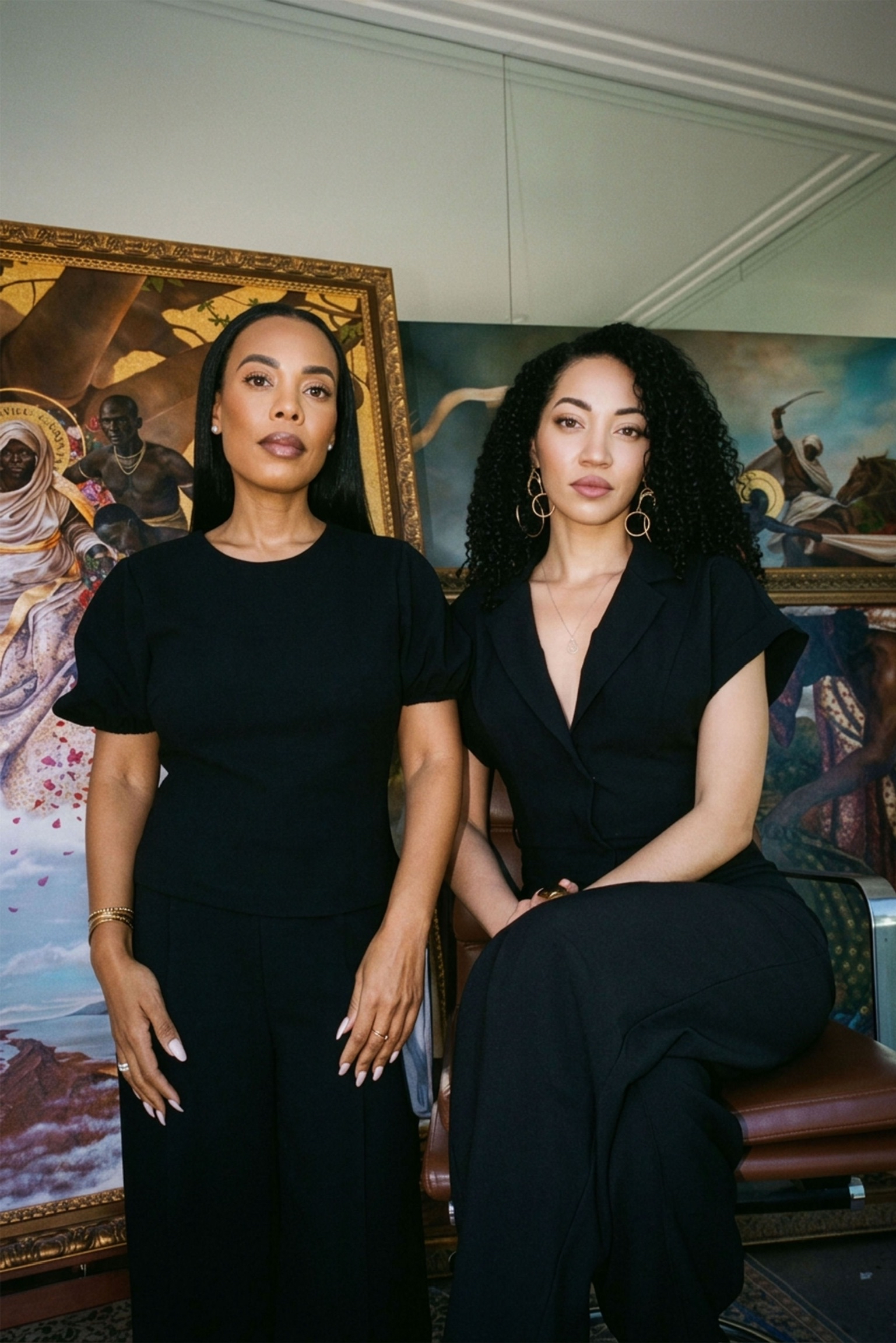
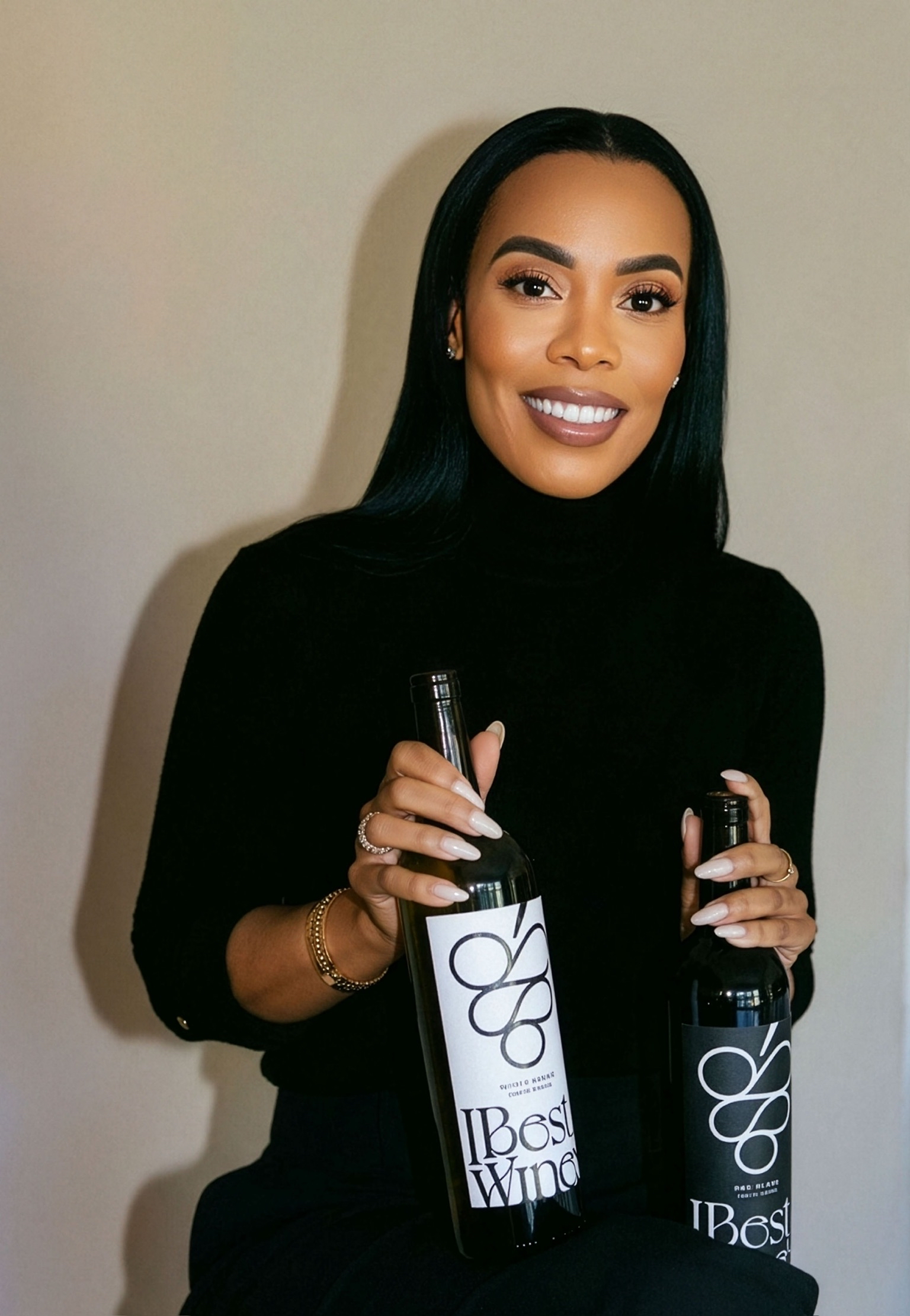
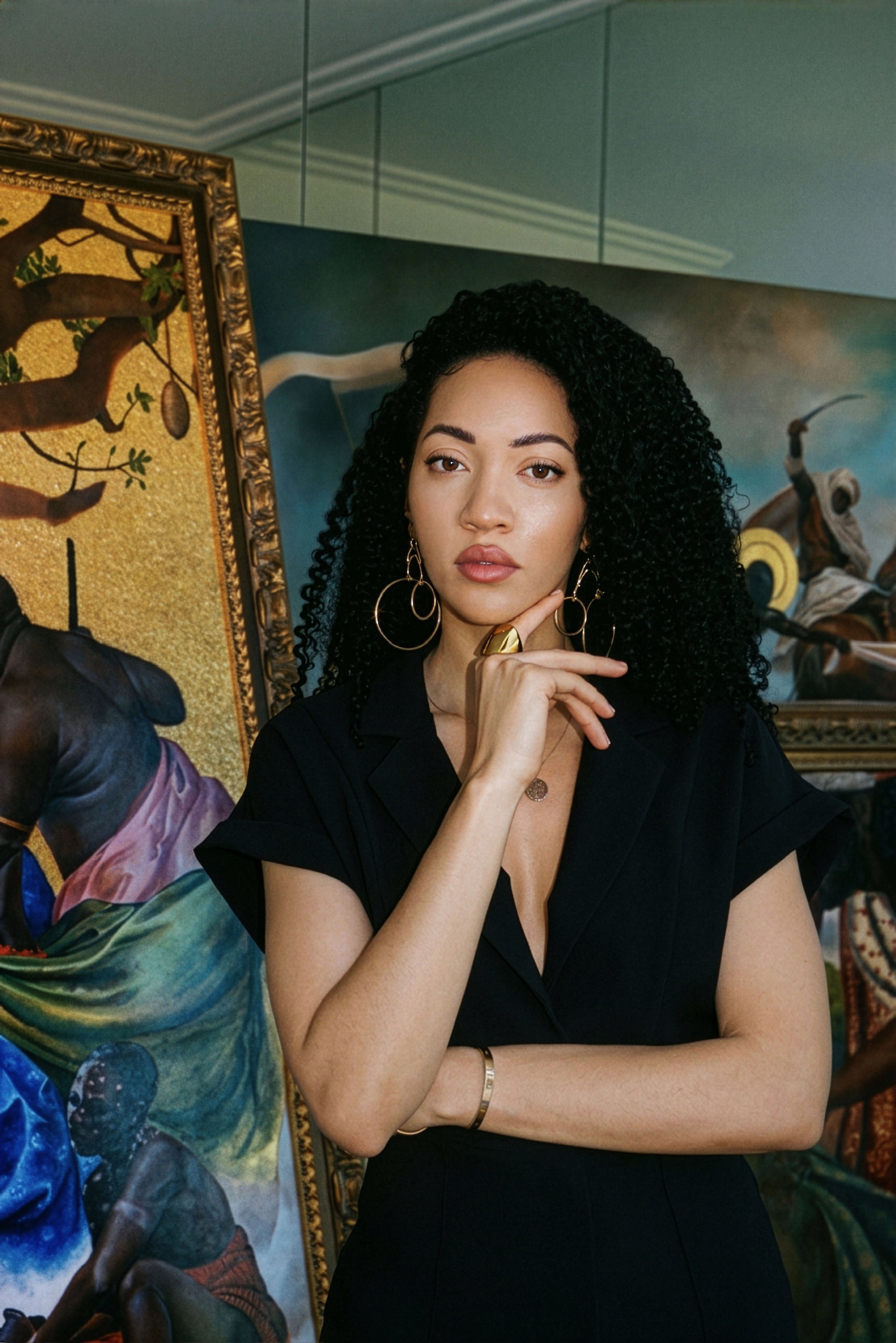
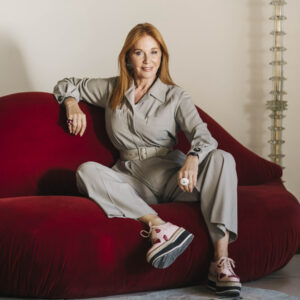
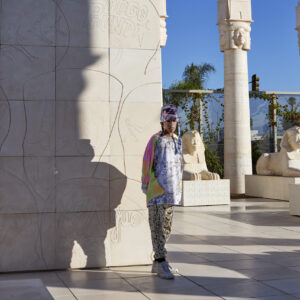
March is Women’s History Month—a time to celebrate how far we’ve come—but as Harmonia Rosales and Ingrid Best know, ensuring cultural change and opportunity for women requires more than representation and celebration. Rosales, the Chicago-born Afro-Cuban artist and NAACP-nominated author, has built a practice around restoring what history erased with her reimaginings of Renaissance and religious iconography. Best—the Afro-Latina founder of IBEST Wines, which pulls from underrepresented regions around the globe, and a prominent collector—has spent years thinking just as deeply about access, legacy, and who gets invited into our cultural spaces.
The two first met through Rosales’s buzzy 2022 show at LA’s UTA, where Best was so struck by the work that she was immediately moved to acquire a piece. Rosales returned the favor by becoming the first artist to invest in Best’s business. Here, the two discuss ownership, community, and the importance of creating structures that don’t just celebrate women, but sustain their legacy.
Ingrid Best: The first time I met Harmonia was at the UTA show in Los Angeles. The whole art community in LA and abroad was buzzing about this show. I remember walking in and being in awe of the work. Obviously everyone was swarming her at this show, but I was like, I have to meet her. Before actually getting an opportunity to meet Harmonia, a group of us came together and purchased work from that show.
When I finally got the chance to meet Harmonia, I just knew in that moment I had to stay close to this woman. There’s some people that just have that energy where you want to be their friend. I wanna know them. I want them to be in my orbit. We’ve developed such a beautiful friendship, respect, sisterhood, right? Harmonia was one of the first people to buy IBEST Wines and serve IBEST Wines in their home. I am so fortunate to, along with 10 other collectors, own Harmonia’s work, which is currently on view at the Getty in a show titled “Beginnings: The Story of Creation in the Middle Ages,” through April 19. And then you fast-forward to her decision to be the first artist to invest in IBest Wines. It’s clear that we were meant to be in one another’s lives.
Harmonia Rosales: My artistic practice is painting Black bodies back into divinity in the historical context. Everything that I do stems from that, whether it’s through sculpture, paintings, or written mythology. I remember meeting Ingrid and feeling the exact same way. I always admire businesswomen. You can have it all, the beauty and the brains behind it. You are something that’s rare. You are the architect and the engineer of your entire business.
You consistently support artists. I was really moved by the collective that purchased my work because their entire mission is to make sure the work is consistently being seen publicly, not just collected, not just into a private home. The entire mission is to keep it traveling. Whenever my work is purchased, I try to purchase another up-and-coming artist’s work in order to support my community. That was my feeling with this. I’ve learned that through you over the past couple years. It made me want to invest in something outside of just the art world.
Wine can be such a wonderful, sensual thing, but it can also feel inaccessible and Eurocentric. Can you two talk a little bit about your relationship to wine and how you got here?
Best: Wine is such a deeply sensory experience. It engages your taste, your smell, your atmosphere, your storytelling. But I think wine has often been framed through a narrow lens. For so many communities it has felt like something you were meant to admire from the outside rather than participate in.
My relationship with wine developed from two sides, with spending 20 years inside the global wine and spirits industry, working on iconic brands. But also, I come from a community where wine, food, music, storytelling, and hospitality are central to everything that we do. Now what excites me most is that I’m helping to reposition wine as an invitation rather than a gate.
Rosales: You made it less about the exclusivity. You really built that bridge for all industries and communities to really gather. You made it accessible in all ways.
You think of wine, you think of Italy. Same thing with art and the Renaissance. We put it up on a pedestal. With my art, I want to not rewrite or reimagine the artwork or the histories. I just want to include, to widen that way of thinking. Like, no, it’s not only coming from one place. This is not the only history. I’m using the tools that we as a society feel are untouchable, priceless, and the stories and images that are ingrained in us, and showing you a different narrative—one that includes my culture, my background, the Black diaspora.
Was there a moment or a person who shaped your understanding of the importance of investing culturally or pursuing ownership yourself as a woman?
Best: Being involved in the art world has had a huge impact on how I think about ownership. I’ve been in business for years: I’ve invested in real estate, and I am now investing in art. As I’ve become more of an engaged collector and patron, I’ve come to better see how artists shape culture historically, but they haven’t always captured the full value of that impact that they create.
In my industry, having that level of influence also doesn’t always necessarily equal ownership. It’s not the same thing. So when I thought about this journey with IBest Wines and my connection to the creative community, I realized that ownership really matters, not just financially, but culturally. There’s this duality there.
I want my legacy to be as someone who’s done it for herself and is also providing a level of hope and guidance for people who need to see it. Sometimes you just gotta see it to know that you can do it. I want to be bullish about giving other people the opportunity. And Harmonia, that’s why I think you being a part of this is so powerful, right? Because we’re showing people how to do it a different way.
Rosales: I really like that. When I think about ownership, I think of that saying: If you want to know the future, look to the past. If you wanna know how it ends, look to the beginning. My understanding of ownership really came from when I began to discover how this mythology that I’m trying to mainstream became silenced, how we don’t hear about it. Studying that history of erasure—of taking land, of taking ownership—I started to understand the context. It’s a cycle that’s consistent even now. It’s this feeling of the displacement structurally of our stories, beliefs, all those things.
Best: Ownership is where the narrative shifts.
Rosales: Exactly.
Best: It really determines who builds wealth and who shapes the future of an industry. The data shows that. But if we build a solid foundation and help support others, we can be the ones that are going to shape the future.
Here at the magazine, we think a lot about not just art but the entire ecosystem that sustains it. How do you think about that relationship for yourself, moving between the role of artistic producer and cultural investor?
Best: I definitely see my role being very fluid across the ecosystem. And I’m so grateful for that. From collector to patron to someone who has donated works to institutions now. I’m at art fairs and trying to be at the intersection where a new kind of cultural ecosystem is being built. And I love it here.
Collectors dinners where the wine is at the center have been so central, whether they’re here or in South Africa, or recently in Paris where Mickalene Thomas requested for the wine to be a part of her private dinner for her opening at the Grand Palais. Whether it’s museum openings in Brooklyn or Atlanta, where Swizz Beats and Alicia Keys requested our wines for their opening for their Dean Collection. Most recently, being a part of the inaugural Butter Art Fair that took place here in Inglewood. That is no small feat for a startup. A lot of it has been at the request of the artists or at the request of the galleries and the museums. I’m really proud of that, because I think we represent a brand that isn’t just trying to market to people.
Looking ahead, what do you think success really looks like for women who are building across artistic and commercial spaces in the next 10, 20 years?
Rosales: What I love about Ingrid is she’s that architect and engineer. We are often encouraged to participate culturally but not actually build and create. In 10 to 20 years, I really hope to see more of those female powerhouses having that vision, engineering it, and having that ownership of their ideas and businesses.
Best: I think you’re spot on. Part of the challenge in the gap is that the data shows that women founders and artists are not equally supported. So we’re often having to do far much more work to access the capital that we need to build companies or art practices. And so I hope that we’re just seeing more investment in women and their ideas and their leadership.
Rosales: Do you think it’s innate in us as women to feel like we need to hold onto and save money rather than take more risks? Do you think that’s the case or that’s holding us back?
Best: Oftentimes, women are left out of the deal flow and investment conversation. Oftentimes men have their groups, and they’re accessing that deal flow at the very beginning and becoming early investors. So I think some of it is having the deal flow conversations be more approachable for us. And the reality of the situation is we need to be doing more, having those early conversations, and we do have to be willing to take some risk. We are always thinking about the bigger picture, so risk can mean something different for us, right? Because at the end of the day, when ownership expands, opportunity expands.
More of our favorite stories from CULTURED
Dries Van Noten Opens Up About His Next Chapter: ‘We Didn’t Stop to Have a Quiet Life’
Psychoanalysts Jamieson Webster and Adam Phillips on How to Get the Life You Want
The Best Oscars Red Carpet Looks of All Time, According to 14 Very Opinionated People
Love Story’s Costumes Could Have Tanked the Show. Then Rudy Mance Stepped In.
Is the 82nd Whitney Biennial Weird Enough to Match Our Chaotic National Mood? John Vincler Thinks So
Sign up for our newsletter here to get these stories direct to your inbox.



 in your life?