
Architect and patron Nicole Saikalis Bay divides her time as few do: between a historic palazzo in Milan and a London home brimming with art, with pit stops in Beirut and Paris, where she grew up. What began as a private impulse to live with art has grown into something far larger: a triple-pronged artist support network that includes a foundation, an exhibition space, and an arts nonprofit. The international effort spans the cities that shaped her and champions some of today’s most compelling contemporary voices.
Through her Saikalis Bay Foundation, she operates a Milan exhibition space, Circolo, which this month presents work by 10 rising artists of Lebanese heritage at a time when the region is in desperate need of support. Saikalis Bay and her husband, Matteo Bay, also support local Milanese creatives through the nonprofit WeAre Projects. As she sees it, there are no art collections without artists, and it’s a collector’s responsibility to help build a cultural ecosystem that enables artists to do their best work.
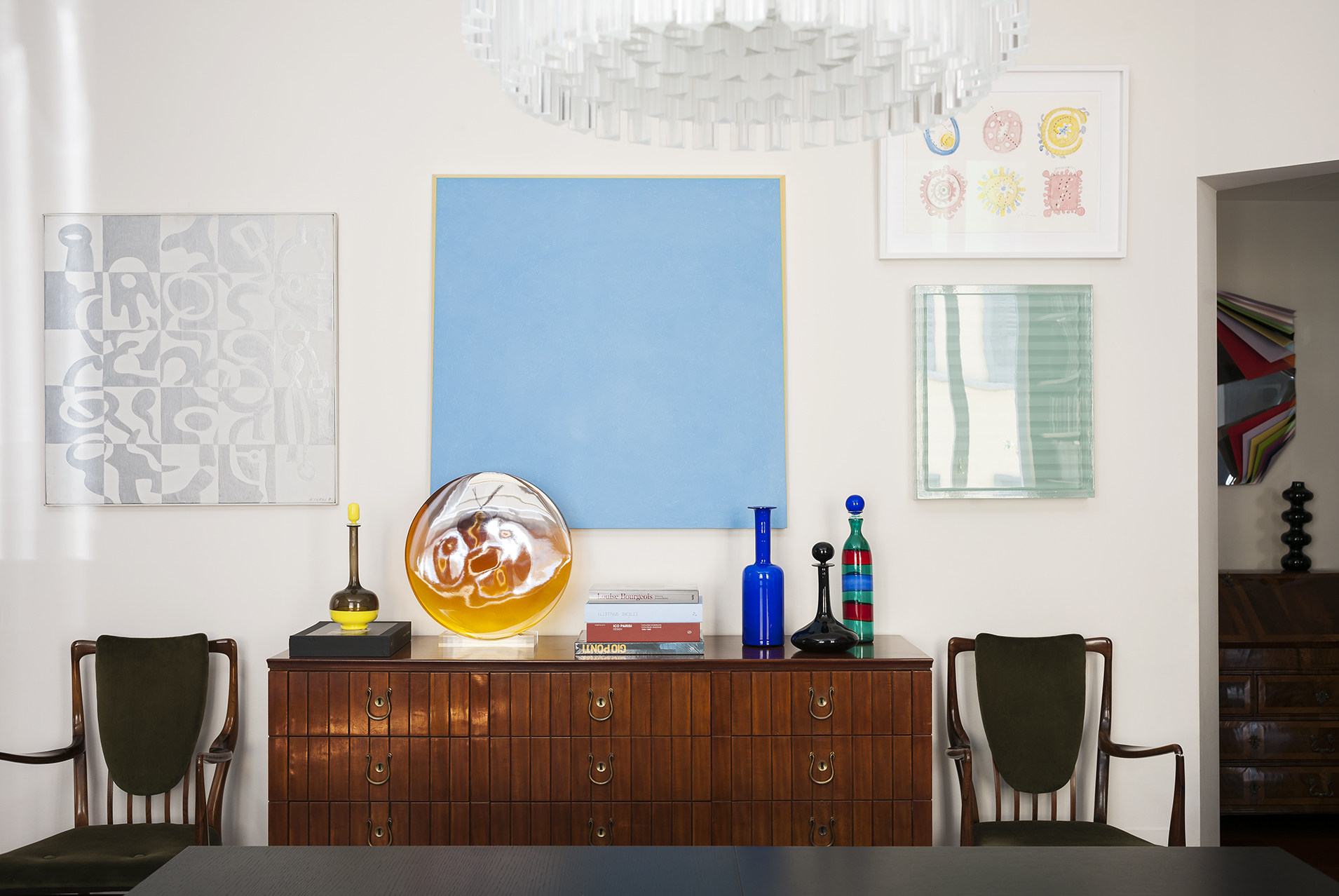
Saikalis Bay invited CULTURED inside her Milan home, which is filled with impeccable glassware and art by Italian legends and emerging names alike. Here, she reflects on her journey from collector to network-builder and how her training as an architect shapes the way she views the world.
Where does the story of your personal collection begin?
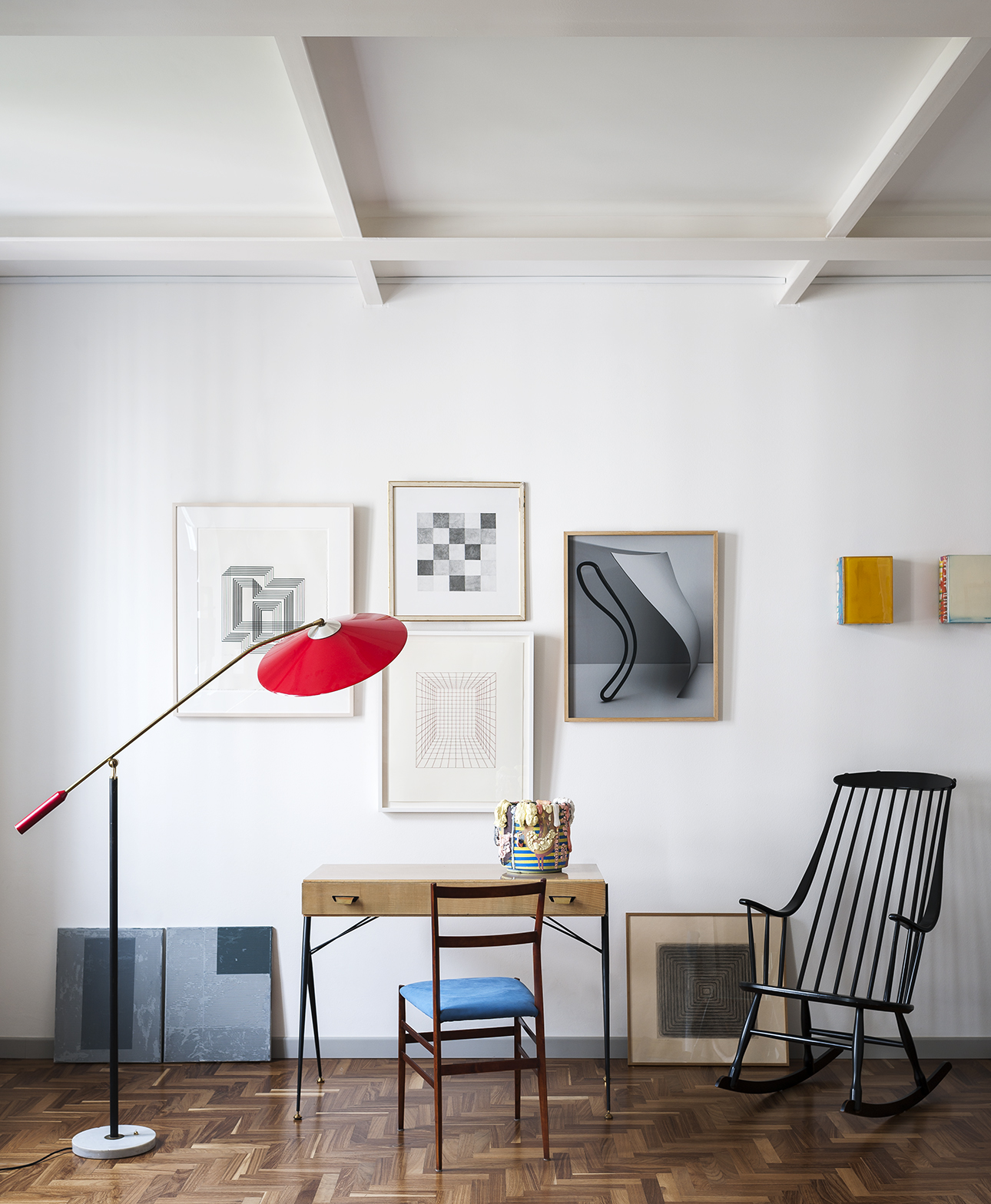
The collection began in our London home, when my husband and I started looking for works that could live with us rather than simply decorate the space. My architectural background led me instinctively toward modern Italian masters such as Enrico Castellani, Fausto Melotti, Carla Accardi, and Alighiero Boetti, whose sensitivity to material and space felt very close to my own language.
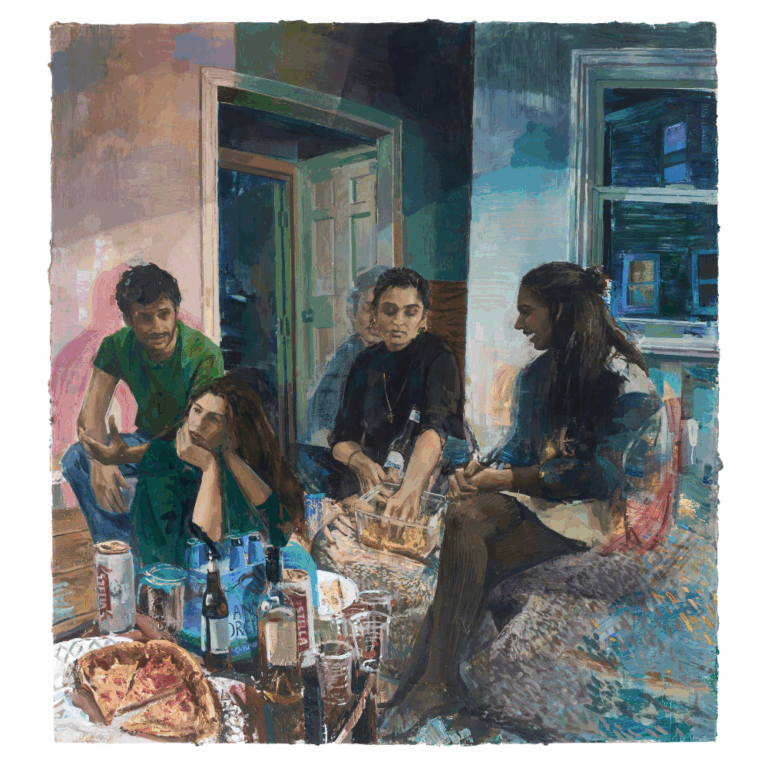
Over time, the collection expanded into contemporary practices—artists such as William Kentridge, Nari Ward, and Tacita Dean—and collecting gradually shifted from a private passion to a shared commitment. That evolution eventually led to the creation of the Saikalis Bay Foundation, where collecting became part of a broader desire to support the contemporary artists whose practices we felt deeply connected to, and had come to understand over time. Founded with my husband, the foundation was born from the belief that art is a relational space—a way of building bridges between cultures, generations, and geographies.
What factors do you consider when expanding your collection?
Emotion is always the starting point—the lingering presence that an artwork, or an artist’s practice, leaves with you. From there, we instinctively think about dialogue: how an artwork might resonate with other works already in the collection. We were initially drawn to Italian modern artists, carefully studying their historical context and formal language. Over time, our focus expanded toward contemporary artists who reflect the complexity of the present moment, like those whose work engages with social and socio-political realities while remaining materially and conceptually compelling.
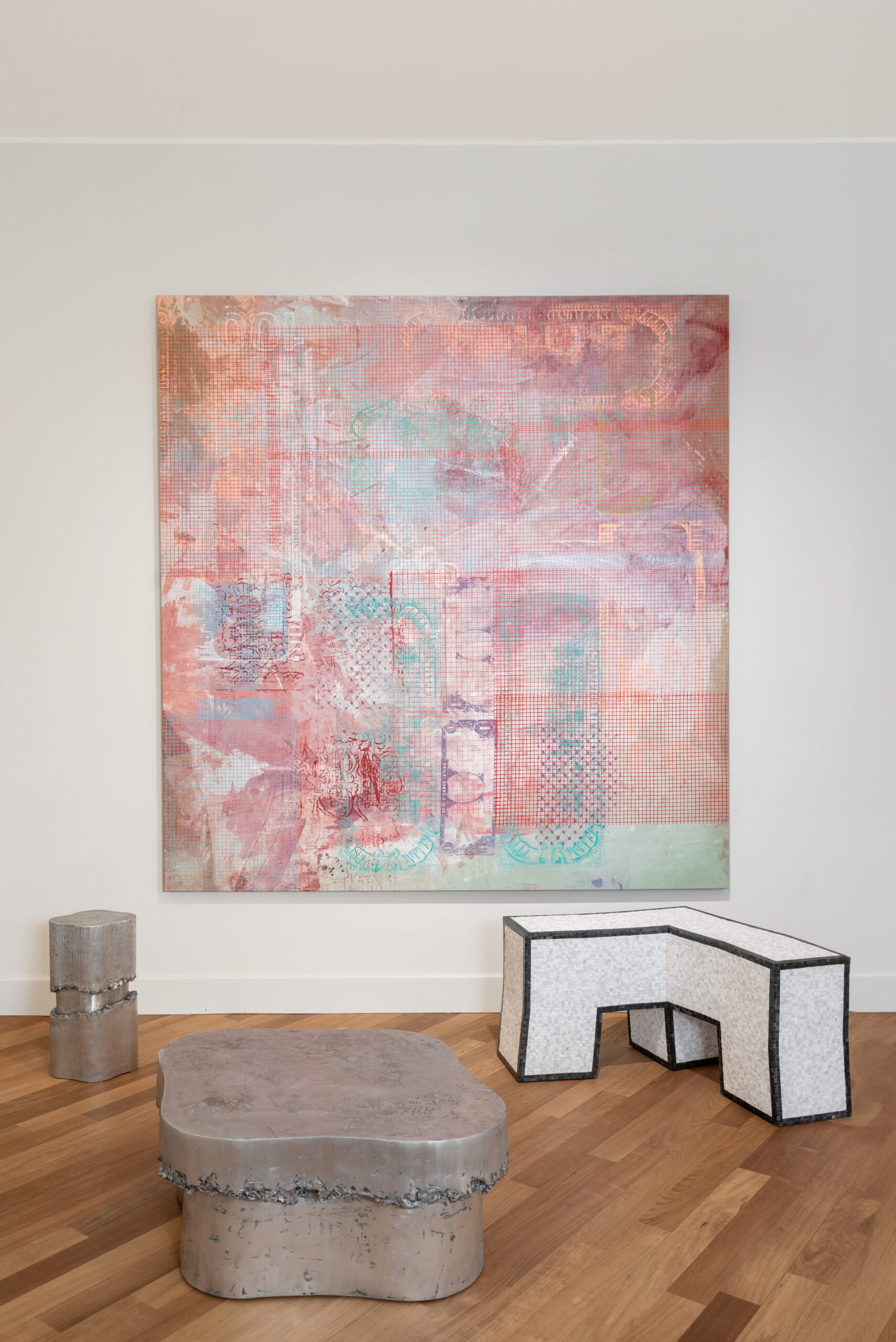
Artists such as Walter Price or Mandy El-Sayegh, for example, appealed to us for their layered narratives and material richness. I am particularly drawn to practices that unfold slowly and continue to reveal themselves over time.
What makes the Milan art and design scene distinct? How do you immerse yourself in it?
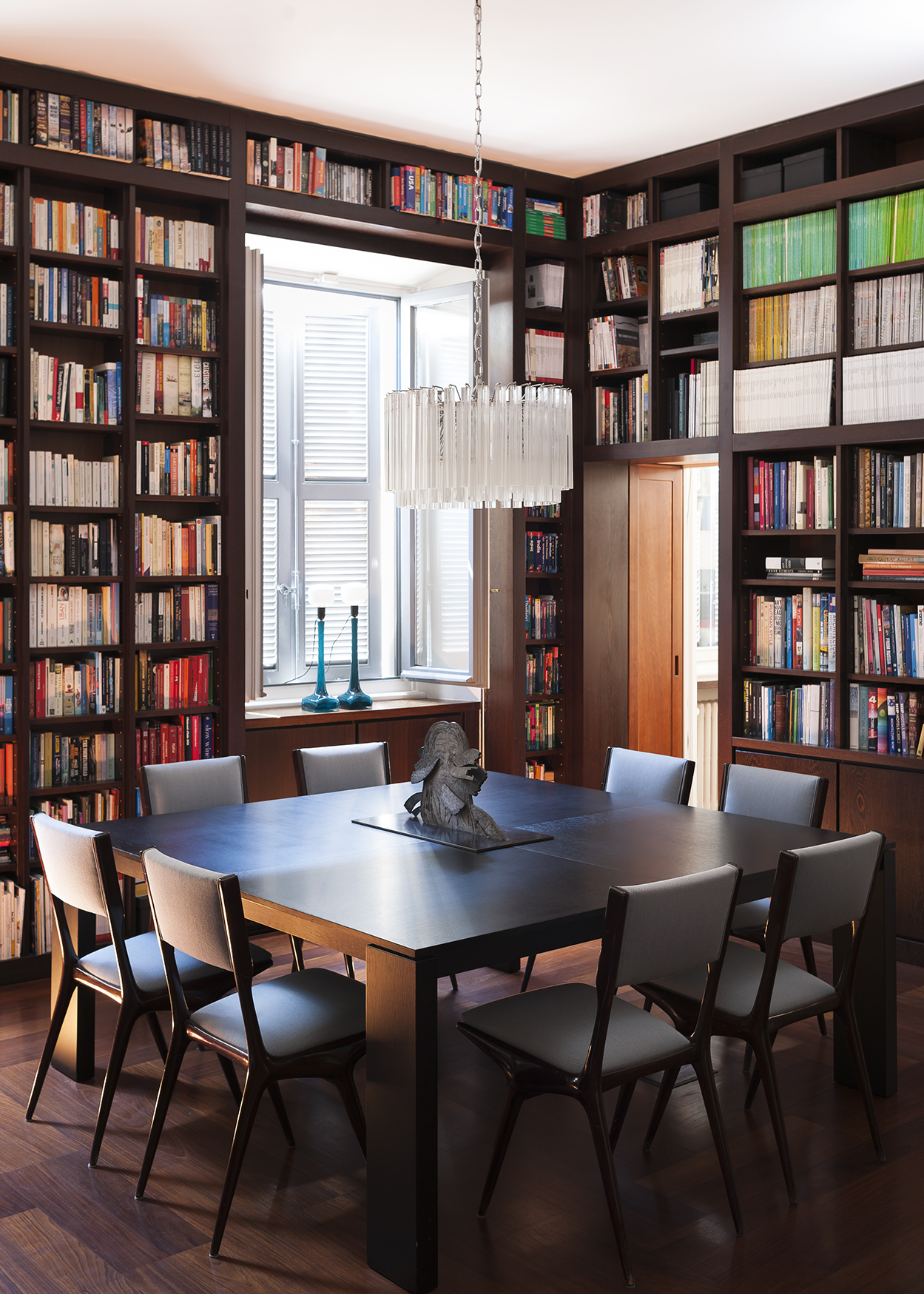
Milan has an understated intensity. It may appear discreet, but beneath the surface there is an extraordinary concentration of culture and knowledge, where design legacy and contemporary artistic research intersect naturally. Living in a historic palazzo that has been in my husband’s family for over a century carries both responsibility and pride. It deepens my relationship with the city, not as a temporary observer, but as someone connected to its architectural and cultural memory.
At the heart of any art scene are relationships. I immerse myself through studio visits, collaborations with artists and curators, conversations, and projects at the foundation’s exhibition space, Circolo. Being immersed in Milan means staying present: supporting galleries, attending openings, hosting talks and dinners, and creating spaces where artists can connect with new audiences. It is about contributing to the ecosystem, not simply observing it. I do this through the foundation and our other initiatives. For example, we recently staged the exhibition “There’s No Place Like Home,” which platformed early and mid-career Milanese artists who, despite receiving some attention in Italy, remain largely unknown to a wider international audience. I wanted to celebrate local creatives and open their practices to a broader public.
Do you see collecting as an extension of skills you’ve honed as an architect, or something entirely new?
Architecture shaped my sensitivity to space, proportion, and material presence, and that inevitably informs how I live with artworks. A work can introduce a new emotional layer—both to the person living with it and to the room it inhabits. At the same time, collecting allows for a freedom that architecture rarely offers: decisions guided by intuition, emotional response, and personal resonance rather than function or permanence.
What has living and working between Beirut, Paris, and London taught you about various art communities?
Living between these cities revealed how deeply artistic practices are intertwined with memory, history, and social context. Beirut embodies resilience and layered narratives; Paris offers intellectual continuity and a strong relationship to artistic discourse; London feels open and plural, a space where experimentation and diverse perspectives coexist.
I have become particularly fascinated and invested in Beirut’s art scene in the last year or so. I was born there, and it’s naturally a place I have a close affinity with. This has led me to work on a number of current and forthcoming initiatives to support artists coming out of Lebanon, and includes an exhibition we are opening called “Shifting Crossroads | Beirut Contemporary“ at Circolo, which will be on during Milan Art Week.
If you could snap your fingers and instantly own the art collection of anyone else, who would it be and why?
I deeply admire the Cranford Collection of Lebanese collectors Freddy and Muriel Salem—thoughtful and generous collectors who truly live with their art. Their collection reflects years of research, patience, and sustained dialogue with artists and galleries. It is the kind of depth that can only emerge over time.
What inspires me most is their commitment to artists, particularly their practice of hosting a yearly site-specific installation within a dedicated domestic space in their London home. That ongoing conversation between art, architecture, and lived experience is something I find profoundly poetic and inspiring.

Has your work on nonprofit incubator WeArt Projects introduced you to new artists? Galleries?
Yes, profoundly. WeArt Projects and the foundation have both expanded my role from collector to supporter and facilitator. Through studio visits, residencies, and collaborations, I have encountered artists and galleries beyond my initial collecting trajectory. Institutional involvement became an important part of this journey—supporting organizations such as South London Gallery, Delfina Foundation through its Director’s Circle, the Whitechapel Gallery Commissioning Council, and specific projects like the Venice Biennale pavilions.
A central part of this commitment is residency support, particularly our multi-year partnership with Gasworks in London, which provides a fully funded residency for Lebanese artists. Creating time and space for research and exchange is, for me, one of the most meaningful forms of patronage.
What book changed the way you think about art?
Italo Calvino’s Invisible Cities has accompanied me since I was a young architecture student in Paris. At that time everything felt possible—the future seemed limitless, and imagination had no boundaries. Calvino’s idea of cities as layered constructions of memory, desire, and perception continues to resonate with me. It shaped the way I think about space, narrative, and ultimately about art itself.
Do you have an art-fair or museum-going uniform?
Comfortable shoes and curiosity. Art fairs can be overwhelming, so I try to move slowly and return to artworks more than once. When traveling for art fairs, I prefer to travel light and not overthink elegance. Practicality takes over for a few days. Simple, monochrome attire works best—something effortless that allows me to focus entirely on looking, listening, and engaging.
Tell us about what’s coming up at Circolo.
As a non-profit contemporary art space and the home of the Saikalis Bay Foundation, it has hosted diverse exhibitions, artist commissions and a dynamic program of talks, performances, and more. The upcoming exhibition, “Shifting Crossroads | Beirut Contemporary,” opening on March 23 in Milan’s historic center, reflects the foundation’s commitment to dialogue, research, and long-term artistic relationships.
The exhibition has been in development for over a year. We recently travelled to Beirut for five days of studio visits and meetings with artists and curators. [The show] brings together 10 artists of Lebanese heritage living between Beirut, Paris, London, and Berlin—voices that speak of resilience, complexity, and a country that continues to look forward.
It feels like a particularly meaningful moment for this dialogue, and we are very excited to share it with a wider Italian and international public. Of course, my soul as a collector is always present. Toward the end of every exhibition, my husband inevitably asks, “So, which work are we bringing home?” And often, one piece continues the journey with us.
More of our favorite stories from CULTURED
A Movie Deal Is a Writer’s Dream—or Is It? 5 Authors Get Real About the IP Machine
Shrinking Actors Sherry Cola and Jessica Williams Talk Therapy (On Screen and Off)
The Pitt’s Shawn Hatosy Is an Emmy Winner, a TikTok Star, and a Secret Literature Nerd
Why Are Artists So Interested in Making Playgrounds?
Sign up for our newsletter here to get these stories direct to your inbox.


 in your life?