

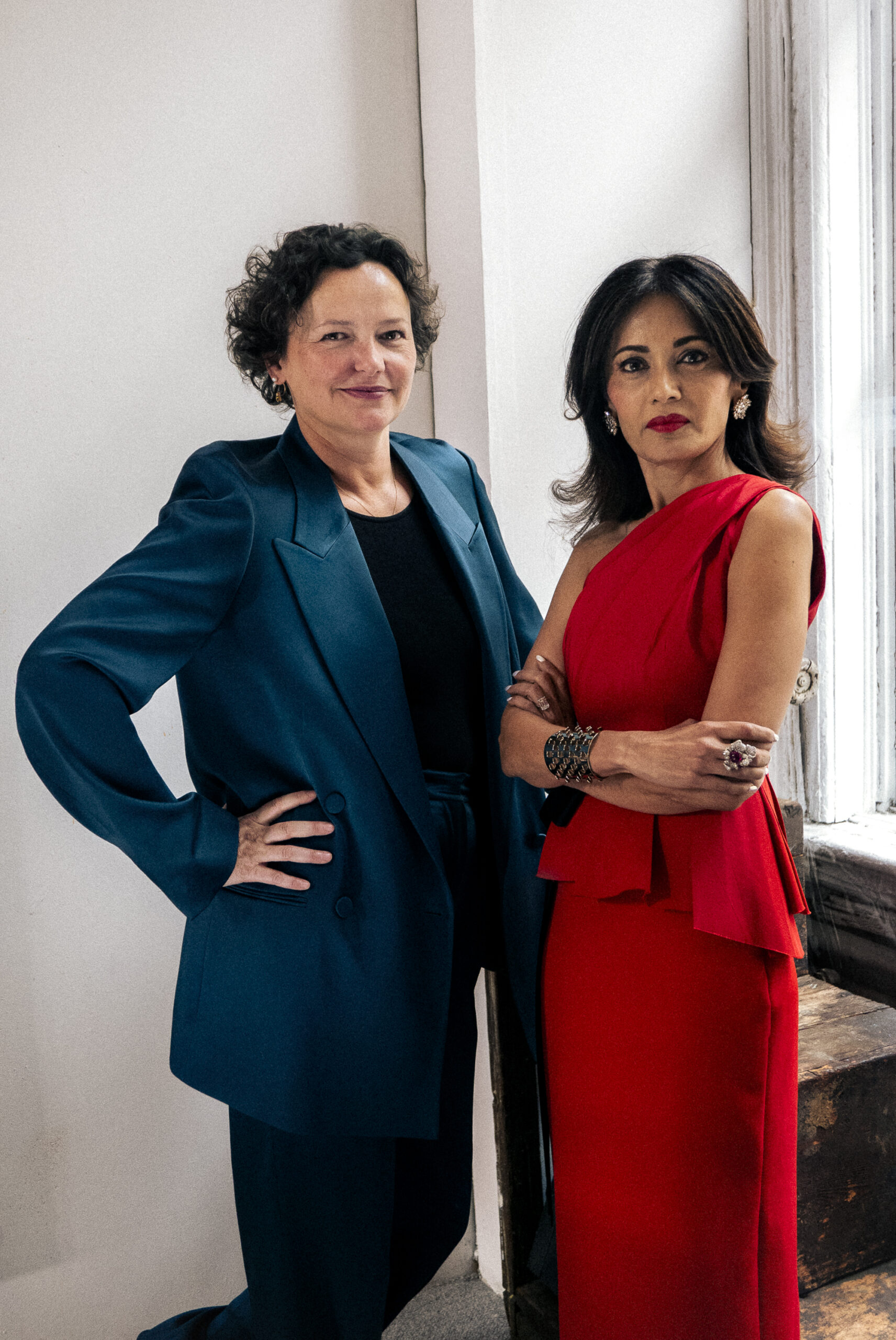
There’s a story that Komal Shah likes to tell. In 2023, the former tech executive hosted an exhibition of her art collection in New York. All 84 artists featured in the show, titled “Making Their Mark,” happened to be women. During an event for students, a young boy raised his hand.
“He said, ‘I didn’t know women artists could be this good,’” Shah recounts to me, wide-eyed, over coffee at the 1 Hotel in Miami Beach in December. “How did our education system teach this boy that the only good artists are men?”
The moment was galvanizing, even radicalizing, for the Ahmedabad, India-born, Silicon Valley-based collector. At that point, she was already a known quantity in the art world, having accrued an enviable trove of brawny, colorful, largely abstract paintings by women and artists of color in less than a decade—a remarkably short time frame to infiltrate a notoriously insular milieu.
She pulled it off with a strategy she describes as “soft seduction.” In interviews about her collection, she emphasized artistic excellence over identity politics. She organized conversations between artists and influential cultural figures at Stanford University, her alma mater. Surely, she thought, once people saw a luminous acrylic painting by Suzanne Jackson suspended in midair or heard Kara Walker speak about her confrontational, ambitious work deconstructing American history, they would recognize that women artists are as equally skilled and deserving of support as men.
But the young boy’s reaction to the show—and, later, the re-election of Donald Trump and his administration’s subsequent attack on diversity, equity, and inclusion efforts—emboldened her. The New York exhibition drew 50,000 visitors in four and a half months. But as it came to a close, she asked herself, What happens after?
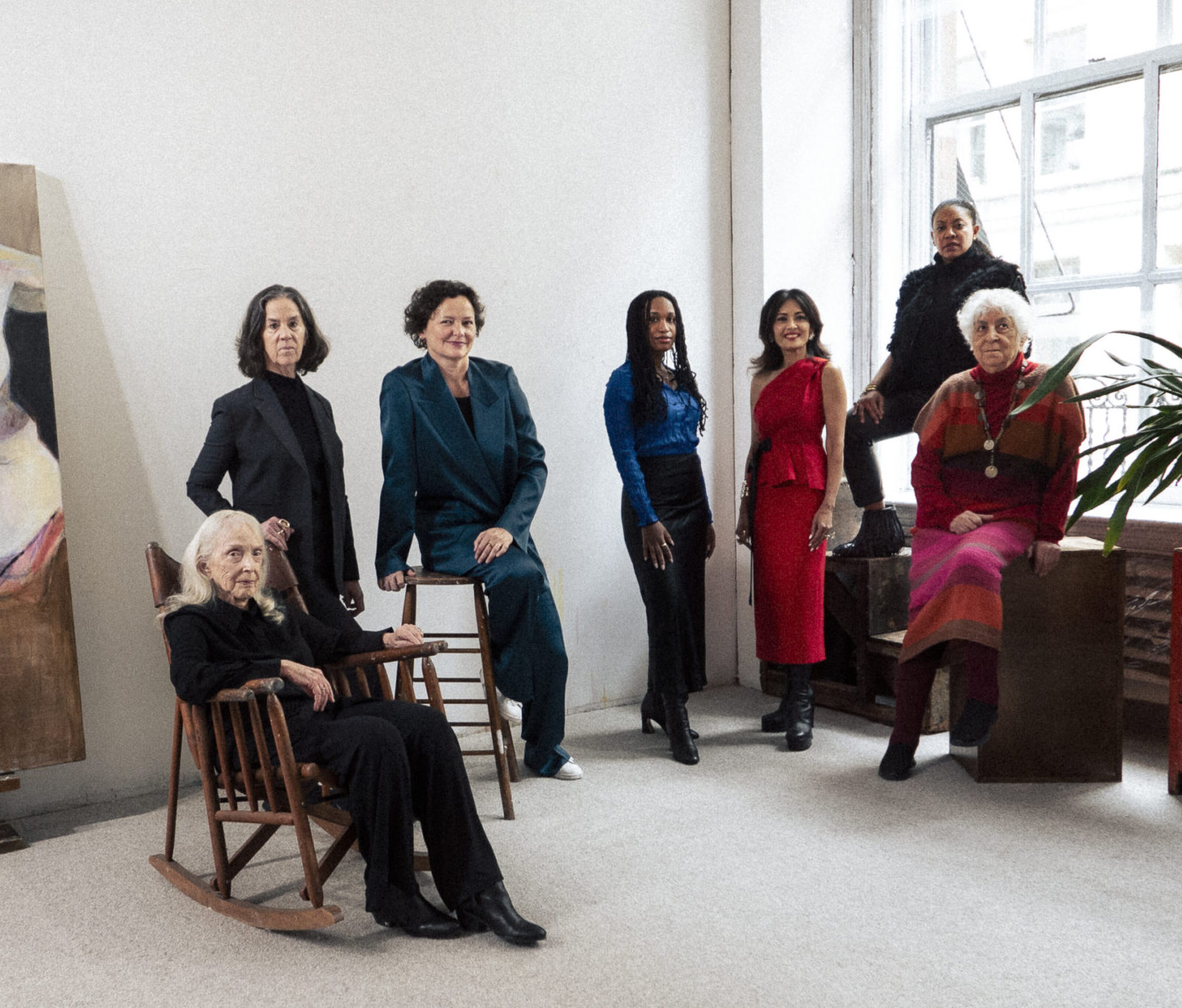
Now, she has an answer. From March 5–7, Shah’s foundation will host the Making Their Mark Forum, a gathering of museum leaders, artists, market figures, educators, and students in Washington, DC. The event coincides with the latest presentation of Shah’s collection, which has been traveling to museums around the country since its New York debut, at the National Museum of Women in the Arts (until July 26).
The forum marks a more overtly activist chapter for Shah, who seems to still be coming to terms with this new role. “When we were planning this, Kamala Harris was going to be the president, so it was like, Oh my God, this is gonna be hugely celebratory,” she says. “The circumstances changed.”
In addition to performances by and conversations with artists in the collection, Shah and her team decided to rework their plans to integrate panels exploring the systems that shape the way women navigate the art world. Kymberly Pinder, the dean of the Yale School of Art, will discuss the state of art education with Karen Rosner, the former director of visual arts for New York schools. Christophe Cherix, the director of the Museum of Modern Art, and Kaywin Feldman, the director of the National Gallery of Art, will discuss the responsibility of institutions to preserve and present the work of female artists. The journalist Charlotte Burns and I, who co-founded the equity-focused Burns Halperin Report in 2018, will present the latest data on how women artists are represented in museums and the art market.
“We’ll be 100 feet from the White House celebrating female excellence and power,” Shah says. “People around me did get nervous, like, Are we poking the bear? And that’s never been my mode of operating. But being in DC now, I see it makes more sense than ever before.”
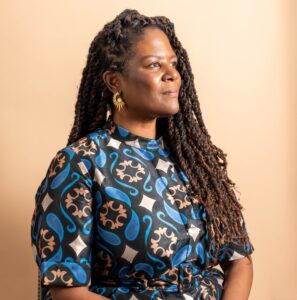
Of course, women artists faced structural challenges well before Trump took office. Between 2008 and mid-2022, according to the Burns Halperin Report, more money was spent on work by Pablo Picasso at auction than on all art made by women—combined. “The powers that be—collectors, museums—always need to be pushed because they still control and are still largely discriminating without even understanding that that’s what they are doing,” says the 93-year-old artist Joan Semmel, who will speak at the forum.
Increasingly, however, women have emerged as a powerful force in collecting. According to the most recent Art Basel and UBS Art Market Report, women outspent men on art by 46 percent in 2024. “A lot of the people who have championed my work are women,” Uman, a fellow forum participant whose polychrome canvases draw from her East African upbringing and Arabic calligraphy, notes.
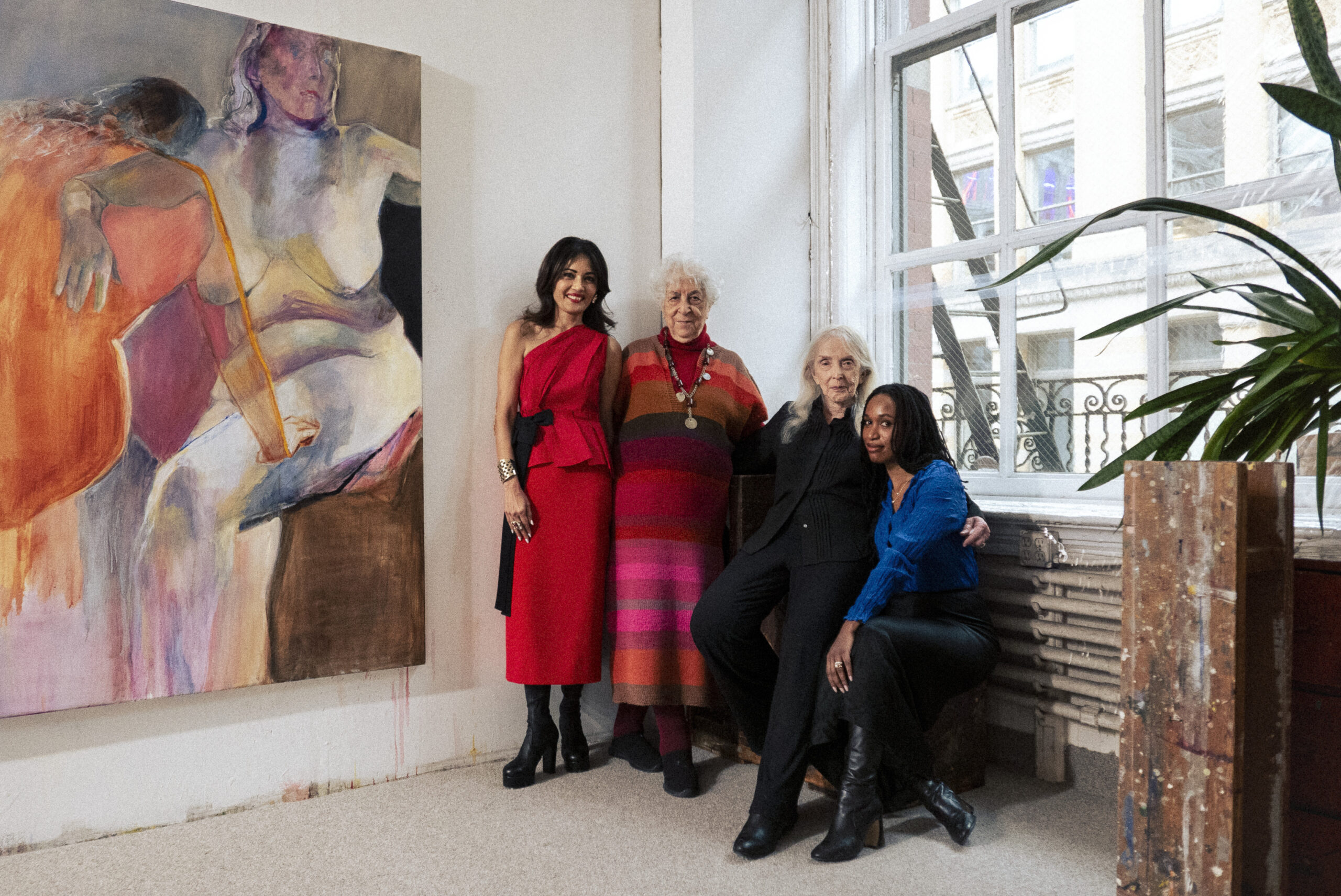
As federal museums rush to conform to Trump administration directives and multibillion-dollar foundations focused on equity must navigate heightened scrutiny, Shah is embracing her influence—and her independence. The Making Their Mark Foundation is privately funded, as is the National Museum of Women in the Arts, which hosts the show’s DC chapter. “If I die fighting, so be it,” Shah says. “But we have to fight.”
This confrontational language is somewhat surprising to hear from Shah, who was initially drawn to abstraction because of its ability to subtly subvert the expectations of the viewer. “The engineer in me was saying, ‘I’m building a collection that’s focused on ungendered work, but made by women,’” she recalls.
As time went on, however, Shah began to question her own assumption of what exactly “ungendered work” looked like. She realized that “the rules that delineated fine art and craft were made by men. That freed me up as a collector, and I became more confident in what I was doing.”
Today, her constantly growing collection includes ambitious textile works by artists who have received relatively little institutional and market support, such as Françoise Grossen, Trude Guermonprez, and Kay Sekimachi. “What’s interesting about Komal is that she’s curious—she collects what she loves, but she’s also interested in going back in history and finding artists that have no market value or did not have any market value until recently,” says Cecilia Alemani, who organized the “Making Their Mark” exhibition and is curatorial director of the DC forum. (The event is also produced by Loring Randolph and Alexa Milroy.)
Alemani knows a thing or two about this recovery approach, having orchestrated a wildly successful Venice Biennale in 2022 featuring 90 percent women artists, many of whom operated outside traditional systems. She did not foreground that fact in conversation about the show, although it dominated coverage anyway. The Financial Times described “The Milk of Dreams” as “absurdly gender-unbalanced”—without acknowledging the centuries of exhibitions preceding it, whose imbalance went the other way.
“Everyone has an opinion about these kinds of women artist shows,” Alemani adds. “But the fact that we’re still talking about it is the answer.”
More of our favorite stories from CULTURED
10 Collectors Share the Book That Changed How They Think About ArtNobody Sings About Sex Like Peaches. With Her First New Album in a Decade, She Shows Us Why.Stylist Jason Bolden Spotlights 3 Young Black Designers You’ll Soon Be Seeing a Lot More OfMasturbation on the Moors: Emerald Fennell’s ‘Wuthering Heights’ Is a Bodice-Ripper for the Internet AgeThe 14 Horniest Places in New York, According to Jordan Firstman, Francesca Scorsese, and More
Sign up for our newsletter here to get these stories direct to your inbox.


 in your life?