In a cell where clocks were stripped away, inmates measured time by the steady dripping of water. This detail is just one of many testimonies at the heart of “Prisoners of Love: Until the Sun of Freedom,” on view at the Bell Gallery at Brown University until May 31.
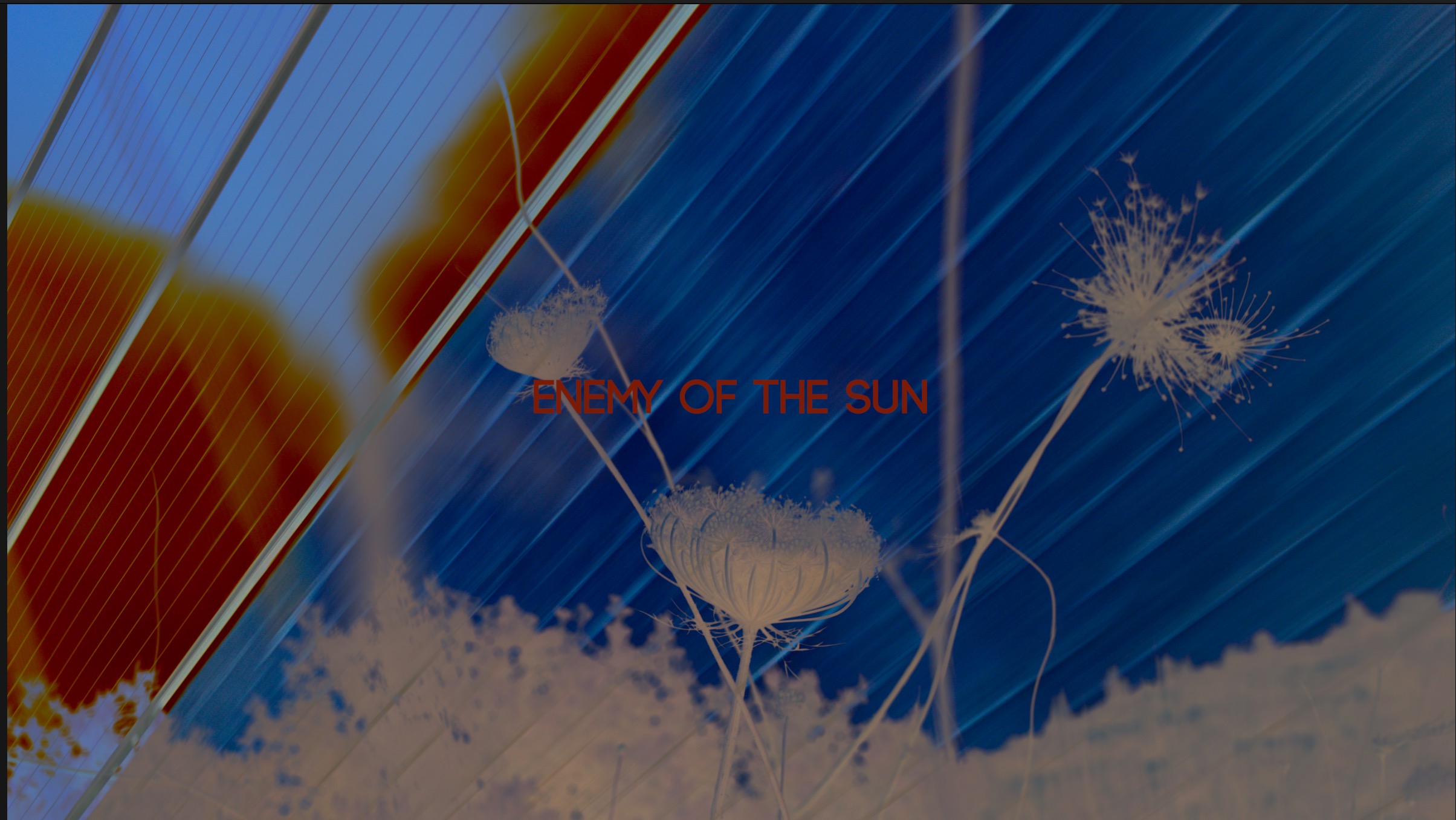
The exhibition, from artists Basel Abbas and Ruanne Abou-Rahme, circles a historical “mistake”: the poem “Enemy of the Sun.” Found in the cell of Black Panther George Jackson after his 1971 murder in San Quentin, the verses were long attributed to the activist before being identified as the work of Palestinian poet Samih al-Qasim. The misattribution reveals what Abbas and Abou-Rahme call “radical kinship:” a deep, historical bond between Black radical thinkers in the U.S. and Palestinian activists.
At the Bell, the poem serves as a jumping-off-point for a striking video installation. Amidst structures of weathered steel, concrete, and fabric, the artists project footage featuring interviews they conducted with former political prisoners in Palestine. Curators Kate Kraczon and Thea Quiray Tagle, who have collaborated with Abbas and Abou-Rahme in the past and are leaving the institution after having been terminated last December, present a project years in the making, fueled by archival research into mass incarceration and on-the-ground interviews. In a time of global upheaval, the show offers blueprint for survival, proving that even amidst the rubble of colonization, creativity remains a necessary tool for resistance. Below, Kraczon and Quiray Tagle walk us through the exhibition’s back story and the voices and histories that underpin it.
Can you speak a bit about how the idea for the exhibition emerged?
Kate Kraczon: I have been working with Ruanne and Basel since 2013, when I first encountered their project The Incidental Insurgents: The Part about the Bandits at the Istanbul Biennial. I brought that installation and Part II: The Unforgiving Years to the Institute of Contemporary Art at the University of Pennsylvania, where we produced their first catalogue in 2014. We remained in conversation over the next five years, and when I came to Brown in 2019, I officially reached out to Ruanne and Basel to begin thinking through a major new commission. Thea joined the project in 2022 when she arrived at Brown, as their work intersected with her scholarship around decolonial movements, land-based struggles for freedom, and media activism.
Thea Quiray Tagle: I have a background as a professor of Ethnic Studies, Feminist and Gender Studies, and Visual Studies, and worked with Basel and Ruanne to develop and co-teach a course at Brown in Spring 2025, where students assisted the artists with their research on political prisoners while also uncovering other stories of mass incarceration in the U.S. and globally, such as the rock gardens made by Japanese Americans in internment camps during WWII.
Class visits to the Hay Library at Brown offered Basel and Ruanne opportunities to conduct research in its Mass Incarceration Archive, especially with the Blank Panther Party newspaper; this research specifically informed this presentation of “Prisoners of Love” at Brown, which differentiates it from its other iterations at Nottingham Contemporary, MACBA, and Kuunstinstitut Melly.
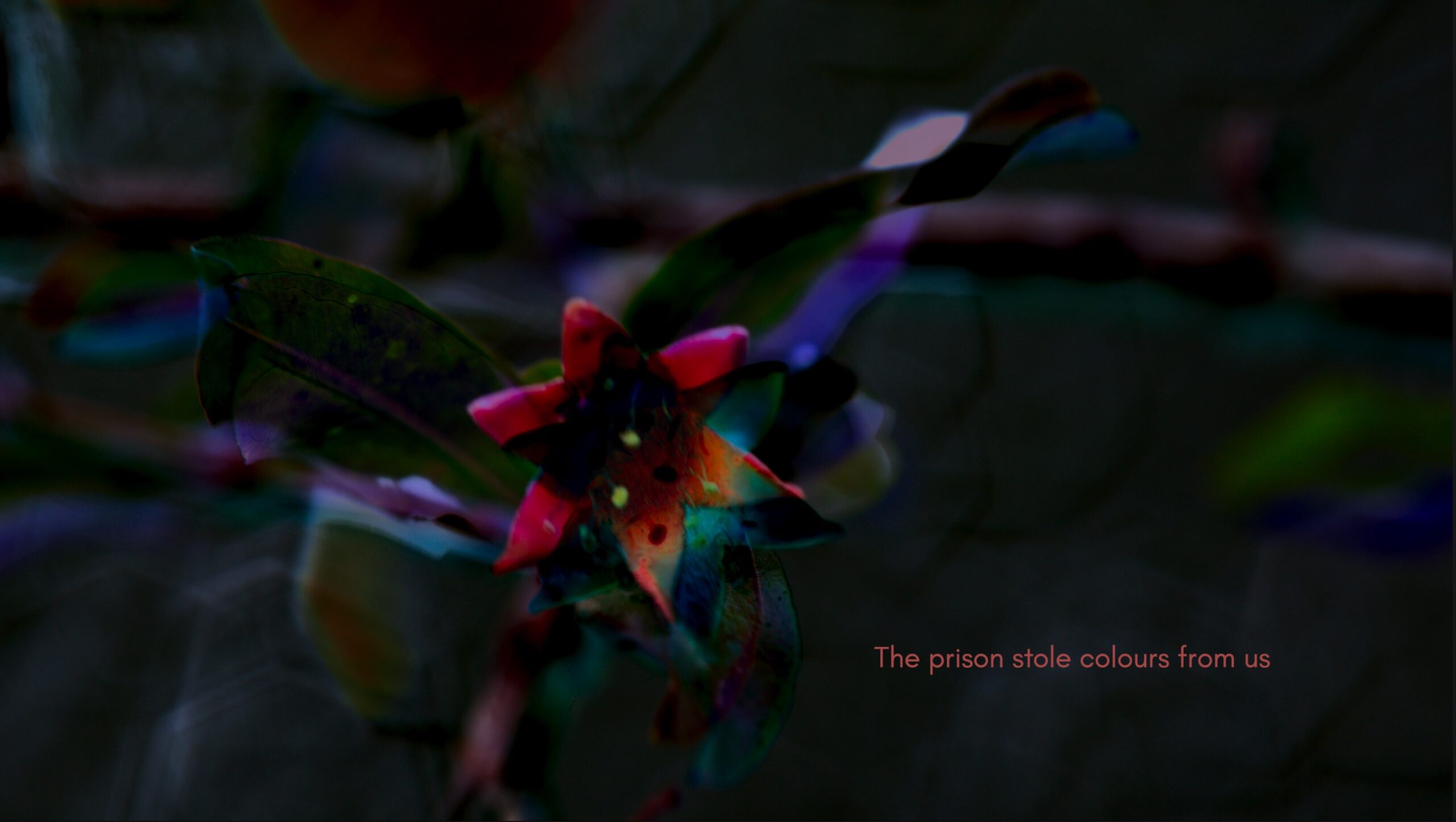
The poem at the center of this exhibition, “Enemy of the Sun,” has lived many lives. Can you speak about how the reappropriation and recontextualization of the poem and other words operate within the exhibition?
Quiray Tagle: There is a long history of conversation and exchange (real and speculative) between Palestinian writers and activists with Black radical thinkers and revolutionaries in the United States. The poem “Enemy of the Sun” was found handwritten in Black Panther George Jackson’s cell after his murder in San Quentin Prison in 1971, and for many years was misattributed to Jackson. It was actually written by Samih Al-Qasim, the incredibly important Palestinian poet.
This “mistake” is very revealing of the deep similarities between the condition of Palestinians and African Americans in their respective locations and is a clear demonstration of what Abou-Rahme and Abbas have called “radical kinship” or “kinship in struggle.”
Kraczon: Ruanne and Basel are forthright about “Enemy of the Sun” as a formative text for the project, but there are many revolutionary writers and thinkers that have been “sampled” by the artists in this work, nearly all indicated by a first name or a single or double initial: Jean Genet, Malcolm X, Ghassan Kanafani, Muin Bseiso, and, of course, Walid Daqqa, who is referenced repeatedly. All are spoken about and even addressed directly with admiration and intimacy, the kind of intimacy that is produced through extensive study and long-term engagement with a writer or artist.
Ruanne and Basel have described anonymity as a political act, as a choice of when to appear and when to disappear. Their choice to cite a dually “authored” poem, even if that authorship is incorrectly attributed, in an otherwise intentionally obscured script of revolutionary writers is a generative act and one that solidifies the long relationship—both real and imagined—between Black activists and Palestinians.
What histories are at play in this exhibition? What can they tell us about our present?
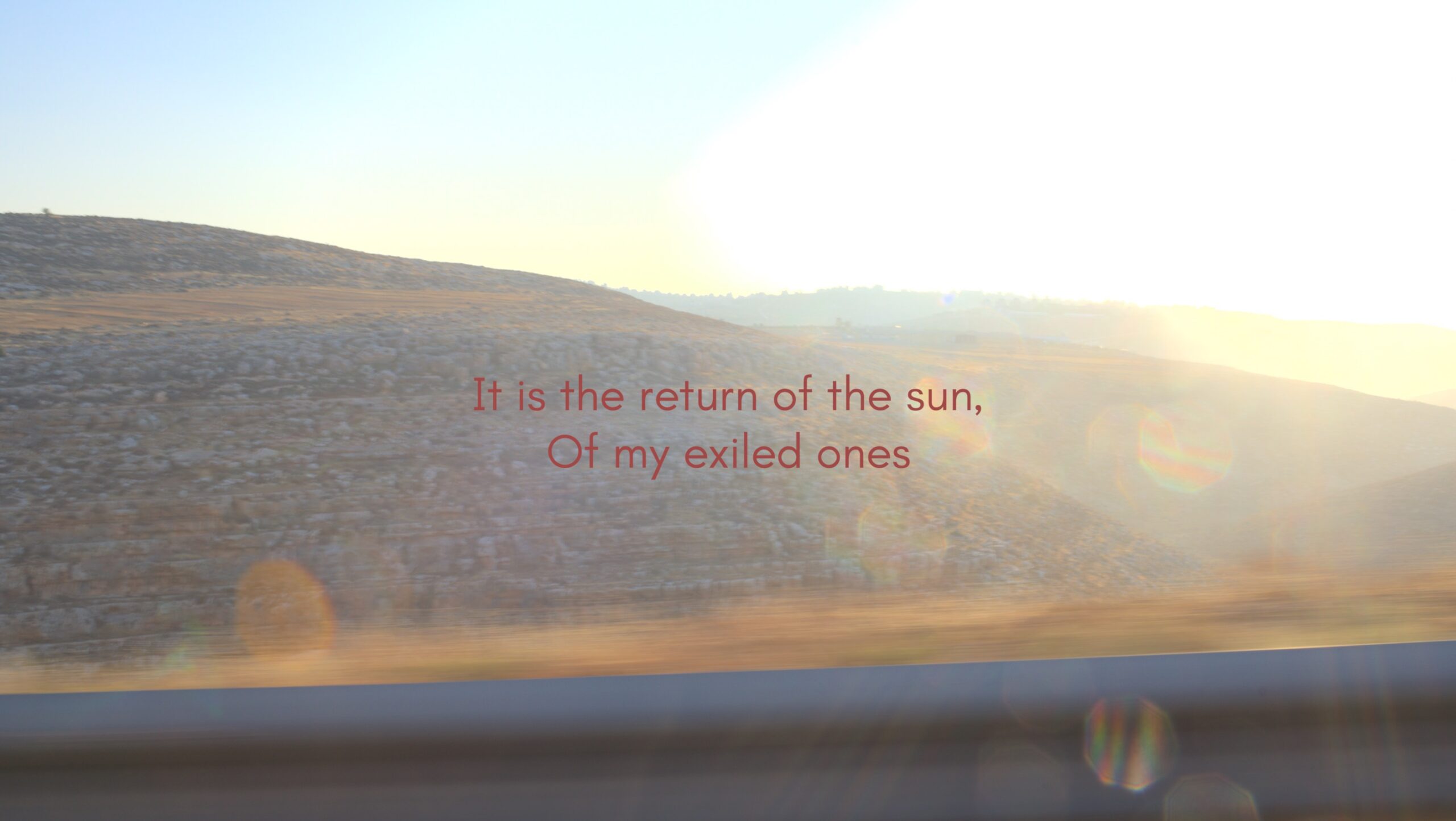
Quiray Tagle: “Prisoners of Love” evidences the spatial violence of colonization while also celebrating the historical and ongoing resilience of the Palestinian people. We see footage of roads blocked by barricades and the remains of destroyed Palestinian villages in the West Bank. At the same time, plants still grow amidst the rubble, and Palestinians continue to navigate through and across checkpoints. Life of all kinds continues, and death is never total.
Even more overtly than the histories of kinship and shared struggle between Black and Palestinian folks which are embedded in this work, “Prisoners of Love” directly incorporates interviews with formerly incarcerated Palestinian men and women, and their testimonies of the ways that songs, drawings, letters, and even drops of water became forms of resistance to the prison. We hear verses of songs calling for the end of prisons. We learn how drops of water can be used to tell the time when clocks have been removed. Creativity is necessary for survival, and “Prisoners of Love” reminds us that we can all resist fascism, militarism, and incarceration–individually and collectively.
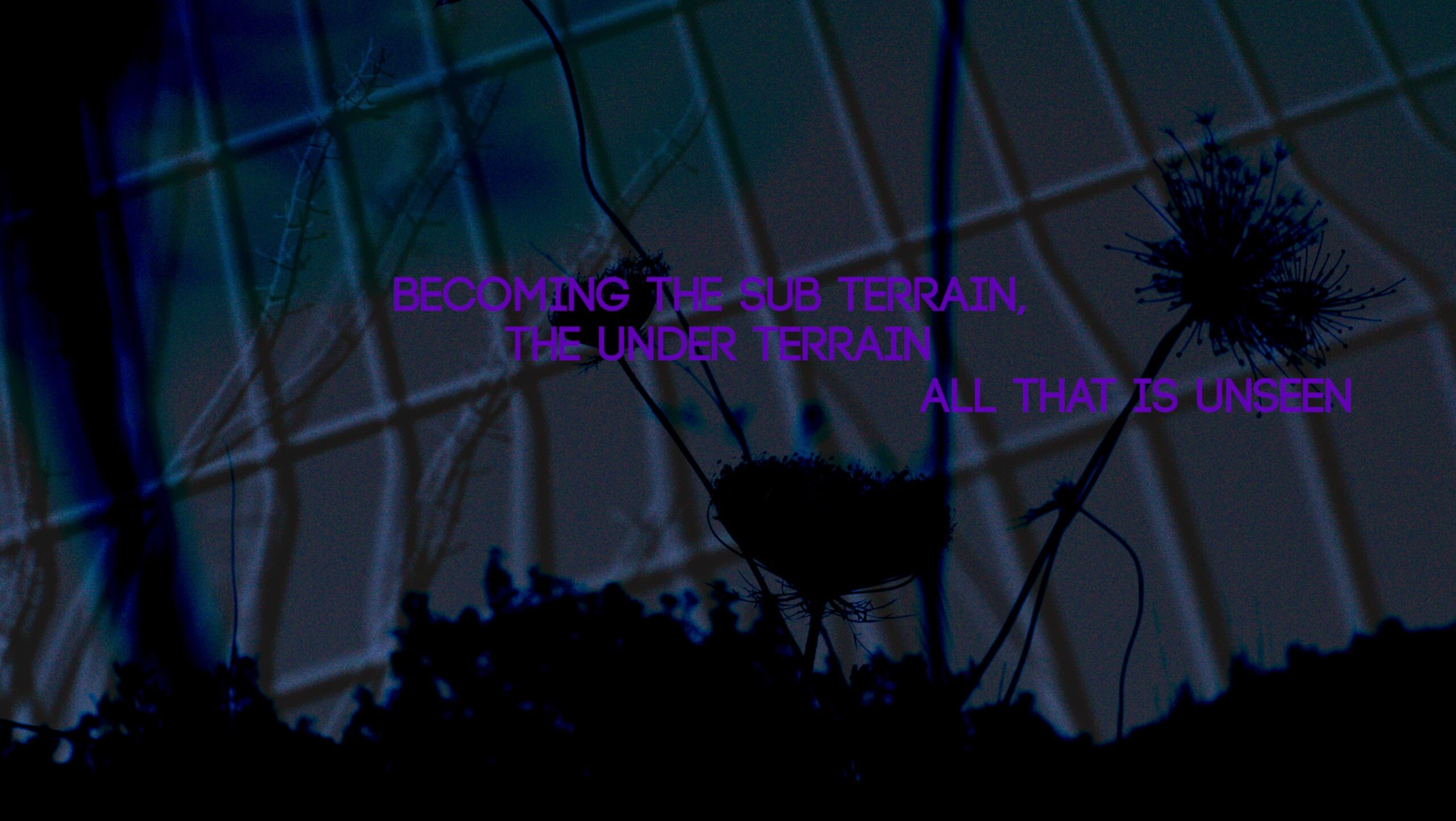
The exhibition recalls the condition of “fugitivity” as Saidiya Hartman or Fred Moten might describe it: identity groups that have been unmoored from normative society and unite as collaborators of the fringes of traditional channels of power. What thinkers, theorists, or artists informed your and the artists’ thinking about incarceration, containment, and escape in this show?
Quiray Tagle: Basel and Ruanne are very clear that the Palestinian Prisoners’ Movement is the very ground of “Prisoners of Love” and that they are the architects of freedom we all should be looking to for inspiration. In our class together at Brown, other scholars, artists, and activists were very foundational to our conversations, especially Walid Daqqa; June Jordan; Greg Thomas; Adam HajYahia; Avery Gordon’s books Ghostly Matters, 1997, and The Hawthorn Archive, 2017; and Orisanmi Burton’s Tip of the Spear: Black Radicalism, Prison Repression, and the Long Attica Revolt, 2023.
For me, I have long appreciated and thought alongside the work of abolitionist scholar-activists in the U.S., especially Ruth Wilson Gilmore, Dylan Rodríguez, Joy James, Lydia Pelot-Hobbs, and Mariame Kaba. I’ve been in many conversations with artists Dan Paz, Ava Aviva Avnisan, and Alejandro T. Acierto about their creative collaborations towards the abolition of youth and women’s carceral facilities and hope to curate them into a future project.
Was there a moment when the work surprised you or you discovered something new in the process of mounting the exhibition?
Kraczon: I was able to experience the work fully installed at Nottingham Contemporary last fall and had anticipated being deeply, even viscerally, affected by their deployment of language, sound, and moving image; yet I was not expecting to be as empowered, and even emboldened, by narratives shared by the liberated political prisoners on film. The work builds a kinship—a term the artists prefer over solidarity—among global struggles both historic and contemporary and feels particularly acute at this moment in the United States.
More of our favorite stories from CULTURED
A Movie Deal Is a Writer’s Dream—or Is It? 5 Authors Get Real About the IP Machine
Shrinking Actors Sherry Cola and Jessica Williams Talk Therapy (On Screen and Off)
The Pitt’s Shawn Hatosy Is an Emmy Winner, a TikTok Star, and a Secret Literature Nerd
Why Are Artists So Interested in Making Playgrounds?
Sign up for our newsletter here to get these stories direct to your inbox.


 in your life?