A lot is riding on the success of Black art museums. Created to represent broad, multifaceted Black communities eager to see their culture celebrated in their own cities, these institutions often carry generations of hope on their shoulders. The 2005 opening of the Museum of the African Diaspora in San Francisco, for instance, was decades in the making and owing to the tenacity of Willie Brown, the city’s first Black mayor, who—together with a team of community members—understood that after years of urban renewal in the 1970s and 1980s led to the gutting and razing of Black neighborhoods, Black San Franciscans needed a permanent place to call their own.
The ambitions of Black museums are often met with challenges, including a near-perfect storm of financial pressures, which has forced the development of out-of-the-box fundraising strategies. The unprecedented scrutiny of any race-driven mission by the current U.S. administration has only made that paradigm worse.
So let’s use this moment to consider: What is a Black museum’s impact in 2026? How does that impact translate to funding? And how do these institutions—even in our most challenging cultural and political chapters—still find room to preserve and build on their legacies?
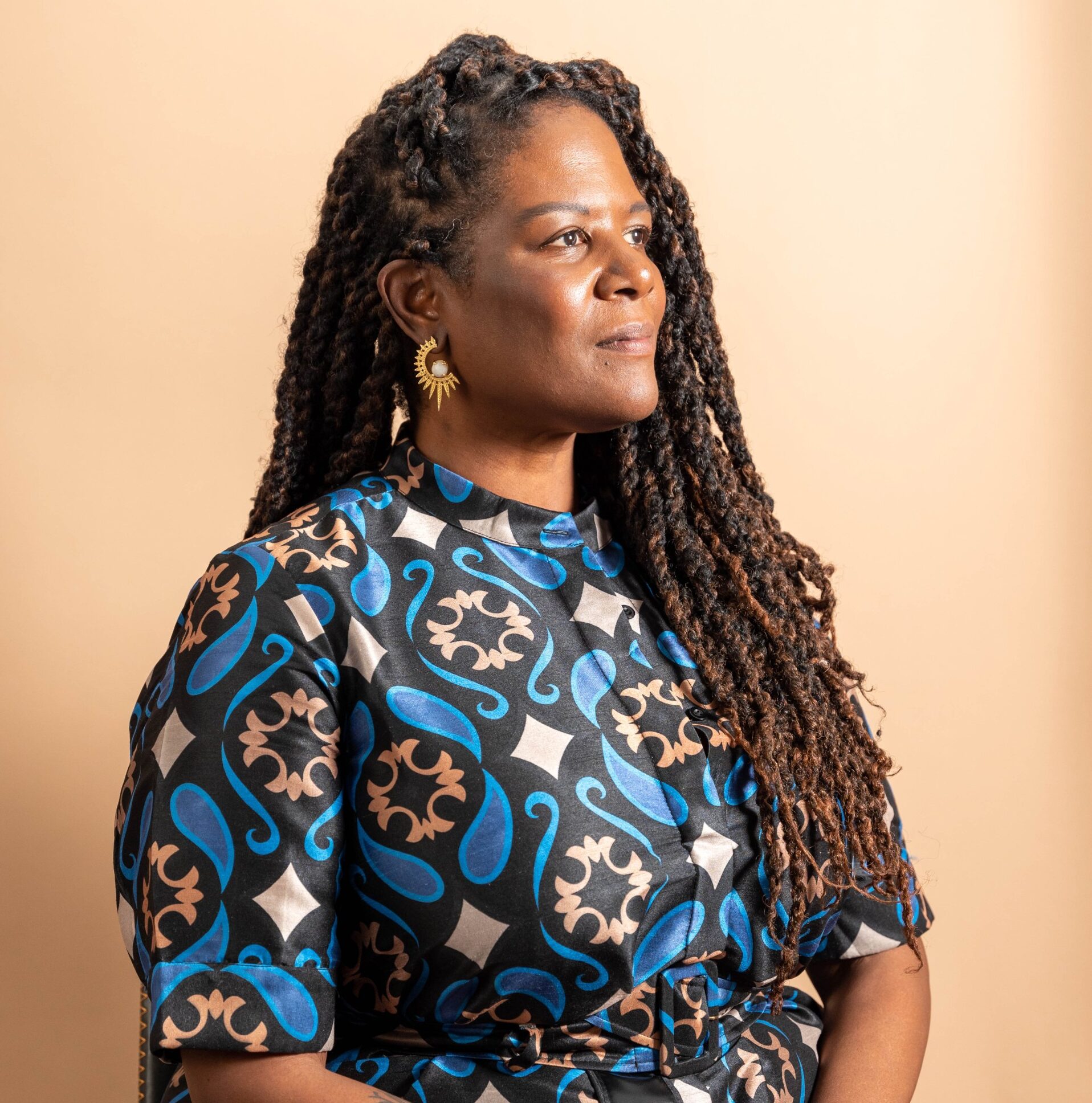
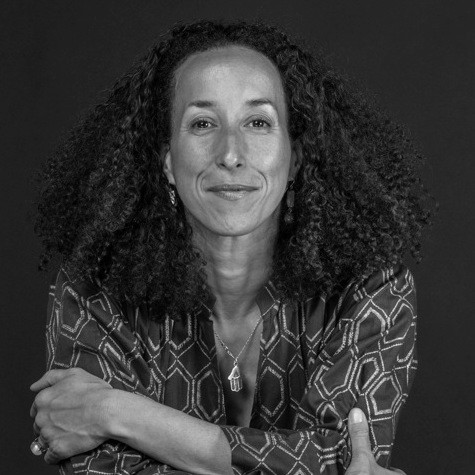
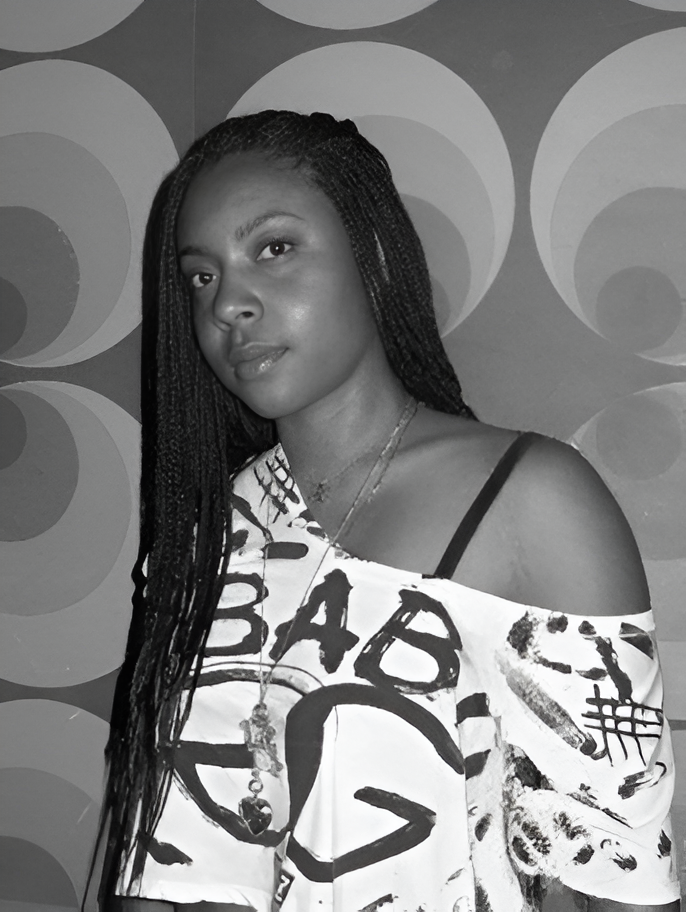
To answer these questions, CULTURED assembled a roundtable of three Black women in key roles at some of the most well-respected Black institutions in the U.S.: Key Jo Lee of the aforementioned Museum of the African Diaspora (MoAD) in San Francisco; Cheryl Finley, of the Atlanta University Center Art History and Curatorial Studies Collective (AUC); and Amy Andrieux of the Museum of Contemporary African Diasporan Arts (MoCADA) in New York.
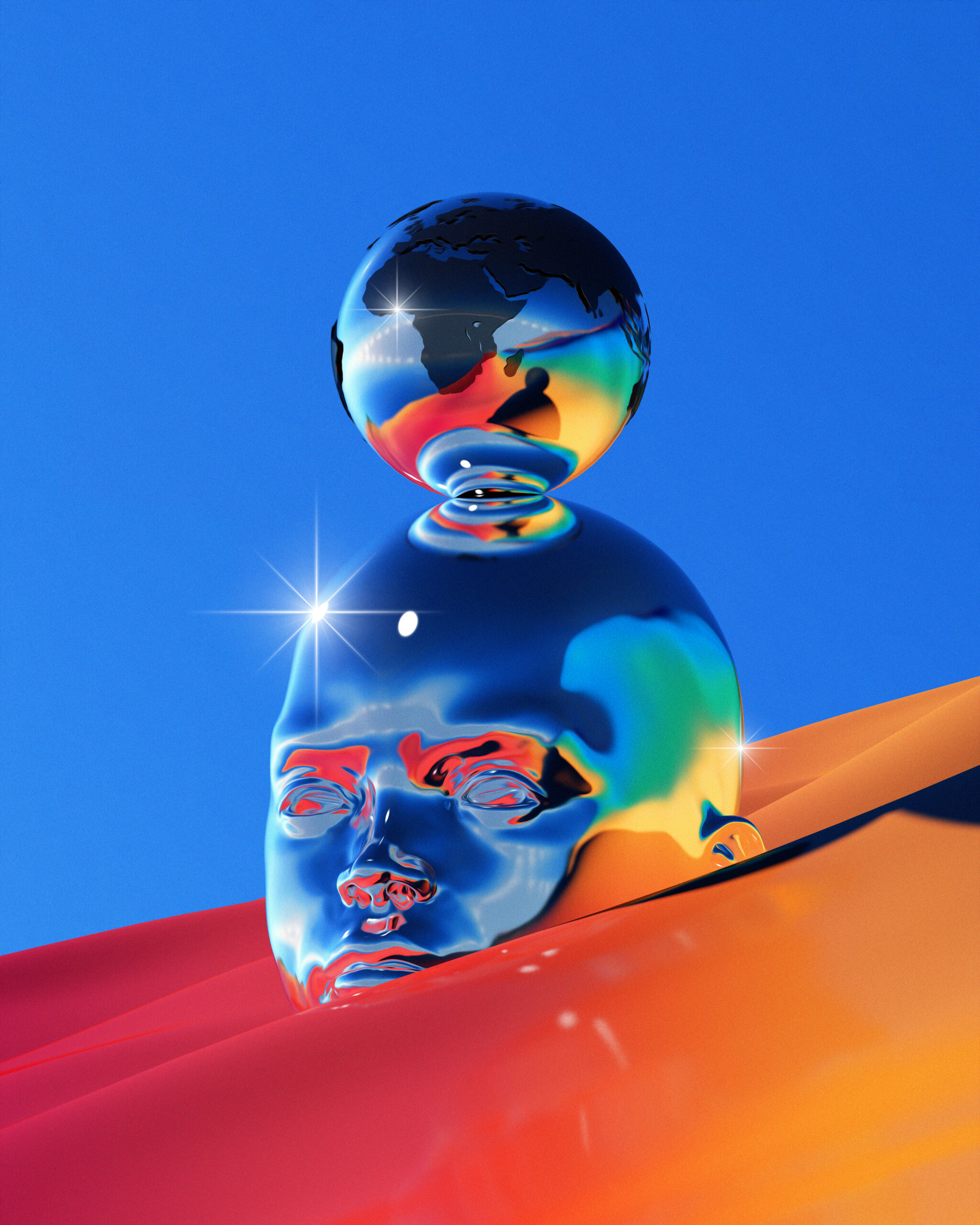
Lee is the chief of curatorial affairs and public programs at MoAD, a position she took three years ago after nearly seven years at the Cleveland Museum of Art. Her current exhibition at the museum, “UNBOUND: Art, Blackness & the Universe,” which explores the relationship between Blackness and the cosmos, was named by Hyperallergic as one of the top 25 of 2025.
Finley is the epitome of an art world multi-hyphenate: a curator, art historian, critic, and author. Since 2019, she has been the inaugural director of the AUC (which includes Clark Atlanta University, Morehouse University, and Spelman College), an incubator of the next generation of museum and visual arts leaders of color. She is also a professor at Spelman.
Amy Andrieux is the executive director and chief curator of MoCADA. After spending 20 years in music and media at outlets including Red Bull Media House and MTV World, she was recruited by the museum in 2018 to develop a strategic plan to keep it afloat. She signed on as a consultant shortly thereafter, before eventually taking the helm in 2019.
In conversation, these women share what led them to their current roles, why they remain committed, and how, in moments like these, it’s even more urgent, as Andrieux puts it, “to raise the volume and stay loud.”
How did each of you arrive at your current roles?
Amy Andrieux: My path to museum work was definitely not traditional. However, I am an artist. I grew up in New York in the ’90s, so I was a culture kid. And I’m Haitian, and our culture is very rooted in the arts.
[In 2018], a friend of mine was the board chair [at MoCADA], and he told me that it was on the brink of closing. I was inspired; I wrote a two-year strategic plan [that was then] presented to the board. Next thing I know, they asked me to be a consultant for six months. And then that led to: “Can you just be the executive director?” And years later, I am still here.
So you went from running a museum on the brink of closure to successfully raising funds for new capital projects? The museum expanded in 2023, and now operates across three venues in Brooklyn and Governors Island.
Andrieux: The nonprofit industrial complex is not for the faint of heart. What has helped me is actually my background, being outside of this space, and being able to look at it differently.
Key Jo Lee: Amy, I think we are similar creatures in that I had a very circuitous route. I’m a first-generation college student, and I had never been unsurveilled in my life. I got to [college] and nobody was looking for me or telling me where I was supposed to be, so I had big fun. After that [experience], I did every job you can think of. At one point, I was helping my best friend with her kids and figuring out what I wanted to do. I was in this affluent little town in southern New Jersey, working at a Starbucks, and one of my regular customers asked me, “Why are you working at Starbucks? You seem really smart. What are you doing with your life?” And I said, “I love going to museums. I used to go to the Philadelphia Museum of Art every Sunday because it was pay-what-you-can. And for me, that was zero.”
It turns out that this customer was the chief conservator at the Philadelphia Museum of Art and invited me to shadow her. After that experience, she introduced me to a curator. He allowed me to shadow him. And I thought, This is exactly what I should be doing.
You left the Cleveland Museum of Art (CMA) to work at MoAD. Did you always want to work at a culturally specific institution?
Lee: I did not, [but] I have always had a special interest in Black art. In Cleveland, I actually started in their academic affairs department, so even my path into curatorial has been a bit non-traditional.
It was a big shift to move to a non-collecting, non-endowed museum, but the idea that I would be able to think and write about my folks—and without justification! At the CMA, I had pitched a show called “Diasporic Drapetomania” [a term describing the proposed mania slaves experienced trying to escape captivity], and I was told we couldn’t do a show like that because nobody knows what drapetomania is. And my response was, “But white folks made up the term. So how about we just give everybody a learning lesson?”
Amy, I know there was a bit of happenstance in your path to this role, but if it had been offered at a non-culturally specific institution, would you be just as interested in taking it?
Andrieux: No. Not only am I Haitian, I’m a New Yorker; and I also went to Howard. So for me, all those three things, I couldn’t be anywhere else. And I’ve always been immersed in culture.
Cheryl, how do you feel hearing Amy’s story, especially since you’re so integral in cultivating new talent?
Cheryl Finley: It’s exciting. And to get back to how we all got started: I’m a native Washingtonian, and grew up going to every museum on the Mall. My parents met at Howard [University]. They collected art from their friends who were artists at Howard. So works by artists that were Howard-trained [formed] the lens through which I saw the world. [In college], my work study job was in the art department. So [even though] I majored in Spanish, I got this introduction to the history of art. And when I finished, I didn’t really know what I wanted to do, but I ended up getting a position working with the collection of photographer Berenice Abbott. In that position, I was organizing exhibitions. I worked in the archives. I was the curator. And as part of that job, I met an appraiser [and went on] to work with her.
[One day,] I went to an auction and Robert Mapplethorpe’s Man in a polyester suit [which depicts a Black man with his penis exposed] came up for sale, and the man who had to show this work [to the people attending the auction] was a Black man. And when he picked this work up, he did not have it oriented the right way. And I was holding back tears because I could only imagine how that made him feel. I decided at that moment I couldn’t be in that world anymore.
I looked into the gallery of people who were bidding on works of art, and there were no Black people there. I was like, I want to be able to educate the next generation of people about the rich, deep, important, and transformational history of African, African American, and African diasporic art. I want to be able to come to an auction, maybe a decade from now at Christie’s or Sotheby’s or wherever, and see in that room people like us.
I’m really excited by how the landscape has changed. Even though it’s only been almost eight years at the AUC, I see the impact that the graduates have made, the outreach from different groups coming to us to want to partner in some way. [With funding], we’re in the midst of a crisis. Those kinds of partnerships enable us to create opportunities that give students, and also the institutions that we partner with, new ways of learning and seeing the world and thinking differently about what’s at stake.
Can you all speak more about the funding crisis and the workarounds you’ve created to empower yourselves and your institutions?
Lee: There are whole grants that just went away overnight. Our MoAD in the classroom [program], where we serve [under-resourced] schools in the Bay Area—and for many, that’s their only art instruction—is supported by federal funding. We received a letter from the federal government that said our work was no longer of interest. Rather than reacting to that, we put out the call to action to our communities. We are shifting the strategies around how we fundraise. We are being innovative in how we’re thinking about with whom we are partnering: How are we thinking about San Francisco in particular, which is a very expensive city? How are we keeping artists here? How are we inviting people here? It’s been a strategic pivot, but it has also made me more ambitious. If the status of our nonprofit is that political whims can have an existential impact, then we need to figure out a different way. We need to own more buildings. We just have to have a new strategy around how we are approaching our longevity.
Amy, do you feel similar pressures and challenges?
Andrieux: I think we all do. I think that’s the intention. Our institutions are in a perpetual state of crisis because they’ve never actually been supported in the way that they deserve to be. Most of us are running on part-time staff. Most of us are working from a place of fiscal year-to-fiscal year in terms of fundraising, as opposed to actually having an endowment. So you put all that together on top of this sector not necessarily thinking about us or our artists. The crisis is deeper than what’s happened in the past year. This has just compounded it. In the same way that Covid compounded issues that were systemic in our communities.
Also, with MoCADA, our remit has always been about social justice and art. So I’m also thinking: How is the community impacted—with food insecurity, education—when someone says, “Let’s kill DEI, let’s come up with a list of words that we don’t want to see in any [grant] application”?
People don’t know that a lot of city and state funds are sourced through the federal government. Then with private foundations [trying to] step up at this moment, that’s complicated, too, because in their stepping up, they’re realizing that they need to support even more organizations. So the dollar amount that you may get is much less. Covid [stopped us from] competing with one another to look at coalition building—like, how do we fundraise together? Now, this situation is putting us back each other’s throats because we are all looking at the same buckets for funding.
One of the smartest things I did with MoCADA was join a number of coalitions during the pandemic, where we’re fundraising together. I think that’s the mode of the future. I don’t want to lie and say that I’m not concerned about the fundraising. But I am [much more] focused right now on: What are the ways that MoCADA can step in to support and [develop programs for] the community? The money will come.
Finley: Being at an educational institution, another challenge is obviously the attack on higher ed. Historically speaking, HBCUs have been perpetually under-resourced. That also keeps us super agile, nimble, and innovative.
That being said, running a program in art history and curatorial studies, how do you compete for those dollars with the STEM areas? We have students doing amazing work looking at cultural heritage solutions for stolen African art objects through blockchain technology, for example, but enabling potential funders to see how important that work is is [hard]. At the AUC, 50 percent of our students are Pell Grant-eligible. That means a household income of $50,000 or less. We know that there’s a change in current federal guidelines around Pell Grants that’s going to drastically affect who can actually go to college. We always think, How can we mitigate any type of lapse that is going to affect the students?
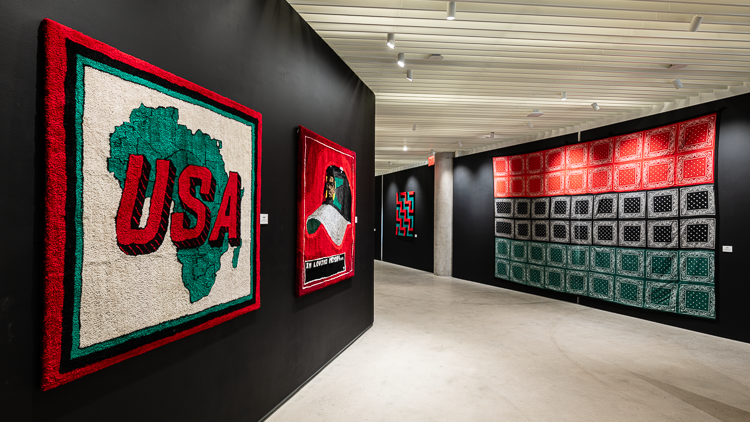
How does running a culturally-specific museum now compare to the cultural environment in which this type of museum was born?
Lee: I’ve only been at MoAD for three years, but this is MoAD’s 20th year, and [when] it was created in the early 2000s, the city was mandating that the new development have a certain percentage secured for the community. Among the institutions that were created around that time, MoAD is still here, whereas our Contemporary Jewish Museum has closed. The Mexican Art Museum never opened.
We really feel supported by our community. Our executive director put out a call to action when we got those letters and people were immediately responsive. So I do feel that San Francisco really understands the importance of MoAD. Our director always likes to say that we punch above our weight. But why do we always have to be so scrappy? I think it’s helped us be more innovative, but what would happen if we were actually well-funded?
Andrieux: For me, the crux of the conversation is: Where is the art sector placing its value? And does value equate to impact? Because many of our institutions were the launchpads for these artists [who became well-known]. I think the foundations need to be thinking about that. Because we’re not just nurturing the artists who come through our space; we’re also nurturing the young culture-seeker, showing them how to matriculate through the space as administrators, collectors—and also how to interpret it, because interpreting our work in our spaces means something different than when you’re in a traditional space. Why do we have to be the scrappy ones on all these levels?
Do you feel like the money is ever going to match your level of impact on your communities?
Andrieux: I’m having trouble with that question only because I’m like, Am I putting the onus on my community to make sure that we are sustainable in a way that other institutions don’t have to? But will we be fully-funded in the way that we should? Absolutely. I do believe that. I don’t know if it’s going to happen during my time, but what I’m going to do is make sure that I create the environment so that when I leave, there is sustainability and there’s also a succession plan.
Finley: In terms of envisioning alternative fundraising models, why not go to all those major patrons and donors of major encyclopedic museums, and say to them, “Can we get a little bit of recognition here for catapulting this artist out there into the world?” Or how might we partner in other ways, looking forward and backwards?
Lee: I’m not interested in having another young person meet the only Black person in their department. I’m interested in field-changing and defining movements out of our small space in San Francisco.
True courage is feeling the fear and doing that shit anyway. There are ways in which things have always existed to undermine our very existence. But our inheritance is not only that generational trauma. It is that drive toward joy, beauty, commonality, family. I refuse to allow any circumstance to deter me from that ancestral legacy.
Does fear impact staff morale?
Lee: Yes, it does. We’ve had conversations internally about folks wondering, “Are we going to stop saying Black? Are we going to shift our program?” And my line has been, “I’m a Black woman doing this work. Where am I going? Where should I hide?”
You have even broadened your institutional mission recently, right?
Lee: We just unveiled a new mission last year, which is to place the art and artists of the African diaspora at the center of the global cultural conversation. And that means not at the center of the conversation about art in the African diaspora; it’s about global contemporary art. This is something that MoAD has traditionally done but hasn’t claimed as clearly. And that looks like broadening our international partnerships, expanding our emerging artists program to become an international residency. It means that we are everywhere we go in the world.
Finley: That’s a really prescient way to speak to the name of the institution, but also expand upon its original mandate in a timely way. Throughout the diaspora, it just creates more coalition building—that can move us forward in different ways.
Andrieux: In 2019, I started a coalition of arts organizations across the diaspora. We did a research study to [identify] the challenges that we’re facing here in America versus [internationally], and everyone is experiencing the same challenges when it comes to fundraising; the same challenges when it comes to having a bold mission but limited bandwidth. To me, that speaks to a deeper issue, a sector-wide issue.
When we talk about value and commitment to culture, to people, to unpacking what’s happening across the diaspora, I feel like we’re on our own. Talking about these things will not only open the eyes of the patrons who support our organizations, but also open up the eyes of funders to do more. Because it’s necessary. Not because we’re bleeding—that should not be the call to action. The call to action should be that these are places of impact. These are places of care. These are places of culture that have always done this work and have always been going above and beyond. It’s time that we catch them up.
More of our favorite stories from CULTURED
A Movie Deal Is a Writer’s Dream—or Is It? 5 Authors Get Real About the IP Machine
Shrinking Actors Sherry Cola and Jessica Williams Talk Therapy (On Screen and Off)
The Pitt’s Shawn Hatosy Is an Emmy Winner, a TikTok Star, and a Secret Literature Nerd
Why Are Artists So Interested in Making Playgrounds?
Sign up for our newsletter here to get these stories direct to your inbox.


 in your life?