

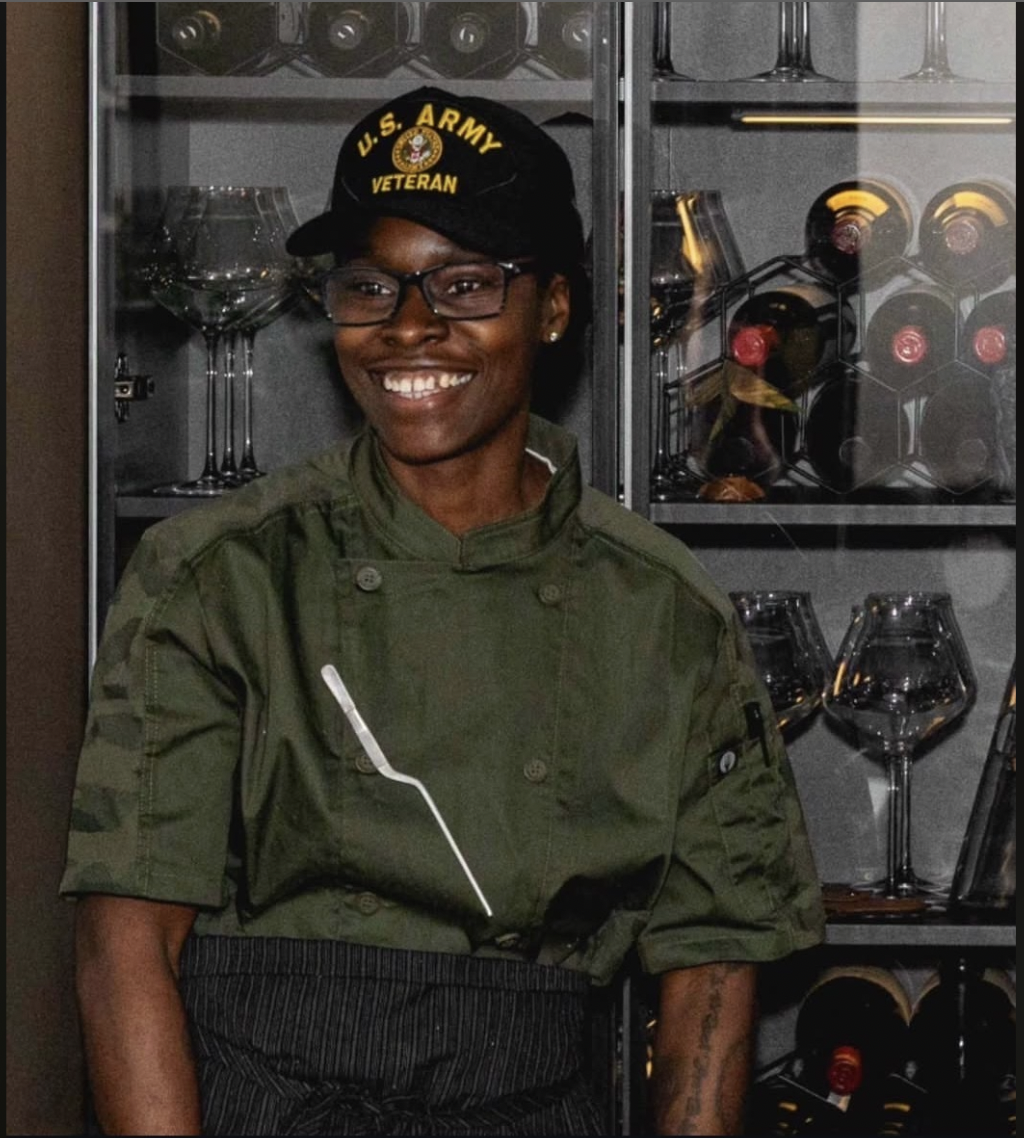
Roshara Sanders—also known as “Chef Ro”—has more than a few lines on her resume that most elite chefs don’t. She is a decorated U.S. Army veteran. She is the first Black female instructor at the Culinary Institute of America. She is a mentor on Netflix’s hit show Next Gen Chef, a Chopped champion, and a 2024 Food & Wine “Game Changer.” Recently, she took on another novel role, as “chef ambassador” for the beloved Harlem restaurant Red Rooster.
In the role, Chef Ro is working with Red Rooster’s founder Marcus Samuelsson to reimagine the menu, expand the way the restaurant’s dishes reflect the African diaspora, and enrich the skill set of the staff. “It is meaningful because it allows me to honor the women who paved the way before me while using my platform to inspire and guide the next generation,” she says.
In our interview, Sanders speaks about the Black female chefs who shaped her, like Edna Lewis, Leah Chase, Mashama Bailey, Nina Compton, Toni Tipton-Martin, and Dr. Jessica B. Harris. Perhaps the most important guide of all has been her mother, who worked for 35 years in the hospitality industry and now gets to bask in the immense pride of seeing her daughter thrive (even if she didn’t exactly encourage Sanders to follow in her footsteps at first).
Here, Sanders explains how she brings her military experience—which she embarked on in an effort to get a scholarship to culinary school—into the kitchen. (If you can survive two tours in Afghanistan, you can definitely survive a night at the helm of a restaurant.) Now, she teaches at the same school she worked so hard to attend.
Where are you, and what’s in your system?
I’m in New York. Last night I had roasted turkey wings with rice and braised cabbage my wife made.
Tell me about your new position at Red Rooster. What does chef ambassador mean, and why is this position meaningful to you?
The role of chef ambassador allows me to celebrate cultural heritage through food while representing a restaurant that honors tradition, community, and innovation. Red Rooster has always been a space that uplifts culture and storytelling, and I am proud to be part of that mission. To me, being a chef ambassador means serving as a bridge between history and the present, between culture and cuisine, and between mentorship and leadership. It is meaningful because it allows me to honor the women who paved the way before me while using my platform to inspire and guide the next generation.
Where do you derive your sense of confidence?
My confidence comes from a lineage of strong Black women and leaders. I stand on the shoulders of culinary pioneers such as Edna Lewis, Leah Chase, Mashama Bailey, Nina Compton, Toni Tipton-Martin, and Dr. Jessica B. Harris, whose work has shaped and preserved our foodways. I also draw strength from my mother, who dedicated 35 years to food service. Their resilience, discipline, and excellence inform my own sense of purpose and confidence. Finally, my experience serving in the United States Military offered me a perspective I otherwise would never have.
Tell me about the transition from the military to the kitchen. How does the meaning of hierarchy shift?
The transition from the military to the kitchen felt natural in many ways… Both environments rely on structure, discipline, teamwork, and accountability. Hierarchy in the kitchen, when used properly, creates clarity, efficiency, and safety. It ensures that everyone understands their role and can execute at a high level. When done right, hierarchy should be inspirational.
We all hear about the negative connotations, but what are some of the positives?
While hierarchy can sometimes be viewed negatively, its positive aspects include mentorship, organization, and professional development. A strong structure allows experienced leaders to guide and train others while maintaining high standards. When rooted in respect, hierarchy becomes a tool for growth rather than limitation. The discipline, “sternness” or the “type A-ness” is ultimately a tool to create great experiences.
You mentioned your mom didn’t want you to embark on a career in the hospitality industry because she had worked in it her whole life. Why did you feel clear that this was your path?
I’ve always had it in me. I went to vocational high school for culinary arts. My instructor was a CIA [Culinary Institute of America] grad. He was like, “You’re talented and you need to go to the CIA.” I thought, Okay. I joined the military in order to get the GI Bill and attend the CIA. I didn’t have the money on my own, so I did my deployments and did my time. I joined the military at 17, did six years, and then went to the CIA immediately after I got out. I was home for like three weeks and then started school.
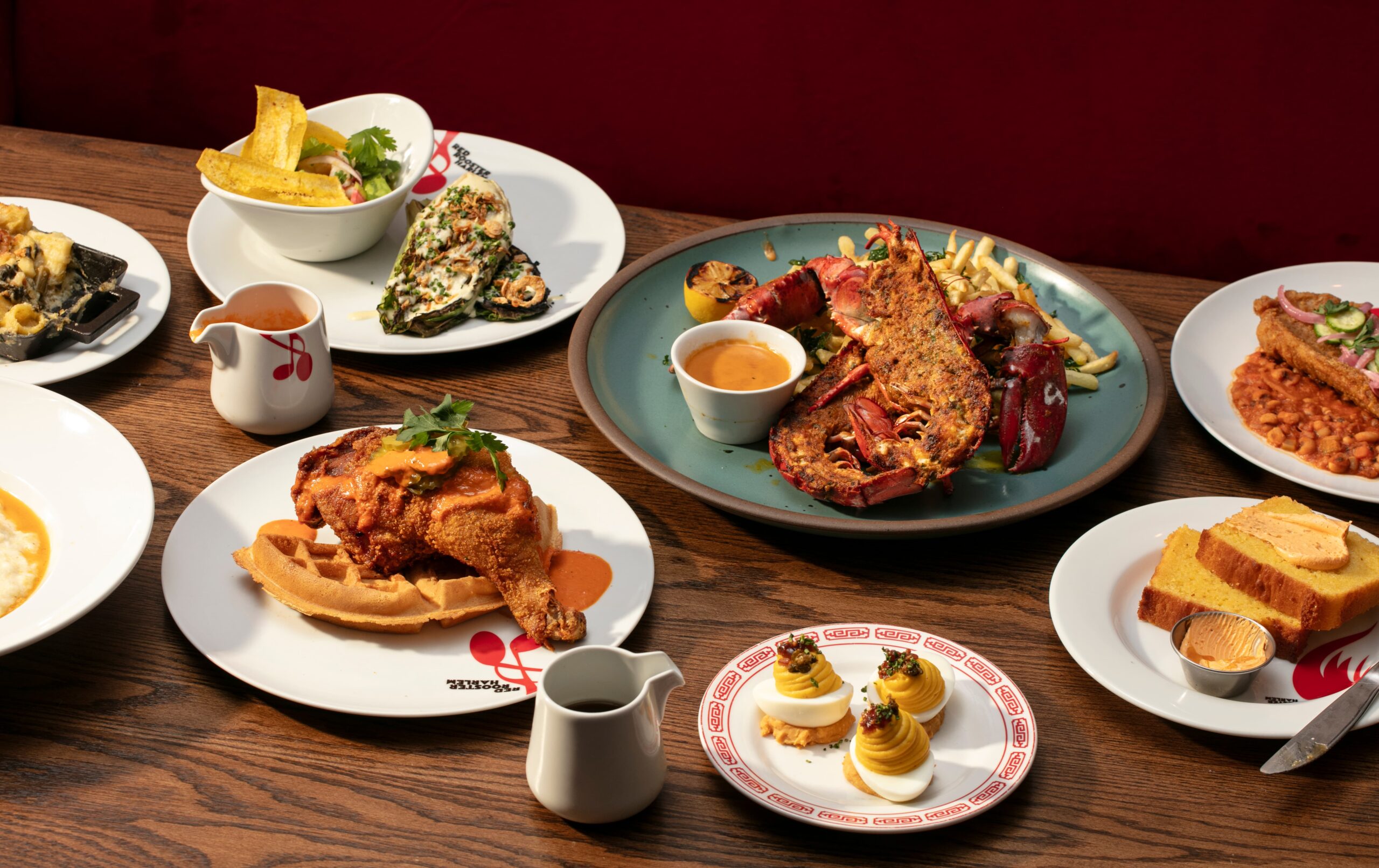
Tell me about the current menu at Red Rooster. What dishes on the menu hold meaning for you?
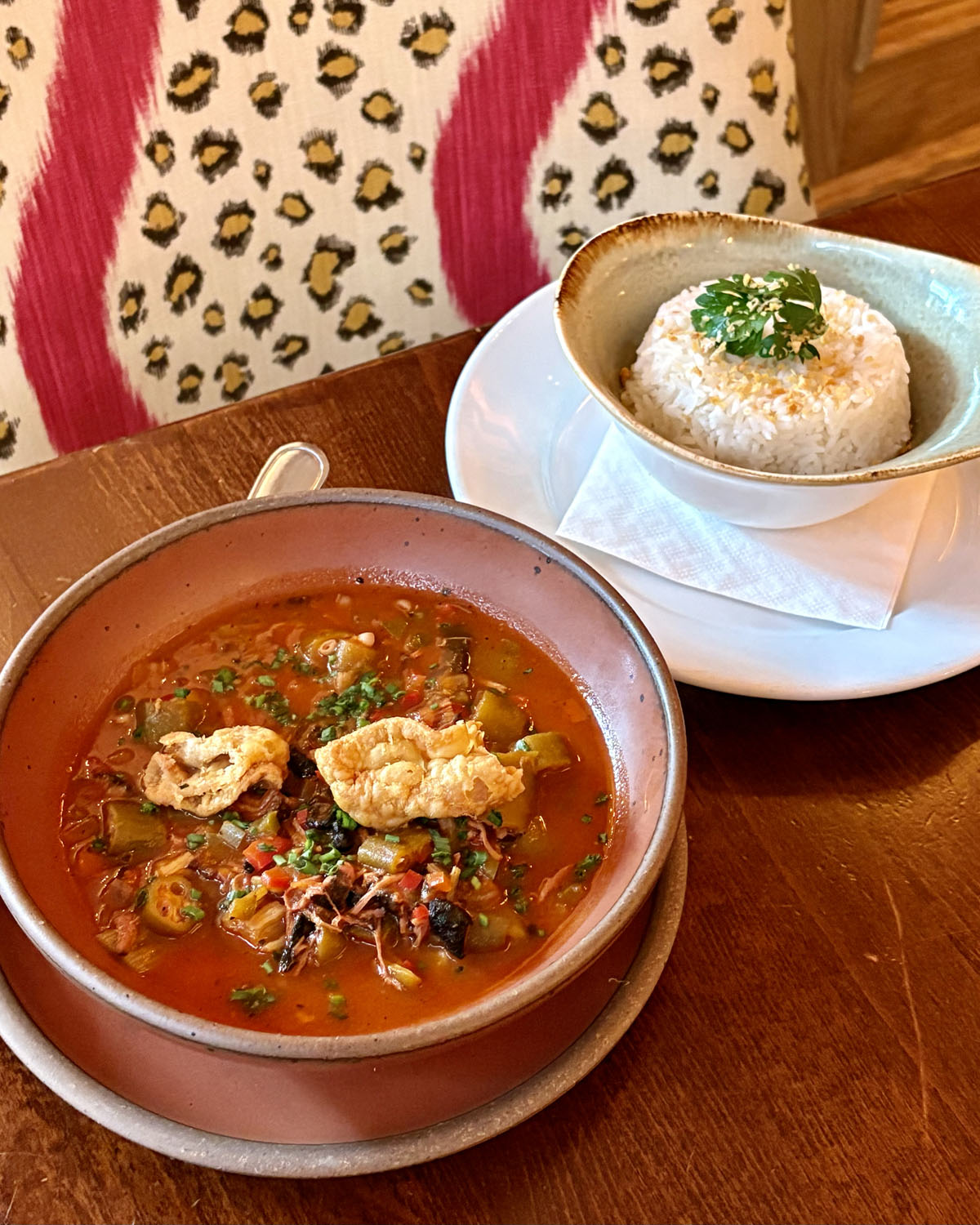
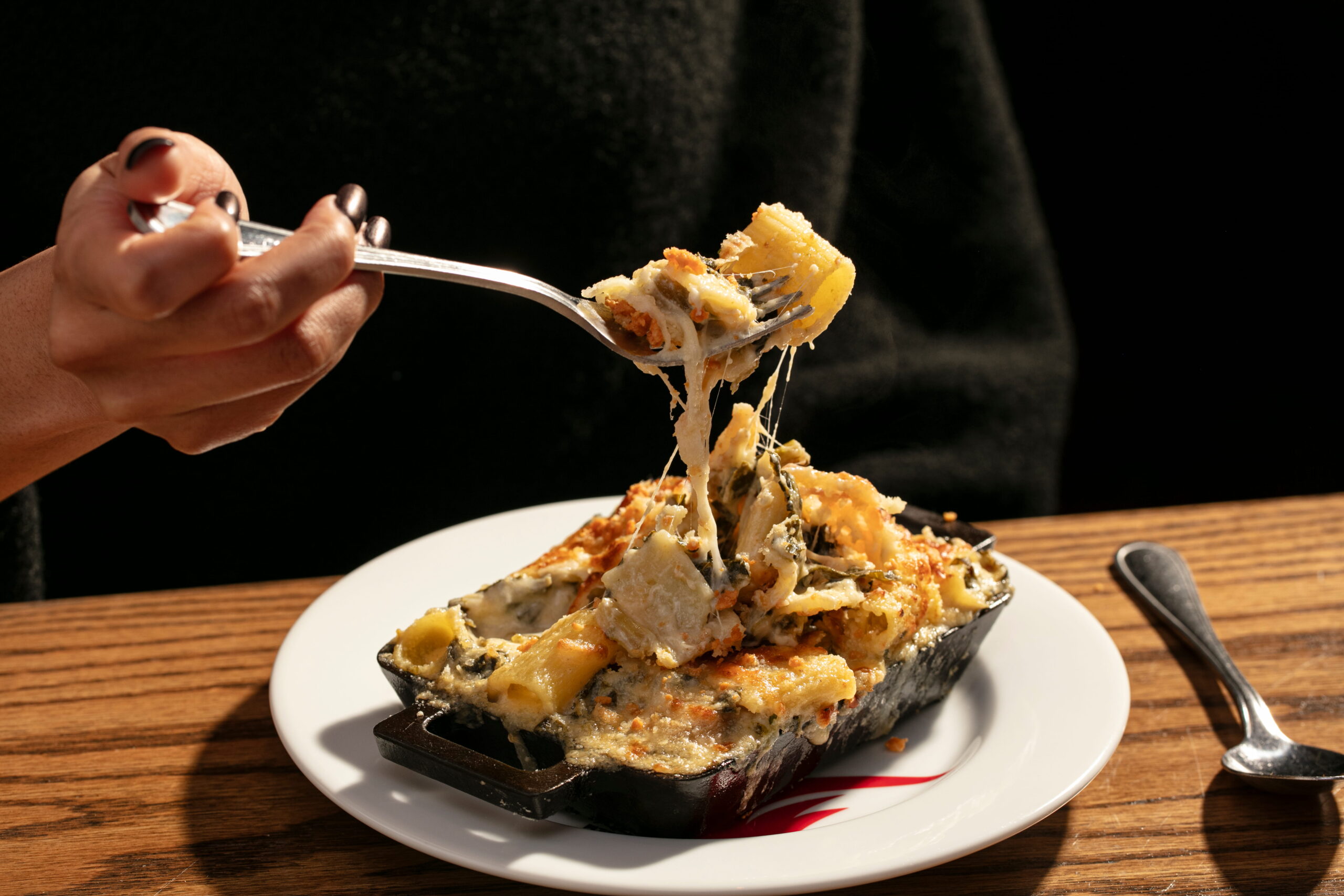
This menu is collaborative. Red Rooster has their classics, I have about eight menu items that are permanent, and I run specials as well. One that’s special to me is the Gullah okra stew. That’s my grandfather’s recipe. He’s a World War II veteran and passed the recipe onto my mom. I always said that one day I was going to try and refine it and put it on a menu. Even people who don’t like okra love it. It is my favorite because as a Black woman—I’m speaking for myself—I didn’t know my roots. My mom was a crack cocaine addict who has been clean for 35 years. My grandparents were from South Carolina. So what does that mean?
I did my research and tried to figure it out… South Carolina, African descent, Gullah Geechee community. They do an okra dish down there with stewed tomatoes. I said, “Mom, that’s what we make.” Then I did a DNA test, and now I know I’m Gullah Geechee and Cameroonian. I traveled to Cameroon with [culinary historian] Michael Twitty and [chef] Mashama Bailey. Food is my connection to my roots.
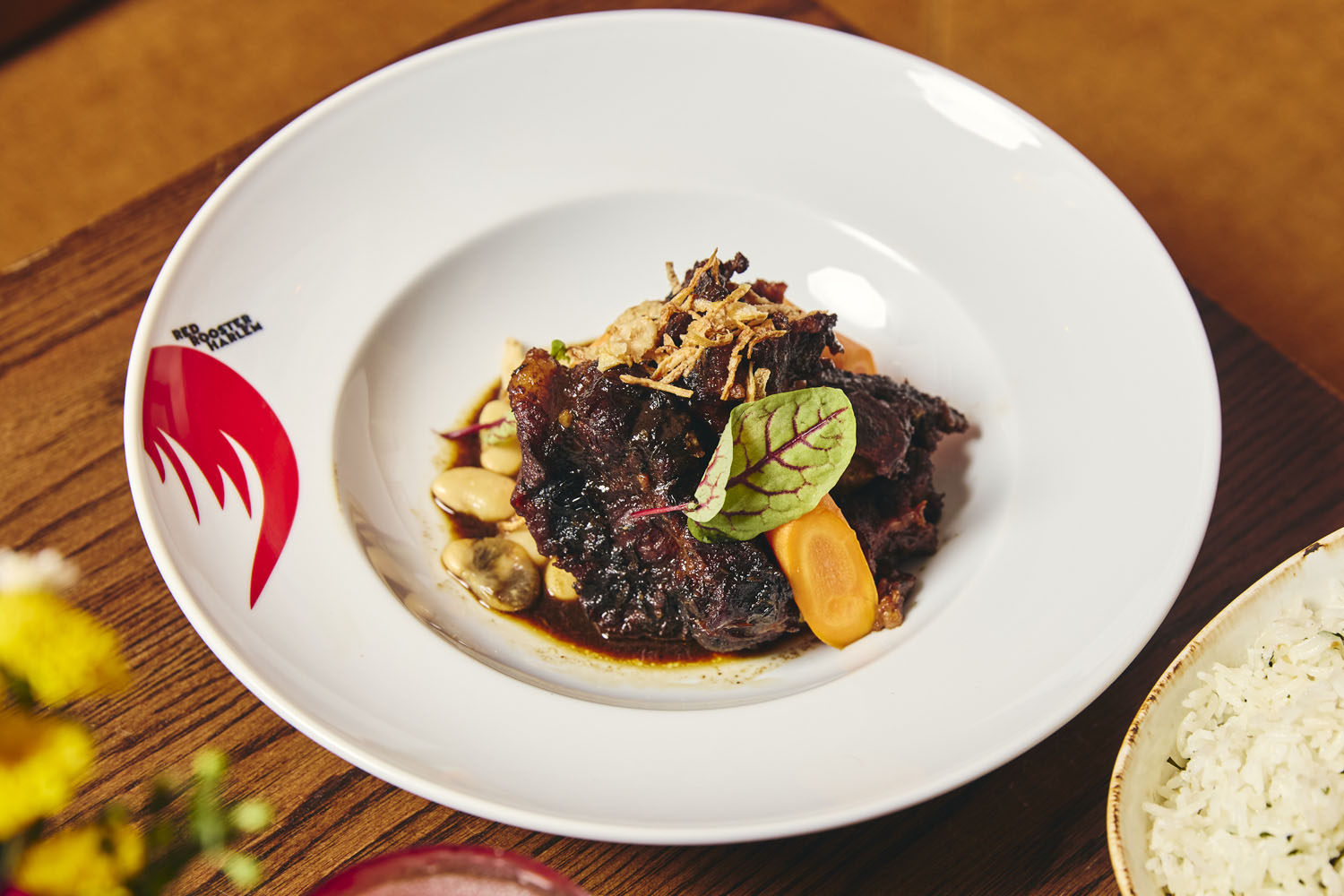
I also have an oxtail dish. I have never met my father and I have not been to Jamaica yet. But when I cook this oxtail dish, it sells out every night. People who are Jamaican say, “Whoa—this is different, but this is still Jamaican.” So it’s ancestral. Those are the two dishes that mean the most to me. Those are what I’m known for.
Wow, chef, I look forward to reading your book one day. Now for the rapid-fire section. Is there a kitchen etiquette rule you live by?
Wash your hands, season your food, taste your food.
Amen. A kitchen utensil or tool you use the most?
A Japanese wooden spoon. When I’m trying to scrape off fond, all the brown bits on the bottom of the pan that add the flavor and color, the Japanese wooden spoon does the perfect job.
Breakfast, lunch, or dinner, and why?
I am usually running around in the morning and midday, so dinner is when I can actually relax.
Can you draw a parallel between your relationship to food and your way of looking at the world?
I find God in food. I find God in people. I think food allows me to understand gratitude. The world is so wicked and crazy. Cooking is my way of showing gratitude to other people and love. I have post-traumatic stress disorder and I can’t think about nothing while I am cooking except making sure that I don’t burn something, right? Or, does this taste good? Food is the connector. It is the connection.
More of our favorite stories from CULTURED
10 Collectors Share the Book That Changed How They Think About Art
Nobody Sings About Sex Like Peaches. With Her First New Album in a Decade, She Shows Us Why.
Stylist Jason Bolden Spotlights 3 Young Black Designers You’ll Soon Be Seeing a Lot More Of
The 14 Horniest Places in New York, According to Jordan Firstman, Francesca Scorsese, and More
Sign up for our newsletter here to get these stories direct to your inbox.


 in your life?

