Hollywood, with its promise of sunlight and unfathomable sums, is forever auditioning for the role of financial fertile crescent in the lives of cash-strapped literary types.
Joan Didion and John Gregory Dunne famously funded their writerly pursuits with commercial screenwriting. In his memoir, Dunne recounts Didion’s indictment of the American public’s taste in movies—and her own willingness to pander to it for the right price. F. Scott Fitzgerald, during his down-on-his-luck days, signed a contract with MGM Studios (he lasted 18 months); John Steinbeck, Ray Bradbury, and William Faulkner all penned screenplays. In today’s troubled publishing industry, selling the IP of one’s novelistic work has become one of the only ways for an author to scrape together a survivable income. Meanwhile, Hollywood’s own financial troubles have made such IP, and the ostensibly built-in audiences that come with it, ever more covetable.
Cinema’s mimetic impulse seems to have reached its fever pitch: prequels, sequels, and spinoffs dominate the silver screen. Harry Potter is headed back to Hollywood once again, only this time Hogwarts is housed at HBO. Wuthering Heights, which has resolutely endured over 20 film and television adaptations, is one of this year’s biggest releases, courtesy of Emerald Fennell, whose last project was an amusing (if utterly lacking in eccentricity) Ripley rip-off. Production companies are cropping up to commission fiction intended for adaptation, more agencies than ever specialize in the greasy book-to-film pipeline, and adaptation deals are increasingly inked before books hit shelves. Yet while Hollywood’s investment in IP has never been higher, the collision of overlapping cinematic universes with streaming services’ recommendation algorithms means that the most profitable IP is often also the most rote, or the easiest to slot into algorithm-friendly silos on Netflix and BookTok.
This profusion of tags and labels can blind us to the surprising contradictions stashed away in some of the most seemingly straightforward stories. But it can also, as novelist Katie Kitamura told me, be a “clarifying lens” that helps us to identify gaps in the canon, inciting us to write into them and patch up our tapestry of narratives—or better yet, pull at the loose threads and unravel it entirely, so we can braid the detritus into something genuinely unusual.
Kitamura’s fifth novel, Audition, is part of a raft of forthcoming adaptations that refuse facile categorization—books that play fast and loose with form and skip nimbly into uncharted psychological territory. Along with Kitamura, whose project will be directed by Lulu Wang and star Lucy Liu and Charles Melton, this cadre includes Coco Mellors, Virginia Feito, Julia May Jonas, and Samantha Leach—whose narratives warp tropes even as they wield them to their own ends. Antiheroines, age-gap relationships, Victorian gothic revivals, and the poor-little-rich-girl gone awry are all plausible if desperately insufficient descriptors—not to mention potential tags—for these stories, and all are resolutely deconstructed as each one unfurls.
Not all of these projects are adapted by the authors themselves, but each has a formidable creative team attached—Feito’s satirical horror story about a governess gone wild has Zachary Wigon directing and Maika Monroe as lead, Lena Dunham turns her astute eye for girlhood’s transcendent risks and bonds to Leach’s journalistic memoir about the troubled teen industry, and Rachel Weisz brings May Jonas’s repressed and obsessed middle-aged protagonist to life.
I spoke to Feito, Mellors, May Jonas, Leach, and Kitamura about the potential and the pitfalls of Hollywood’s IP machine, and what it might look like to loosen some of the screws, getting it whirring in strange and stirring new ways.
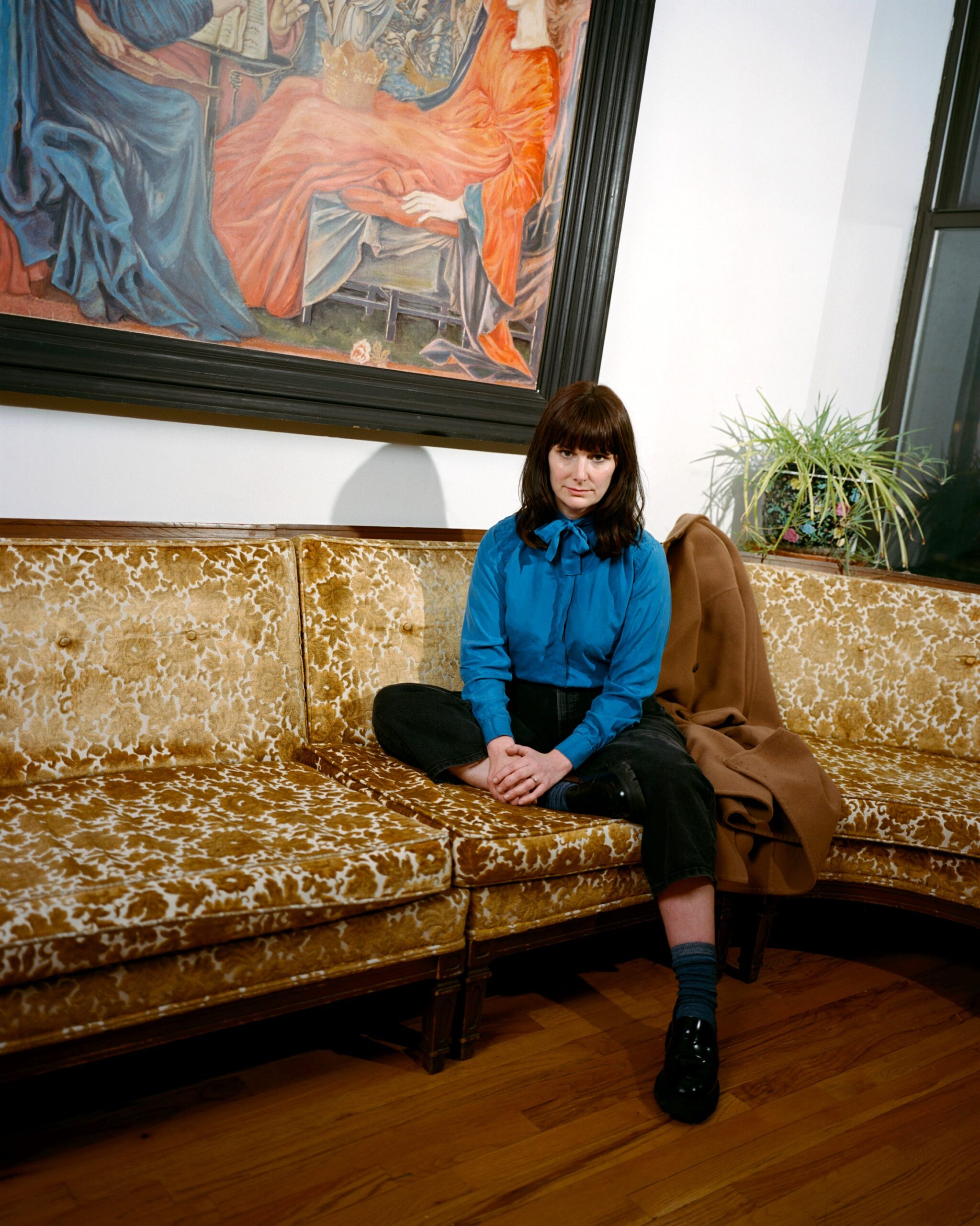
Julia May Jonas, Vladimir
The playwright and novelist has adapted her debut novel, Vladimir—about a professor who nurtures an erotic obsession with her colleague—into a series for Netflix starring Rachel Weisz, John Slattery, and Leo Woodall. Her work includes the five-play cycle All Long True American Stories, a series of inventive narratives inspired by the work of five canonical male playwrights, and Evelyn, centering on a celebrity incarcerated in a mental institution.
How did this adaptation project come about? How does your screenwriting practice diverge from your approach to novels?
It was never my intention to stick closely to the book. Efforts to do that will often go astray. Vladimir is not Harry Potter; there’s not a legion of fans demanding to see the Goblet of Fire as it was described to them.
Speaking of Harry Potter—there’s a certain cinematic universe-ification occurring in Hollywood. What is it like to translate such an eccentric project for a machine that runs on IP?
Until practically the last day of shooting, it didn’t really register that we had gotten away with making this very literary book into a series for Netflix. It’s a bummer in general that original stories can’t really exist without some kind of pre-existing IP. It’s sad that writers write short stories so that they can sell a screenplay off them. That all feels rather grim. I would never write a book with the hope of adapting it—I have a problem with that from an artistic viewpoint.
This book has been called a campus novel, and the show is pitched as a thriller. How did thinking through those genres factor into your writing process?
Genres are for marketing and therefore readers, but I don’t feel like they’re for writers. If a writer tries to squeeze themselves into a genre, it often doesn’t feel authentic. The show has elements of erotic thrillers, but it’s also a comedy. Again, I’m so surprised I got to make it.
“Genres are for marketing and therefore readers, but I don’t feel like they’re for writers.” —Julia May Jonas
Your main character is incredibly nuanced and well-drawn—how did she change as you collaborated with an actress attempting to render her on screen?
Anyone you work with will come with an interpretation—the hope is that it surprises you. Rachel Weisz definitely surprised me. We were aligned on who the character was, and then Rachel did things that were completely surprising, even magical. You want someone who looks at your words and does something more. That’s what great actors do.
Was there anything in the critical discourse around your book that you felt misunderstood the project? Do you fear a repeat scenario with the show?
Some people saw my main character as a Phyllis Schlafly type. I think of her as a good liberal grappling with how her identity is challenged in shifting times. Some people found her much more atrocious or appalling than I intended her to be. Even when she does this terrible—or at the very least, questionable—thing, you’re kind of rooting for her to finally take what she wants.
What is missing from contemporary literature? What are you sick of seeing?
I’ll read anything if I feel like the voice is authentic and considered. I remember reading All Fours and thinking, Finally, someone who’s trying to entertain, who’s putting their fullness and uniqueness out there in a way that, sentence by sentence, is delighting me. I would like a break from reading about nuns for a while. We’re all fascinated with the idea of living a “pure” existence, and that leads us to fixate on people who don’t have sex.
That feels related to your writing on the ways our culture trains us to police our appetites—and the way critics condemned your character’s appetites even when she hadn’t even acted on them.
Yes, and we often cannot police our own appetites. We have tried for all of history.
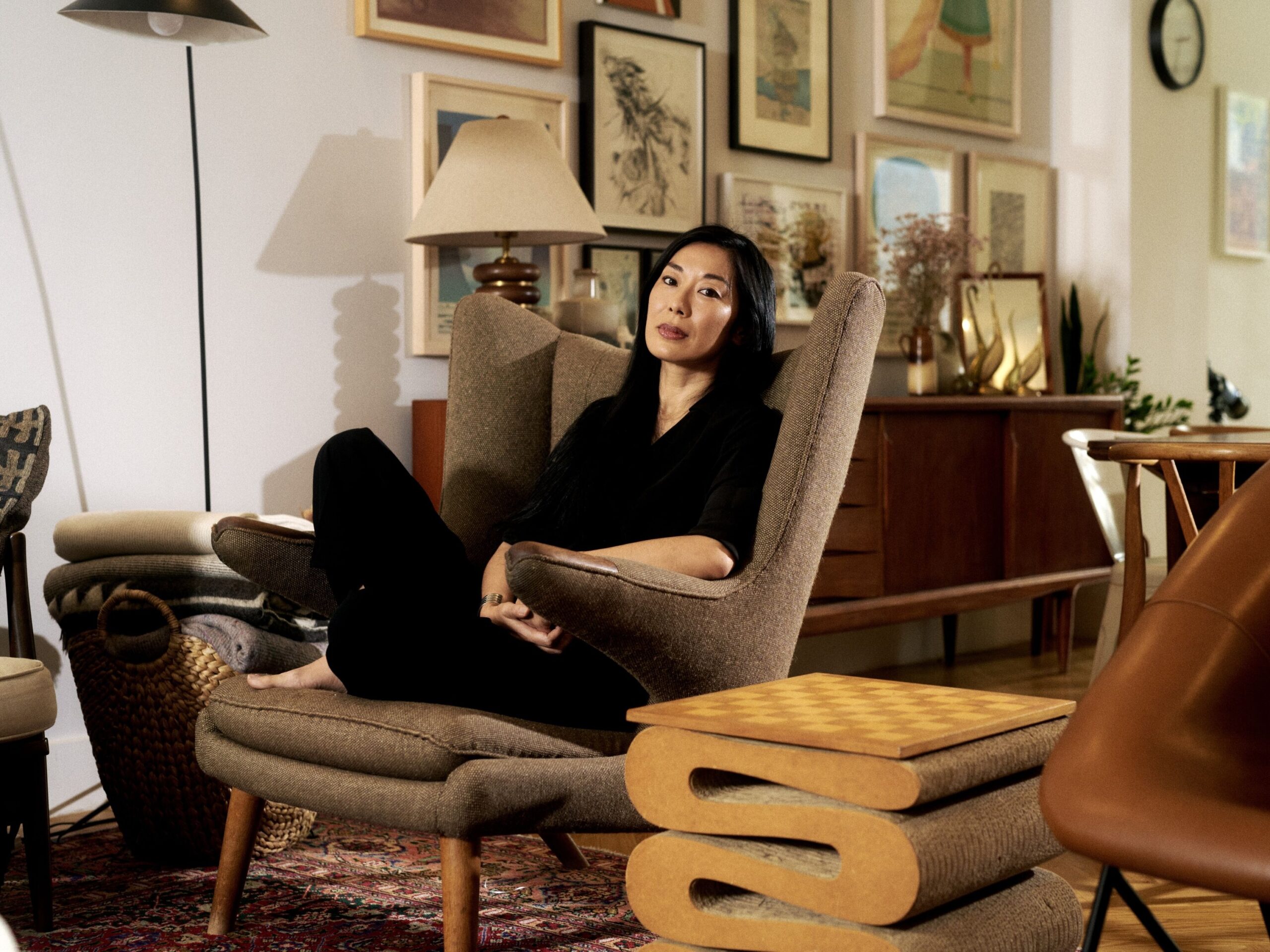
Katie Kitamura, Audition
Audition is an experiment in interpretation: A middle-aged actress is confronted by a stranger with a startling secret about her past that threatens her present. The book is the critic, novelist, and NYU creative writing professor’s final entry in a trilogy exploring translation, identity, and performance.
You’re not writing this adaptation yourself; Lulu Wang is writing it with playwright Martyna Majok. What is it like to cede control over a novel—really a universe—that you spent years building?
A carbon copy is absolutely not the right way of doing an adaptation. I’m hoping they’ll make big changes. I said, “Think of this as a relay race, and I’m handing you the baton.”
Your novel investigates the menagerie of roles we take on in our daily lives. What is it like to watch that existential question physically performed?
With most of my books, my reference points are other works of fiction. With Audition, it was films: David Lynch, Ingmar Bergman, Alfred Hitchcock. Lulu Wang is directing—she has an incredible intuition for pushing against the culture’s expectations of an actor. Think about casting Awkwafina in The Farewell—she changed the public’s sense of what she could do. She cast Lucy Liu as the lead, who has such an iconic quality to her. I’m excited to see how her cultural resonance transmutes onto the screen and into the story.
You’ve written about translation and interpretation—does adaptation function as a mode of translation?
It does. I’m not interested in complete authorial control at all, particularly not with Audition, which is a book that’s very open to the reader’s interpretation. To give free rein to artists I respect feels very true to the spirit of the book.
“The trick to writing a novel is finding a world, premise, character, and voice that you want to live with for several years.” —Katie Kitamura
These days, are more novelists writing with adaptations in mind?
It would be naïve to say that’s not happening. Novels are incredibly porous; they’re open to the influences of mass culture.
If you could see a screenplay from any novelist, living or dead, who would it be?
I heard something heartbreaking recently: In the final years of his life, Denis Johnson was doing rewrites for HBO. I would love to know what that looked like, to have a bit more Johnson to read.
Books and films by women are often immediately labeled feminist, regardless of whether the art is intended politically. Do you hear your work described that way?
The trick to writing a novel is finding a world, premise, character, and voice that you want to live with for several years. I’ve become more interested in my writing since I started writing about female experience; it’s striking that so much is still underexplored there.
In my novel, the character is 49. Even though the words “menopause” and “perimenopause” do not appear a lot of people have asked me if I consider it a menopause novel in the genre of Miranda July’s All Fours. The notion that you could still, in 2024, pioneer a new genre is fascinating. Meanwhile, the male midlife crisis novel has moved from canon to trope. So the category feels potentially restricting, but also very clarifying. It shows you where the gaps are.
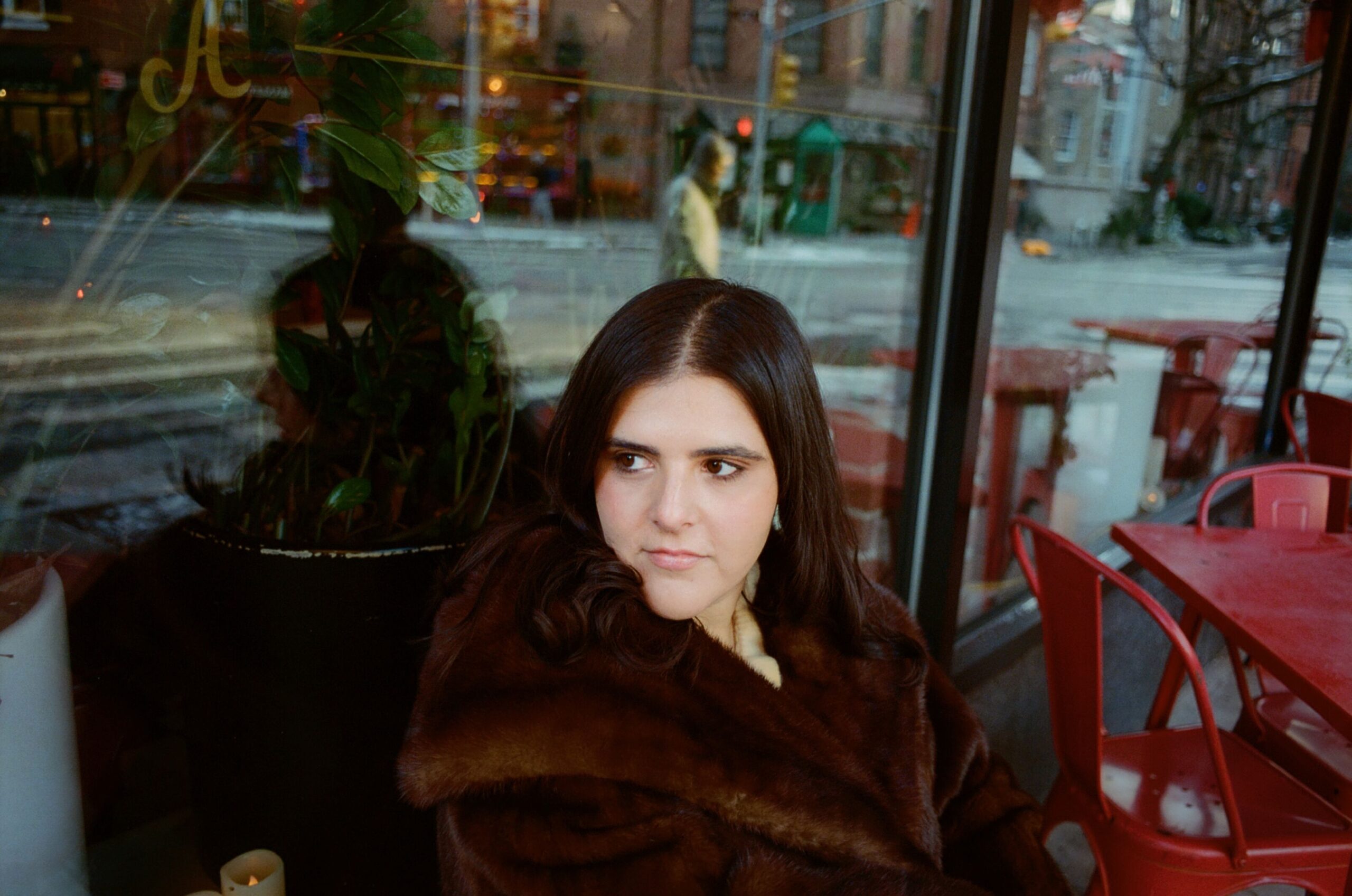
Samantha Leach, The Elissas
The cultural critic, reporter, and editor at Bustle has spent much of her career in entertainment journalism. Her debut book, The Elissas, is both a memoir and a journalistic account of an American tragedy that investigates the troubled teen industry through the stories of three young women who met at one of its institutions and all ended up dead within a decade. It is being adapted by Lena Dunham for Netflix.
You wrote a nonfiction book, but it’s being adapted as a fictional show. Tell me about that pivot.
It’s a personal book with a lot of heavy themes. When I was writing the book, people in their lives—friends, family members, former teachers—were extremely generous in speaking to me. I was eager for it to reach new audiences, but I didn’t want to put anybody through that again.
But even a fiction version could have been done in classic true-crime style, or intrepid-journalist-on-a-mission style. How did you land on your more complex storytelling approach?
There’s a real boom in adaptations about women looking back on fraught times in their lives. The longer we worked on it, the more Lena started pushing against that. If it were a really faithful adaptation, I would have had more anxieties about how we were depicting these women. I interviewed Patrick Radden Keefe after he adapted Say Nothing—he said he was essentially fact-checking the script. If this had been a more traditional adaptation, I would have felt compelled to do that.
Is the intensified pace of option deals changing how people think about the life cycles of their books? Do Hollywood’s ideas around genre influence the literary world’s?
The days of hyper-preciousness are gone. There are so few ways for writers to make money now. The fantasy used to be to get a book published, but the massive onslaught of adaptations has probably moved the goalposts. One of the first things people ask when a book comes out is: “Is it getting optioned?” I’m sure when there was more money in traditional publishing, it was: “Where are you going on book tour?” But in terms of packaging, whether it’s “true crime” or “girl remembering her trauma,” subgenres can help us find form. [Lisa Taddeo’s] Three Women really opened a portal for how this book could be arranged.
“The fantasy used to be to get a book published, but the massive onslaught of adaptations has probably moved the goalposts.” —Samantha Leach
Your writing highlights the tension between individuality and collectivity in adolescent friendships, which can inspire both solidarity and self-harm. Are you worried about that balance translating on screen?
I expected to have a lot of fears around that, but I’m spoiled because it’s Lena. There is no one whose writing has been more influential to me in terms of craft and, quite literally, how I see the world. When she texts me about the adaptation, my first thought is always, Wow, that’s a great idea, and my second thought is, I’m texting with Lena Dunham, and she’s calling me baby angel.
The troubled teen industry has almost become a trend in TV—there was Paris Hilton’s documentary, then Mae Martin’s show, and a shoutout in All’s Fair. Is that attention yielding activism?
It’s been really helpful. Before Paris came forward, nobody knew what the troubled teen industry even was. Now, so many violent institutions have closed.
What are you sick of seeing lately, in bookstores and on screens?
Divorce books. Miranda July really did that, and now I’m a bit tired of it. I categorically don’t want an adaptation of All Fours, despite having loved the book. I always say, “Some things are tweets, some things are articles.” When it comes to adaptations in general, I think some things are books, some things are movies. Not everything lends itself to the screen. If you’re going to adapt, be willing to make a different thing entirely. I bet Miranda July will make an amazing movie out of All Fours and I’ll eat my words.
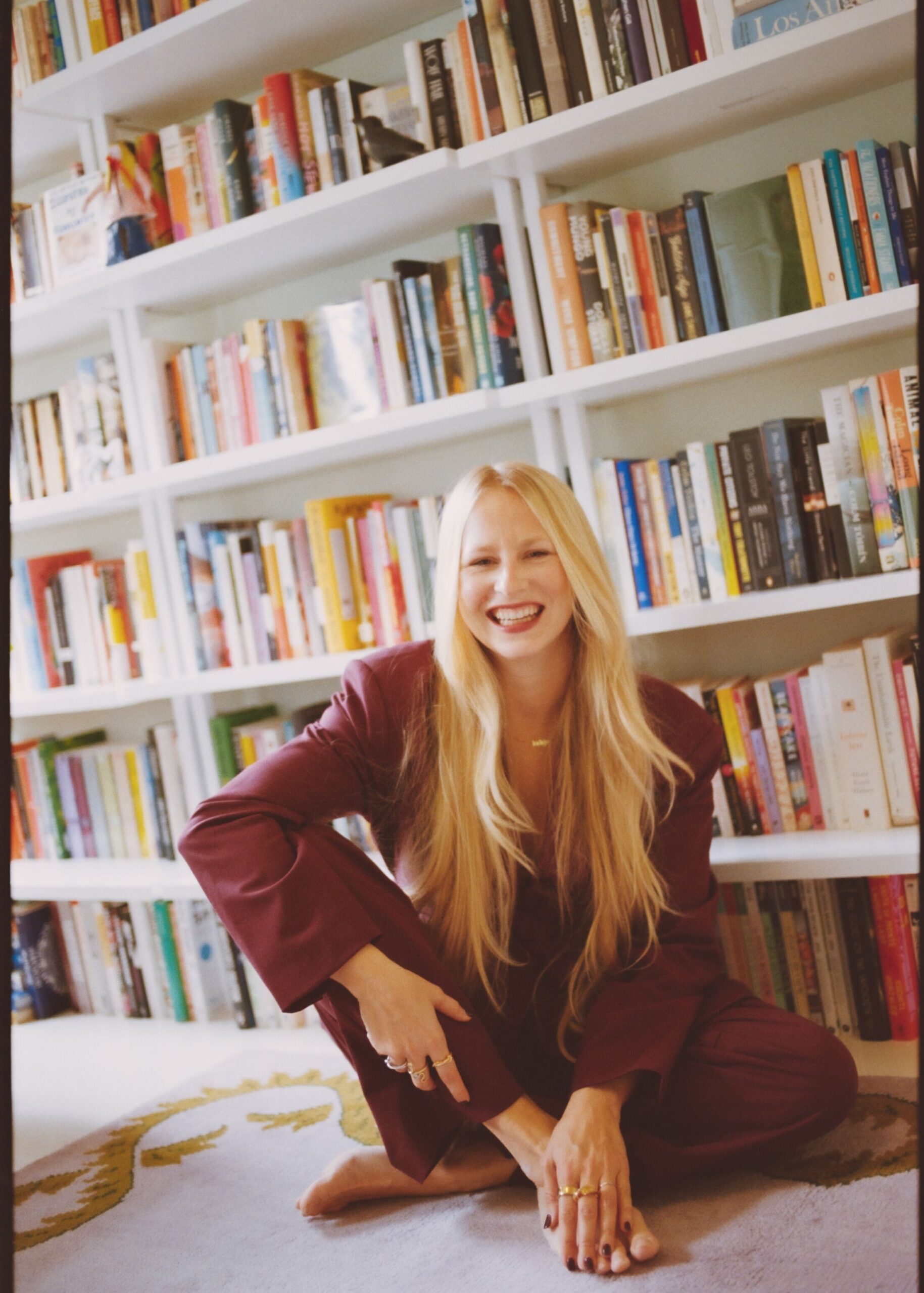
Coco Mellors, Cleopatra and Frankenstein
A Brit turned New Yorker, Mellors pens polyphonic odes to the city she’s chosen to call home. The author’s bestselling novels, Blue Sisters and Cleopatra and Frankenstein, are both being adapted for the screen—the first is in talks, the second by the novelist herself.
Both of your novels are being adapted. Did you always envision these stories on screen?
Cleopatra and Frankenstein was rejected by so many publishers that it was a miracle that it even became a novel. Thinking about an adaptation would have been like thinking about grad school before finishing high school. So when it went out to be optioned, I was prepared to face a lot of nos. But there was actually such an appetite to adapt that book. I remember saying to myself, Fuck, should I have been a screenwriter?
Multiple reviews call your prose “cinematic.” Were your references during the writing process filmic?
For better or for worse, I learned more about plot from television than I did from reading. When I’m reading, I’m trying to learn how to write a better sentence; I only read books I think are very strong on the language front.
The first review I got for Cleopatra and Frankenstein was negative—I was accused of writing a book engineered for television. I remember thinking, right, I worked on this book for free every evening and weekend for five years. Then I sold it for remarkably little money. Then I waited two years for it to be published. It was a seven-year con to get a TV deal.
“For better or for worse, I learned more about plot from television than I did from reading.” —Coco Mellors
Has the adaptation process felt different with your second novel?
I’m not going to write this one. I was so involved in the process with Cleopatra and Frankenstein, but with Blue Sisters, my feeling was, if I’m going to put my time and energy somewhere, I want it to be something I know is happening and that I have a lot of creative control over—another novel. Taylor Jenkins Reid once said that her books are her children, and having them adapted is like being a grandparent: You get to show up for the fun stuff without the daily rigmarole of raising the child. I have a literal child and the book I’m currently writing, so I want to pop in for a cheeky meeting now and then and let them take care of the rest.
Can you tell me the conceit of your new novel?
It’s about motherhood and the years before becoming a mother. That period of ambivalence—of longing for and fearing something when you don’t know what that thing is. I felt like that period hasn’t been given its due.
People complain about the increasing market demands that books and films be part of a niche microgenre. Do those paradigms actually impact writers, or just happen on the publicity end?
For me, there’s a separation between writer and author that is quite stark. As the writer, I don’t think about the outside world. When the book comes out, I’m an author. When my agent and I were thinking of how to pitch Blue Sisters to editors, I said, “It’s Little Women meets The Royal Tenenbaums.” I never think that way when I’m writing, but I understand the utility. It’s temporal: Once I’m in author mode, I want to make sure the right reader can find it.
I come from a fashion and marketing background, so I don’t dislike the publicity gamesmanship; I find it quite satisfying. I understand that book covers need to look good on social media or carried like a little clutch.
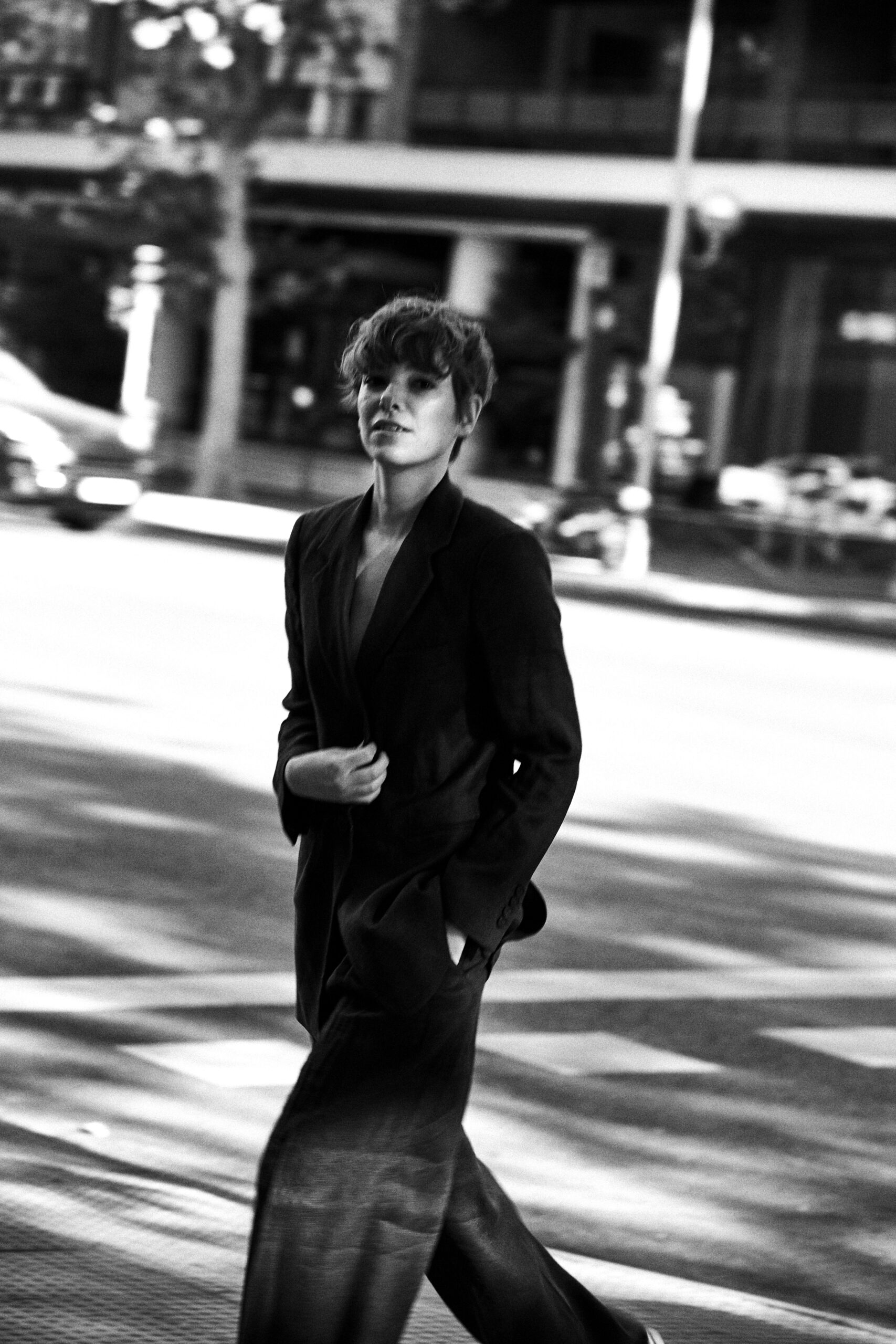
Virginia Feito, Victorian Psycho
The Spanish novelist’s work centers on women unraveling. Her debut, Mrs. March, followed an Upper East Side housewife through a series of paranoid spirals, and her second novel, Victorian Psycho, is a governess-gone-wild tale, both a work of gothic horror and a spry satire of the genre. She adapted the book, set for release with Bleecker Street this year.
In a world of Marvel Cinematic Universes, does adapting a literary novel feel like attempting to throw a wrench into the IP machine?
I don’t think it’s necessarily a bad thing to IP the hell out of the work, so to speak, but I would like, just once, to write a movie on my own and see if it’s an absolute fucking disaster.
How does the process compare to your fiction practice?
It’s like learning another language. I’m used to writing books by myself in a room. This sounds obvious, but every single line you write, you will later see performed on screen. The visual metaphors, the way the actors are positioned, what you’re conveying about the power dynamics between characters, all of that is communicated in a completely different way. With books, I feel free to break rules, but with scripts, I get the sense that I’m supposed to have studied this shit.
“I don’t think it’s necessarily a bad thing to IP the hell out of the work, so to speak, but I would like, just once, to write a movie on my own and see if it’s an absolute fucking disaster.” —Virginia Feito
Both forms are being broken down into marketing silos lately—tags like “dark academia” and “weird girl fiction.” Is that changing how people write?
I come from advertising, so to an extent, I’m like, Whatever we need to do to read the market. Sometimes it’s weird—and sometimes funny—where a book is positioned in a bookstore. I feel prouder in certain cases than others. I think the BookTok stuff is kind of sweet—we’re specifying and sub-specifying until we dig so deep we reach the center of the Earth. If you’re making good shit, I don’t care what you want to call it.
Horror is a trope-heavy genre—are you aiming to subvert or embrace those? Or both?
This film has been branded as horror—fair enough. But I wonder if there’s a bit more to it than that. There’s other weird stuff, too. You couldn’t do Victorian Psycho without all the… psychosis, but it also wouldn’t be Victorian Psycho without the humor. I love horror movies that do all the tropes, and I love horror movies that are described as “elevated,” which is now its own genre. I don’t know what’s original anymore; we’re all copying someone else, which is the only way to make art.
What do you think the literary landscape is missing right now? What is it oversaturated with?
Too much body horror—cinematically and literarily, especially after The Substance. Undersaturated: international writing. Translation is on the up, but it’s historically under-celebrated.
More of our favorite stories from CULTURED
Tessa Thompson Took Two Years Out of the Spotlight. This Winter, She’s Back With a Vengeance.
On the Ground at Art Basel Qatar: 84 Booths, a Sprinkle of Sales, and One Place to Drink
How to Nail Your Wellness Routine, According to American Ballet Theater Dancers
10 of New York’s Best-Dressed Residents Offer the Ultimate Guide to Shopping Vintage in the City
Sign up for our newsletter here to get these stories direct to your inbox.


 in your life?