
Every stylist is also a talent scout, sifting through industry rags, fashion school shows, and Instagram feeds to uncover the fresh sartorial perspective that might just make their next look sing. Jason Bolden, who’s dressed everyone from Michael B. Jordan to Nicole Kidman over the last few weeks, is no different. So this Black History Month, we asked our Style Editor-at-Large to single out three emerging talents he’s been keeping tabs on.
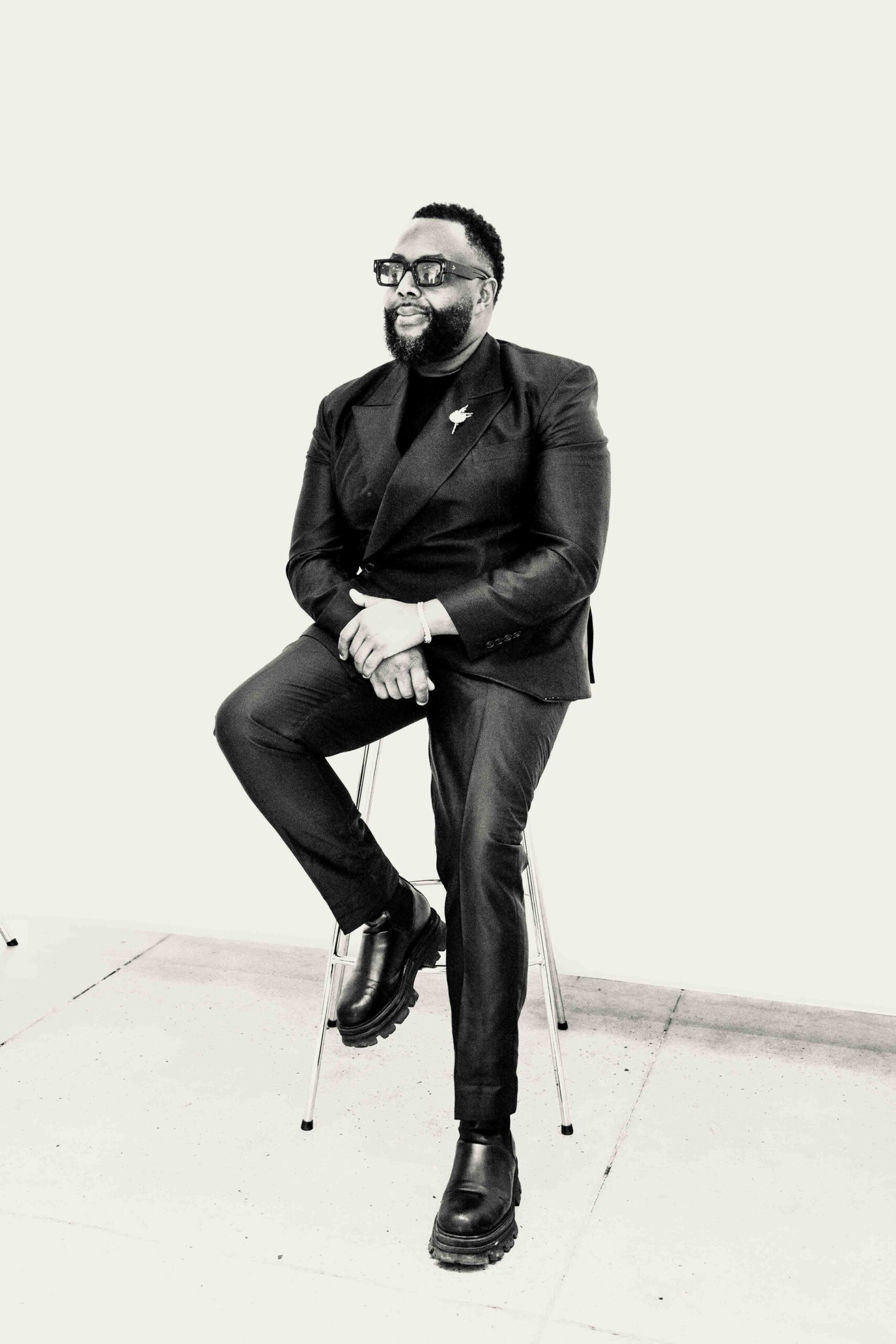
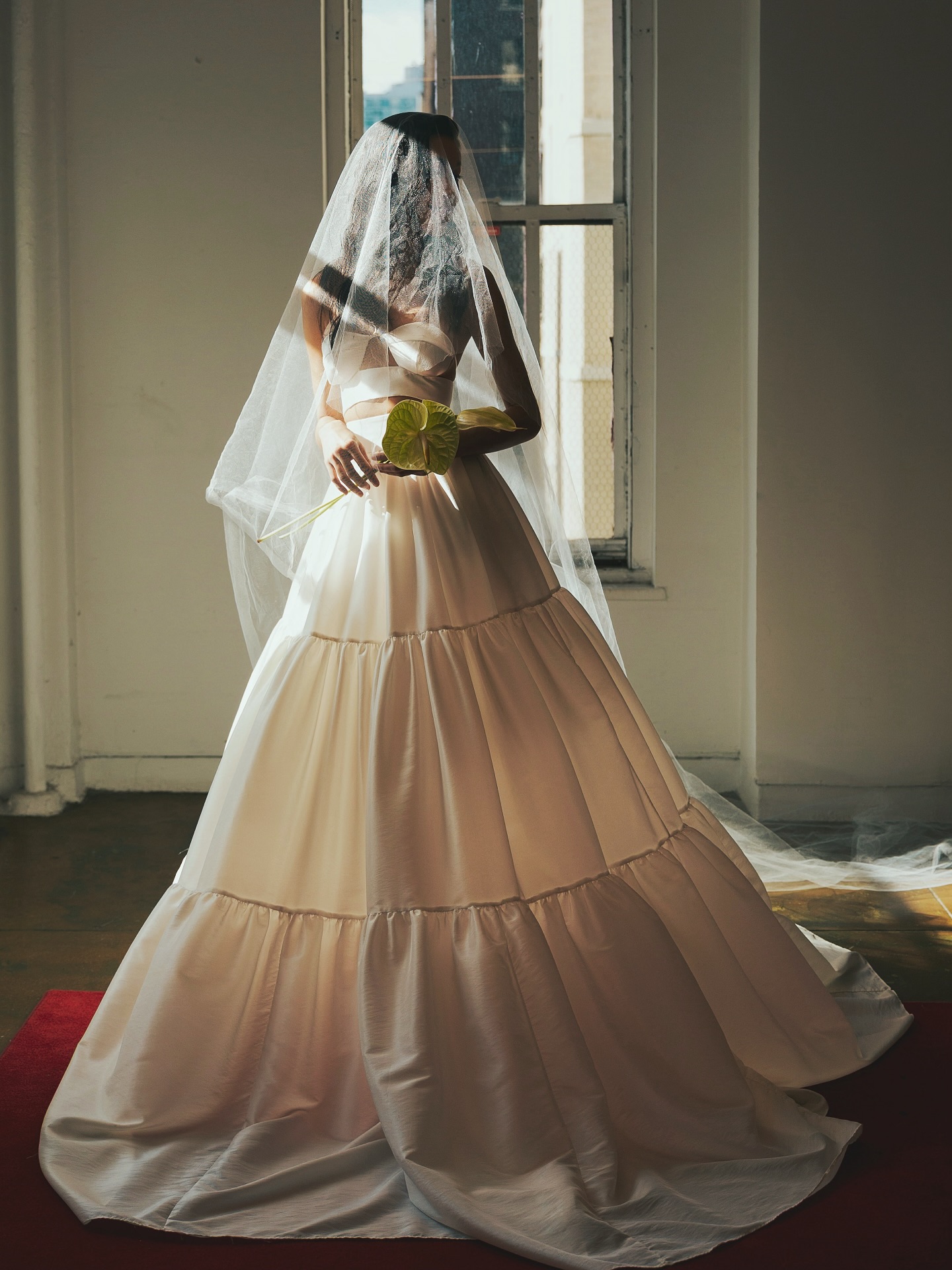
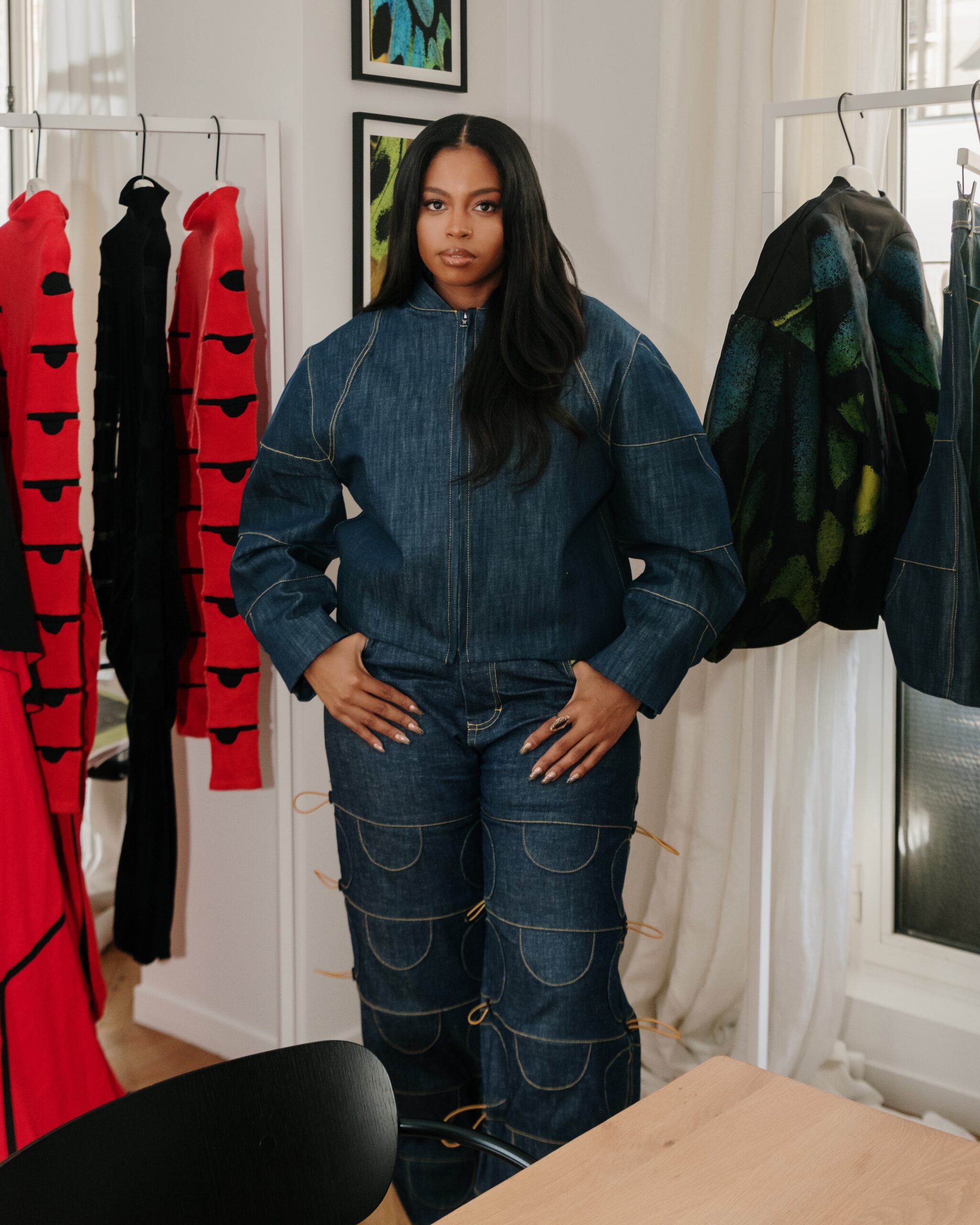
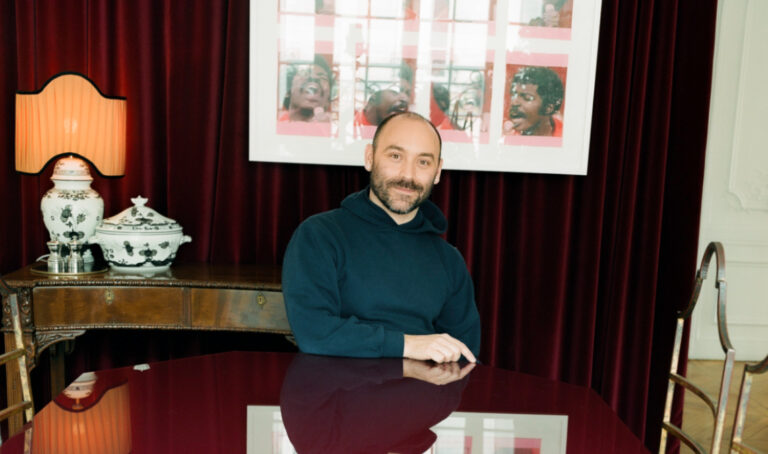
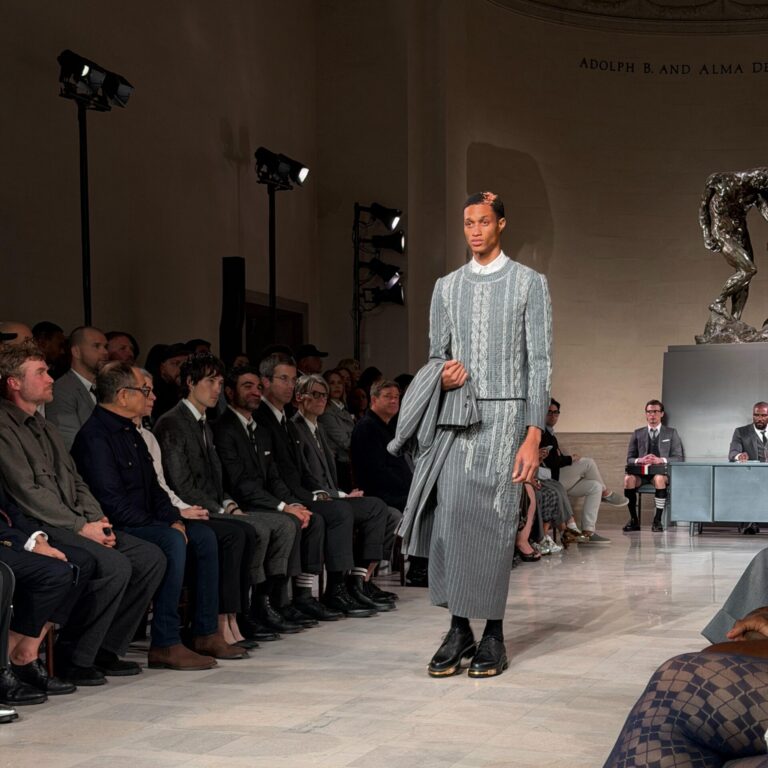
Charles Dieujuste of Scorcésa, Raeana Anaïs of Raena, and Jimmy LaTouché of LaTouché represent a new generation of Black designers scaling the fashion industry on their own terms. Scorcésa reimagines bridalwear through a contemporary lens, blending Haitian heritage with modern elegance. Raena operates as a multidisciplinary fashion universe where clothing, film, and performance converge (including a short-listed film at the 2025 Berlin Fashion Film Festival). LaTouché elevates tailoring to an emotional practice grounded in personal history, creating custom garments rooted in Haitian motifs.
Here, the trio go behind-the-scenes of their practices to talk hard-earned lessons, industry representation, and where they see the next five years taking them.
What sparked your interest in design, and how did you get started?
Charles Dieujuste: My aunt often said she noticed my talent from a young age. One day, during a funeral procession outside our second-floor window, she asked, “Charles, what are you looking at?” I excitedly shouted in Haitian Creole, “M’ap gadé costume!” [“I’m looking at a suit!”] She glanced down and saw a gentleman in a tailored jacket. At that moment, she knew I was destined for this path. Years later, I answered that call.
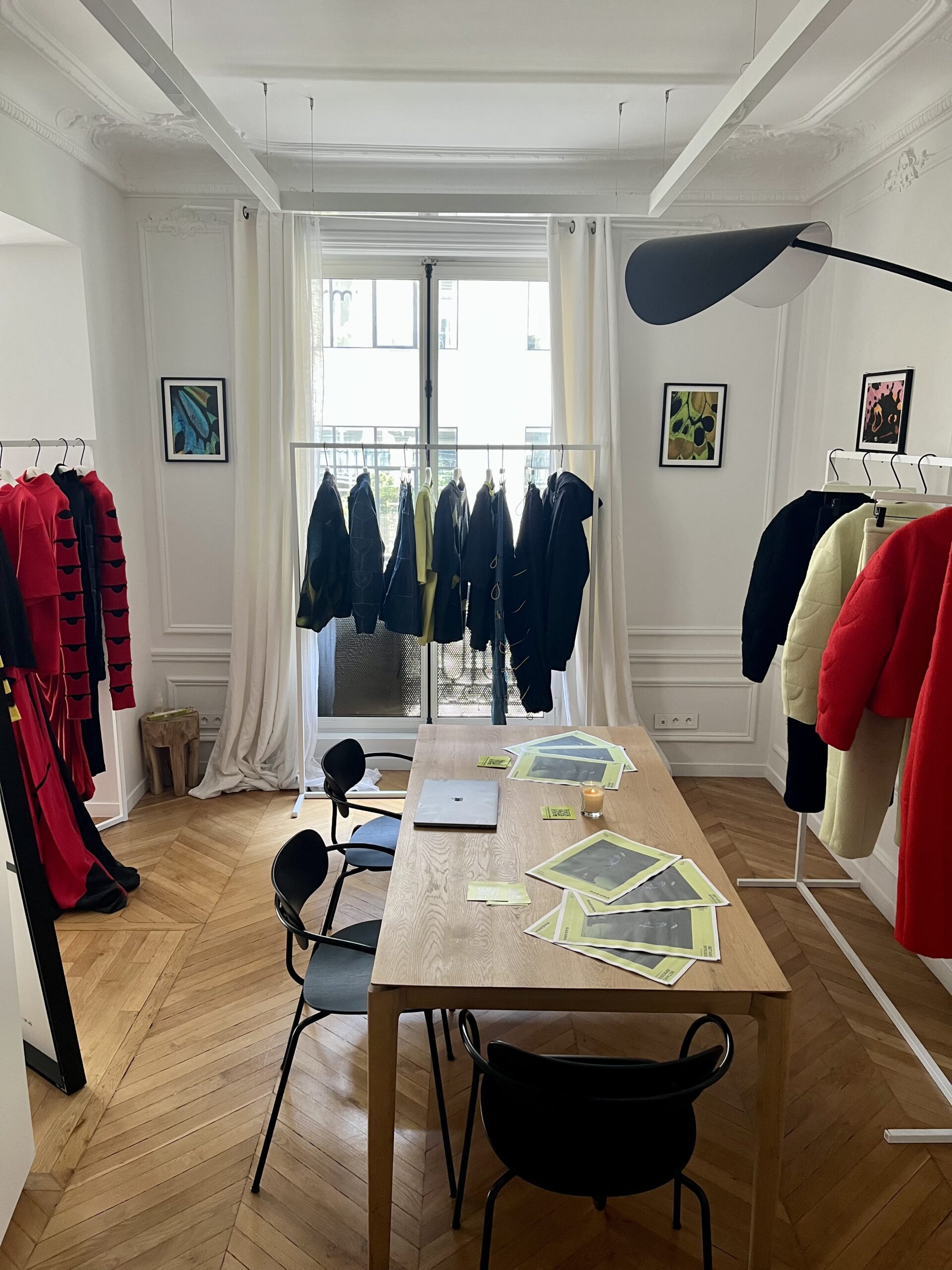
Raeana Anaïs: I went to Parsons, further immersed in design education, and found my voice as a designer. When I graduated, I started building Raena. No matter what else I worked on, or where else I worked—I was always working on the brand. I developed Arthropoda in 2015 as a concept and a world within the Raena universe inspired by arthropods. I incubated the idea and launched Arthropoda: Collection 1 in January of 2023 during Paris Fashion Week. Arthropoda by Raena is a culmination of all my interests, merging fine art, fashion, film, performance, music, and world-building into one living ecosystem.
Jimmy LaTouché: [I had] a deep need to never look like anyone else—I wanted clothes that felt like me. After high school, I spent two years battling depression, feeling stuck and unseen, until one day I decided to bet on myself: I began dissembling clothing and putting them back together. That’s how I learned structure, started teaching myself to cut patterns, and never looked back. That raw creative spark turned into LaTouché, proving that betting on your own vision allows unlimited possibilities.
Where do you envision your brand’s growth in the next five years?
Dieujuste: I see my brand thriving as a leader in the bridal industry, celebrated for redefining the notion that bridal can be contemporary—a new form of tradition that empowers and inspires brides. I envision a strong community of loyal customers, a diverse collection that embraces cultural influences, and an unwavering commitment to sustainability.
Anaïs: I envision Arthropoda expanding as a global luxury house (and world) that people can physically enter as an extension of the collections. The work will deepen through experiential design, immersive exhibitions, and retail environments that function as portals into the universe of the series. Each collection unfolds a new chapter in the series, with its own atmosphere, installation language, and experiential expression, unified by signature silhouette and color codes that carry across the brand ecosystem.
LaTouché: LaTouché will be a fully-formed, global house of tailoring, anchored by a New York and Los Angeles studio, a signature silhouette, and a reputation as the brand that dresses for historic cultural moments. Our goal is recurring contracts with major airlines and hotels to elevate uniforms, red-carpet and film credits, and tightly-curated drops that sell out because people trust the fit, story, and craft—not just the hype.
What keeps you grounded amid the pace and pressure of the fashion industry?
Dieujuste: I understood early on that pursuing my dreams is my responsibility. What keeps me grounded is my commitment to constant meditation and solitude. I don’t own a television, and I don’t rely on Uber Eats; instead, I often walk to get what I need. I create a space that protects my peace at all costs. I dance when no one is watching, and I read whenever I can. My parents instilled in me the importance of education, and I carry that legacy forward.
Anaïs: Ultimately, my faith keeps me grounded. Staying in my own lane keeps me grounded too. I set my pace. Pressure can only creep in if I’m focused on what’s happening around me and not on my own world, Arthropoda, the one I’m creating. This is my life’s work and that’s not something I want to rush.
LaTouché: What keeps me grounded is remembering that the LaTouché brand started with a dream. I followed through and never quit, no matter what. I’m an example of resilience. I made a promise to make people feel seen in their clothes, not just styled. I removed the transaction and replaced it with a genuine relationship. Staying close to the actual fittings—the hands-on work, the conversations in the studio, the parents, kids, and communities I’m doing this for—keeps the noise of the industry from getting louder than the craft.
Which personal and cultural moments most inform your work?
Dieujuste: Interacting with–and observing—the success and resilience in my community greatly inspires my creative process.
Anaïs: Music is the pulse that directs my work. I can live inside of a song on repeat for weeks. Lately, I’ve had Beethoven’s “Symphony No.7 in A Major, Op. 92” on repeat, alongside “Mahal” by Glass Beams, “Les Fleurs” by Minnie Riperton, and “Same Ol’ Mistakes” by Rihanna. Dance informs how I think about silhouette and movement, how the body becomes the story before a single word is spoken. Alexander McQueen’s work left a lasting imprint on me, especially Plato’s Atlantis [the Spring/Summer 2010 collection], as a reference point for how a collection can operate as a full world, with narrative, sound, image, and atmosphere moving as one.
LaTouché: Growing up Haitian and watching my parents work relentlessly shaped how I think about resilience, beauty, and responsibility. It’s why so much of my work feels like a love letter back to them and to Haiti. Moments like bringing Haiti onto major runways, dressing athletes and artists for milestone nights, and seeing kids from communities like mine light up when they see themselves in the clothes, that all feeds the way I cut, layer, and tell stories through fabric.
What is your dream collaboration?
Dieujuste: I’ve immersed myself in the ebb and flow of life and truly believe that what’s meant for you will find you. As a self-funded Black-owned brand, I often don’t take the time to reflect on these moments. That said, I’d love to see my pieces sold on Net-a-Porter. I’d be thrilled to sit down with Michelle Obama; her wisdom is inspiring. The opportunity to work with brides who adore my offerings truly warms my heart. And, of course, I’d love to be a judge for Miss Universe!
Anaïs: I’d like to pair the Tate Modern and Dover Street Market to launch Arthropoda as an immersive architectural installation and moving image experience. It would continue as a portal-style retail world with an archival capsule of wearable artifacts.
LaTouché: My dream collaboration is to design the suits and peacoats for the next James Bond film, and use it as a laboratory to merge my love of science and textiles at the highest level. I imagine Bond in pieces that look impeccably classic on the surface, but are engineered with advanced fabrics, hidden functionality, and performance details you only notice in motion or under pressure. For LaTouché, it would be the perfect canvas to show how tailoring can be both rigorously technical and deeply emotional.
Where do you look for inspiration?
Dieujuste: Inspiration comes from my culture and the incredible women in my life—my aunts, sister, and grandmother. They are a constant source of inspiration, uplifting me with their strength and wisdom.
Anaïs: Nature. The most beautiful and interesting things I’ve ever seen exist there. Particularly arthropods. The variations of patterns and prints, the segmented bodies, that’s the foundation of Arthropoda. It’s a source of inspiration that feels endless to me, and I’m excited to spend my life immersed in it, learning more and going deeper.
LaTouché: I look for inspiration in people and places before I look at fashion. Watching how real people move through a city, travel, work, pray, and celebrate gives me more ideas than any runway show. I also go back to Haiti, as well as the Caribbean and Thailand, my two favorite places, where the colors, architecture, music, and resilience always find their way into my cuts, proportions, and fabric choices.
Can you share a recent collection, project, or piece that you’re especially proud of?
Dieujuste: I’m particularly proud of the Margot Gown. I may be biased, but every piece holds a special place in my heart.
Anaïs: I’m incredibly proud of the first film in the Arthropoda series, Metamorphosis. It’s deeply personal. I created it to move through my own experience of loss, grief, and rebirth. I hold it close because it came from a place of real vulnerability, and it demanded determination to bring to life. It’ s also one of the first true expansions of Arthropoda beyond the clothing.
LaTouché: I’m especially proud of global collaboration with an American heritage brand that’s coming this month. I can’t share all the details yet, but it was a chance to bring my love of science, fit, and storytelling into garments that will live in people’s real lives, not just on a runway. It proves that a kid from Haiti with a vision and a big imagination can sit at the same table as the brands I grew up seeing in the mall—and still protect the soul of LaTouché in the process.
What are some of the joys of being a young Black designer?
Dieujuste: While there are challenges, the joys are abundant. For me, it’s all about the creative process—sourcing fabrics, exploring new possibilities, and embracing forward movement. And the ultimate joy? Having someone believe in your point of view and affirm your vision. That’s what makes it all worthwhile!
Anaïs: I’m designing from my own life and point of view, and I get to watch that land in rooms where it hasn’t always been centered. I have definitely been the first or only one in certain spaces. I feel the weight of that, but I also feel the responsibility and the joy in it. I’m building with the intention that the door stays open behind me, so the next young Black designer walks in with more room, more ease, and more belief. When I was studying fashion, so much of the work I loved was not created by people who look like me. That feels vastly different now, and I am proud to be part of the shift, and part of the diversity of identities and voices making that possible.
LaTouché: One of the biggest joys is getting to design from a place that feels completely specific to me—my family, my culture, my taste—and seeing the world respond to that instead of a watered‑down version. There’s a real freedom in knowing I can bring Haiti, the Caribbean, the barbershop, the block, and the lab into a single jacket and call it LaTouché. Another joy is representation: watching young Black kids clock the label, or see a tunnel fit, campaign, or collab and realize, Oh, someone who looks like me is cutting these clothes.
Where can representation in the fashion industry improve—both on the runway and behind the scenes?
Dieujuste: Representation can improve through empathy, proper education, and accountability. Empathy fosters understanding of diverse experiences, while education equips future designers with knowledge of various cultures. Accountability ensures that brands set diversity goals, assess progress, and remain transparent.
Anaïs: It’s important that there’s diverse representation both in what we see, and in who holds power. On the runway, diversity should be consistent and more expansive across skin tones, body types, ages, gender expression, and physical ability, with cultural specificity handled thoughtfully. Behind the scenes, more diversity in leadership roles across creative, casting, styling, design, production, buying, marketing, and executive teams will help shape culture in a way that lasts. The beauty is that having more perspectives in the room makes the work more interesting, and more innovative.
LaTouché: Representation in fashion needs to move beyond tokenism on the runway to real power and ownership behind the scenes. Runways should consistently feature models across sizes, ages, abilities, and ethnicities (not just during “diversity seasons”) with plus-size at under 5 percent and mid-size dropping.
What advice would you give to a younger version of yourself looking to grow in the fashion industry?
Dieujuste: Years ago, before 2020, the opportunities for Black-owned brands to thrive were slim. I had a namesake brand at that time and found myself discouraged. What I told myself then, and still believe now, is to learn the ins and outs of your industry. Work for someone, learn from their mistakes, and if you need to start over, that’s okay. You’ll be prepared. Along this journey, I’ve experienced both celebration and setbacks, including getting fired, which felt like the end of the world. But I’m incredibly grateful for those experiences! They shaped me and equipped me for what lies ahead.
Anaïs: Create a beautiful garden and the butterflies will come. Focus on you and the world you’re building. Stay imaginative, stay curious, and don’t rush. Be true to yourself in everything that you do, even if it means taking the long way. Don’t compromise your vision, your values, your standards, your taste, or your peace.
LaTouché: Fail early and fail fast. It builds integrity. Build your eye before you build your network. Study fit, fabric, and proportion obsessively, because a great garment opens every door. Say yes to the small jobs that teach you how to deliver under pressure, but always protect your time to design and dream. Most importantly, stay connected to why you started—your family, your culture, the kids watching—because the industry will try to make you generic, but your specificity is your superpower.
More of our favorite stories from CULTURED
Tessa Thompson Took Two Years Out of the Spotlight. This Winter, She’s Back With a Vengeance.
On the Ground at Art Basel Qatar: 84 Booths, a Sprinkle of Sales, and One Place to Drink
How to Nail Your Wellness Routine, According to American Ballet Theater Dancers
10 of New York’s Best-Dressed Residents Offer the Ultimate Guide to Shopping Vintage in the City
Sign up for our newsletter here to get these stories direct to your inbox.



 in your life?

