
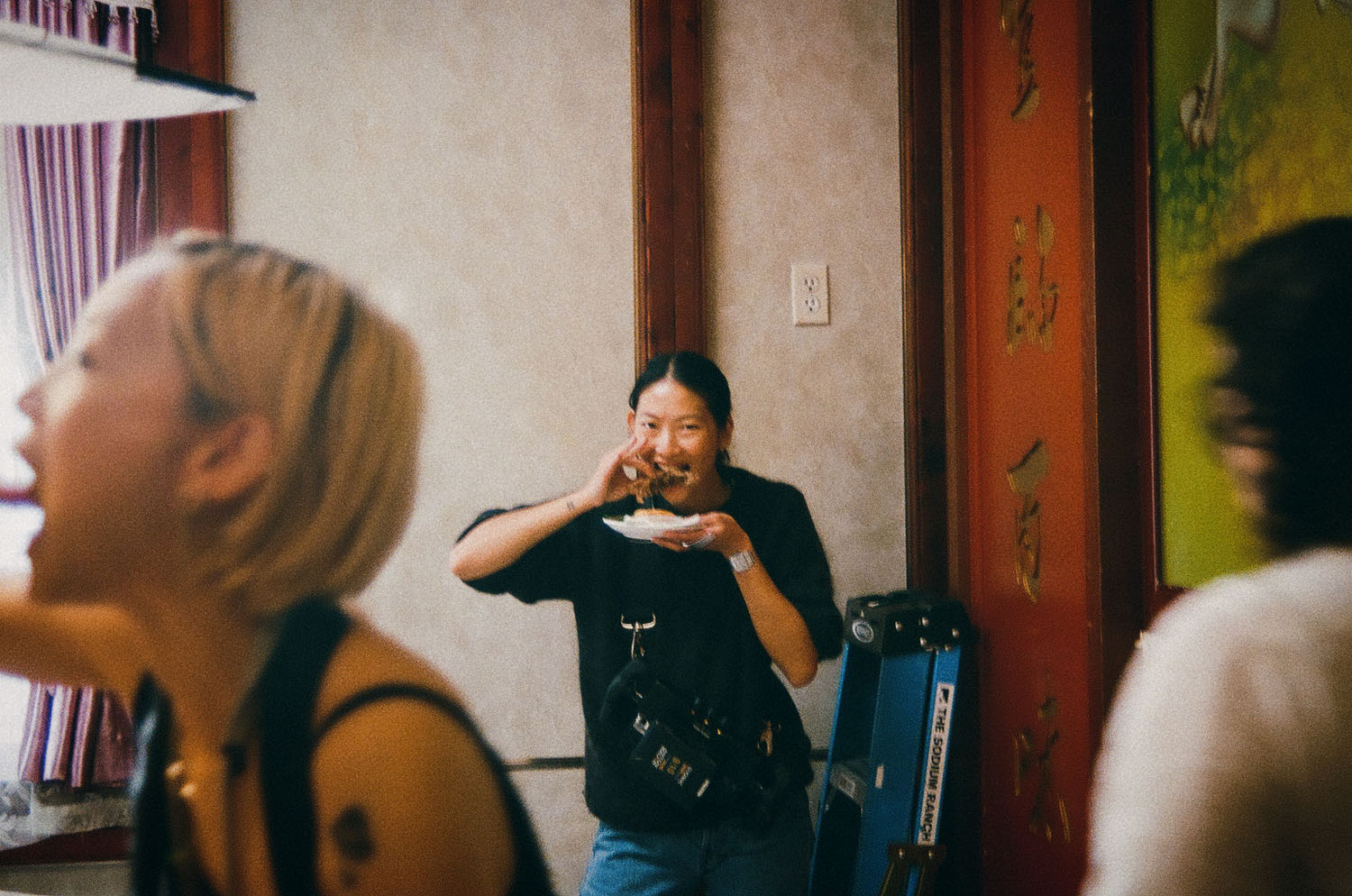
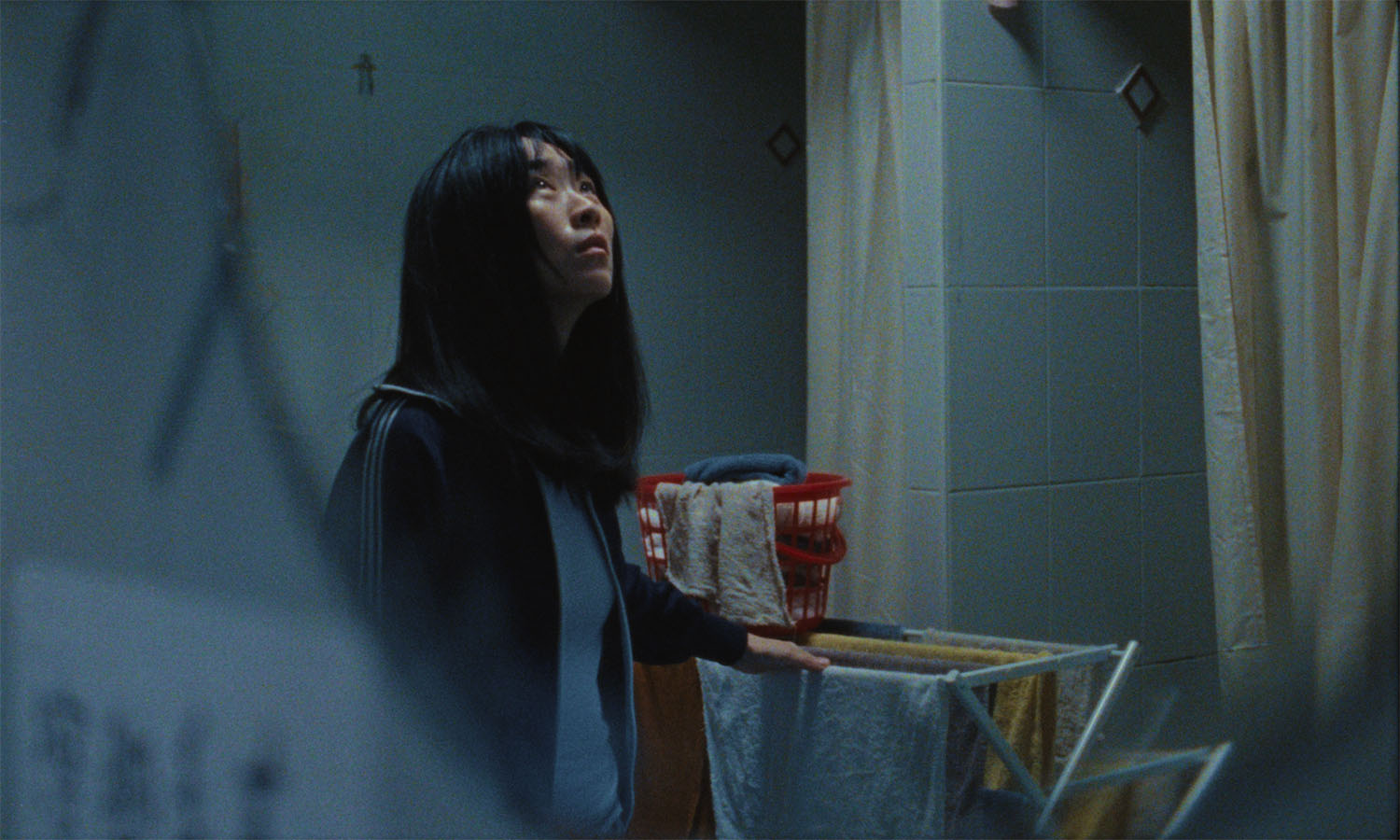
For her directorial debut, Constance Tsang went back to Queens, where she grew up. In Blue Sun Palace, a 2025 Cannes premiere, three Chinese immigrants—two young women who work in a massage parlor and one of their older, hapless boyfriends—try to make it work Stateside for their own reasons.
The trio circle each other and the city in quiet, extended scenes ushered onto the screen by Tsang’s minimalist touch. When a violent tragedy strikes at the parlor a half hour into the film, inspired by real-life Atlanta shootings in 2021, the project’s comfortable pace seamlessly turns melancholic. This study of collective grief earned the director a litany of nominations on last year’s festival circuit and this year’s upcoming Film Independent Spirit Awards, including Best First Feature, Best First Screenplay, and Best Cinematography.
Ahead of the ceremony, Tsang walked us through her personal and ripped-from-the-headlines inspirations, as well as the biggest lessons she learned as a first-time filmmaker in a particularly fickle market.
This project is loosely drawn from your experience growing up in Queens. How did that come into play?
In 2021, there was a series of attacks on massage parlors. I started to write a film that was centered primarily on a singular protagonist. It felt very much like your typical immigrant story and I couldn’t really find my own film through that. After Covid, a lot of the structure and what I was going through on a personal level changed that experience. It really became a story about how I connected to the particular industry, but also the space and the environment in which it takes place: Flushing, where I grew up.
I moved from Queens when I was 16. Right after my father passed away, my mom immediately bought a new apartment in Dumbo, [Brooklyn] and I really hadn’t been back there, on a level where I was trying to connect, until I started doing location scouting for this film. I felt very emotionally far from this place, and it also felt like a place where I had such strong emotional memories. I guess that became a place of exploration.
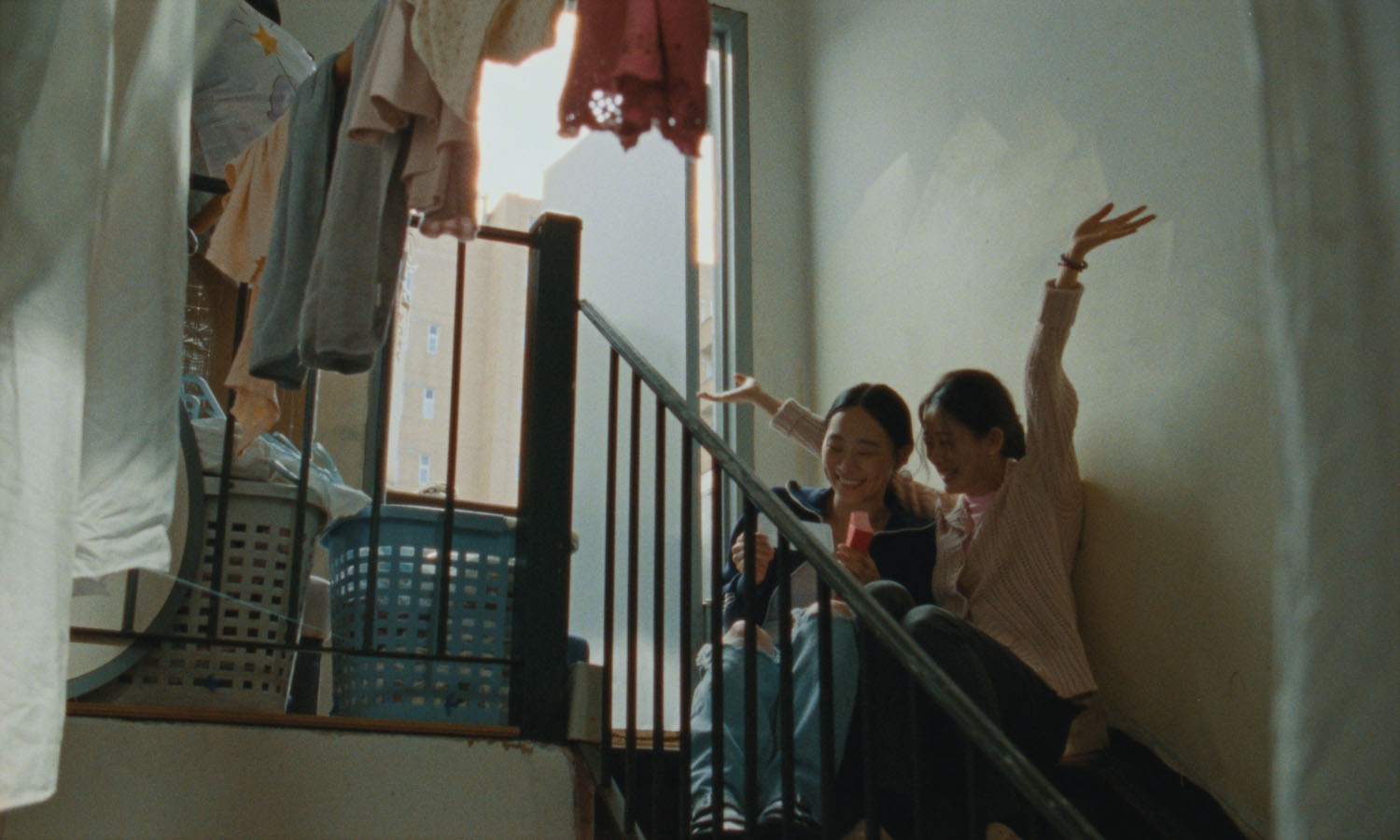
Tell me a bit about working with these actors. I know they helped you translate the project from English to Chinese. It sounds like they had a lot of input on their characters.
I’m the type of collaborator where I really enjoy input from the actors. The first step is finding another creative collaborator that feels very close to the characters, and for them to bring in their own thoughts and decision-making and their own intuitive choices. It was so incredibly helpful during the rehearsal process because I had written the script in English. My first language is Cantonese, but I’m, like, illiterate. We had a translated script that was just very sterile and not at all the emotional script that it needed to be. With the actors, we added in all of the things that you don’t see. The choices that are there, but the decisions are made from a place of abstract emotionality. Those conversations really shaped how the scenes worked, what the pacing was, and ultimately, even on set shooting, what that choreography needed to be.
Was there anything that they brought to you where you were like, “I didn’t even see that in the character”?
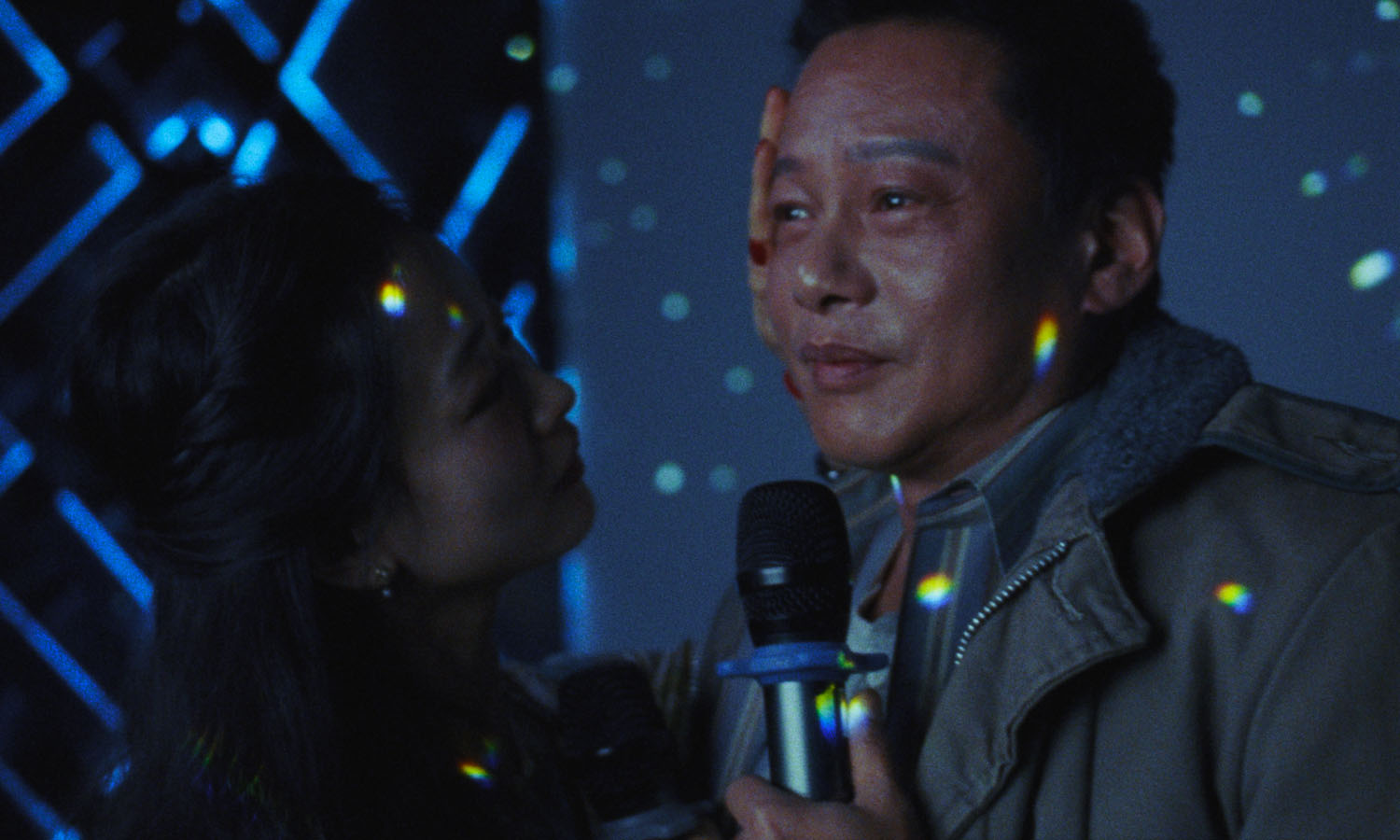
Really early on, when we were first starting to work with [Taiwanese actor and one of the film’s three stars] Lee Kang-sheng, he didn’t quite understand why all these women were attracted to him. We started to build this character and this man who was much more romantic. I really wanted this character to feel a lot more poetic and soulful, but that was a decision that came directly from that one comment he made that I couldn’t get out of my head.
You almost have this “before” and “after” in the film, when you get about 30 minutes in. How did you think about that divide?
In the first iterations of the script, it wasn’t like that at all. I didn’t know where to put the incident, the moment of the crime and the death. For me, the structure came through because I just kept asking myself, What is the story really about?
I was also going through a divorce at that time. So much of it was myself letting go of personal walls in order to tackle real grief. My own grief really informed the final version of the film—a willingness to tackle the subject in that way, to tackle the loss of a father figure from when I was young. I just let it be what it needed to be.
Did you lean on any other filmmakers in your network for advice or feedback while making your first go at directing?
So many filmmakers that I know, they’re all coming from a background where there is not that much money and not that much time. So, how do you make the best of what you can do? It’s been really liberating and a really wonderful perspective, re-engaging with how we make films. That’s the interesting conversation coming out of it, that we don’t necessarily need financial support from the mainstream and that you can make a film that is excellent, made for very little money, and that still speaks to people. It’s been an inspiring conversation because it’s very hard, as you know, Sophie, making films.
That’s what I’ve heard from every single filmmaker. They’re all like, “It’s a really weird time to get a film funded.”
It’s really weird and it’s so rare these days to see films that feel really free, that have a sense of the commerciality [not being] inherent in the filmmaking process. When I watch the films of some of my peers, I’m like, Wow, it feels almost like a small miracle that something like this can exist. A lot of filmmakers that I talked to are coming from a space where their countries support them and give them grants. To see filmmakers existing in our economy and being able to make films that feel free, it’s really remarkable.
Will you tell me a bit about how your next project is coming together?
We’ve developed it with Mubi, who was very kind to give us that sort of support. I’m now in the process with my producers of attaching actors and in casting. It’s a little bit easier than my first film. I’m so used to anxiety and the pain of making a film. I’m like, Oh God, does that mean [this one’s] not gonna be as good? Am I not challenging myself? Of course, you learn from your previous experiences. I ask myself, How can I push the directing in this? How can I push the form? What am I really exploring on a level that is thematic and also visual?
I think a lot about how I am using camera language to support a film like this. I’ve just written the script and I’m starting to get a feel for the pacing and the editing. I’ve started looking here and there in terms of visuals and moods and images that I’m collecting. That’s kind of what I’m taking away from Blue Sun to this, that everything needs its own time and to not give yourself a heart attack over it.
It’s a good place to start a new project. How do the 20th century Russian director Andrei Tarkovsky’s films factor into those inspirations?
I feel like they are a marker of what the form can be. He has this one specific chapter [in his book on filmmaking, Sculpting in Time] that really changed the way I looked at cinema, about his perspective on time, rhythm, and editing. When you’re in film school, you’re taught a very Western way of filmmaking, and it comes from a theory that has been entrenched in the works of [Sergei] Eisenstein, like, how is the editing creating rhythm? When I was in school, I loved all of these films that were so far away from that style. I’m a huge fan of Chantal Akerman, Béla Tarr. I love when films exist in a space that feels like it’s of its own time, but I didn’t quite understand what that meant. When I read this book, it just clicked.
It was his way of talking about how filmmaking is really about the individual’s time and the way that we approach scenes and the way that we approach the choreography. It’s so intuitive to us as individual artists that it’s not necessarily about the time existing on the editing floor. I understood what a film like that could be, and what the rhythm of that could be, and I took that with me to Blue Sun, and hopefully for the rest of my films. But it’s a really scary thing, to trust yourself.
More of our favorite stories from CULTURED
Julie Delpy Knows She Might Be More Famous If She Were Willing to Compromise. She’s Not.Our Critics Have Your February Guide to Art on the Upper East SideGus Van Sant (Loosely) Adapted Shakespeare and Cast William S. Burroughs. Here’s Who He’s Reading Now.Pat Oleszko Has Turned Everything From Waiting Tables to Stripping Into Art. Five Decades In, the World Is Catching Up.Move Over, Hysterical Realism: Debut Novelist Madeline Cash Is Inventing a New Microgenre
Sign up for our newsletter here to get these stories direct to your inbox.



 in your life?

