Nicholas Aburn’s optimism has teeth. It’s a New York affect: practical, direct, and somehow still romantic. In the studio, it functions like policy. “I try to say yes to every idea,” he says, and he asks the people around him to start there, too. Then comes the real vetting: cost, time, whether it fits the business’s priorities. Yes, for Aburn, keeps “the creative tap flowing.” The point is the momentum.
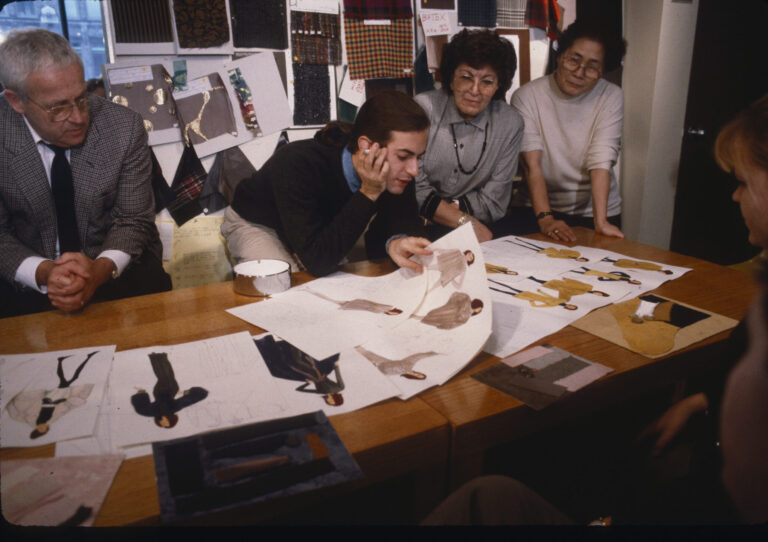
Nightlife staple Area tapped the designer as creative director in early 2025 after the downtown brand’s co-founder, Piotrek Panszczyk, stepped away after just over a decade at the helm. Area’s visual language is legible from across a room: glamour that flirts with overload. Aburn arrived fluent in that dialect, with a resume that reads like a checklist of the 21st century’s hard-edged darlings, from Tom Ford to Alexander Wang to Balenciaga’s couture studio under Demna.
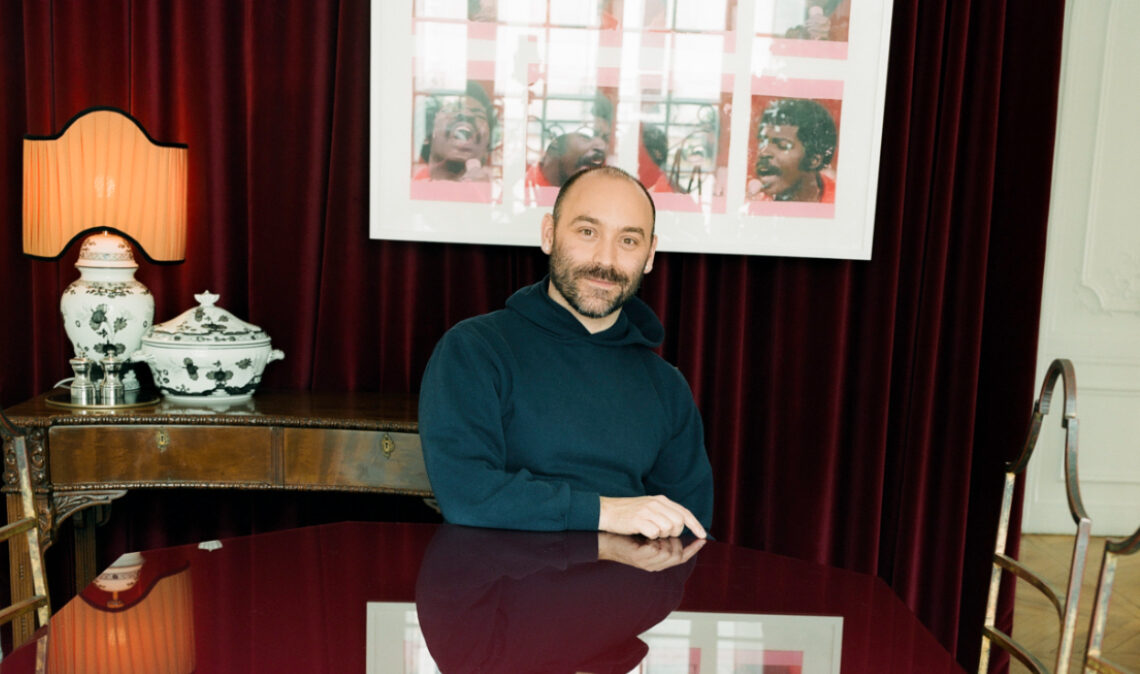
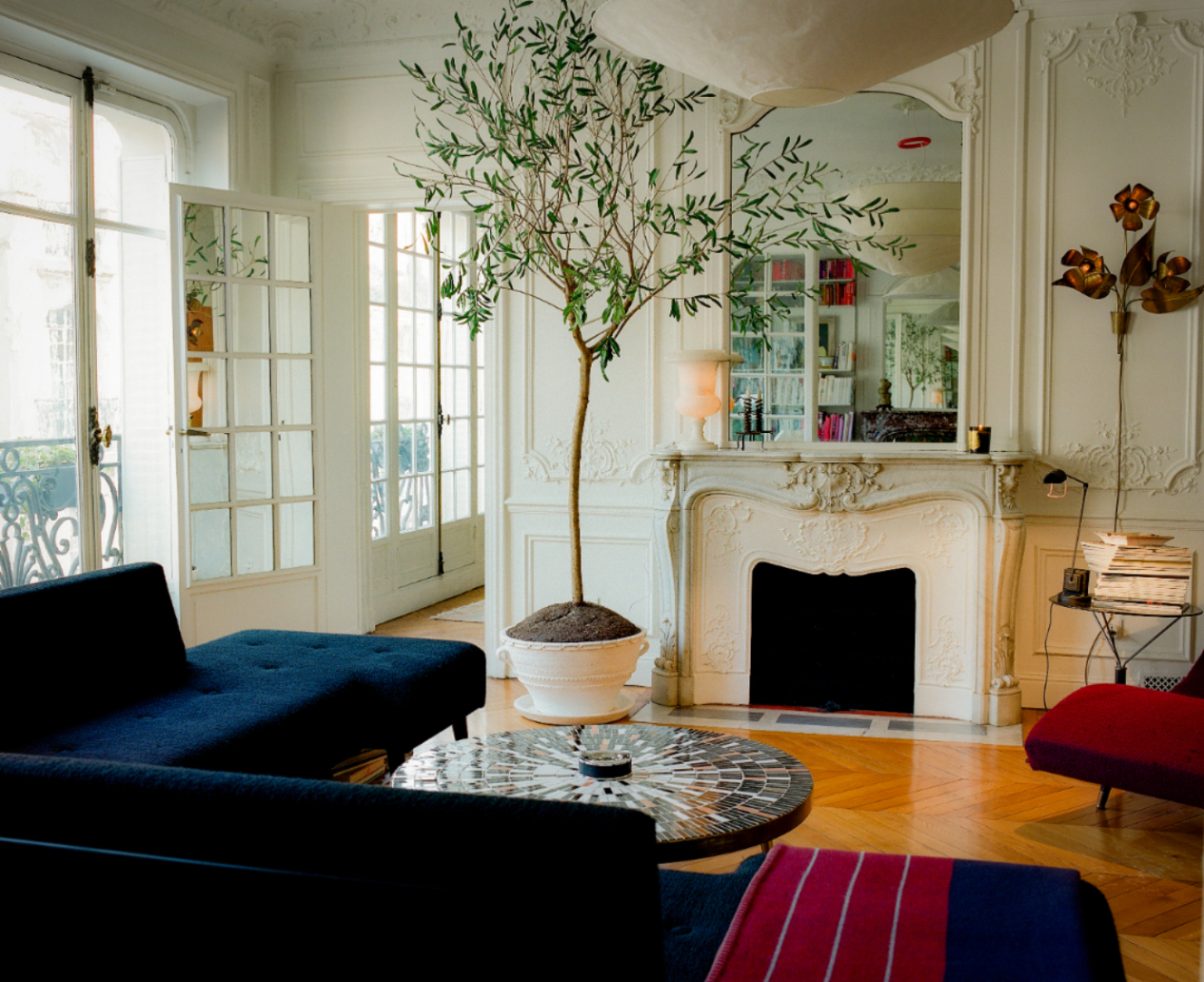
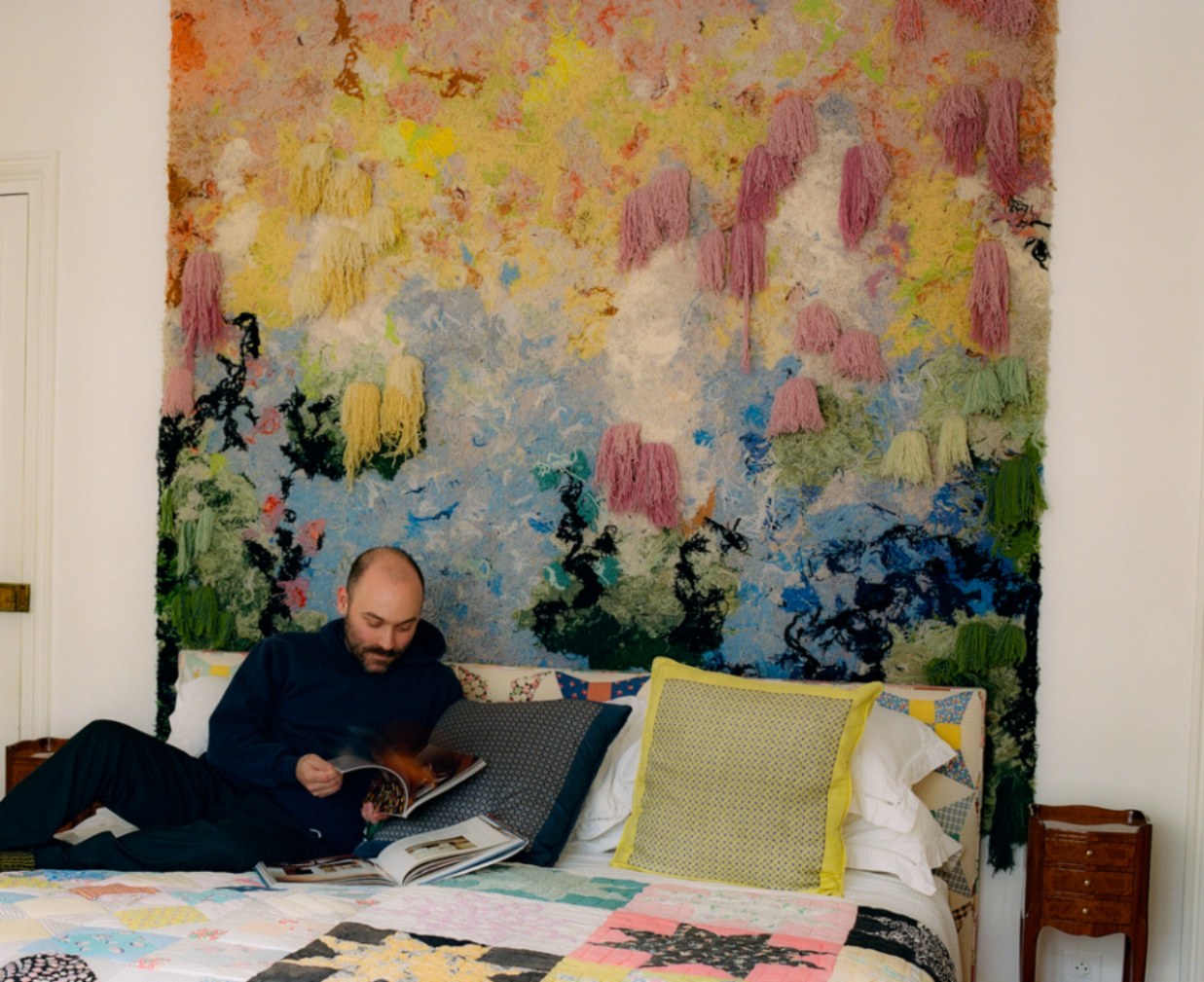
He speaks to me from his Paris apartment, which is a study in controlled romance: deep red velvet, white molding, parquet floors that catch the daylight, a high-gloss table the color of dried red wine. Aburn grew up in rural Maryland, far from fashion’s easy access points. He made his own curriculum from the glossy magazine stacks at Barnes & Noble and weekly glimpses behind the curtain on Elsa Klensch’s TV show Style. Those early images left him craving glamour on the street. So, decades later, his pitch to Area was simple: Keep the spectacle, add the day-to-day. A clearer quotidian dimension with no apology for shine.
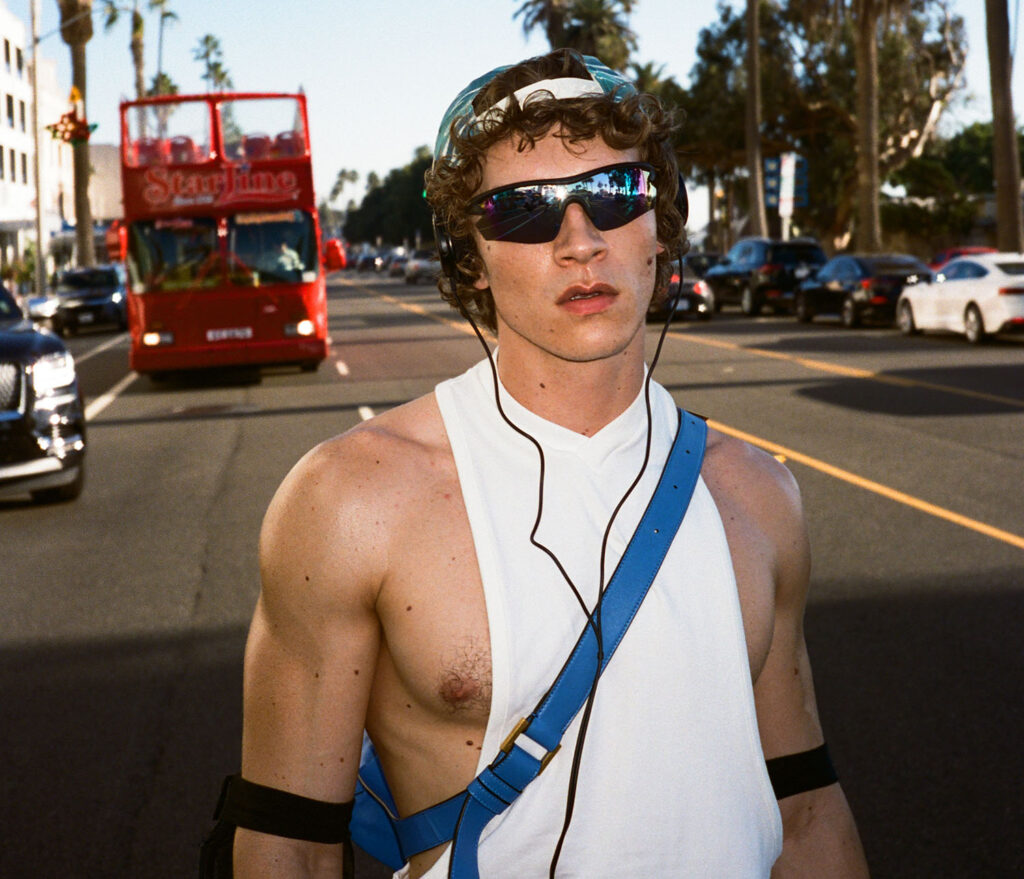
Aburn’s Spring/Summer 2026 debut at New York Fashion Week last September made that case, adding nods to the pulse of daily life without sanding down Area’s edges. His most persuasive looks refused to choose sides: a satin hoodie paired with a long skirt—tuxedo-style and held together by an undone cummerbund.
“Fashion tells a story, but it’s only the story of a single day. One day, I want to feel strong. The next, I want to feel like summer.” —Nicholas Aburn
Aburn’s vision for his Area debut is evinced by the show notes, written in the form of a screenplay. The single sheet of text chronicled the ritual of getting dressed for a night out, ending on a line that swings between thrill and dread: “What if the confetti never stops falling?” It gave the clothes a sense of psychology. “I wanted to get people feeling and not thinking,” Aburn says. He’s less interested in the performance than the private experience before it, when a person decides who they’re playing. “Fashion tells a story, but it’s only the story of a single day. One day, I want to feel strong. The next, I want to feel like summer.”
If the collection has a hero garment, it’s the cloud confetti mini dress. Confetti’s arc is short—from joy to debris once the music cuts out. Aburn turns that vanishing point into a site of intricate labor; the dress reportedly took several weeks to construct. “I like taking really simple things and treating them with a reverence,” he says. The gesture feels almost devotional.
Aburn’s gift is the edit. He designs for people in motion, for moods that shift, for confidence that needs a little structure. He doesn’t ask you to buy into the fantasy; he builds it until it’s within reach.
More of our favorite stories from CULTURED
Tessa Thompson Took Two Years Out of the Spotlight. This Winter, She’s Back With a Vengeance.
On the Ground at Art Basel Qatar: 84 Booths, a Sprinkle of Sales, and One Place to Drink
How to Nail Your Wellness Routine, According to American Ballet Theater Dancers
10 of New York’s Best-Dressed Residents Offer the Ultimate Guide to Shopping Vintage in the City
Sign up for our newsletter here to get these stories direct to your inbox.



 in your life?