
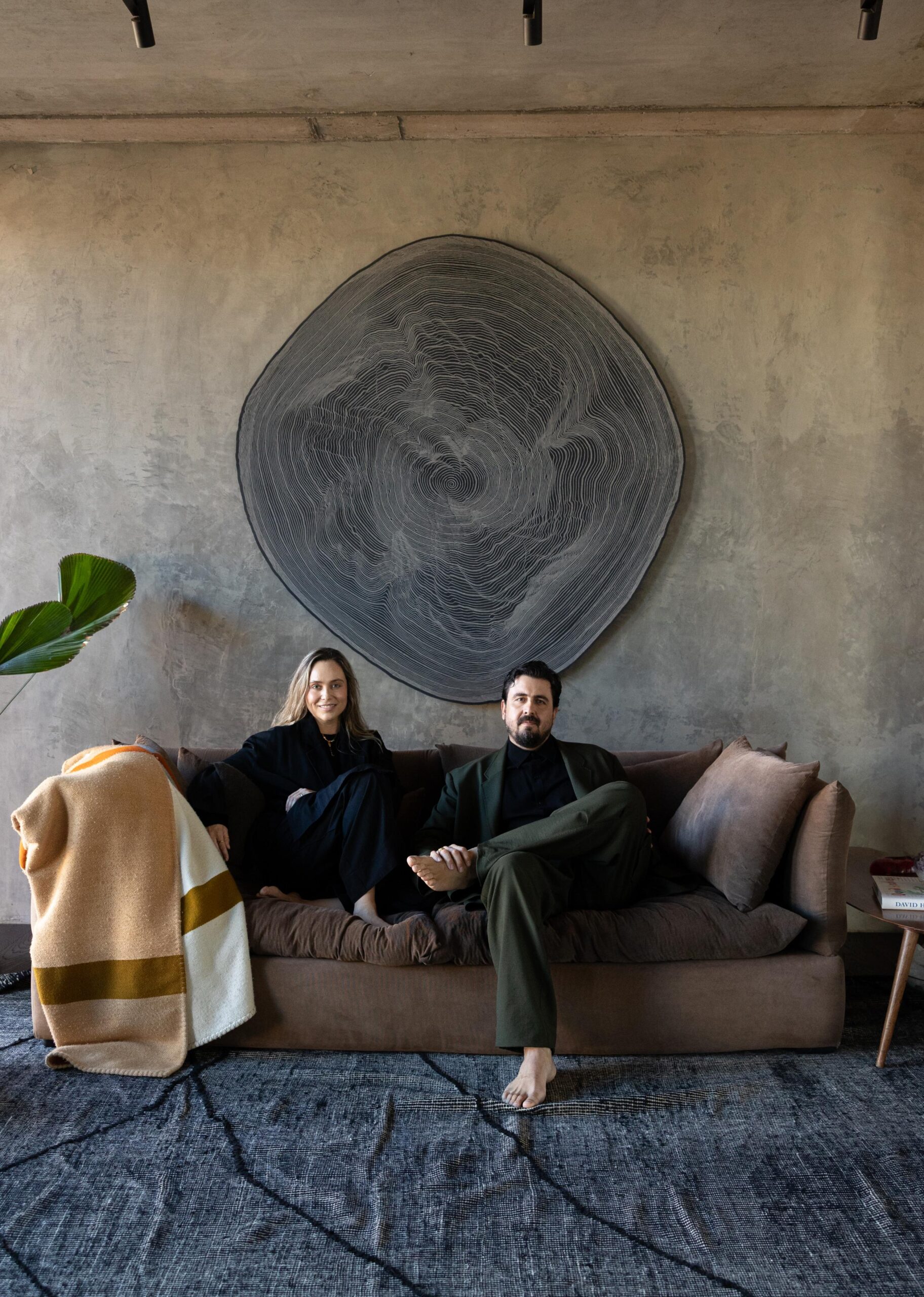
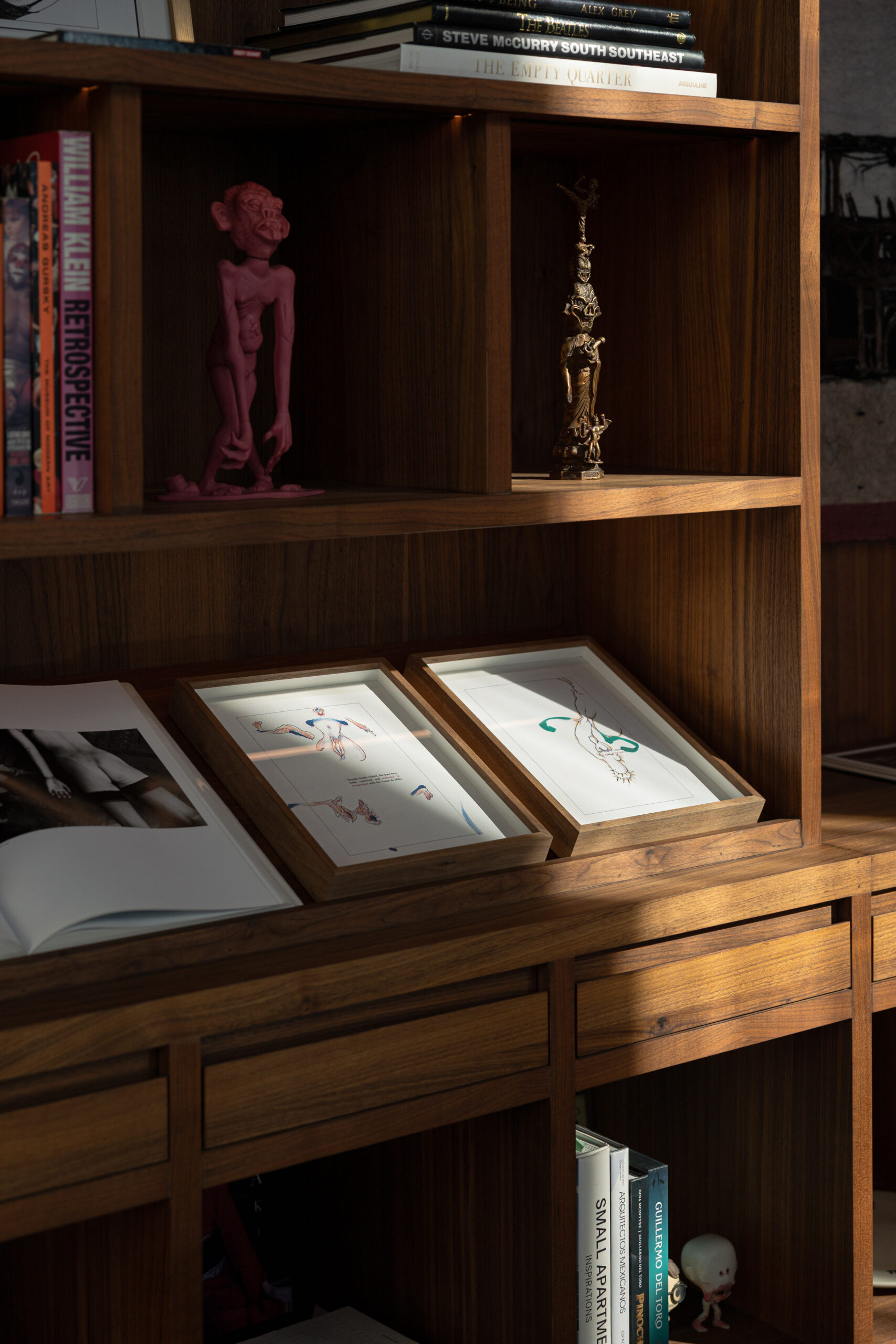
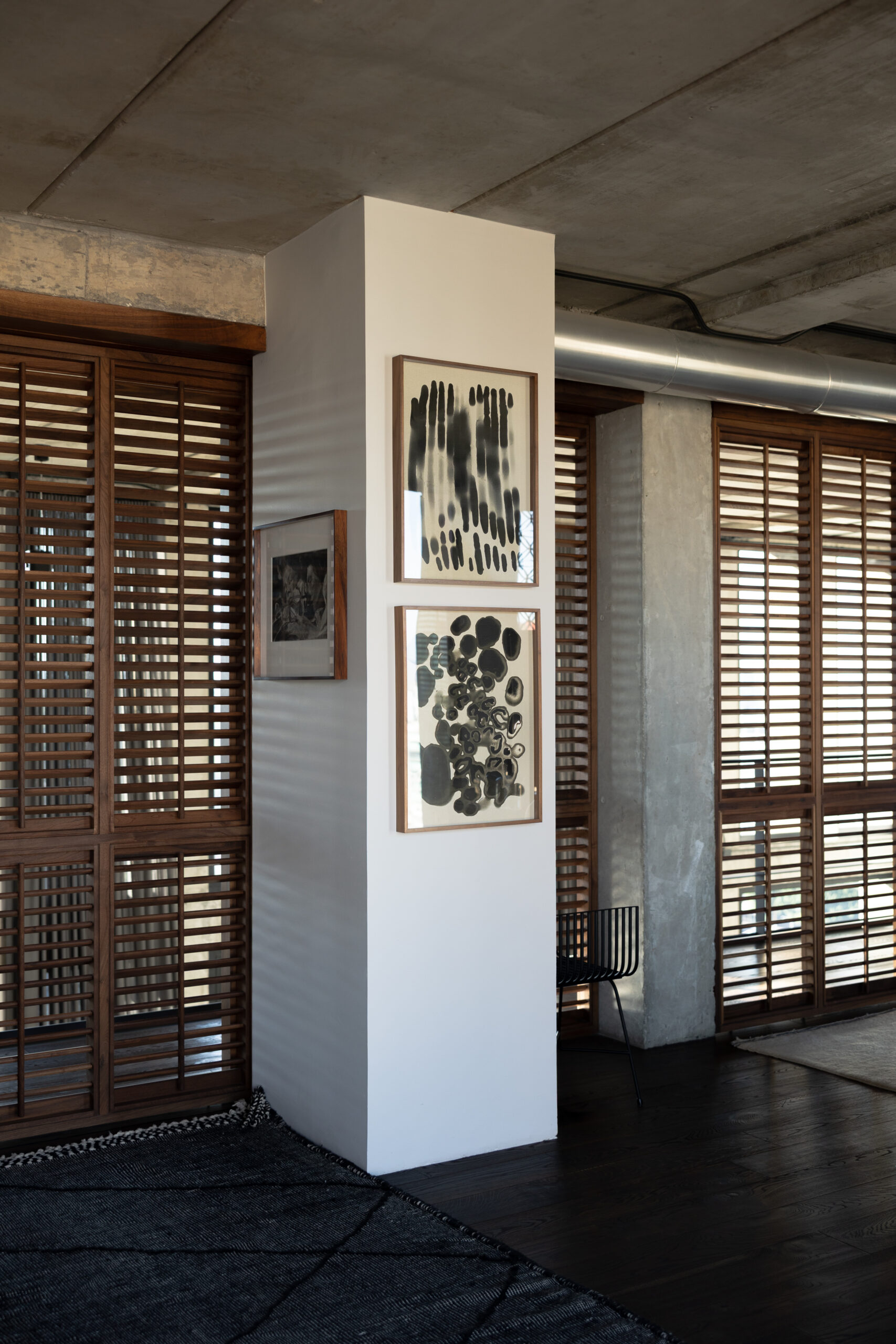
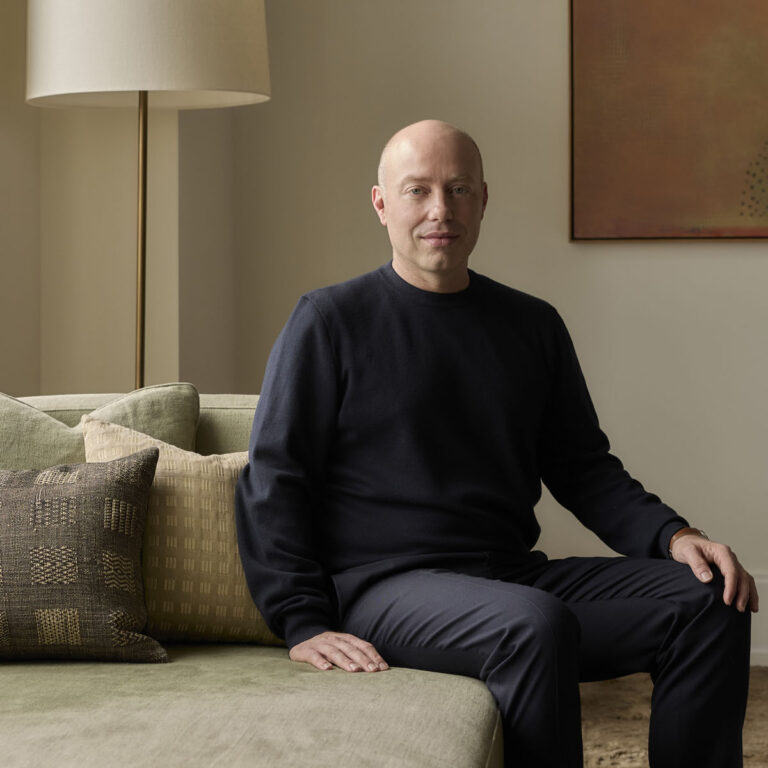
In a quiet corner of Guadalajara, Mexico, Amaury Vergara and Valeria Bross have amassed a collection that succinctly reflects where they find themselves—geographically and emotionally. As local patrons and board members of the Museo de Arte de Zapopan, their collection grows as much through private studio visits as it does through the growing Mexican fair circuit, including this year’s edition of Zona Maco.
Vergara, the CEO of health and wellness outfitter Omnilife and president of football club CD Guadalajara, shares the curation of the collection with his wife, Valeria Bross, a professional wedding photographer whose first acquisition was long calculated and hard won. At home, they’re surrounded by pieces that chart the expansion of Mexico’s contemporary art scene–composed of a materially inventive and culturally incisive crew of creatives.
“The city offers a non-competitive, fertile ground for artistic experimentation, distinct from the capital’s more market-driven scene,” Vergara notes. Indeed, recent years have seen American collectors and institutions heading down south in increasingly large droves, in search of new voices and work. With Mexico City thoroughly saturated, the couple is betting on Guadalajara as the next must-visit stop on the map. For CULTURED, they sat down in the midst of Zona Maco and its satellite fairs to unpack their own locally inspired collection, and the tide changes that continues to shape it.
What do you think makes the Zapopan and Guadalajara art scene distinct right now?
Historically, Guadalajara has been an epicenter of culture, craftsmanship, and Mexican folklore. In recent years, its international resonance has expanded dramatically, propelled by a generation of locally rooted artists whose internationally established careers have redirected global attention toward the city. Alongside this growth, new galleries and spaces have emerged. The city offers a non-competitive, fertile ground for artistic experimentation, distinct from the capital’s more market-driven scene. Its hospitality, culinary richness, and genuinely warm atmosphere tend to captivate the hearts of art visitors, making Guadalajara increasingly influential, dynamic, and relevant year after year.
Which work in your home tends to provoke the most conversation from visitors?
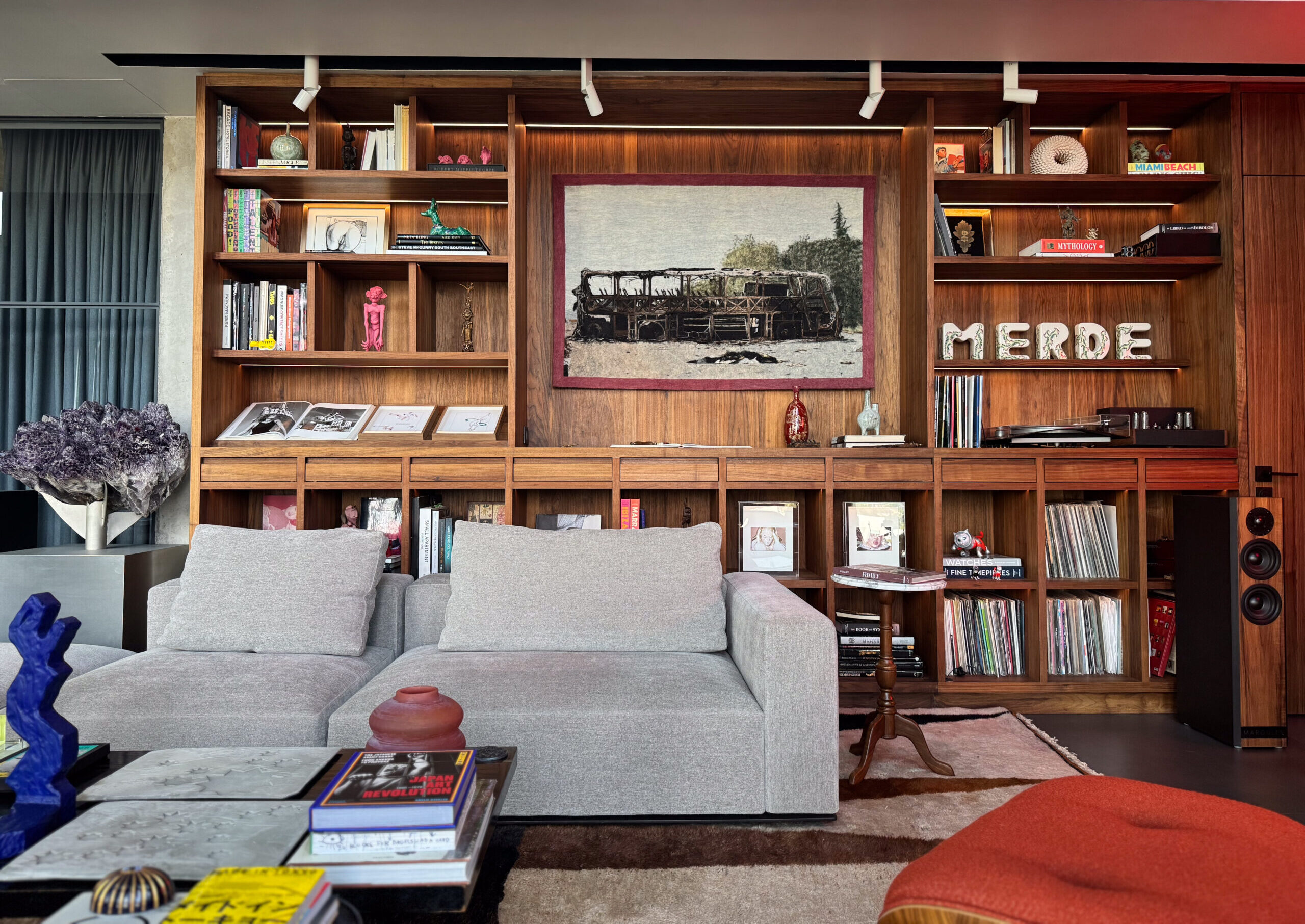
The work that most consistently provokes conversation in our home is Nochixtlán (III) by Adela Goldbard. Its immediate visual impact draws people in, but it is the underlying narrative that truly resonates. The piece memorializes the violent events that took place in Nochixtlán, Oaxaca, in 2016, translating images of conflict and protest into delicate needle-felted textiles. The tension between material softness and the gravity of the subject matter creates a powerful emotional dissonance.
How do you see Mexican contemporary art positioning itself today, both within Mexico and on the international stage?
From our perspective as a collecting couple, Mexican contemporary art is currently at a particularly compelling moment. It has achieved clear international relevance and established a firm presence within major art fairs and global contemporary art conversations. A generational shift marks a clear turning point: Younger artists have moved beyond many of the themes historically associated with Mexico’s most recognized figures, engaging instead with global concerns and broader conceptual frameworks.
This evolution unfolds within a complex political and social landscape. Mexico occupies a geopolitically charged position bordering the United States while serving as an economic and cultural bridge to Central and South America. Rich in culture yet marked by political instability and deep social inequality, the country offers an abundant source of urgent narratives and globally resonant themes. These conditions have fostered practices of increasing sophistication.
Where does the story of your personal art collection begin?
It begins when we decided to build a life together. From the outset, there was a genuine concern: We each came with distinct and highly personal artistic sensibilities. Collecting together did not come naturally. What followed, however, was an organic and gradual process, almost matrimonial in nature. Over time, we found ourselves gently persuading one another, negotiating which works were truly non-negotiable and deserved to remain, and which, under the shared scrutiny that comes with partnership, were better suited to inhabit another space.
Today, those compromises have shaped a single collection that continues to be formed through constant discussion and exchange. One principle, however, remains unbreakable: the collection is never about decorating spaces. It is about allowing the art to speak about who we are—our individual histories and our shared story—sometimes subtly, sometimes at full volume.
Is there an artist working in Mexico right now who you’re particularly excited about?
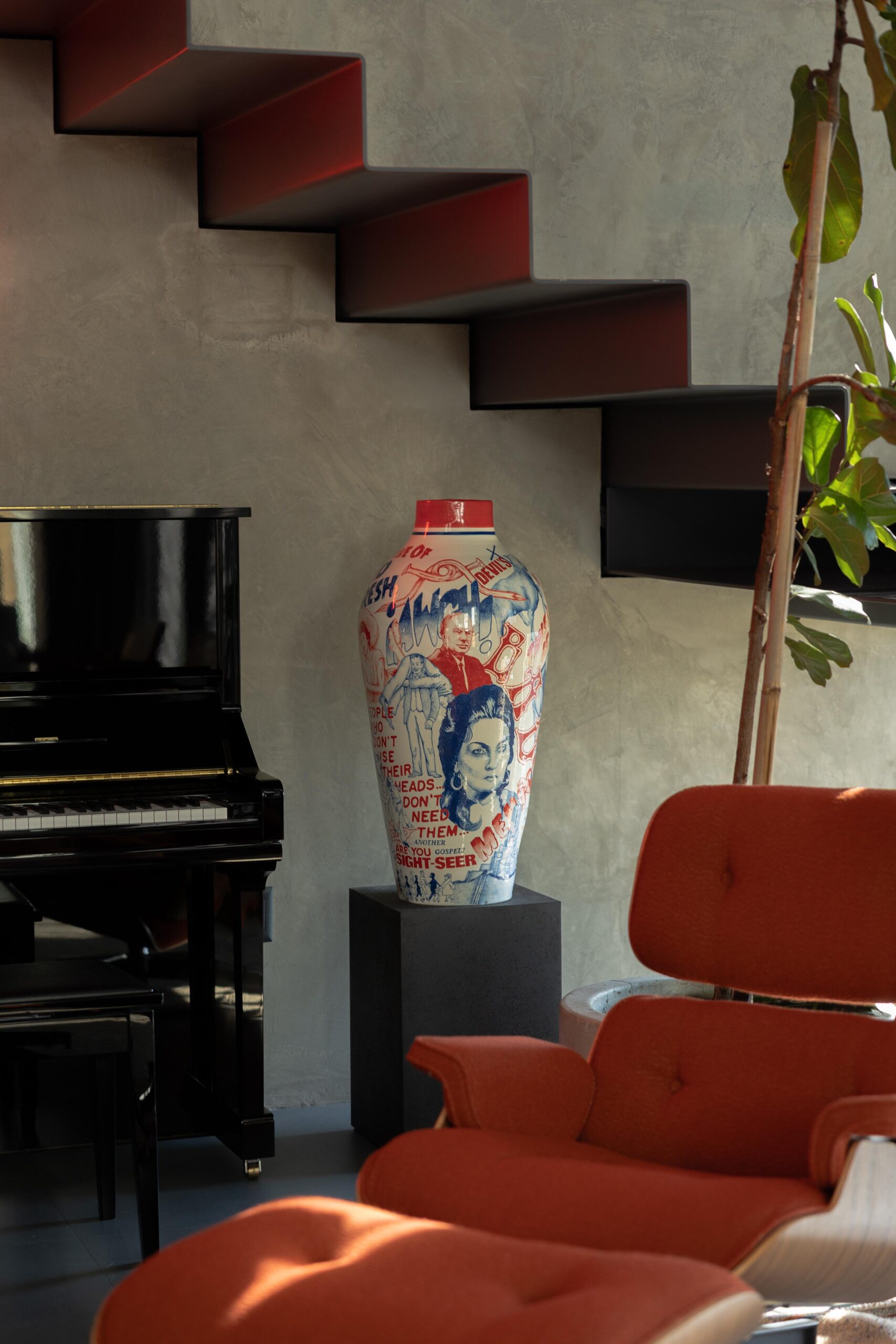
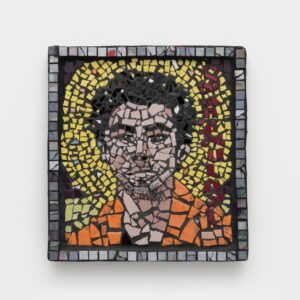
We are particularly excited about Renata Petersen, who is based in Guadalajara—especially with her recent exhibition at the Hammer Museum featuring the monumental work, The Secret Gospel Church of Phallic Worship. Renata’s practice often weaves together archival imagery and symbolic material to create ritual-like themes of belief, power, and desire with both boldness and conceptual depth.
How would you characterize the identity of your collection today?
Intentionally elusive. There is a special energy and a deep commitment to supporting local and emerging artists. We are drawn to spaces where unexpected juxtapositions generate meaning through dialogue rather than hierarchy. The collection operates as an ongoing exploration, reflecting both what we are drawn to now and the directions we remain curious to pursue.
How has the Mexican art scene influenced the way you collect?
We collect by sharpening our sensitivity to context and process rather than to market-driven signals. Being close to artists, studios, and emerging spaces has reinforced a way of collecting that values dialogue, experimentation, and long-term relationships over immediacy or validation. The current momentum and renewed attention surrounding our city’s art scene have added a distinct sense of excitement, an energy that makes collecting feel especially alive, responsive, and present.
How important are art fairs to your collecting practice, and which fairs most shape your perspective?
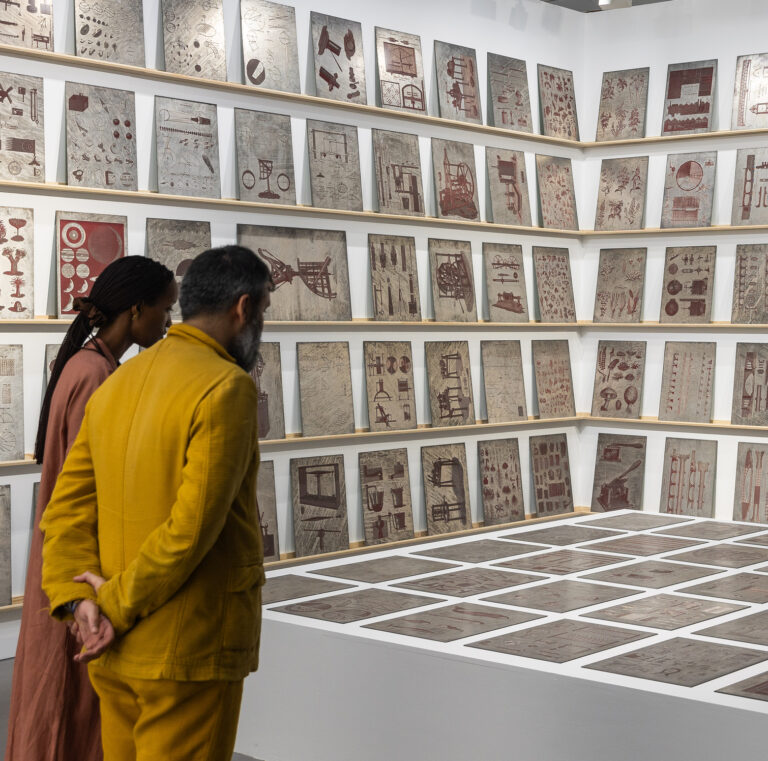
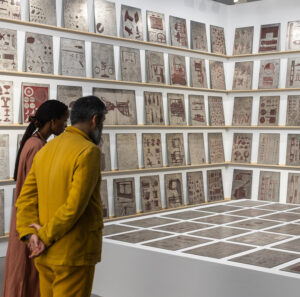
Art fairs play an important role in our collecting practice, particularly as spaces for discovery, context, and dialogue. In Mexico, this includes fairs such as Zona Maco, Material, ACME, and the JOVEM and MAZ programs. Together with the work of local galleries, these have all had a meaningful impact on the way our collection has evolved. Internationally, the Venice Biennale remains essential for us, offering a broader curatorial and historical perspective.
That said, studio visits and direct encounters with artists are by far the most influential factor in our collecting. Being able to understand an artist’s process, environment, and intentions firsthand consistently shapes our decisions more deeply than any fair or exhibition context.
What was the first piece you acquired?
Amaury Vergara: As a child, I gathered fossils, insects, and strange objects, drawn to the act of selecting, preserving, and assigning meaning to objects. Art has always been a fundamental part of my life, and visiting museums was among my favorite activities growing up. I never imagined that I would one day become an art collector until I received my first artwork as a gift: a vintage pin-up intervened by Dr. Lakra, a moment that quietly but decisively shifted my relationship with art.
Valeria Bross: Art has been deeply rooted in my life since an early age. It has profoundly influenced the way I see the world and has a direct relationship with my professional practice as a wedding photographer, shaping my sensitivity to emotion, composition, and storytelling. When I received my first paycheck from a gig, I didn’t hesitate. I went out and bought a work by Gabriel Rico. That decision marked the beginning of my personal relationship with collecting, grounded in intuition, commitment, and the belief that art should be part of everyday life.
What factors do you consider when deciding to expand your collection?
We begin each year by establishing a set of guiding parameters that function as a compass. These include identifying artists we have been following closely over time whose practices feel ready to enter a more critical phase within our collection.
At the same time, we deliberately leave space for discovery, allowing room for new artists or works that genuinely surprise us. Finally, we consider the role of more significant, anchoring pieces that can strengthen the collection’s long-term direction. This balance between intention and openness helps us collect with both clarity and genuine intuition.
More of our favorite stories from CULTURED
Julie Delpy Knows She Might Be More Famous If She Were Willing to Compromise. She’s Not.
Our Critics Have Your February Guide to Art on the Upper East Side
Move Over, Hysterical Realism: Debut Novelist Madeline Cash Is Inventing a New Microgenre
Sign up for our newsletter here to get these stories direct to your inbox.


 in your life?

