
Fairs are largely rote exercises for the veteran art professional. Sure, each has its variants. But given that the first Art Basel premiered 56 years ago, the overall cadence is familiar. Galleries email PDF previews in advance; they triumphantly announce a spate of sales before the end of the VIP preview; a litany of dinners, basement parties, and brand activations follows.
Yet even the most seasoned pros’ usual rhythms have been thrown off at the first ever Art Basel Qatar these past few days, and not only because of jet lag. It’s too early to tell whether the Doha event will become the sustainable new art hub its stakeholders envision and an oasis for dealers who have seen sales slump over the past three years. But it was already clear by the end of the fair’s second VIP day that it had at least succeeded in breaking some old patterns.
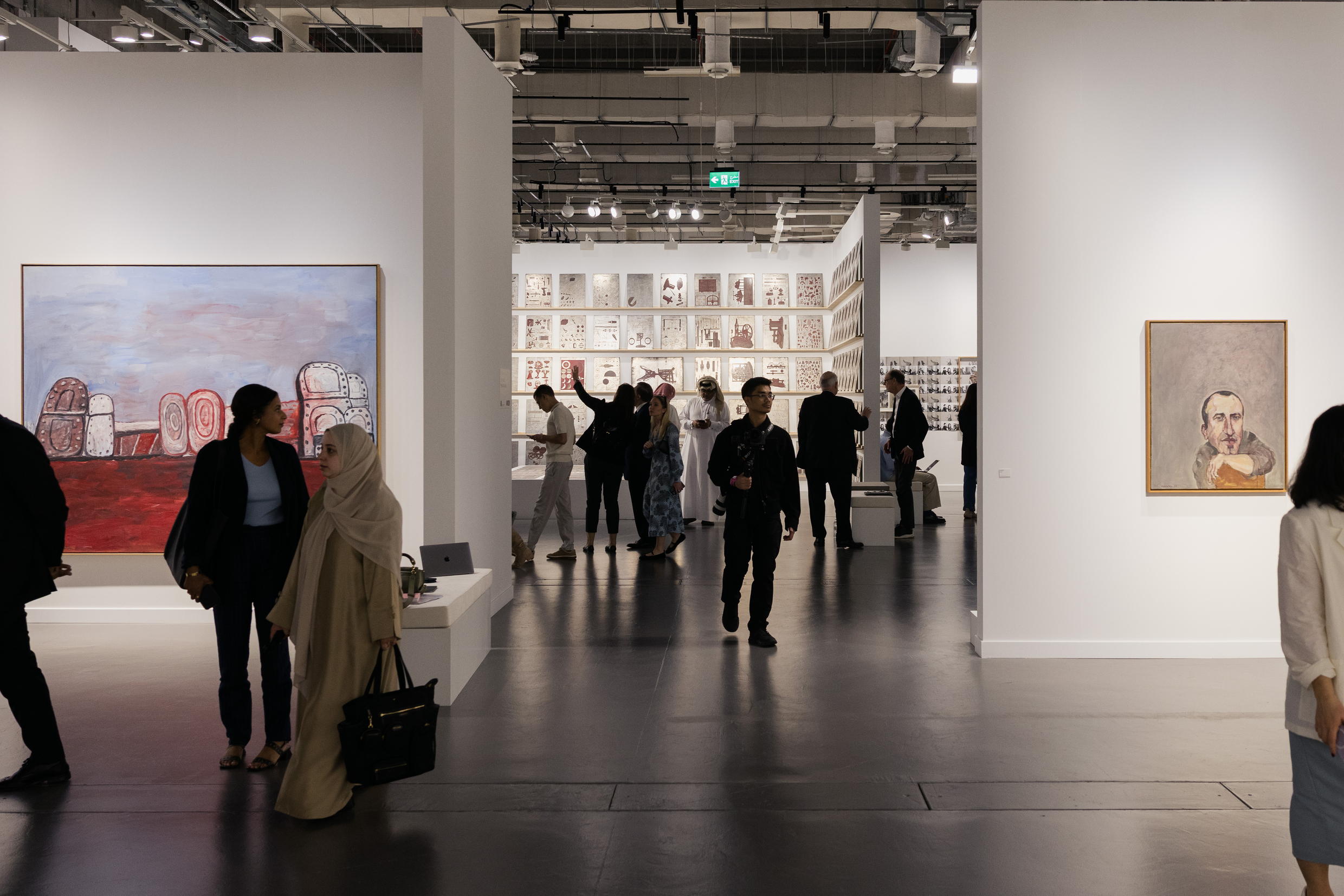
Art Basel Qatar, which opened to VIPs on Tuesday morning, spans just 84 single-artist presentations from 87 galleries. That is less than half the size of Art Basel Paris and around one-third of the brand’s other shows in Miami Beach, Hong Kong, and its namesake city. The booths are split across two buildings separated by a five-minute stroll through the capital’s polished center: the Doha Design District (which, despite the name, is a single structure) and M7, an incubator for fashion and design.
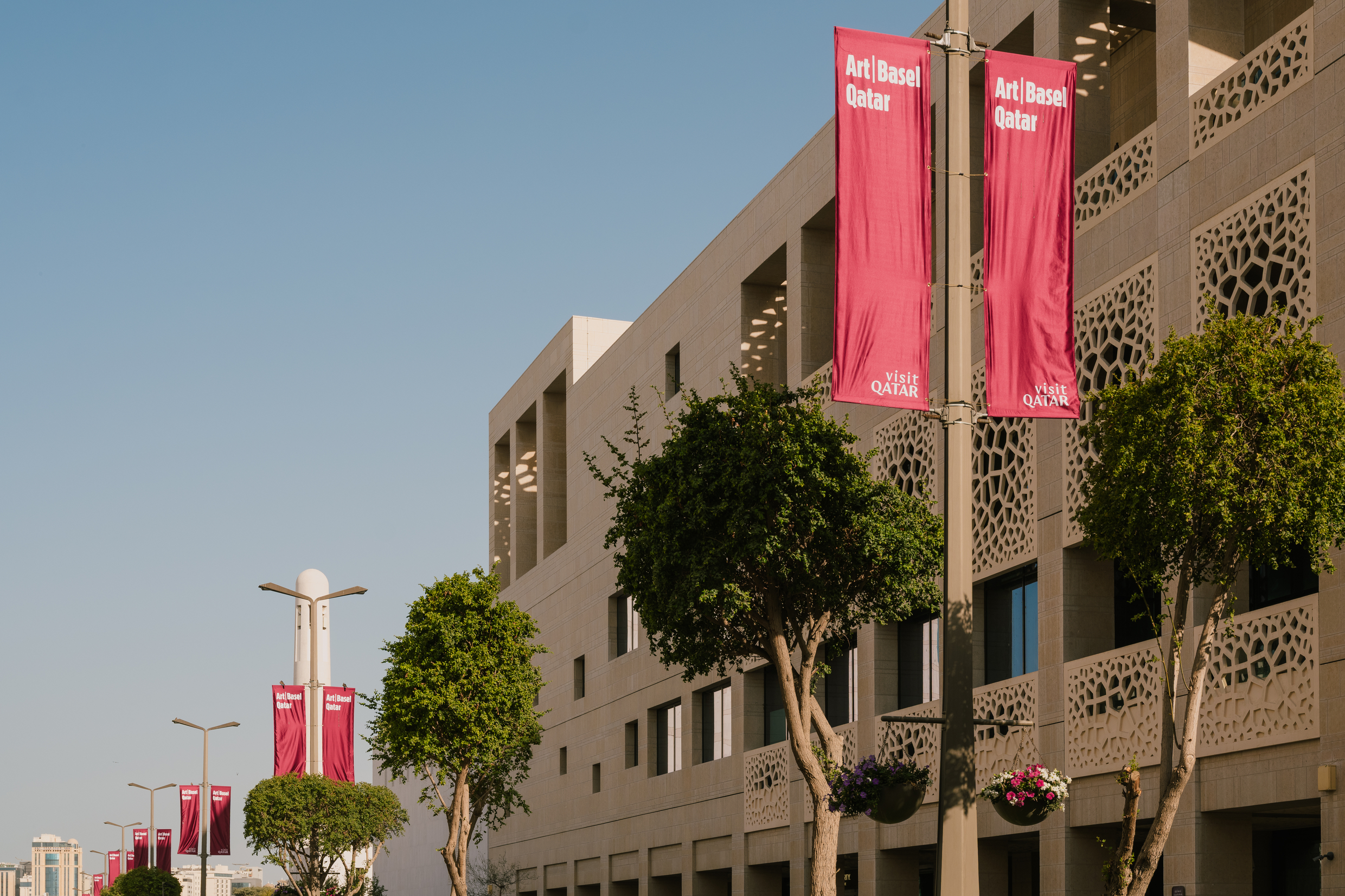
Art Basel CEO Noah Horowitz and Vincenzo de Bellis, the company’s director of fairs and exhibition platforms, repeatedly frame this zone as a “campus.” Although it’s partly marketing, the phrasing is appropriate. Art Basel Qatar has some of the plucky spirit of orientation week—except instead of shopping for classes, people are shopping for art. And they aren’t closing too many deals yet.
During a panel discussion on Wednesday morning, Sheikha Al Mayassa bint Hamad bin Khalifa Al Thani, the chairperson of Qatar Museums, defined Art Basel Qatar—the result of a partnership between Art Basel, Qatar Sports Investments, and QC+, a state strategy group—as “an art fair where engagement is more important than transaction, discourse more important than division, curiosity more important than conviction.”
Orientation Week for the Art World?
The entire Art Basel Qatar experience—at least in year one—is as rigorously curated and compact as the fair itself. There is effectively one itinerary for nearly everyone here to follow each night, no matter their role in the ecosystem.
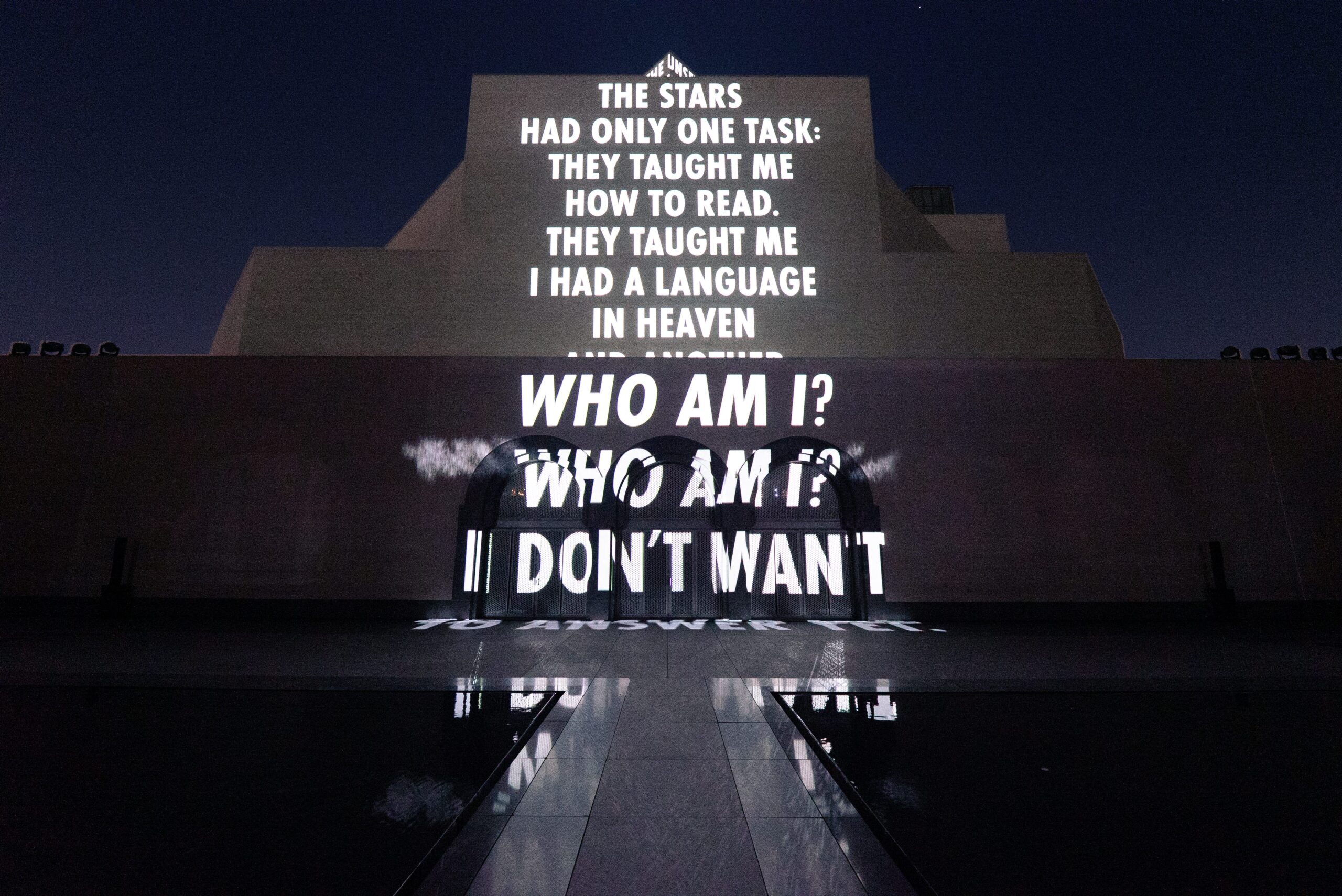
Monday night (art fair eve, as it were), the nexus was the party at the I.M. Pei-designed Museum of Islamic Art. There, guests were surprised by SONG, 2026, an unannounced installation by Jenny Holzer that broadcast verses by the poets Mahmoud Darwish and Nujoom Alghanem through projected text and a swarm of 700 drones. (An appearance by David Beckham made a different kind of stir at the party.) After the fair closed on Tuesday, the art world retinue convened at the nearby Msheireb Museums for an open-air “floating dinner” conceptualized by the artist Laila Gohar.
Aside from Doha’s approachable size, don’t discount how much of this social cohesion has to do with the tight legal restrictions on alcohol. The only Basel-affiliated nightcap in town has been at Stoke & Stoker, the bar at the Rosewood hotel in Lusail, a 25-minute drive north of the fair.
As the lines on Monday night attested, there may be no better way to keep a disparate international group together during a major fair week than to dramatically narrow their options for a drink. (You’ll have to find photo evidence elsewhere, though: Qatar’s strict cybercrime laws hold that posting photos of individuals without their permission can be punishable by fines up to nearly $27,500 or as much as a year in jail.)
On the Floor
Horowitz’s remarks at Monday morning’s press conference included a pointed reminder about Art Basel Qatar: “It may look like a biennial, but don’t forget that everything is for sale.”
The biennial framing is a bit of a stretch. The clean, white-walled booth structure is too ever-present to mistake it for anything other than an art fair. For art pros, a better formal comp for Art Basel Qatar would be to imagine the brand compressing Art Basel Unlimited, the flagship fair’s curated section for supersized single-artist works, down to domestic scale.
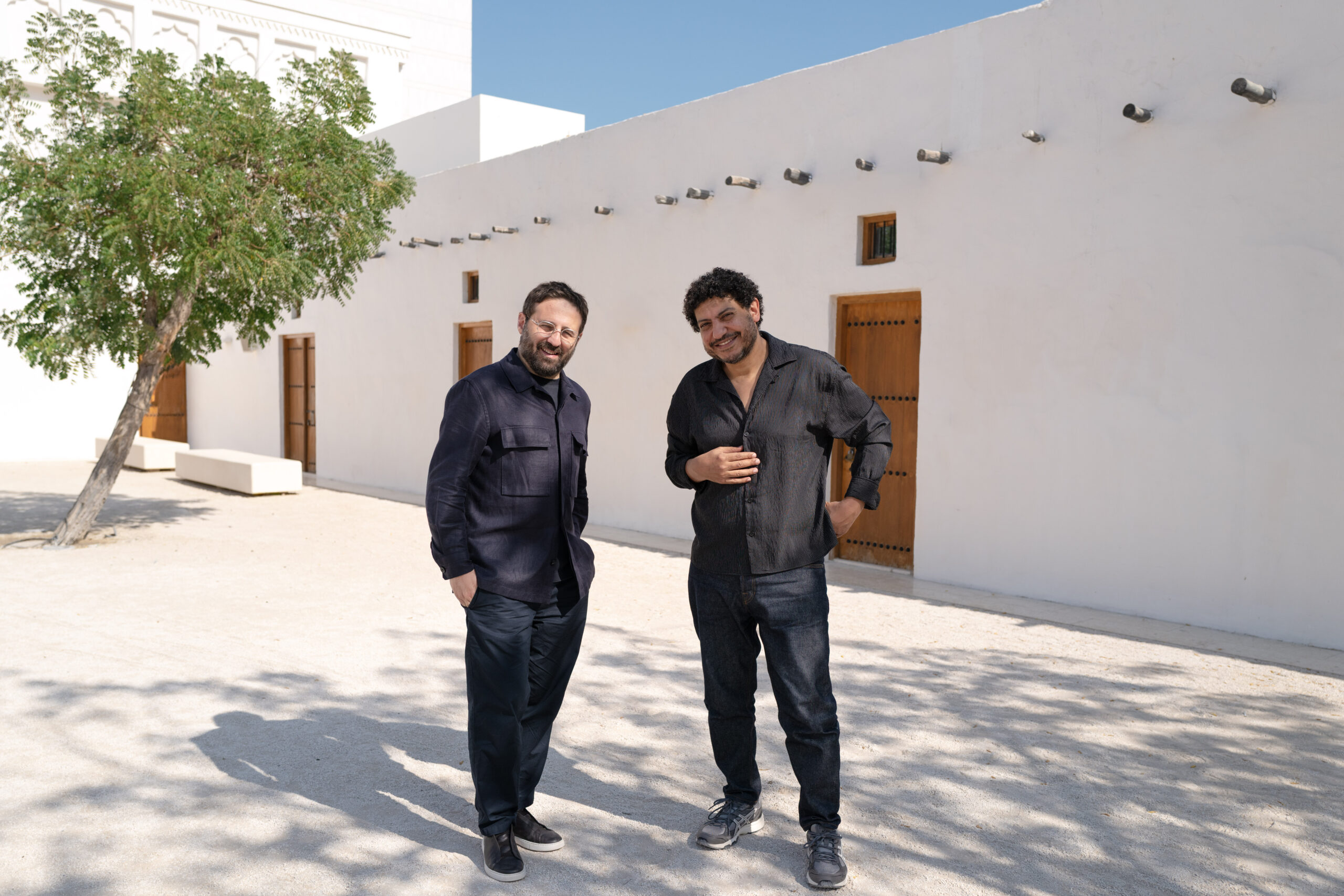
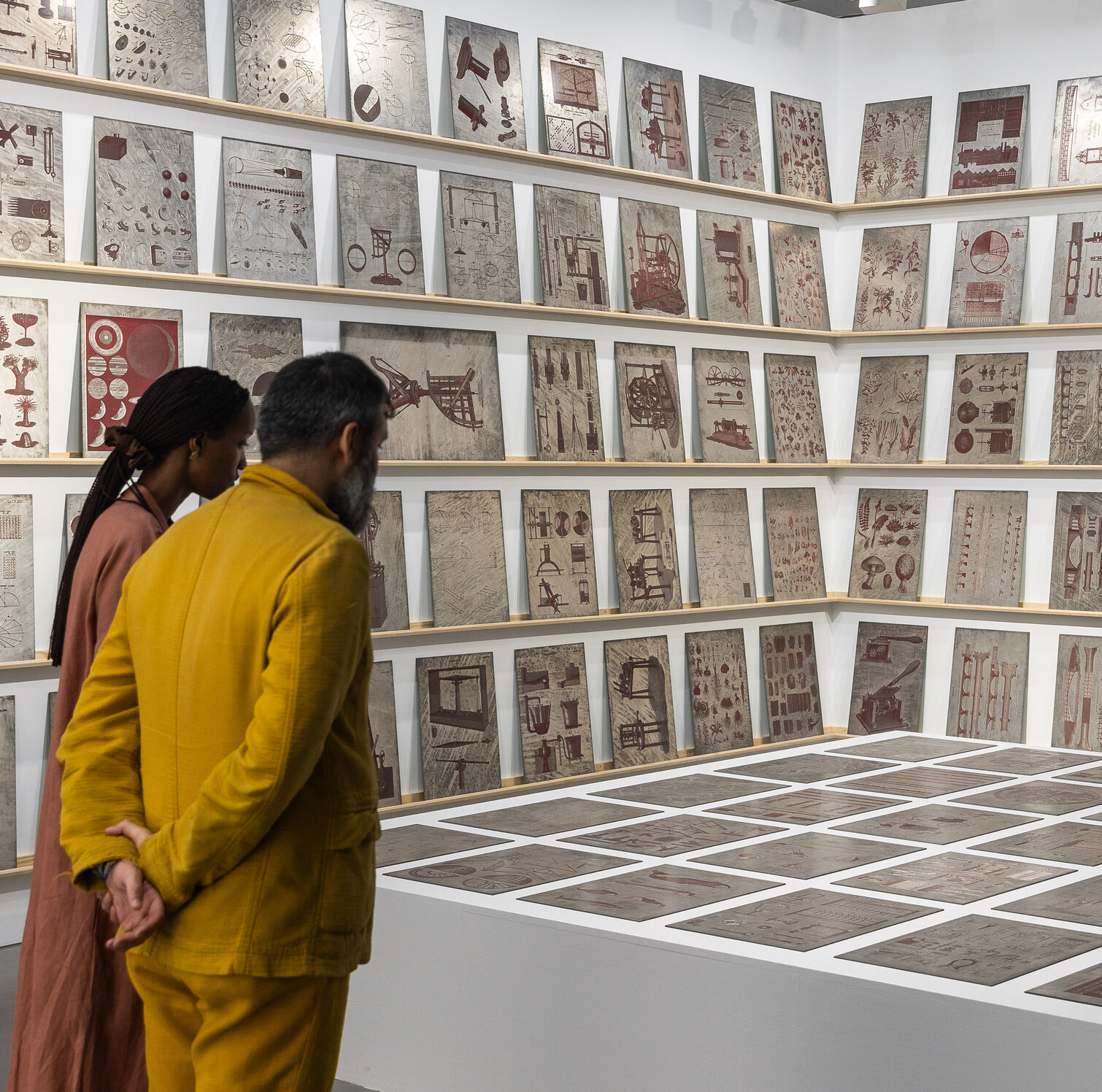
The edited approach was designed to give visitors the time and space to dig deeper into artists’ practices. By appointing the artist Wael Shawky as artistic director of Art Basel Qatar, the fair aimed to, as Shawky puts it, “make the artists the center of attention, not to become more like products.” Around 40 of the 84 featured artists were present and engaging visitors in the booths on opening day. (Organizers facilitated this unusually high level of attendance by subsidizing travel.)
It was an effective strategy: I have never learned more about actual art and artists on an opening day than I did on the first day of Art Basel Qatar.
By the same token, the most disorienting aspect of the fair has been its disconnect from the usual rhythm of sales and their ritual reporting. The fair did not issue the typical round-up of first-day deals. Gagosian put out a statement—credited not to Larry Gagosian but to a director, Andisheh Avini—saying that Qatar’s effort to build “an ecosystem that supports a local collector base” was “clearly working.” But there was no news about any of the Christo works in the gallery’s booth finding new homes, either officially or unofficially. (Gagosian does not confirm sales as a matter of course, but some details about the gallery’s successes typically come to light after opening day.)
Many dealers said they had one or more works on reserve midway through the first day. Lehmann Maupin was a rare exception: The gallery announced the sale of two pieces by the American artist Nari Ward, each for between $80,000 and $100,000; PRAISEWORTHY, 2025, a new installation spelling out the title in multicolored shoe laces, went to a private collection in Los Angeles.
Although there were whispers in the aisles that the Qatari royal family held a right of first refusal on many, if not most, of the works on offer at the fair, an Art Basel spokesperson denied this was true.
Is It Working?
The most important question surrounding Art Basel Qatar remains unresolved: Will it catalyze an organic local and regional market for art?
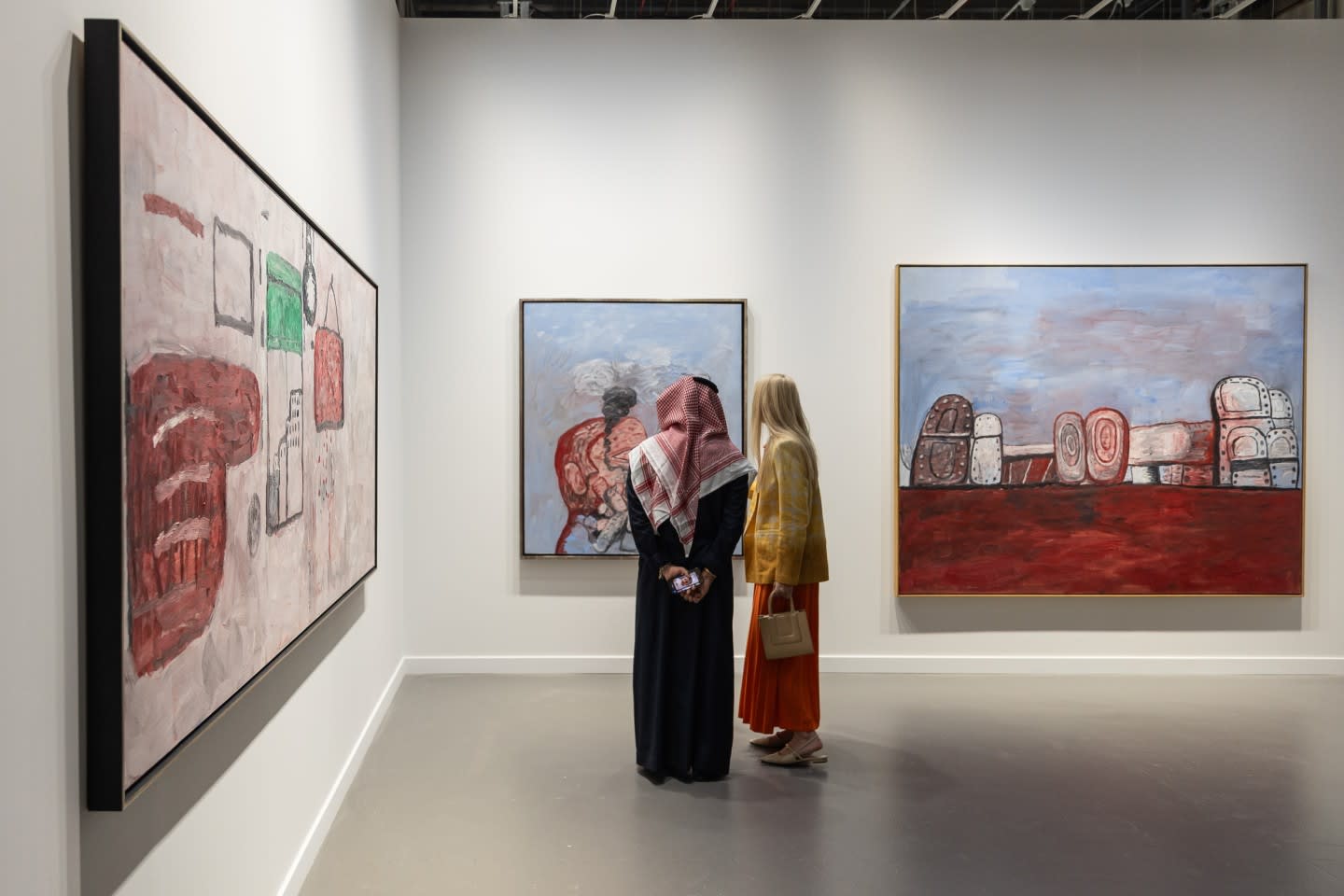
Hauser & Wirth co-founder Iwan Wirth declined to render a verdict. “With an art fair, you can always judge in year two,” he tells me outside his gallery’s booth of Philip Guston paintings on the first VIP day. “A lot of galleries are feeling the pressure. This needs to be successful. And if it is, then even more galleries will want to come next year.”
This is the push-pull at the heart of Art Basel Qatar. On one hand, the fair is the next step in a disciplined cultural plan that the state has been progressing for decades. On the other, galleries need to survive now—and after three years of tough times in the market, every dollar counts.
To assist dealers in taking a longer view, the fair and its Qatari partners drastically subsidized their participation. Booth fees ranged from $15,000 to $25,000—less than a third of the cost of the cheapest standard booth at Art Basel. Each gallery also received subsidized transportation, storage, and partial airfare or accommodations for two dealers and one participating artist.
“For this to be successful, it can’t rest on the shoulders of one sole source of support and patronage,” Horowitz tells CULTURED. “It has to be sustainable from the growth and development of a truly dynamic private market. And after decades of investment activities in this region, the time is right.”
This may ultimately prove true. But for dealers and collectors, the first few days of Art Basel Qatar still felt like a system developing its own logic. Whether that logic will come together satisfyingly for all parties involved is something that, like so much else about the rapidly transforming Gulf, will only become obvious in hindsight.

 in your life?
