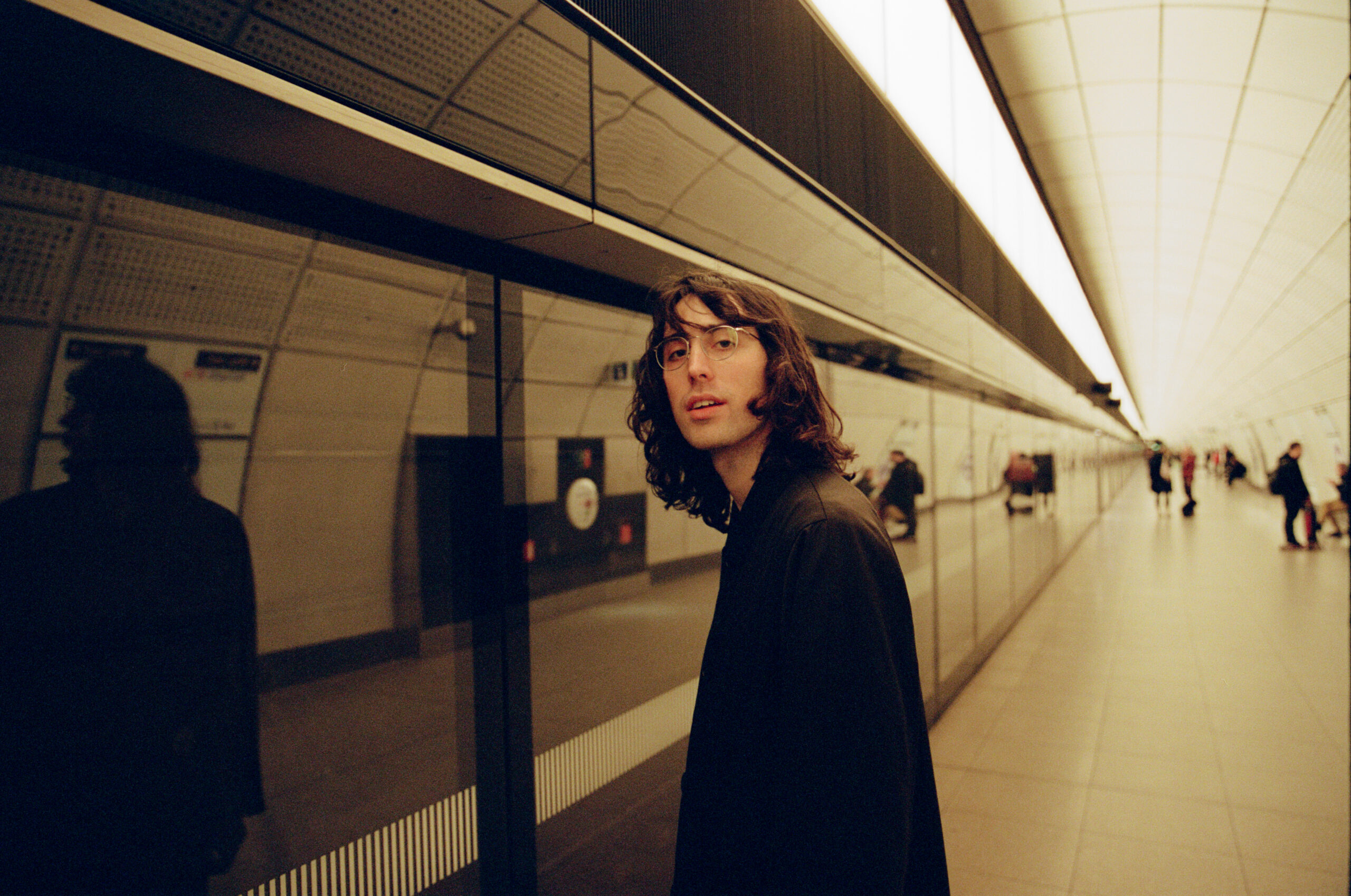
When you think about it, it’s surprising that A.G. Cook hasn’t done a film score yet. The 35-year-old sonic mastermind behind many of Charli XCX’s best tunes—including “360,” “girl, so confusing,” “Track 10,” and last year’s surprise resurgence hit “party 4 u”—as well as the cult hyperpop label PC Music is known for his unhinged, sugar-blasted take on pop music. When Cook arrived on the London scene, some critics and listeners had trouble taking his music—too pop for the club, but too experimental for the charts—seriously. But two Brat summers, a Beyoncé collaboration, and several expectation-defying solo albums in, A.G. Cook’s sound isn’t just accepted—it’s the moment.
Cook has been an integral collaborator and producer for Charli XCX since the mid-2010s when the two of them, frustrated by the creative limitations imposed by Charli’s record label, churned out ecstatic mixtapes like 2017’s Pop 2 and Number 1 Angel. Those projects hinted at an obsession with artifice, the performance of fame, the commercialization of basically everything, and the endless horizon of digital sound—all of which eventually burst forth in 2024’s Brat and its cinematic shadow self, The Moment.
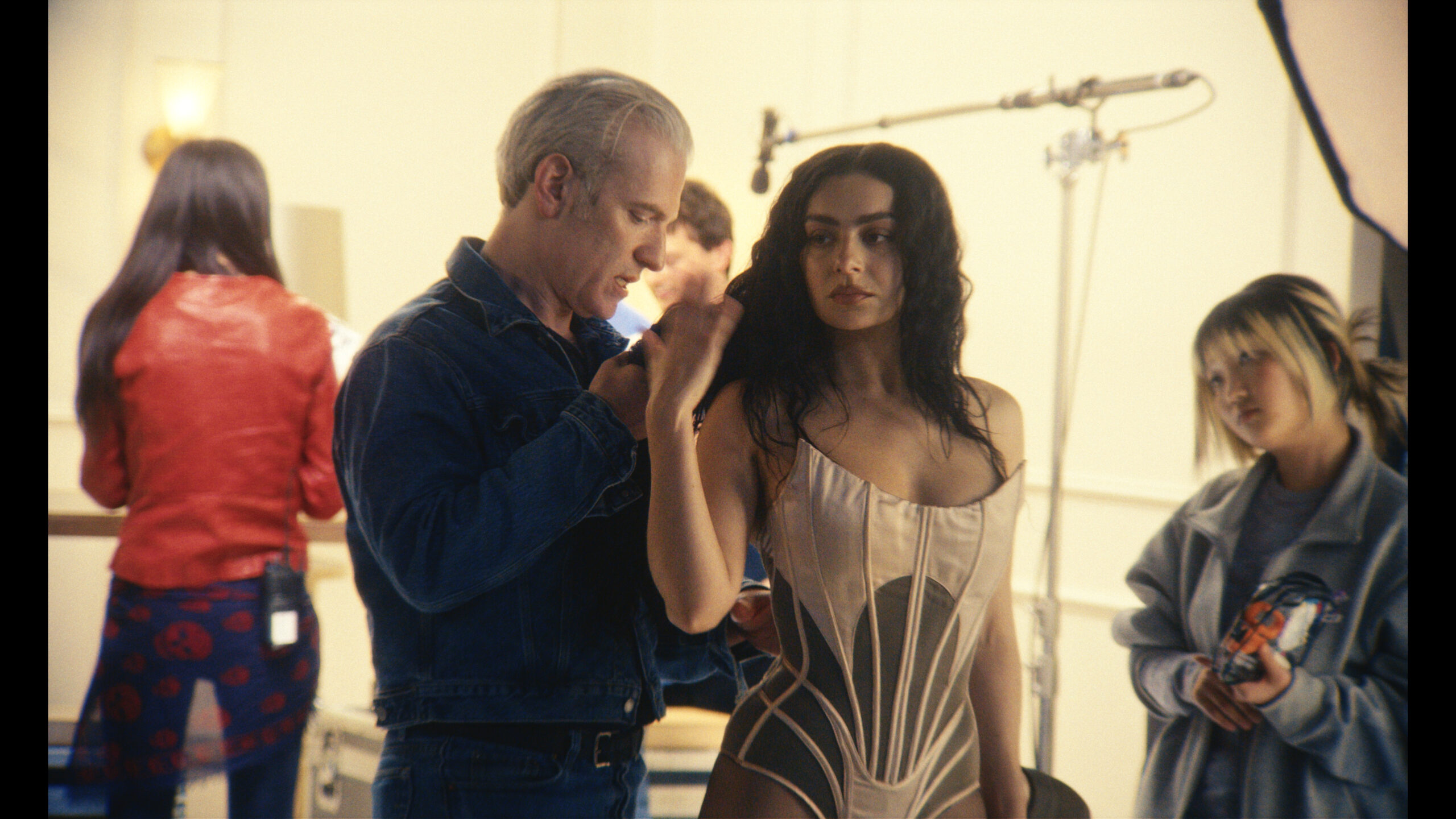
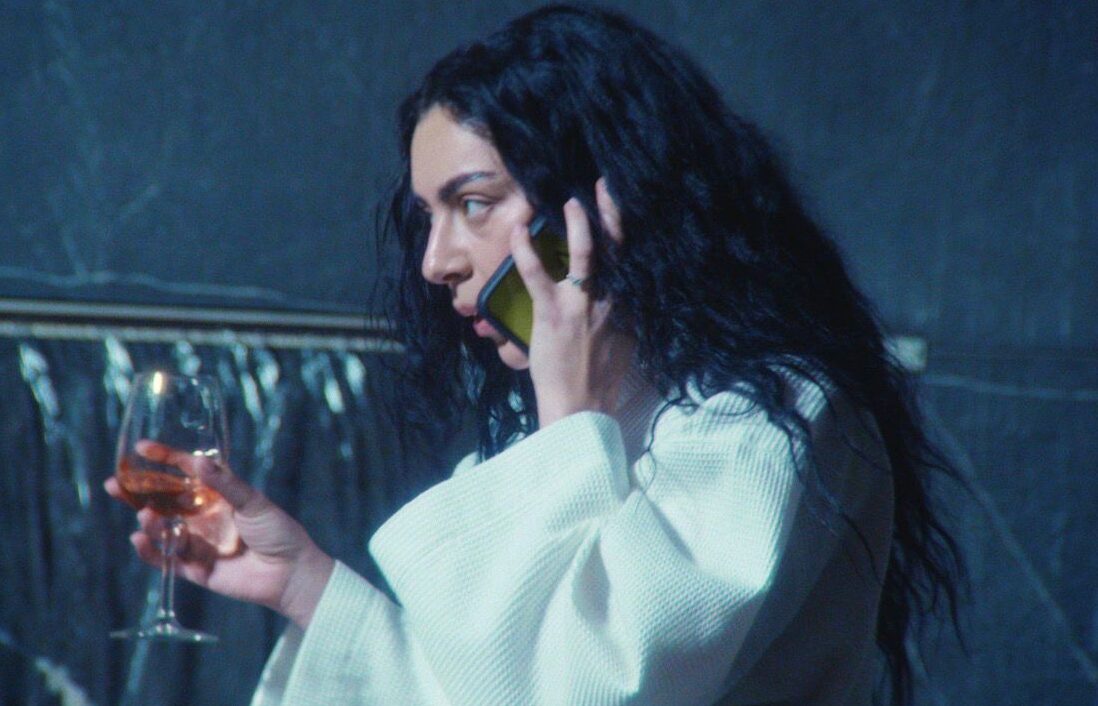
The film, directed by fellow Charli acolyte Aidan Zamiri and in theaters now, leans into Cook and Charli’s cheeky collision of high and low, reality and fantasy. You won’t catch Cook onscreen—save for a cameo as the DJ in a nightclub scene that finds Charli cutting up lines with a Brat credit card and dancing with Shygirl—but his fingerprints are all over it. Part of Brat’s power was the ability for its universe to be both inescapable and somewhat elusive, and The Moment and its soundtrack have been no exception. Cook mixed in early snippets of the score during his sets at Coachella and Glastonbury, which started spawning almost instantaneously on TikTok. His final soundtrack, 40-minutes of pulse-pounding dance music that could be Brat’s more sinister sister, is a through-the-looking-glass response to a pop persona gone haywire. (Go watch the “Residue” music video for a taste.)
CULTURED caught up with Cook to talk John Carpenter, why he’s anti-worldbuilding, and what his own autofictional movie might look like.
What are your favorite movie soundtracks? Did any inspire you this time around?
All my favorite soundtracks are ones where there are really big, important musical moments and then also a lot of silence. A great example is Mulholland Drive. Obviously everyone loves David Lynch’s music and Angelo Badalamenti’s Twin Peaks work, but rewatching Mulholland Drive, there’s such good music but also really long bits where there’s important soundscapes and other things. Like a lot of Lynch movies, it’s not constantly hitting you with music.
Another example is the collaboration on The Thing between John Carpenter and Ennio Morricone. Carpenter has his very lo-fi thing—the single keyboard note Halloween sound—which is amazing. But then for one of the big masters like Morricone to come in and do his take on that John Carpenter sound was really interesting. It’s a really famous score with important moments, but there’s also all this dead space in between and this awkward contrast between synthy sounds and a more extended classical feel.
I prefer those scores as opposed to the constant drone. A lot of modern cinema leans toward filling up the space all the time, and that’s never really how I like to experience music in any form.
This is your first full soundtrack. What was that experience like writing it? It must be really different than writing for Charli or for one of your albums.
I’ve done short scores or fashion soundtrack things—those tend to be like 10 minutes. A full feature is totally different. It’s funny it took me so long to get around to it. I’ve just been worried about the amount of time those projects take, when I’m finishing albums with people and how big a job it is to score something.
This was not just a nice opportunity to work with people I knew well, but also one I couldn’t really say no to. It was such a bizarre setup anyway, with Brat being such a crazy thing to work on and then see out in the real world. To have a bit of commentary or a bit of fun and games with what Brat even is, and to revisit it for a completely different purpose, was very tempting. It let me reflect on it even while being in the middle of all of it.
I insisted on making most of the music up front, before they were shooting, really once I had the script. I wanted to be able to not just have a kind of gut response and work quickly, which is something I’m always trying to catch in the Charli workflow, but also to give them material to live with, shoot with. I was already trying to make pieces that were quite bold, but could then morph, evaporate, and go silent.
It ended up being the intro and outro for Coachella, the soundtrack for the Brat backdrop going on fire at Glastonbury, all those things. It would pop up in my DJ sets before the film was out. People were already snatching parts of it from livestreams, putting it on TikTok, even illegally uploading it to Spotify. So it was a very intentional way of playing into what The Moment is already doing, this sort of unreal reality, this slice of life. There’s a joy to the red herrings. I wanted to enjoy being quite an active participant.
It’s notable to me that in the soundtrack there’s not many themes from Brat or any of your older music. We don’t even hear Charli’s singing voice until the end.
That was very intentional. I knew that it would be exploding Brat in some way. Very immediately I was like, “There can’t be any Charli singing in the actual score.” It would muddy the waters and take away the effect of feeling her vulnerability when she is performing, and I wanted to be able to draw a line. I think that’s why it was really fun with the “I Love It” sample at the end. It’s the credits, but it’s also the first “single” we did in the rollout. It’s a callback to Coachella as well. So it felt like a nice way of suddenly giving in. But even with the Icona Pop stuff, it is and isn’t Charli’s voice. It’s a sort of Schrödinger’s Charli, where it is that Charli song but it’s also a pop song she gave to a different group.
Can we talk about the one big needle drop, “Bittersweet Symphony,” at the end?
That was pretty much in the script, at least the version I saw. It was weirdly an obsession Aidan and Charli had. They needed something that felt like it wasn’t a Charli song.
It’s interesting from a meta-textual point too. The Verve weren’t able to cash in on that song’s massive success for a long time because of an unlicensed sample, so they ended up feeling like outsiders despite their cultural pervasiveness, which I think resonates with the movie.
I think all that’s playing into it. The video is so famous and such an influence on the “360” video and Aidan’s work in particular. It’s my favorite bit of the score, the minute before “Bittersweet” comes in. I had a completely different part of the score underpinning Charli’s monologue, different tempo, different key, and then I had to make it melt and turn into “Bittersweet.” That was definitely the trickiest part of the whole thing.
All the score had to be volatile. Even the dread theme in the credits intrudes on the “360” remix at the very beginning of the film. I knew all these parts would have to be very flexible and in dialogue with themselves or something like “Bittersweet” or “360.” It has a slight DJ quality in terms of elasticity and overlapping.
Were you ever going to be part of the movie?
Very briefly. I think it’s intentional that you never actually see Charli make music in the film. That would be something very different. There are very specific omissions that focus on it in a certain way. There’s no George figure. There is an emotional life, but it’s not the focus. There’s no locked-in music nerd Charli writing a song. It’s about what happens after the music is made.
Watching The Moment made me think of these old tour diaries Charli has on YouTube from the Pop 2 era when she was opening for Taylor Swift on the Reputation tour. They’re very candid little home videos. You’re even in some, with her listening to “5 in the Morning.” I was wondering if working on The Moment made you nostalgic or reflect in a different way on the last 10 years.
What’s funny about 2017 is that Number 1 Angel and Pop 2 happened in the same year. Charli was really busy. We were doing little bits of sessions where we could catch them. There’s some sweet footage from around then. Not that Charli hadn’t already found success, especially as a songwriter, but we really remember that time as being full-on. We’d go to the studio between everything else going on, finish something immediately, get with featured vocalists, track them down. We were doing tiny DJ shows for ourselves or for the mixtape rollout where it’s just Charli with a mic and me with CDJs and no other production.
There was a definite DIY quality considering she was technically signed to a major at that point. The notion that whole year was doing as much as possible ourselves, on our own terms, not really being part of a campaign plan. That’s after Charli’s already played that game with her first couple of albums. You can really hear it in the chaos of the mixtapes. They have a charming quality. Even the way the features sound—different genres, people coming in and out—you get this feeling like anything could happen.
I don’t think the film itself changed my perspective. What really changed things was Brat going down the way it did. And also in a time where there’s constantly interesting music happening, the culture is polarized in a way. Before Brat, there was this feeling that there were no more water-cooler moments, no more mass culture moments. Then something quite experimental by pop standards becomes a very widespread water-cooler moment and still has legs. Around the remix album, people were still engaging with different versions of things. The longevity and dominance of that—that’s the turning point.
I was curious about your thoughts on this wave of artist-created soundtracks—Trent Reznor and Atticus Ross, Oneohtrix Point Never, Jonny Greenwood, Nala Sinephro.
So many of those soundtracks are great. In the A24 context it’s become a selling point. Personally, my own music as A.G. Cook has become more long-form. I’ve been doing ten-minute tracks, even since 7G. I was playing around with Britpop and longer instrumental tracks, and people started asking about putting them in movies. Even my music videos have moved toward longer-form or ambiguous narratives.
I sometimes reject the word “world-building.” Even though there were tracks I left off the vinyl to make it work, I like the idea of presenting it as something quite confident and poppy and in your face. I enjoyed the multiple lives a score can have—live shows, LP versions. This project leans into that heavily. Even the video release for “Residue,” with all the mini Charlis, sits in a strange zone. Is it a movie promo? A single? Part of the score?
Why do you say you’re resistant to the word “world-building”?
The thing that I don’t love about it is it has a very literal implication. Going back, I think of someone like David Lynch as an amazing world builder, because it’s so atmospheric. He’s not telling you everything. The world building I don’t like in media that overexplains. But I really appreciate this sort of dream logic; that’s what makes it feel larger than life.
When doing these zoomed-out projects, I just don’t want the audience to take away something literal from it. I want them to be able to feel it and then dig deeper. It somehow makes it more lifelike rather than giving someone a key and barraging them with detail.
If you were to make a The Moment-style movie about your own career, what would it be like?
I’m quite different from Charli, there’s that. It would be quite funny to make it more dreamlike. Obviously I did PC Music for a long time, and it’s still this entity that I run in the background. It would be almost impossible to make a PC Music movie because there’s so many aesthetics. The whole thing I wanted was for every artist to have their own lane. Group interviews sort of start to break reality, as everyone has their own niche thing that they do.
Because I’m so into contrast, I think it’d be really funny for it to just go between different mediums. Like at one point I’m showing someone how to make a synth sound on a podcast, and it’s incredibly dry. And the next moment it’s like some animated thing of me constantly turning up in the wrong place. Something really high and low, with moments of true boredom and then insane set design. Some sort of Michel Gondry kind of stuff that happens. Making a total dream-logic chaotic thing where you’ve no idea what happened, but you might have some insight into what I might be about.


 in your life?