You’ve heard of Pillion, the “dom-com” biker romance from debut director Harry Lighton, by now. A24 is suggestively asking moviegoers if they’re “ready for a joyride?” Harry Melling, clearly a long way from his Dudley roots, is giving interviewers boot-licking advice. Alexander Skarsgård is showing up for screenings in dildo- and bong-covered button downs (courtesy the Italian brand Magliano) and thigh-high Saint Laurent boots—though that one’s not too far from the usual.
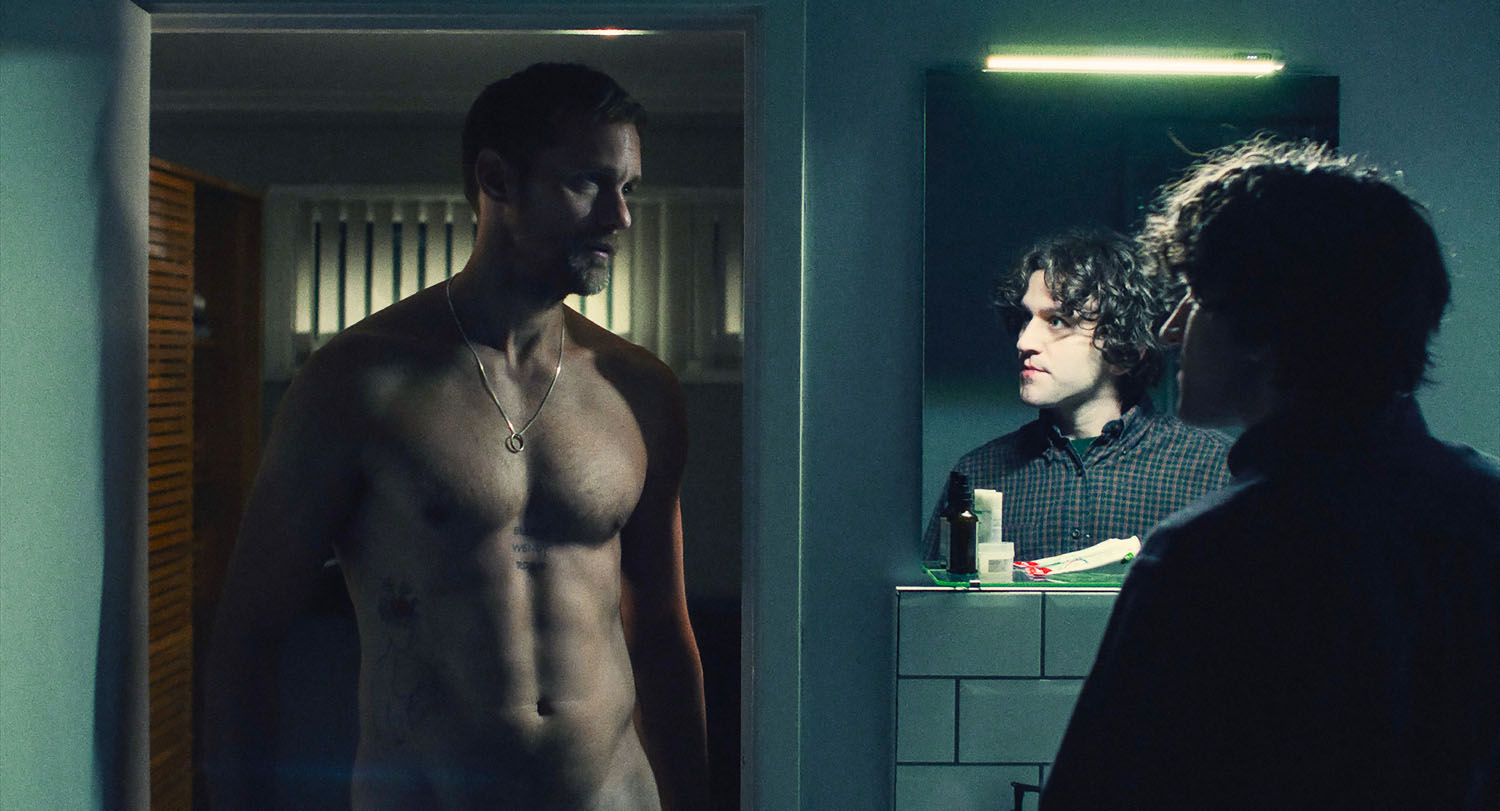
Lighton’s adaptation of Adam Mars-Jones’s 2020 novel Box Hill, in theaters Feb. 6 Stateside, has his leading men engaged in a strict, 24/7 arrangement. The pair first meet when Colin (Melling) is singing in a barbershop quartet at a bar. Smoldering biker Ray (Skarsgård) sidles up alongside him to arrange a meetup. Their dynamic is established posthaste when Ray arrives in full biker regalia, a Rottweiler in tow, and Colin scurries over in his dad’s leather jacket toting the family dachshund—only to be promptly pushed down to meet the former’s Prince Albert piercing.
Come ass-less wrestling singlets or tense family dinners, Lighton manages a simmering, self-actualizing love affair many a film has failed to produce in the last year. And he did it on his first go. Granted, there were thoughts of placing the story on a cruise ship or in ancient Rome, before the director circled back to Box Hill’s original subculture setting in England.
Here, Lighton lets us in on how he whipped all those disparate ideas into a tight 107 minutes.
I’ve been dying to ask about how you were first envisioning putting this film on a cruise ship, or in ancient Rome.
Ancient Rome is maybe easier to comprehend because it’s sort of a mainstay of cheap porn. There’s such hierarchies on a cruise ship and such a division of below and above deck. I’ve since discovered that it’s incredibly difficult and expensive to get permission to shoot on one, but I liked the idea of just rigging up a lot of cameras and having the actors mill in and out of the regular cruise-goers. I’m talking about an all inclusive, massive cruise. There’s so much uniformity in that world in terms of everyone doing aerobics at the same time and drinking the same drinks. I liked the idea of this incredibly unusual relationship taking place in such a uniform environment. I think [the relationship] was initially between a security guard and a passenger.
You also talked to a number of people who are involved in the kink scene to learn more. Did you find people locally? Was it people that you knew?
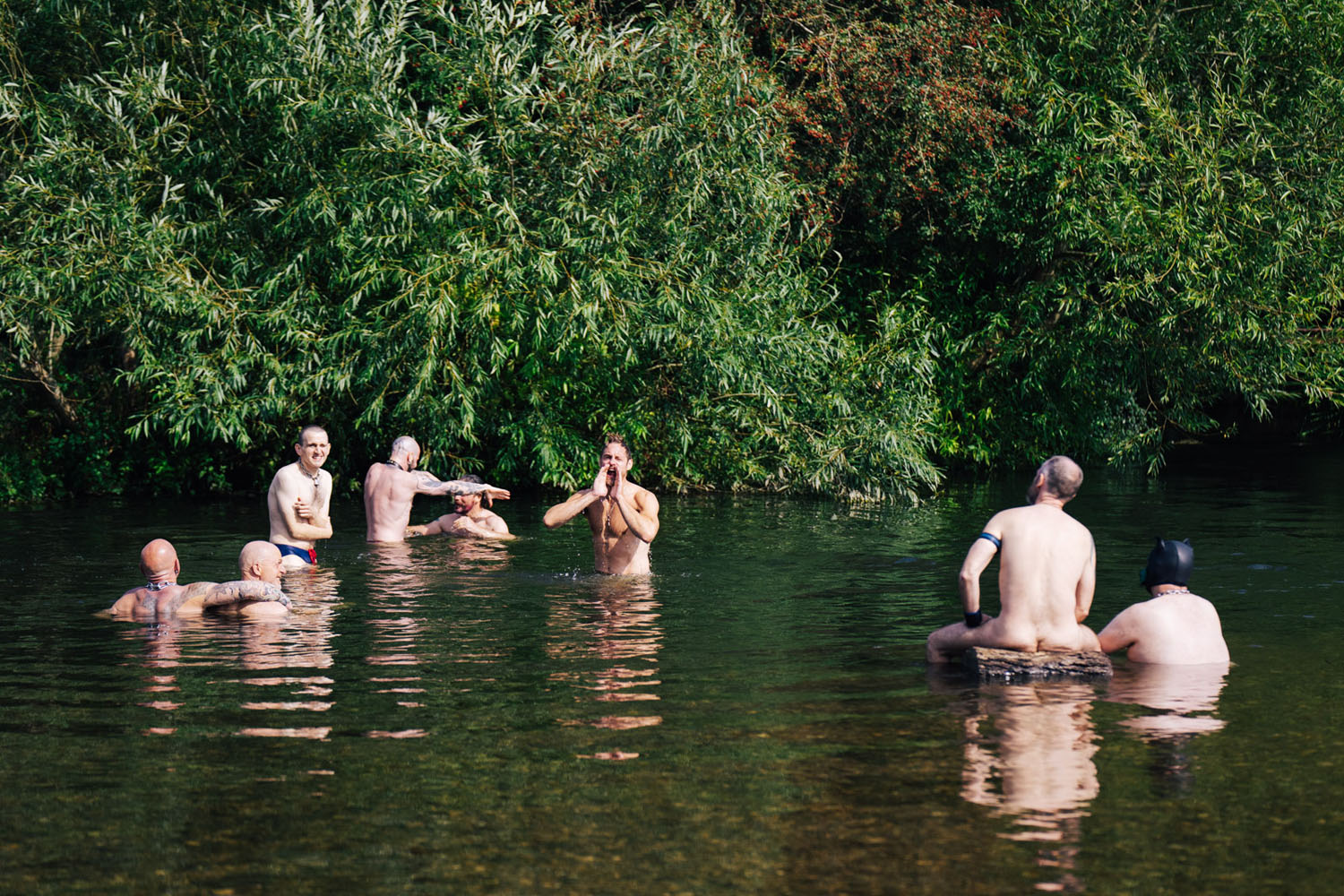
It was a bit of both; some people I knew and then some people myself and the production company reached out to. I’d go around to their house and have a coffee and chat. Then, into the casting of it, we recruited a lot of people from either the kink world or the biker world. They became our next resource. They would [give] input into details in the sex scenes or the bike scenes. I went and met up with the guy who wears the pup mask in the film, Paul, and we were just meeting up to have a drink and talk about his experience as a biker and a kinkster and then off the back of that I was like, “Well, maybe it’d be a good idea to have a pup in the film.” He sent me this great email which was like 2000 words about ways a pup might be incorporated into some of the scenes.
A lot of people who will see the film probably don’t know that much about these communities. Did you think about hitting that balance between showing everything, but also recognizing a general audience might find some of these scenes more scandalous than those steeped in them all the time?
I never wanted to water down the kink scenes for the sake of a mainstream audience, but I guess there were some things. If I considered scat, for instance, I was like, Well that might push away too much of an audience. But for the most part I want those scenes to really feel honest to the specific audience being represented. Often a life within a subculture does sit alongside a more typical life with parents and roast dinners, [and I wanted] to find a tone where you were hugging an audience at the same time as presenting information which might alienate them.
We grew up watching Harry Melling as a kid in Harry Potter. Did you think about what he was bringing to the film, given people’s background with him as an actor?
Certainly not in terms of Harry Potter. I had seen him play secondary supporting roles in a bunch of films, like The Ballad of Buster Scruggs, The Devil All the Time, and The Pale Blue Eye. They’re very different performances, but there was a singular kind of magnetism, which didn’t feel typically alpha male, leading man. It felt magnetically beta and that’s what I thought I needed for Colin. He’s someone who has existed on the periphery of the in-group probably all of his life and has, other than barbershop [quartet], not really succeeded in any area of his life, but is still stubbornly willing to succeed. That’s what Harry captures really well. There’s a lot of small triumphs for Colin, which he perceives to be triumphs where other people would perceive them to be violations or defeats.
The first alley scene might be a good example of that. He has a fairly extreme first encounter with Ray, yet at the end of it he’s grinning and skipping along after Ray to be like, “When can we do this again?” A lot of the comedy in the film comes from that but also a lot of the heart. This is someone who’s courageous enough to jump off a cliff in search of… they’re not totally sure what, but they know they want something more than what they have. That was a very inspiring sentiment to me.
What about Alexander? He’s almost carving out a niche for himself as this guy who’s just down for the craziest movie that you can bring him. If it’s slightly sexually perverted, he’s in. Had you seen Infinity Pool?
I’d seen Infinity Pool, and I’d seen evidence that maybe he was kind of mischievous and quite fearless. But the thing which really brought me to him was Succession. It was seeing him play Lukas Matsson, someone who obviously is categorically a hottie but also is psychologically very capable of manipulating situations. He dommed all the Roy children in the scenes they were in together and did it in a way which was fun to watch and made you smile. I was like, I need lots of that in Ray so that the audience doesn’t feel like they’re sitting in some categorically abusive romance.
This being your feature debut, and having these two actors who have been in so many projects, was that reassuring or was it a little intimidating, that maybe they’ve done it more times than you?
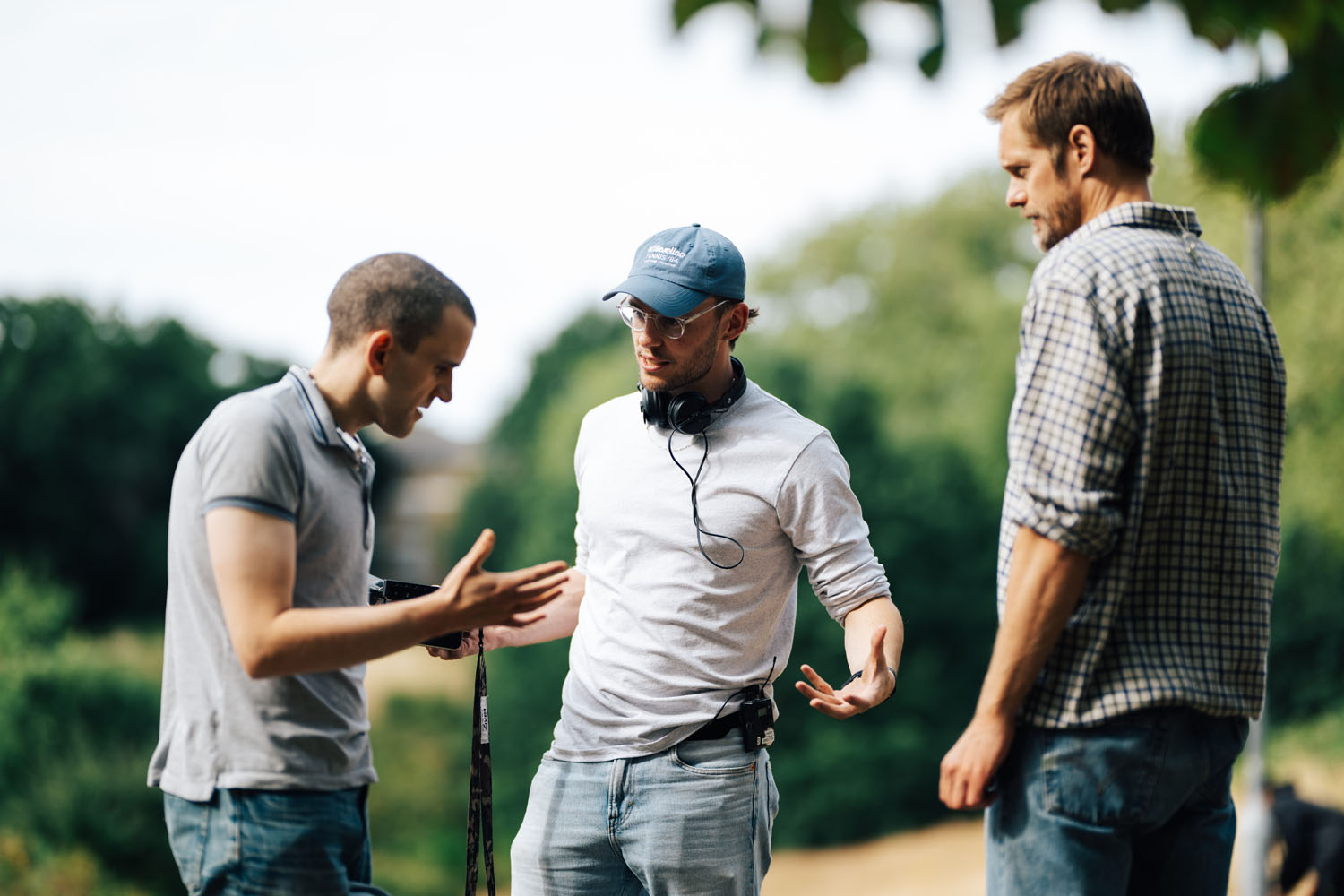
It was both. As soon as they signed on, I had 10 minutes of celebrating and then a couple of days of being like, Fuck, I’ve gotta work out how to direct these guys. But they made it very easy for me. The intimidation factor wore off very quickly.
Is that the power dynamic on set, that you have to dom your actors?
God, I’d call myself, certainly not a dom on set. Maybe like a combination of a brat and a sub.
I read that Roma was an influence on the visual style of the film.
It’s probably less evident than it was in the shooting, but me and the DP were talking about references and there was a thing I found when I watched Roma. It’s following this character who’s in service to a family and she’s often passive within a scene, serving someone and then waiting. The camera language unfolds in very measured, objective pans where the camera is moving independently of the actors, sometimes they’re coming in and out of frame—it creates this propulsion to the scene where you’re waiting for the drama to unfold. I thought that was a great way of creating a thrust with a character who doesn’t provide that thrust themselves. One of the surviving [shots] is the opening of the orgy scene when we pan round with the bike and then land on the poker table.
What strikes me about Roma is it’s known for its black-and-white, sweeping visuals. Did you pull anything from the look of it?
Our references for the colors were British photographers really, like a guy called Nick Waplington. Another film was Beanpole by Kantamir Bagilov. I loved the colors in that film and particularly the way he really limited the palette to rust red and moldy green. I wanted the Smith family to have that same feel of a Christmas past its sell-by date.

And with Elliott Erwitt’s New York City, 1974 (dog legs), how did you first come across that reference?
It was the thumbnail of an obituary. I was well into the writing of Pillion at that stage. I saw the photo and it spoke to me. I’d been thinking about symbols in the film and the motorbike is such a loud symbol that I was wary of having lots of others which spoke to the stark division in power and physical stature between Ray and Colin. But then I saw that photo and it made me smile. I always wanted to have the audience smiling as much as they might be gasping or clutching their pearls. I thought, It would be fun if actually Ray and Colin had dogs which reflected their status. I added Rosie the Rottweiler and Hippo the dachshund into the film. I know the photos of a chihuahua, but my family had a sausage dog called Hippo. The fact that the Great Dane and the human are above the frame in terms of their eye level and then the chihuahuas kind of at the level of the camera, that [also] really speaks to Colin’s perspective in the film. He’s often, metaphorically, looking up at Ray.
There was a review of the film where they call Alexander Skarsgård a gentle giraffe, or perhaps a well-dressed giraffe.
I haven’t been sent that one, but, God, is that a compliment, a well-dressed giraffe? It makes him sound a bit lanky and I guess clumsy, whereas Ray he’s a bit more of a… I don’t know what’s a different animal? You tell me.
A Rottweiler.
Exactly.
Are you thinking about next projects already?
I really am. I’ve carved out some time to really knuckle down. I’ve been throwing ideas around but haven’t landed on one yet, so that’s my main aim in the first six months [of 2026] is to get on with new scripts.
I like that your Instagram bio is still “Sometimes Filmmaker.” I feel like once you’ve shown at Cannes, can you say that you’re just a filmmaker?
It’s interesting you said that cause it now sounds a bit like a humblebrag. It sounds like that annoying British understatement. But it’s worse if it says, like, “Butcher, Baker, Filmmaker.”
Award-winning filmmaker.
Fuck that, God.
More of our favorite stories from CULTURED
13 Books Our Editors Can’t Wait to Read This SeasonWith Art Basel Qatar, Wael Shawky Is Betting on Artists Over Sales LogicJay Duplass Breaks Down the New Rules For Making Indie Movies in 2026How Growing Up Inside Her Father’s Living Sculpture Trained This Collector’s EyeIt’s Officially Freezing Outside. Samah Dada Has a Few Recipes Guaranteed to Soothe the Cold.
Sign up for our newsletter here to get these stories direct to your inbox.


 in your life?