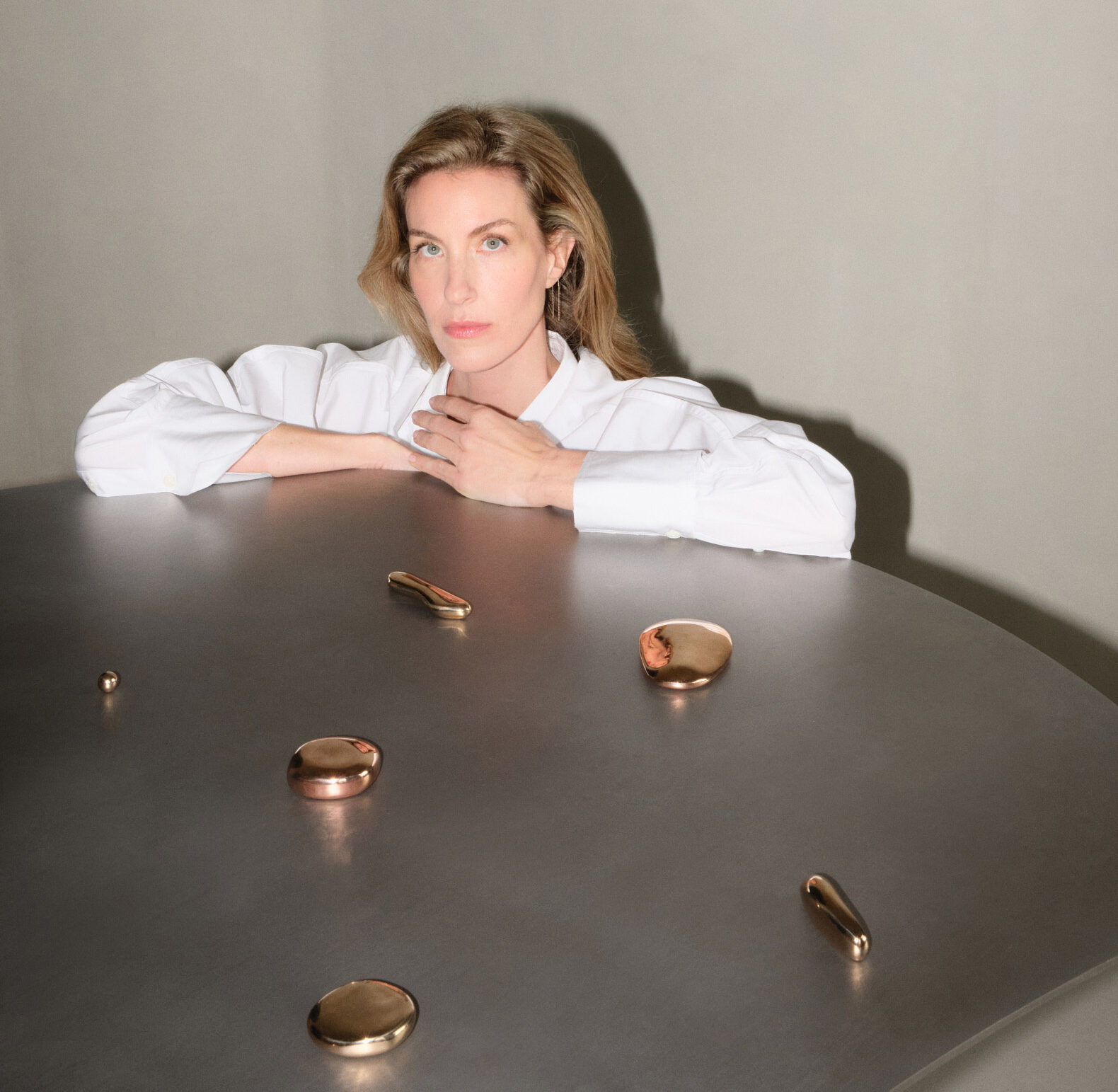
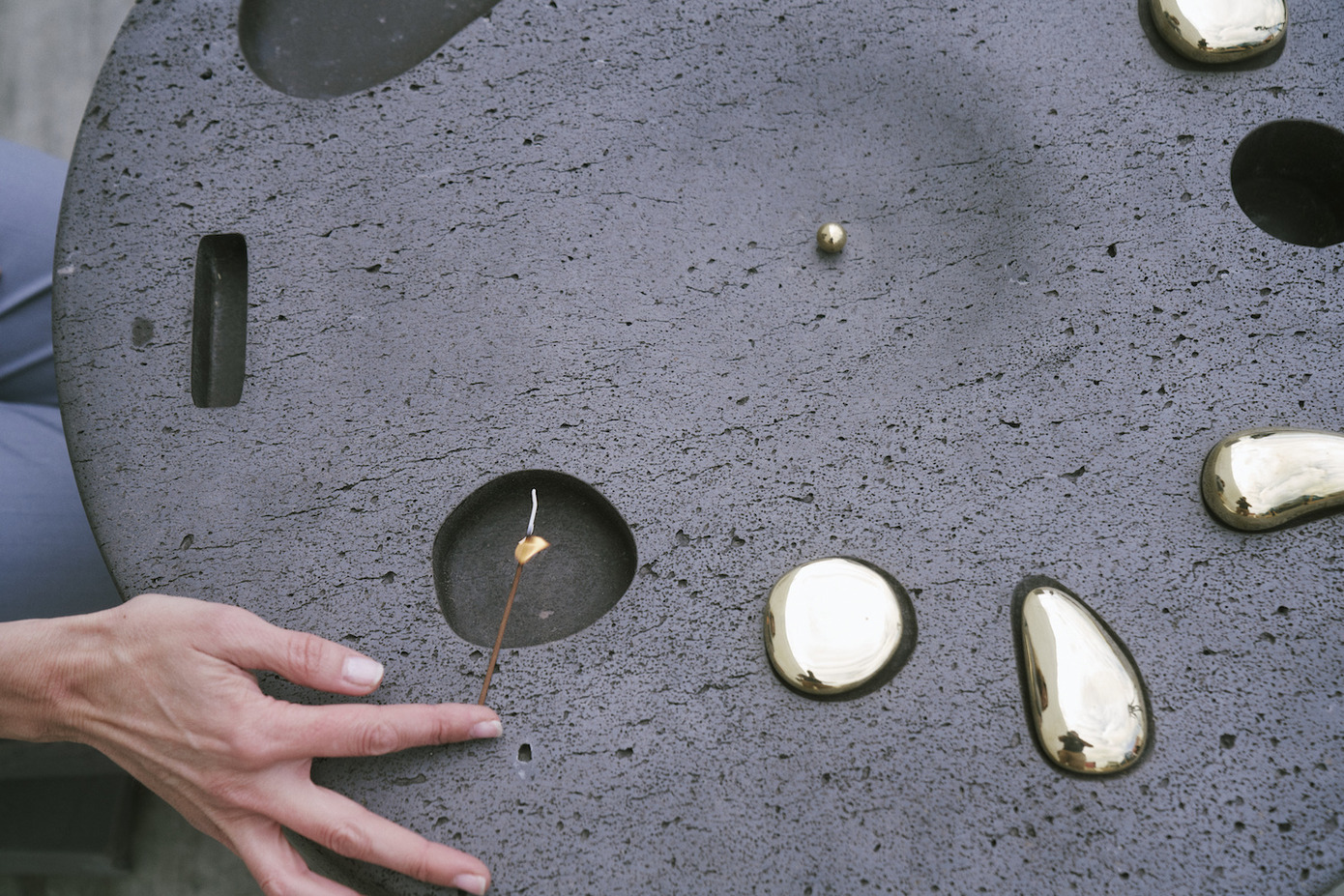
As life speeds up, the ability to slow down has become life’s greatest luxury. Vestali Altars can help. Conceived by astronomer-artist Rose Theodora of Vestali Studio and launched in collaboration with creative director and arts patron Fairfax Dorn of Fairfax Dorn Projects, the new, limited-edition collaboration leverages ancient alchemical frameworks (sacred geometry, anyone?) in a series of contemporary furnishings. First up is the Alchemy of Metals Altar.
Each is formed from black volcanic stone and embedded with seven sculptural materials, designed to be engaged with—in tandem with candles, incense, florals, or contemplation. The objects are forged during their corresponding planetary hour and finished with the a sigil—like Venus for copper, the sun for gold, or the moon for silver. Ahead of today’s launch, Theodora and Dorn sat down with CULTURED to deliver a clarified take on the ancient traditions that have inspired their latest work and been collapsed into a single, functional object of devotion.
CULTURED: Vestali Altars sits at the intersection of design, ritual, and cosmology. What convinced you that this belonged within the world of Fairfax Dorn Projects?
Fairfax Dorn: We have always honored beautiful objects that have been created with high-quality craftsmanship. The power of Vestali Studios’s design immediately resonated with me, with the Alchemy of Metals Altar challenging us to think beyond form and provenance, and consider use as something spiritual and evolving.
CULTURED: How did your experience collaborating with other artists influence your approach here?
Dorn: My background in working with artists, particularly through exhibition work and nonprofit organizations such as Ballroom Marfa, has taught me to nourish artistic vision. With Rose, that meant honoring the depth of her astrological and artistic practice, while creating a platform via Fairfax Dorn Projects for the altars to be understood for contemporary spaces.
CULTURED: The altar is traditionally a sacred object. Walk us through your inspiration for producing something that’s meant to be both functional and deeply symbolic.
Dorn: An object or design that is sacred doesn’t have to be formalized, it can be embedded into daily life. Historically, altars were central to the home, not removed from them. This project reclaims that purpose. The symbolism of the altar is grounded in the functionality of the design—the metals and the construction of the form. Each part of the altar, including negative space, has a practical and metaphysical purpose.
CULTURED: The Alchemy of Metals Altar launches in a very limited Founders Edition of 10. How do you imagine collectors living with, and using, these pieces?
Dorn: These objects are not something you view passively; they invite pause, exploration, and introspection. Whether a collector engages daily or periodically, I see the altar becoming a root, an anchor, a rock, a source, in the home, something that evolves as a reflection of its owner. A source where clarity and connection with self can grow.
CULTURED: Rose, how did astrology guide the reinvention of the altar?
Rose Theodora: We’re living in a moment of extreme externalization with constant exchange and engagement, yet people are deeply craving inner coherence. The altar historically functioned as a point of alignment between the human and the cosmic. Astrology guided this reinvention by offering a structure that is both symbolic and precise. The planets are timeless archetypes, but they’re also rhythmic forces we can actively engage with. This deeper sense of connection with ourselves and the world around us is one that is urgently needed, and the Alchemy of Metals Altar seeks to restore that dialogue.
CULTURED: These altars are described as “operational sculptures.” What does “operational” mean to you here—spiritually, materially, and psychologically?
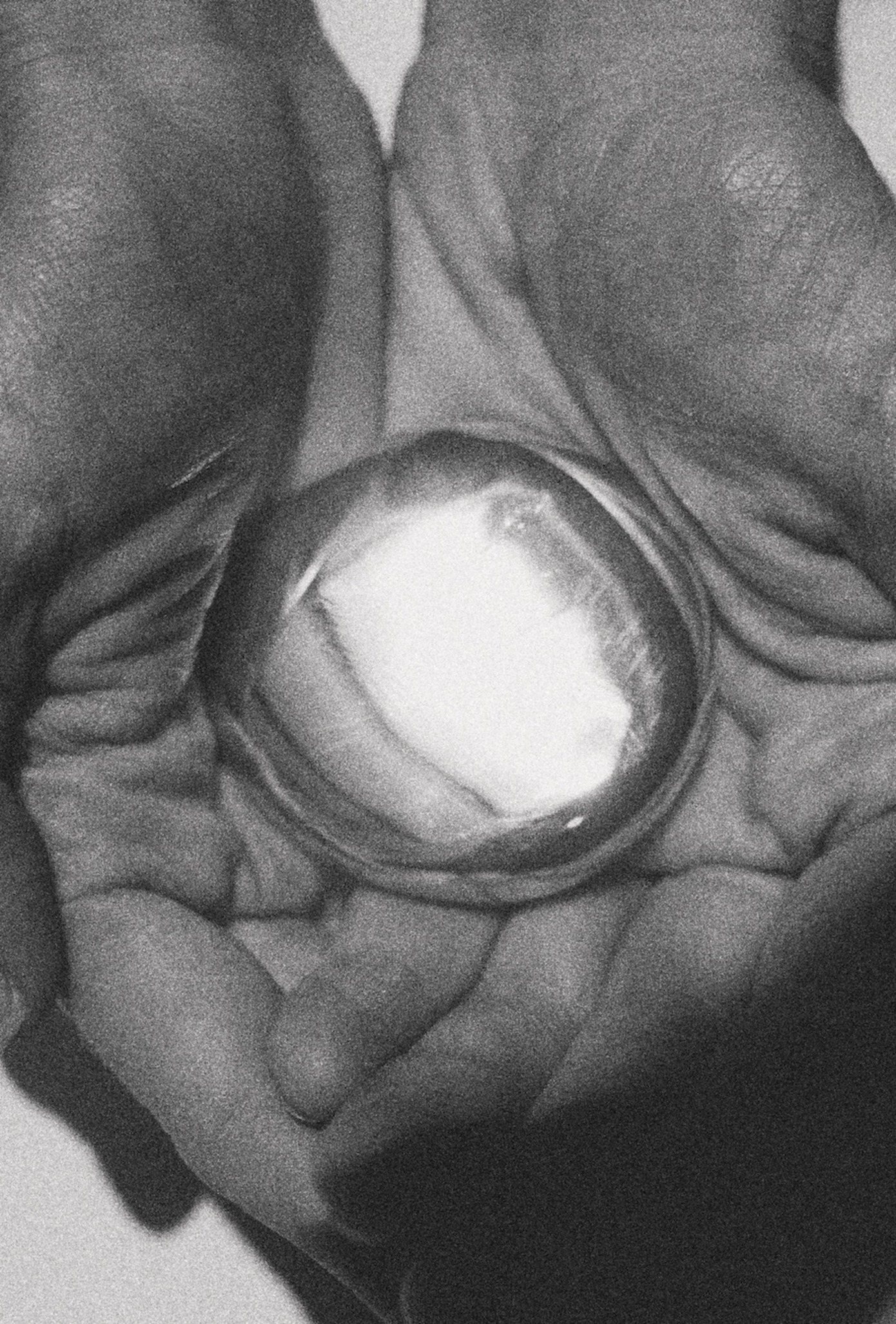
Theodora: Operational means functional: a system that requires engagement. The altars are not symbolic in a passive sense; they have procedure and purpose. They respond in kind; spiritually, they’re insistent on participation and presence. Materially, the altar operates through metals, geometry, and designated elemental stations. The sculpture is incomplete without use. Its meaning unfolds through practice. Psychologically—like good architecture—a well-designed object can reset the nervous system: it reduces noise, guides navigation intuitively, gathers the mind, and creates cadence.
CULTURED: Given that astrology and alchemy are central to this collection, how did you go about translating these systems into a physical object?
Theodora: I utilized astrology and alchemy as design constraints, and approached the collection the way alchemy itself works—by distillation. Astrology and alchemy are vast systems. The challenge was to hone in on their essentials—functional components that don’t lose integrity. The seven planetary metals, the three alchemical principles (body, mind, soul), and the central axis are all translations of abstract systems into tactile form. The geometry is intentional, the materials are symbolic, and the timing of fabrication was just as important as the design itself.
CULTURED: The altar incorporates seven planetary metals. Was there one planet or metal that felt especially important to you in this process?
Theodora: Copper, Venus, and the Sun. Each planet is fundamental to the altar as an ecosystem. Even when they look the same externally, the objects feel different in the hand. Saturn carries weight. Jupiter feels expansive. In alchemical practice, copper is Venus’s metal: the elemental basis of brass. While our alloy is proprietary, I chose brass for its harmonizing, integrating quality. It isn’t just decorative—it’s structural. Venus is the collection’s through line: the principle that refines, reconciles, and brings disparate elements into relationship through unification. Gold is the Sun’s metal—incorruptible, unmoved by contamination. It doesn’t force change; it holds integrity.


 in your life?