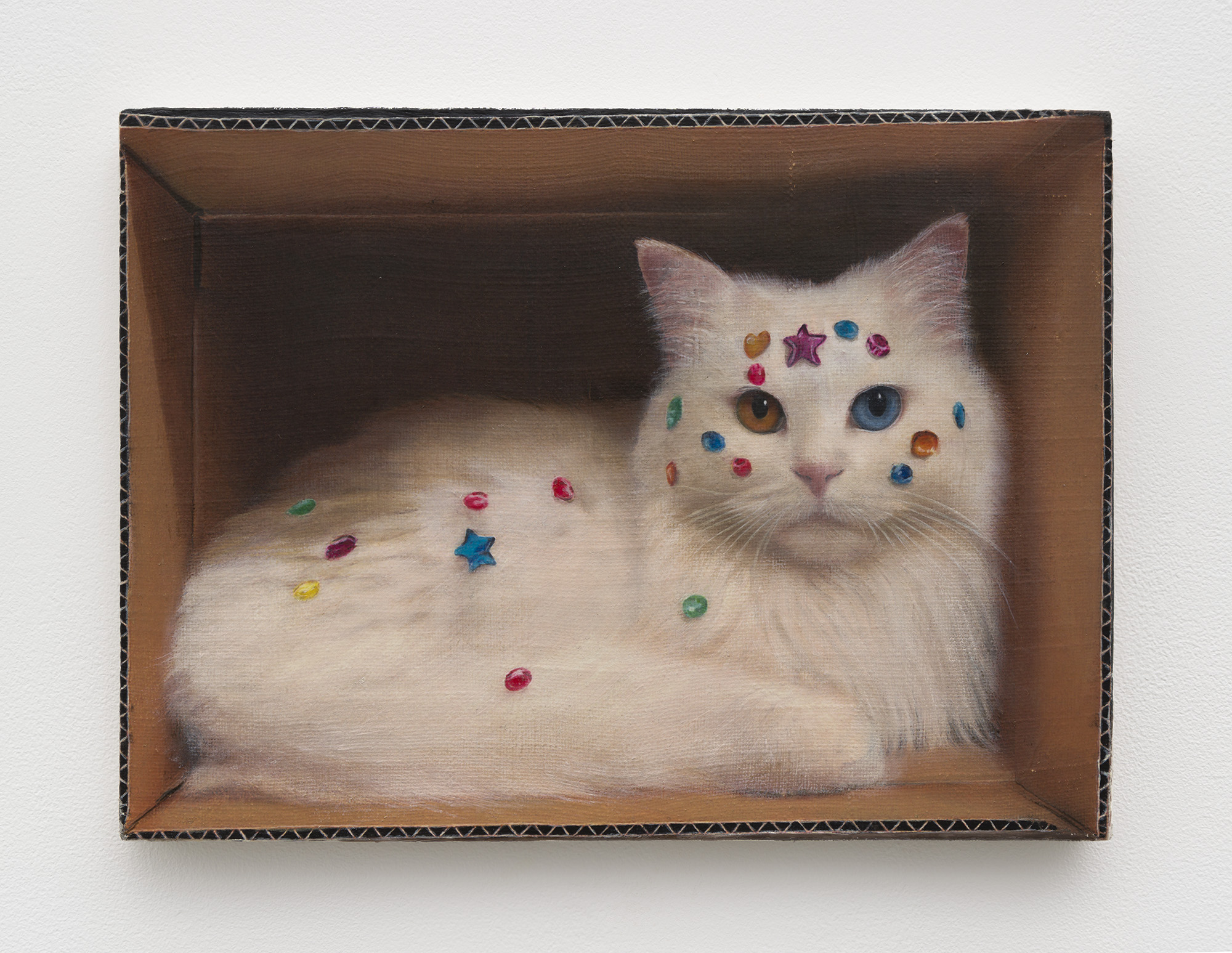
A bedazzled kitten in a cardboard box, a feline-inspired tarot deck shown alongside a video featuring a cat-masked go-go dancer, a papier-mâché dog named Birdie among a menagerie of puppet animals—these are among the cuddly works currently on view across three downtown galleries. Geopolitical conflict? Domestic strife? Forget about it! Escape into cute!
Kittens and puppies don’t engage in politics—they are almost beyond it. Almost. Most presidents, for example, have pets in the White House. The Obamas had Bo and Sunny; the Bidens had the Secret Service agent-biting dog Commander and Willow, a cat. That it’s a little weird that Donald Trump doesn’t have a pet speaks to the importance of domestic animals in the national imagination. It just might say something about the current president’s lack of tenderness and affection, as well as his unwillingness to even perform these qualities through White House tradition. More than 60 percent of Americans own at least one pet. Fido with his wagging tail and a meowing tabby are culture.
Even without this context, the British painter Joseph Jones’s White cat with gemstones, 2026, on view in a solo showing at Chapter NY in Tribeca, is a great little painting. Bejeweled (with children’s plastic stickers), the Persian cat with different colored eyes—one amber, one blue—in a trompe l’oeil cardboard box provides plenty of exacting details, but the composition is most interesting because of how it dares the viewer to dismiss it. For all of the cultural significance of having a pet, pet portraiture vies only with tourist-destination landscape painting for genre schlock.
Each photorealist cat in the show—there are seven, alongside one dog, and four paintings of flowers—is painted as if it is someone’s obsession, which Jones has taken up and internalized. It’s a conceptual swerve that the sheer force of the dozen little paintings, in oil and acrylic on linen, manage to escape their head-on collision with kitsch. White cat with a silk shirt, 2026—a brilliant study in whites, creams, drapery, and fur—and a couple of others in the show zoom in on the cat, seen held by a human companion, who appears only partially: an arm, a shirt, sometimes a watch. The painter and then the viewer stand in for the animal’s person clutching it close. The animals in Jones’s pictures become ever stranger through his meticulous gaze. A vastness opens up in these diminutive canvases through their charged ambiguity.
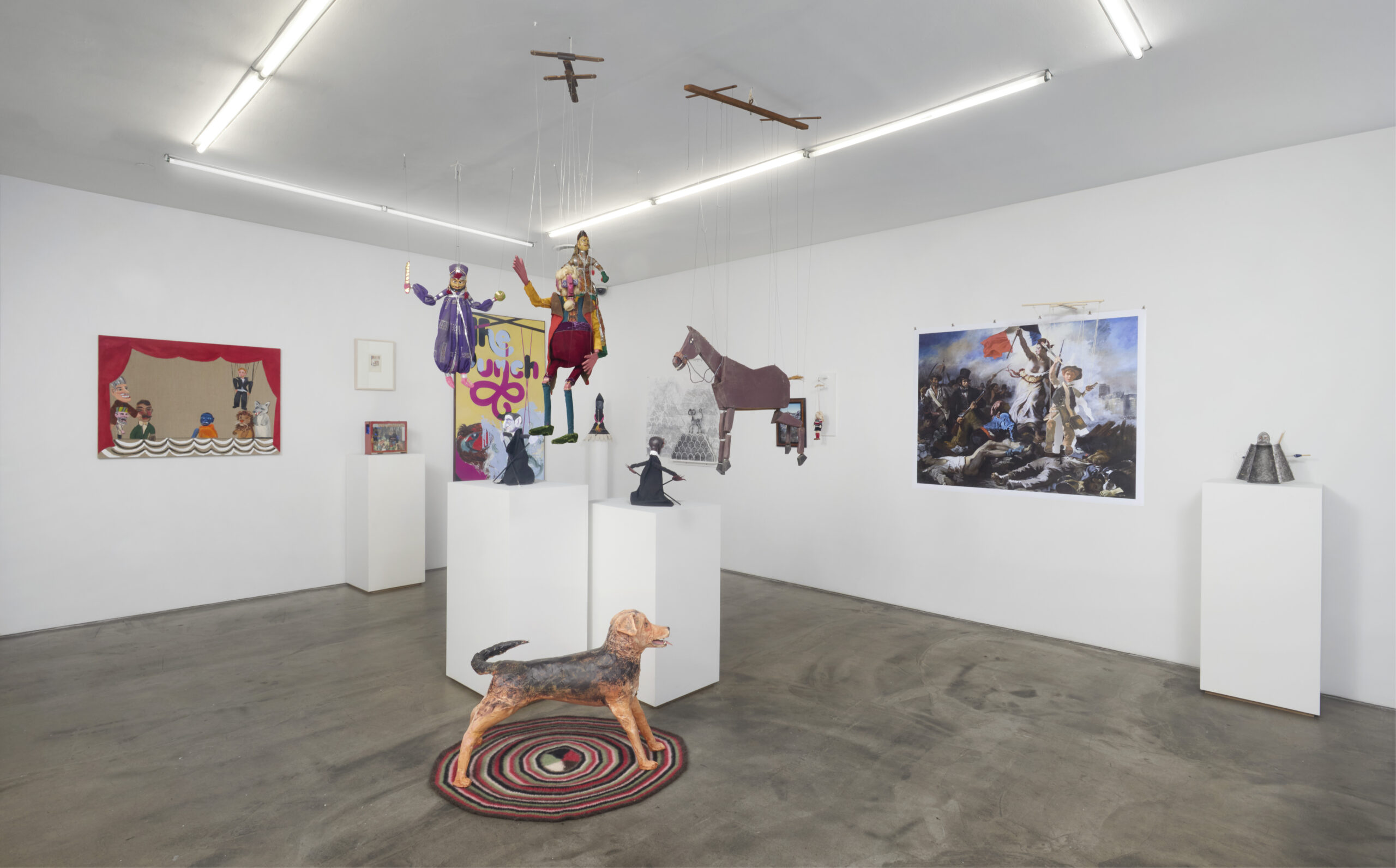
Further east, off the Bowery at the edge of Nolita, the aforementioned papier-mâché dog, by Philadelphia-based artist Sarah McEneaney, greets visitors entering Tibor de Nagy gallery. The current exhibition, a group show called “The Nagy Marionette Company,” celebrates both the gallery’s 75th year, as well as its origins in puppetry. Before starting a gallery, its founders Tibor de Nagy and John Bernard Myers produced puppet shows replete with music and sets. Archival documents including posters, photographs, and notebook ledgers record this history, alongside a mix of period marionettes juxtaposed with contemporary puppet-inspired art. There are nearly 20 featured artists, including the artist, designer, and drag performer Tabboo!, whose video of a puppet performance to music by Amy Winehouse ends with a lion and wolf dancing.
The show celebrates play and the marvelous, while also connecting our present with the aftermath of World War II, when the gallery was founded. Thinking beyond this war, I was reminded of the famous essay “On the Marionette Theater” by Heinrich von Kleist, published in a German newspaper in 1810, where he observes, “the force that lifts them into the air is greater than the one that binds them to the earth.” Now, viewers are just as tempted by art that can so gracefully leave worldly shackles behind.
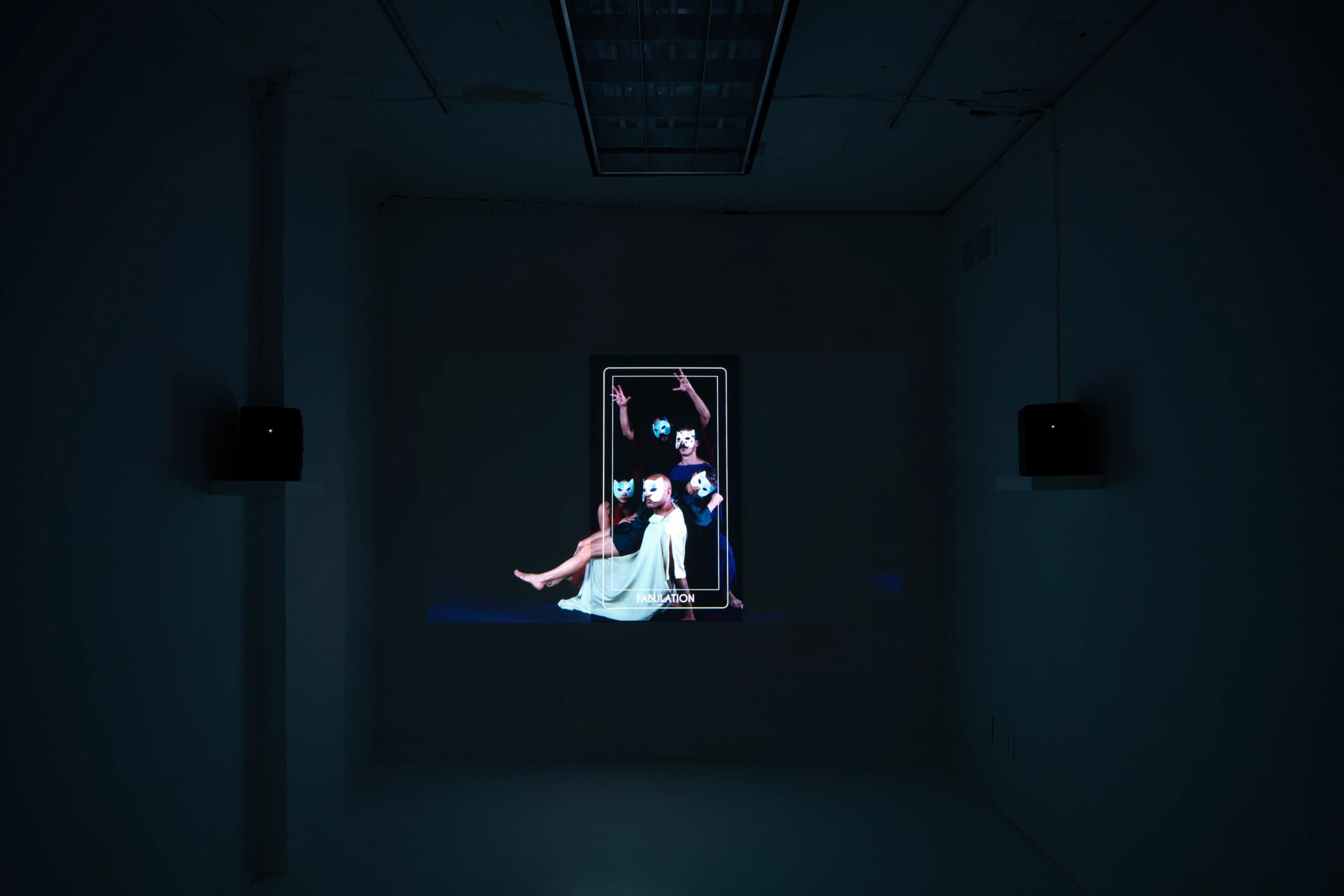
Moving south to Chinatown, My Barbarian, the moniker for the Los Angeles-based collective of Malik Gaines, Jade Gordon, and Alexandro Segade, presents “Cat Suit” at Lubov. The exhibition features several oversize cat-inspired tarot cards as wall works, presented alongside a related nine-minute video piece, with choreography by Eric Geiger and improvised music by the great (and under-appreciated) Matana Roberts. Here, the cats are cuddly and cute as well as near deities. The artists send this up to comic effect.
During the video, voiceover provides a reading from the cards: “It is a violent time, but violence can be sorta a renewal,” it says, without confidence, as if it is almost a question. “And when we don’t feel safe and there is just this endless, open question of ‘I don’t know what the hell is gonna happen…how can I play, how can I have fun?’” The narration trails off. An answer is never given. The video moves on to scenes of music and movement, and the cat-masked go-go dancer gyrates to disco music, recalling a Félix Gonzalez-Torres go-go platform piece, made feline with a pulsing disco beat. It’s as if to say, for those that can’t afford a therapist or psychiatrist, there’s tarot. In the face of violence or cruelty or simply the unknown, there is real comfort in the affection and elegant, mysterious inner life of a cat—or whatever imaginary world you can cobble together amid the ruins with your friends.
Joseph Jones
Chapter NY | 60 Walker Street
Through February 21, 2026
“The Nagy Marionette Company: A 75th Anniversary Exhibition”
Tibor de Nagy | 11 Rivington Street
Through January 24, 2026
My Barbarian
Lubov | 5 East Broadway, 4th floor
Through January 31, 2026





 in your life?