

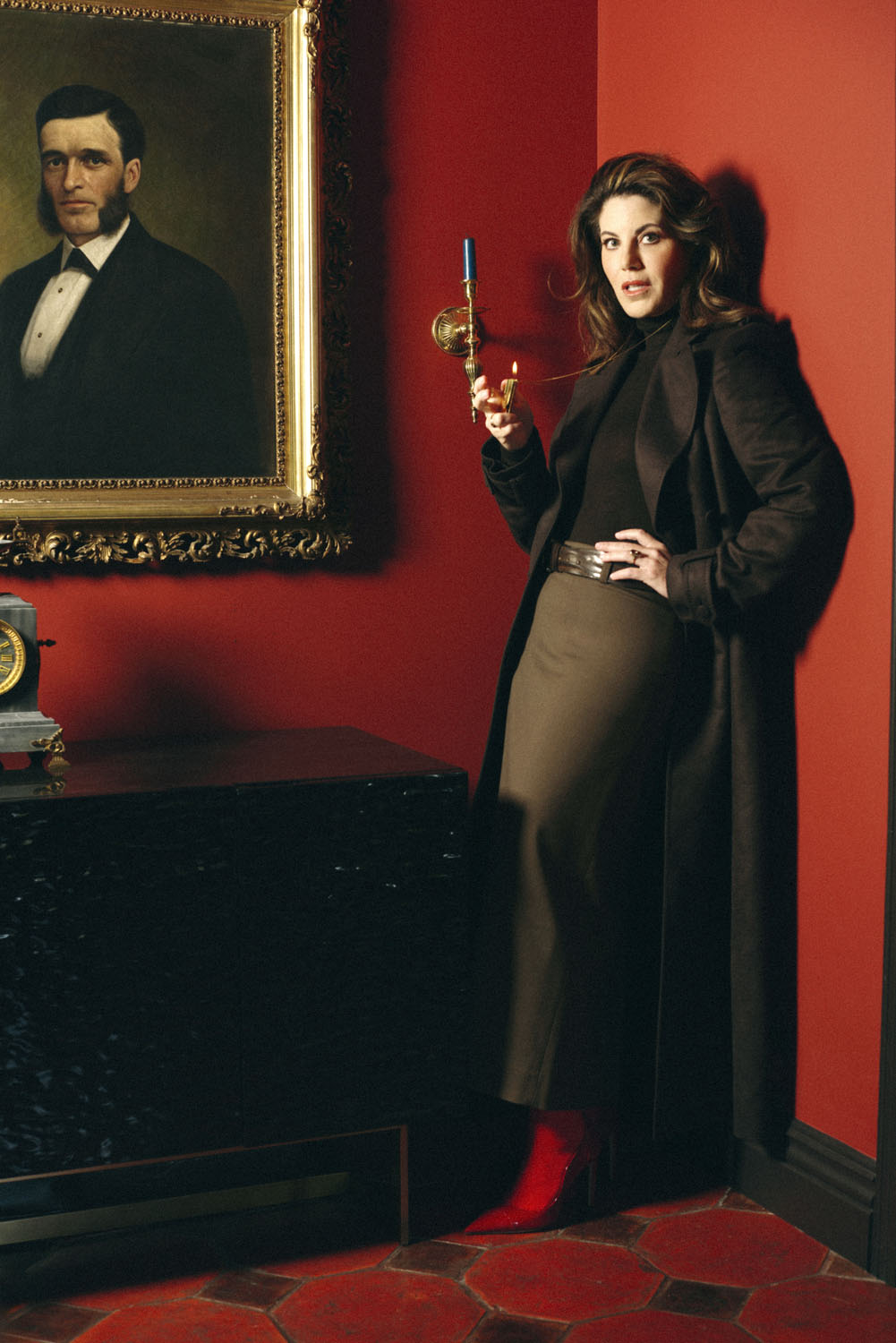
The day after I met Monica Lewinsky, I found myself in tears on a flight. The other passengers shared my vaguely manic anxiety: We were flying amid a government shutdown that cut the number of working air traffic controllers in half. I’d lied to various people about what day I was leaving New York—there was a party I was desperately hoping to avoid—and now I was coming clean on Delta’s messaging-only Wi-Fi.
Lewinsky (who knows a thing or two about government shutdowns, lies, and crying) taught me that even the most minor musings can change your life. So I let myself alternate between texting confessions and typing out petty, desperate—and admittedly pretty funny—poems into my Notes app. She also taught me, and an entire generation of young women, that shame can be a backpack filled with rocks—but if you’re willing to be brave, it can become a lens through which to finally see the writing that was always on the wall.
When we spoke, Lewinsky sat in her living room in Los Angeles, with a framed painting of a blister-pink heart hanging on the wall behind her, describing a life forged from the wreckage of bearing her own heart in public, against her will, as a young woman. Lewinsky’s story is a cipher for much of what ails our media ecosystem and our politics today—from her circuitous route to finding an authentic form of feminism to the seismic shift her story fomented in political reporting and the role of the Internet. Thirty years later, we’ve seen the tides of feminism rush in only to recede, while the Internet’s initial democratic promise has given way to a breeding ground for fascism, misinformation, and misogynistic ideology in the manosphere. Lewinsky’s story teaches us to closely watch the small fractures that can trigger tectonic shifts.
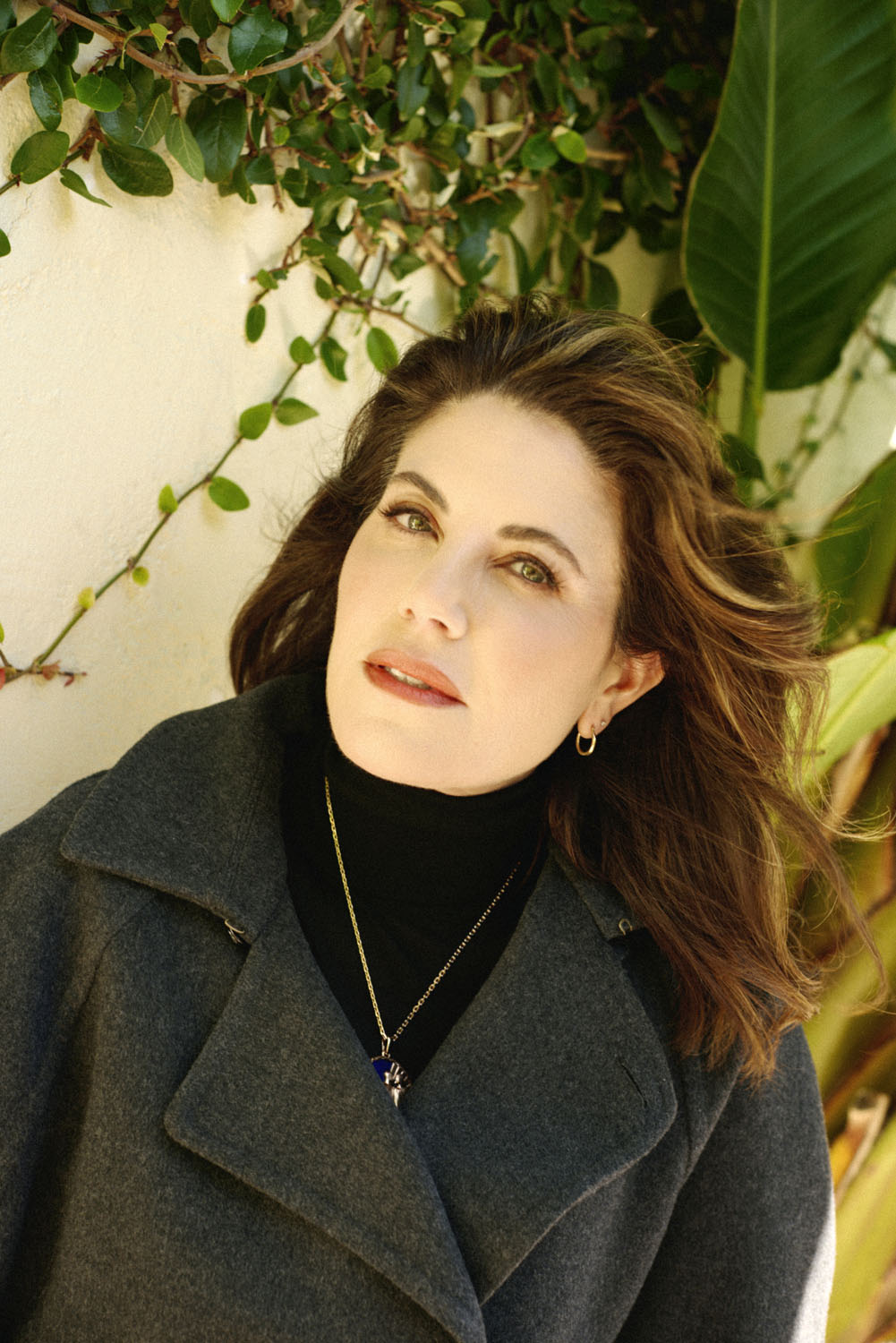
Today, Lewinsky is the host of the podcast Reclaiming and a producer of American Crime Story: Impeachment and The Twisted Tale of Amanda Knox. She’s interested in the healing potential of attention, in listening to people who have too often been poked, prodded, and violently exposed. “We rubberneck the car accident,” Lewinsky observes. “How many of us think, five minutes or five weeks later, I wonder if that person is okay?”
Lewinsky brings a sense of optimism—tempered, of course, by a bit of well-earned cynicism—to the stories that made unwitting celebrities out of regular people. She believes the concerned and curious outnumber the callous online, even if the cruelest, crudest voices dominate. After all, Lewinsky herself has been burned by the Internet. Hers was one of the first political scandals to be broken by a blog and dissected online ad nauseam; she has called herself “patient zero of losing a personal reputation on a global scale.” (The day the Starr Report went live in September 1998, Internet traffic across the U.S. doubled.) The growth of social media has made this phenomenon status quo for regular people—something Lewinsky hopes to change.
In fact, a group of regular teenagers changed Lewinsky’s life for the better. In 2014, she published a memoiristic essay in Vanity Fair, marking the end of what she calls her “dark decade” and the beginning of a healing and harrowing journey back into the public eye. She was riddled with anxiety about how the piece—a melancholic, droll, and ultimately sanguine account of the decades-long fallout of the “epic humiliation of 1998”—would be received.
So she winced when a gaggle of girls approached her outside the (comically positioned) marquee of Slut: The Play. What followed was a heartwarming surprise: The girls told her they were reading her essay in their feminist club. The experience prompted Lewinsky to reevaluate her place in political history. Could her story be a sororal one, about surviving the misogynistic miasma we all stumble through? Could it belong to a canon, connecting her to women she hadn’t previously seen waiting in the wings? It was the beginning of a personal “paradigm shift” that put her back in the driver’s seat of her own life. (Relatedly, Lewinsky told me that she’s been embracing her road rage: “Yelling ‘fuck face’ at someone in my car is a reclaiming moment.”)
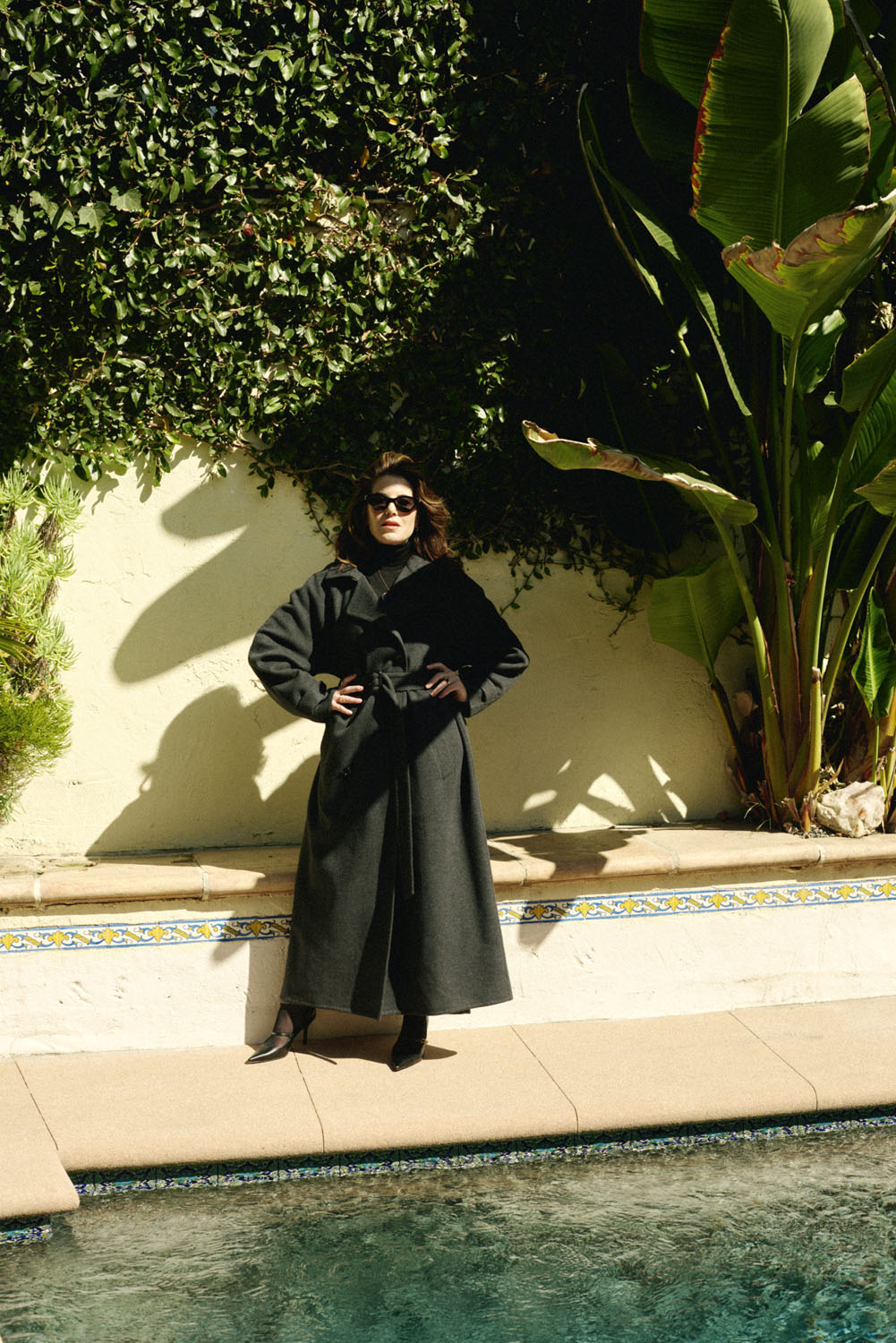
In a take economy defined by hyper-specific, politicized, algorithmically forged silos, I think Lewinsky’s feminism—her willingness to brook nuance and take a joke—is one we need. She maintains a winking poise, derived from having endured the psychic fallout of public slut-shaming at a scale hardly seen since, to the point that it dwarfed the more intimate pain of the sexual relationship that sparked it. Many argue that the infamous relationship, rife with power differentials and gendered dynamics, was inherently abusive, but Lewinsky did not necessarily see it that way at the time.
In the wake of #MeToo, she wondered, “Did my story fit into this? Did I have a right to reevaluate what happened?” She did—and ultimately decided that her experience “wasn’t sexual assault, but it was a gross abuse of power. I didn’t tick every box. I was mindful of not wanting to be a lightning rod that took [attention] away from what felt like more important discussions [at that time].”
For Lewinsky, reclaiming is about agency, choosing when to step in and out of the spotlight, and ensuring that the person living a life is its one true narrator. It does not happen in a single moment: “It is an ethos, a way of moving through the world. It has loss, and therefore grief. Everybody has a reclaiming story,” she tells me, even if we struggle to recognize them as such.
Single at 52, Lewinsky is not troubled by the stifling storylines about “spinsterhood” that she was raised on—far from it. “So far, my 50s have been the best decade of my life,” she assures me. “I hope I can show younger generations of women that it actually gets better.” For my own sake—and for that of women in their early 30s, depressed and teary in airports everywhere—I hope she’s right.
Hair by Ramsell Martinez for Home Agency using Bumble & Bumble
Makeup by Sandy Ganzer at Forward Artists using Lancôme
Production by Caroline Westdyk
Styling Assistance by Hannah Loewen and Lydia Gingrich
Fashion Interning by Janelle Jimenez






 in your life?

