
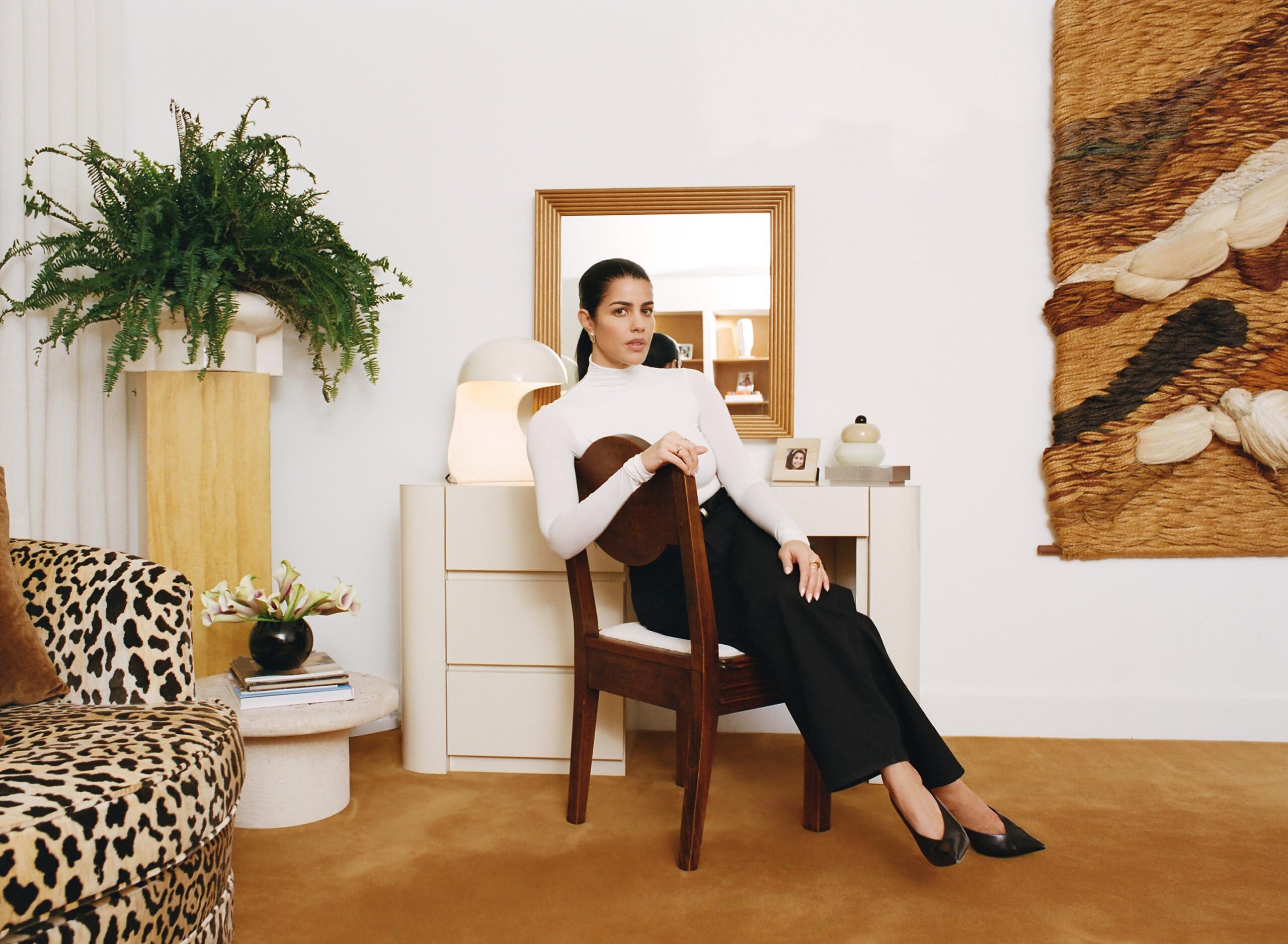
Gabriella Khalil builds worlds that linger in one’s mind—sunlit, sculptural, and pulsing with energy. The creative force behind Palm Heights on Grand Cayman, WSA and SAA in New York, and the Happier hospitality group, Khalil is a designer, curator, and cultural orchestrator with an atmospheric approach to artful interiors. In her spaces (both professional and personal), vintage sculptures, contemporary pieces, and experimental installations coexist in a thrillingly off-kilter dance.
For Khalil, collecting is a deeply personal, intuitive process—one that began in London flea markets and auction houses and evolved into a practice shaped by travel and curiosity. While many collectors take a check-the-box approach, Khalil’s attitude is refreshingly un-pretentious and full of humor and texture. She has Gaetano Pesce light sculptures that evoke living creatures and tapestries that feel like portals into another time.
Taken together, her collection speaks to a unique sensibility honed by experience, and one that CULTURED was eager to explore with Khalil in the following conversation.
Where does the story of your collection begin?
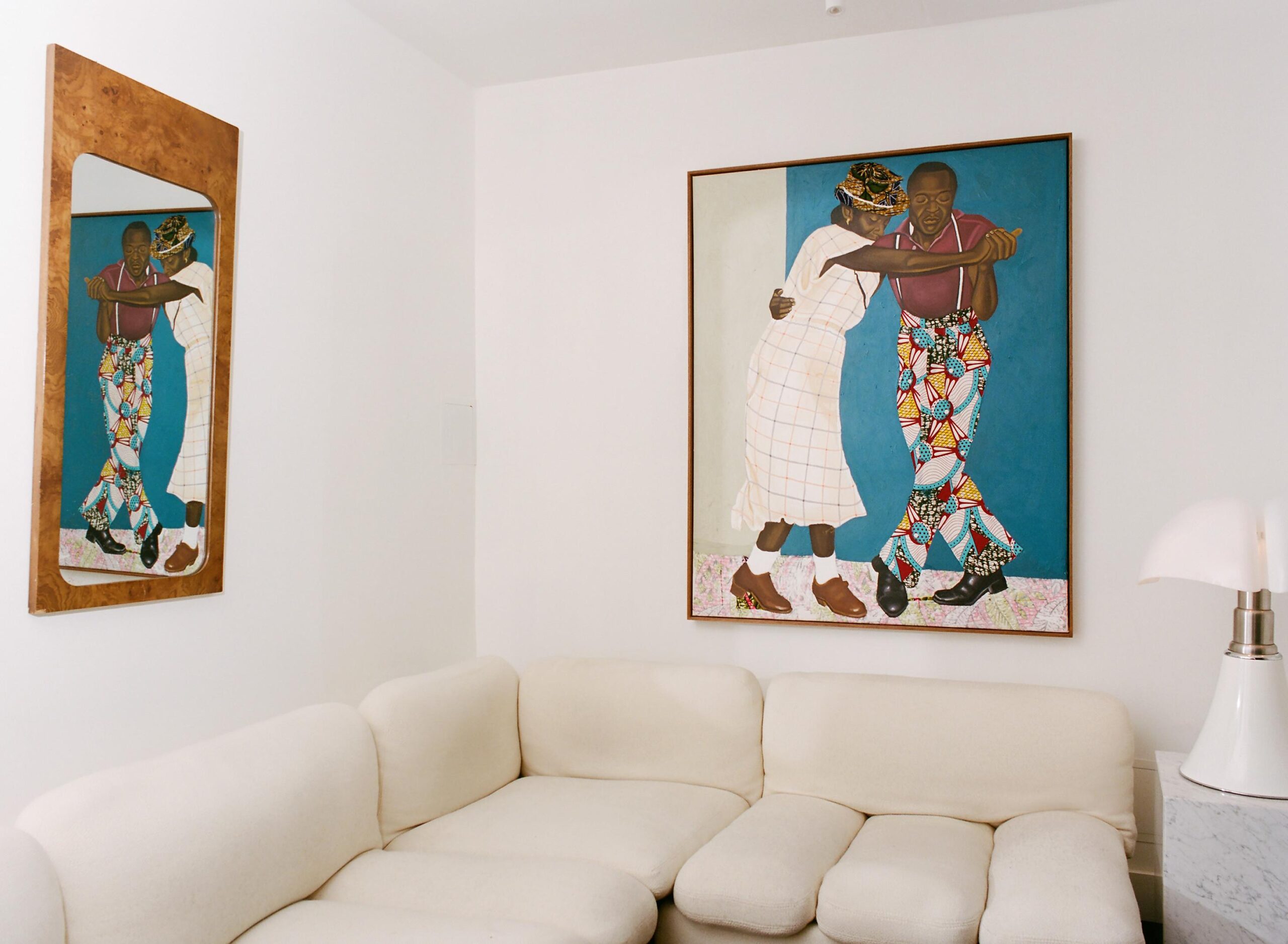
I studied contemporary art and completed my master’s back in London in 2008. I have always wanted to be surrounded by art, whether that’s at home or within my work. I originally worked in art galleries and auction houses, then on the weekends I would visit vintage flea markets in London and Paris. I started to consider that art wasn’t confined to what I saw in an auction house, but that it could take many forms and could be sourced from anywhere. It was all about what I felt inspired by. Vintage sculptures and tapestries were among the first pieces I started to collect, and still remain some of my favorites. I look at art at home and in my projects as storytelling—pieces collected over time that show a journey of style, travel, and evolution. I tend to look at furniture in a similar way, which I also consider pieces of art.
How would you describe the spirit that connects the works you live with?
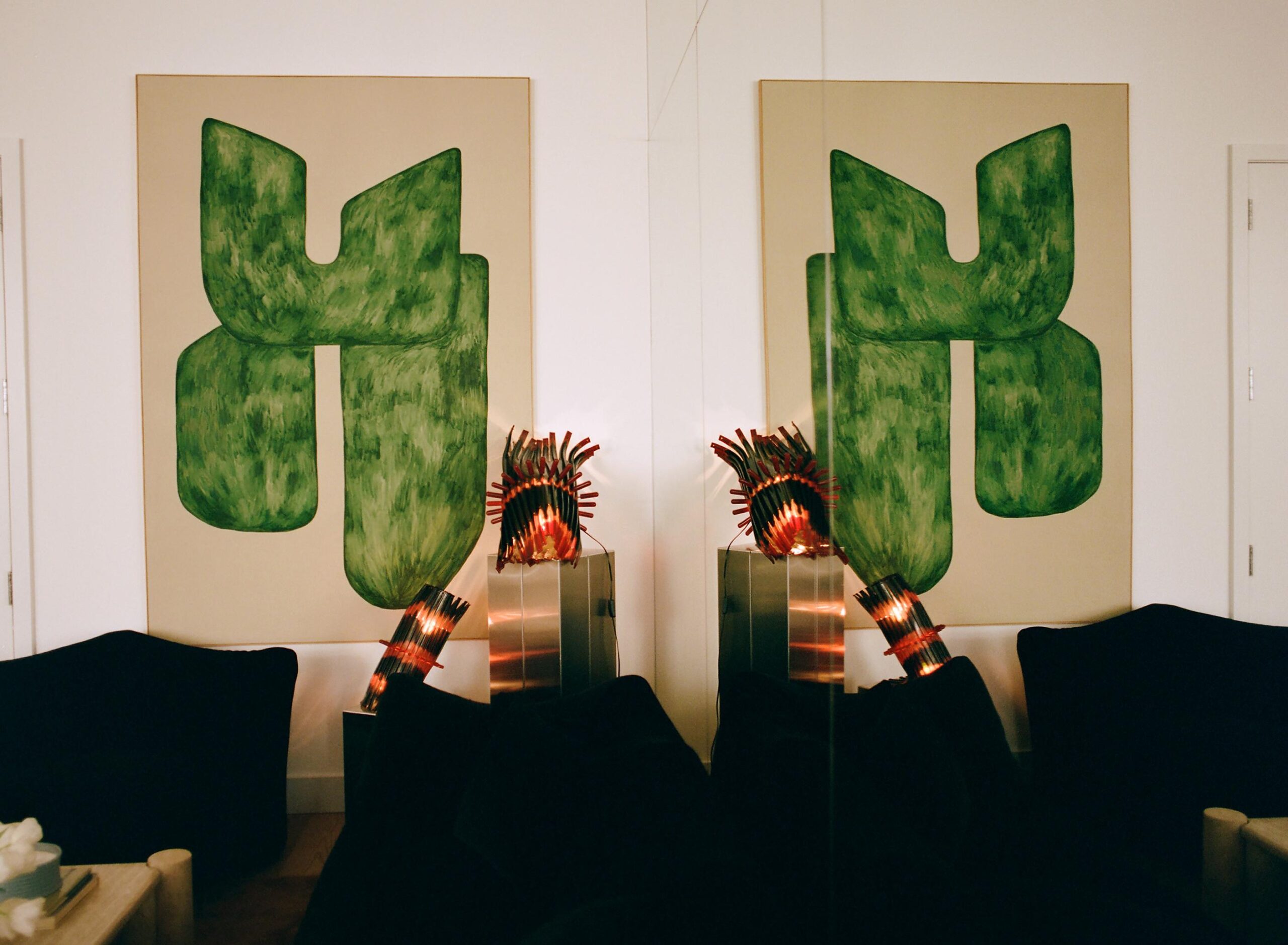
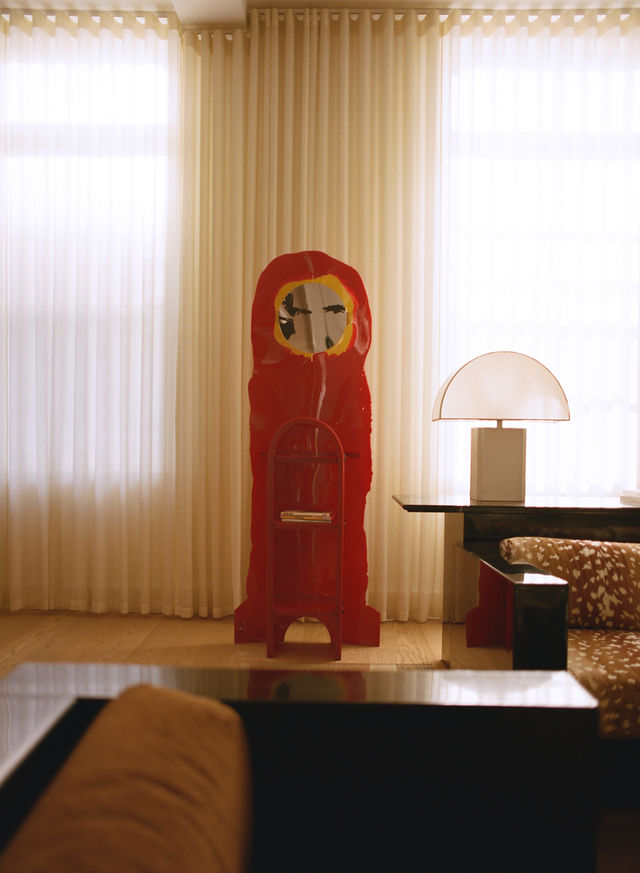
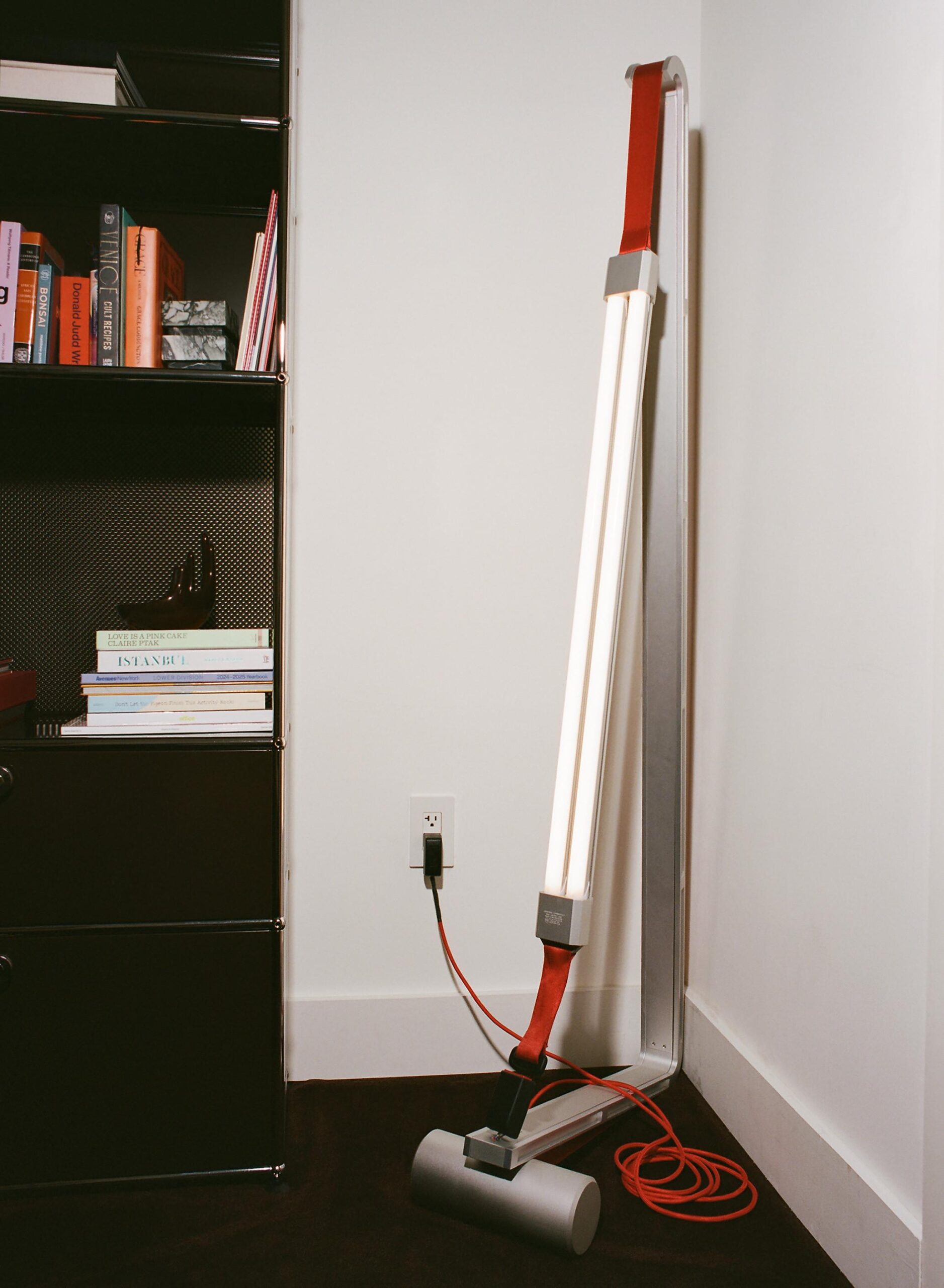
There is a playful and layered spirit in my artwork collection. It mixes artwork from Gaetano Pesce’s light sculptures and Joshua Woods’s stunning photography, to vintage wooden sculptures which I have carried around for years. I enjoy that the pieces are all extremely unique and play off of each other within my space.
Which piece tends to provoke the most conversation from guests or visitors?
I think the Gaetano Pesce lights get the best reactions. They almost feel like sculptural creatures.
How do you discover new artists or bodies of work that speak to you?
I discover new artists and art everywhere. By reading about it, visiting art and design fairs, exhibitions, even social media. Also, over the years we have hosted an artist residency program at Palm Heights where artists can come and create pieces or work on their craft. I discovered so many wildly talented artists through this, and also have loved to watch their journey evolve as artists as well.
How has your eye or approach to collecting evolved over the years?
Over the years, I have become more confident, playful, and bold in choosing artwork, furniture, and objects across the board. I believe that unexpected visual moments within spaces are important and are often the most cherished. I have also been exploring different mediums throughout the years: sculpture, tapestries, and light installations.
If you could instantly own the collection of anyone else, whose would it be—and why?
I wouldn’t say I’d like to have any particular existing collection as my own, as I think the beauty of a collection is the idiosyncrasies that reflect the collector themselves and their nuances. A good collection, in my opinion, evolves and isn’t overly obsessed with particular moments or themes, but is about connection with certain works and what they represent. I can say though that I would love to add an artwork by Kennedy Yanko or Rashid Johnson to my collection.
How does collecting intersect with your professional projects? Do the same sensibilities apply?
I use artwork in my projects in a very similar way that I do at home. I am attracted to visual, thought-provoking pieces, and love to place them in unexpected ways. I also like to use art to showcase important moments in the journey of a space, like entrances, hallways, or grand meeting areas.
What’s the most unexpected or serendipitous experience you’ve had acquiring a piece?
Although not an acquisition experience, the residency program at Palm Heights introduced me to an incredible roster of artists from all around the globe. We sought to celebrate the diversity of the islands and residencies included artists from Benin to Brazil. We have had so much inbound interest from so many parts of the world that we couldn’t have foreseen.
What is one thing about your collection that might surprise people?
For me, I think it might surprise people that there is no systematic approach to how I collect. This has been a serendipitous and organic process for me over the years. I have collected what I loved or what spoke to me. It is only now that I started to realize—oh, I have a collection of pieces that are meaningful to me, but really this has been an evolution of great finds and being authentically excited about a piece or an artist.
Do you ever imagine curating or commissioning new work directly for your spaces? If you’ve done so, how has that taken shape?
I have curated artwork for many spaces and projects, but for me it usually has worked backwards—where I have sourced an amazing artwork, and then after the fact, found the perfect location for the piece. This happens to me time and time again. When I’m working on a project and find the right artwork, I don’t hesitate because I feel certain I will locate the perfect spot. A good example of this is an Ettore Sottsass rug which I sourced from an auction years ago. This piece ended up being placed on the wall at the main entrance of Palm Heights—it is still one of my favorite art pieces from the entire hotel.



 in your life?

