

![[L] Elia Zenghelis, Zoe Zenghelis, Hotel Sphinx Project, New York, New York (Axonometric) 1975–1976 [R] Rendering of Abraj Kudai in Mecca, Saudi Arabia]](https://culturedmag.nyc3.digitaloceanspaces.com/uploads/2025/12/19111900/Screen-Shot-2025-12-19-at-11.18.03-AM.png)
The hotel is also a source of inspiration for architects. Consider husband-and-wife creative team Elia and Zoe Zenghelis’s Hotel Sphinx, a never-built tower conceived in 1975 for the intersection of 7th Avenue and Broadway in Times Square. Immortalized in architect Rem Koolhaas’s book Delirious New York, it was an urban hotel that doubled as a model for mass housing.
Each part of the Hotel Sphinx had a different function: the legs held escalators, the two towers of the tail held studio apartments, the neck housed social clubs, and the spine housed hotel rooms. The ground floor straddled 48th Street, literally bringing the city life into the hotel and the hotel out into Times Square. Today, Hotel Sphinx is the blueprint for the mega-hotels we see in Las Vegas, Singapore, and, notably, the Abraj Kudai in Mecca, Saudi Arabia.
I canvassed architects who have been featured in my Spatial Awareness column about their favorite getaways, and the flurry of responses suggests that the hotel remains a rich typology of possibilities. The best of them, sphinx-like, provide various kinds of comfort.
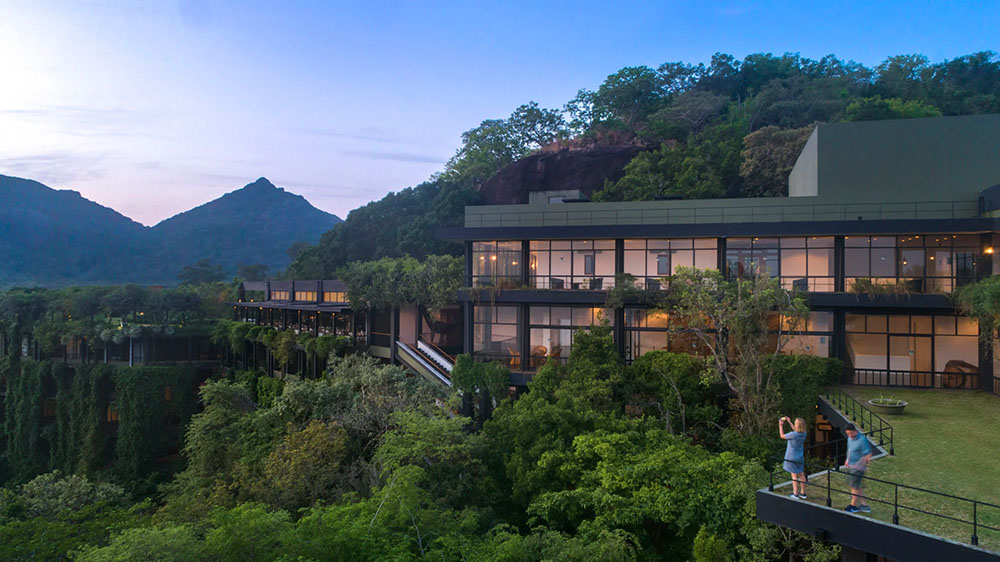
Where: Dambulla, Sri Lanka
Chosen by: Minsuk Cho, founder of the firm Mass Studies
What to Know: Sri Lankan architect Geoffrey Bawa, known as the father of the Tropical Modernist movement, designed and completed Heritance Kandalama in 1994. The 152-room compound is built into a mountainside in a protected forest, and its nearby neighbor is the Ancient City of Sigiriya. It is the world’s first LEED-certified green hotel.
In His Own Words: “It was not an accommodation; it was the destination itself.”
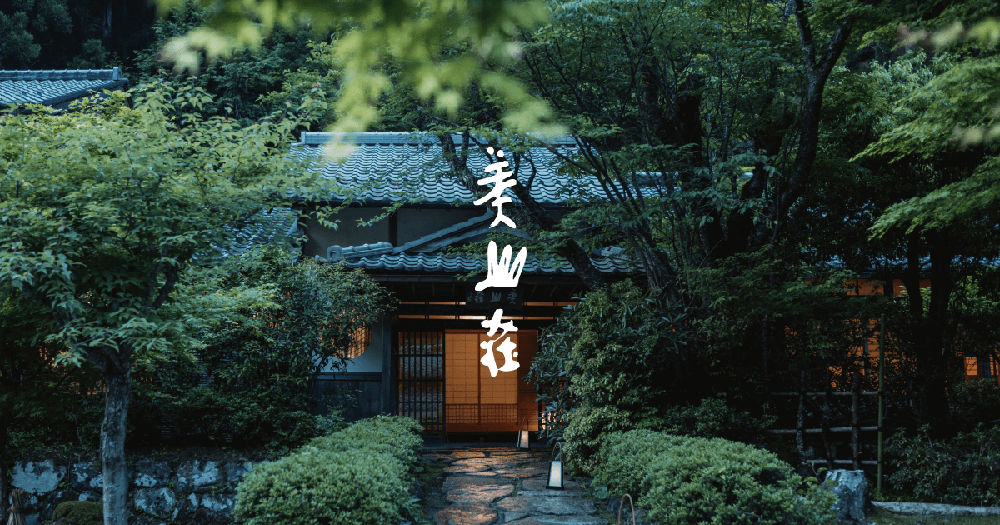
Where: Near Kyoto, Japan
Chosen by: Kulapat Yantrasast, founding partner and creative director of WHY Architecture
What to Know: Originally a hostel for pilgrims visiting the nearby Bujo-ji Temple, the ryokan (traditional Japanese inn) has been run by the Nakahigashi family for four generations. The dwelling’s architecture is based on tea house aesthetics known as sukiya-zukuri, and the inn is renowned for its Tsumikusa cuisine, foraged from surrounding streams and forests.
In His Own Words: “Because time stops / But the creek flows / into your tummy”
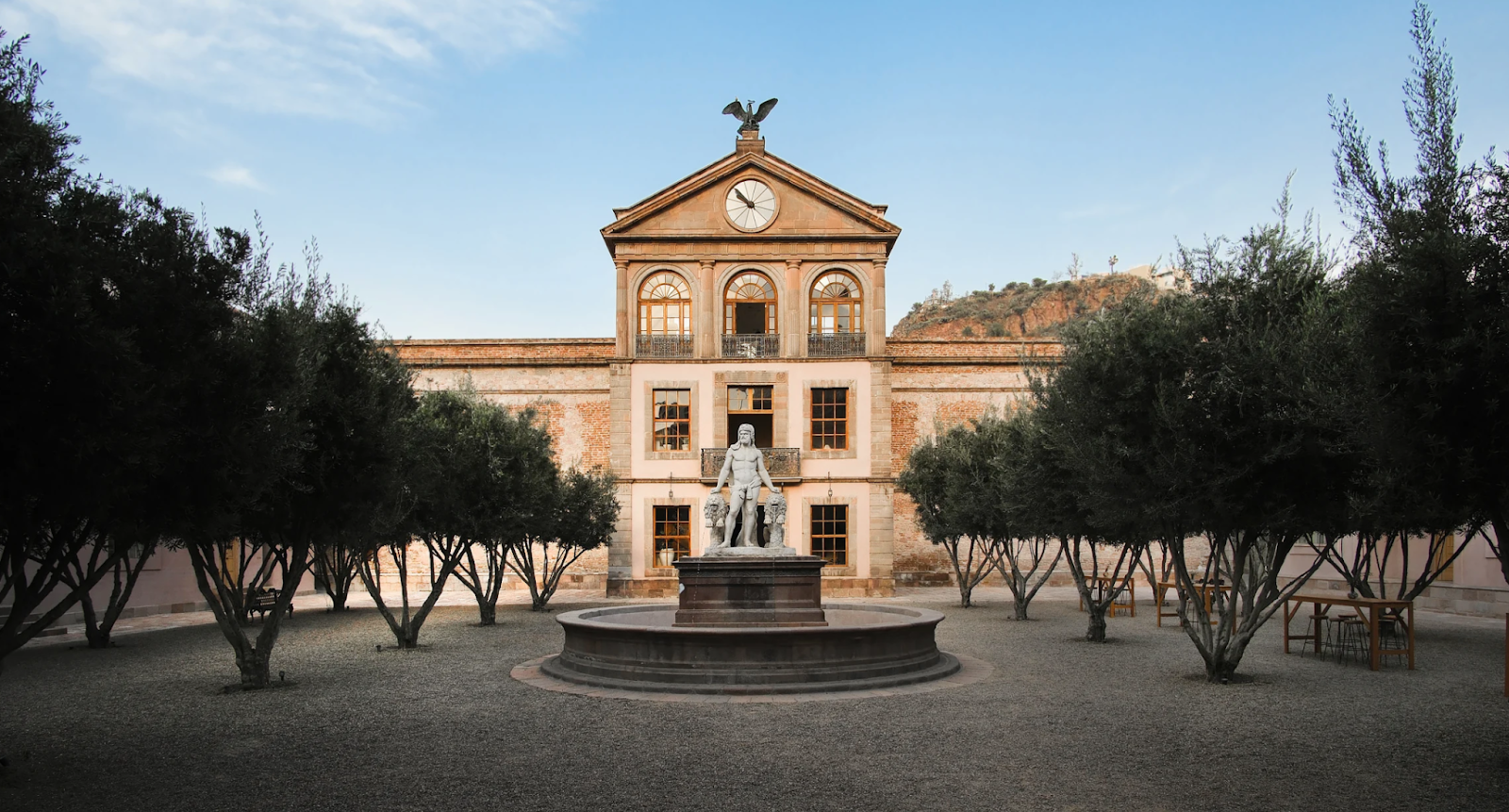
Where: Queretaro, Mexico
Chosen by: Charles Renfro, a partner at Diller Scofidio + Renfro
In His Own Words: “There’s always a magical property that captures the spirit of a place, and if it’s my first time and if I’ve fallen in love with the place, then I fall in love with the hotel. My most recent hotel crush is in Queretaro, Mexico. It’s the Hotel Hercules.
It started as a fabric factory built in palatial style and was later converted into a brewery, a spa built into the factory’s ruins, several farm-to-table restaurants, and a collection of artisanal fabricators with shops and artists’ workshops. It’s a city within a city.
There are no TVs in the rooms. No minibars. Only old squeaky parquet floors, oversized doors, hand-made tiles, and of course artisanal linens.”
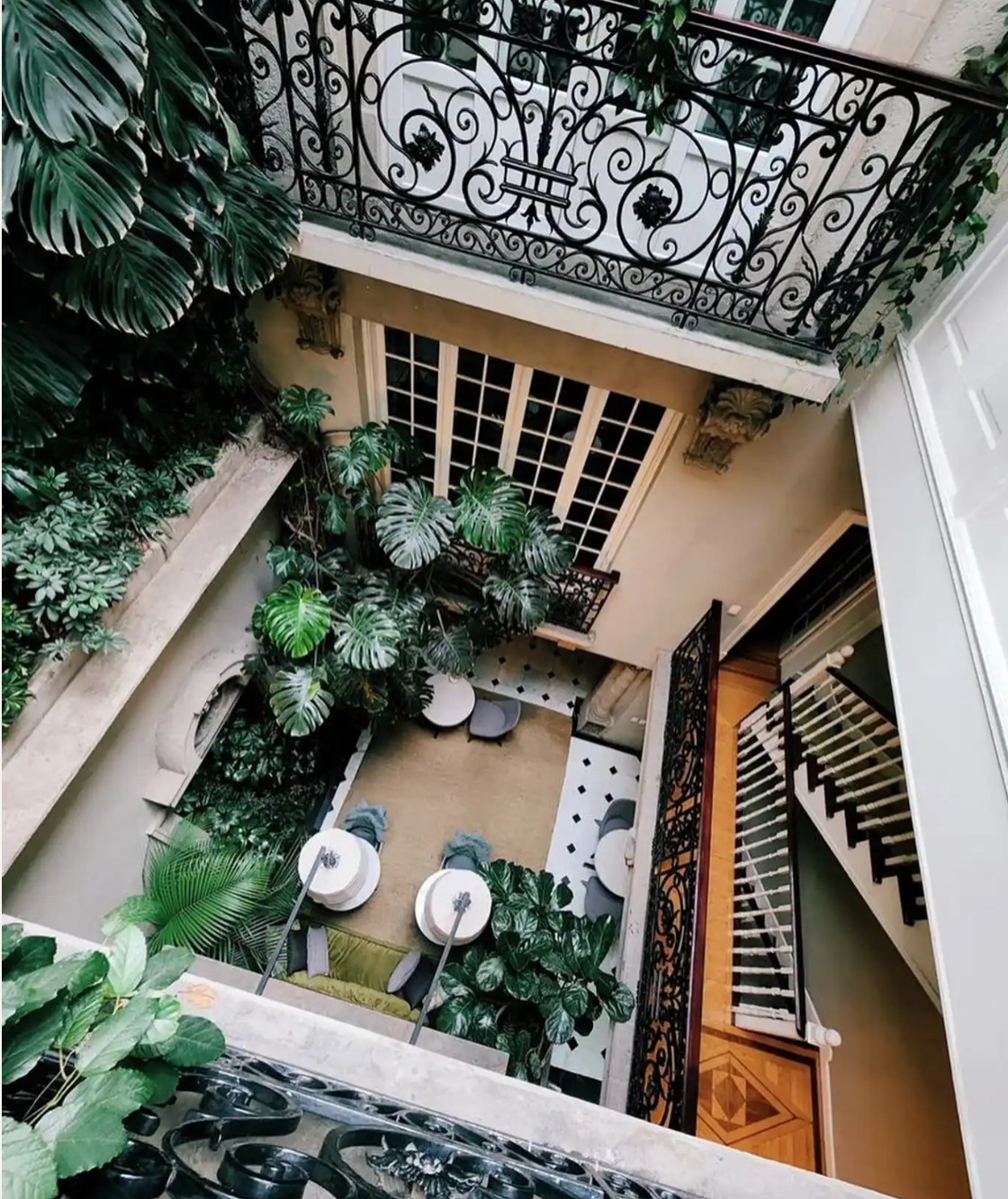
Location: Mexico City, Mexico
Chosen by: Miriam Peterson, co-founder of Peterson Rich Office
What to Know: The owner, Regina Montes, converted a historic early-20th-century mansion in a hip neighborhood that boasts art and design galleries, trendy restaurants, and street food.
In Her Own Words: “Nima Local House in Mexico City is the best hotel I’ve ever stayed in. The four-room hotel is in an old mansion in Roma Norte, and the quality of staff, food, and services is incredible and feels very personal. It’s low-key, but luxurious.”
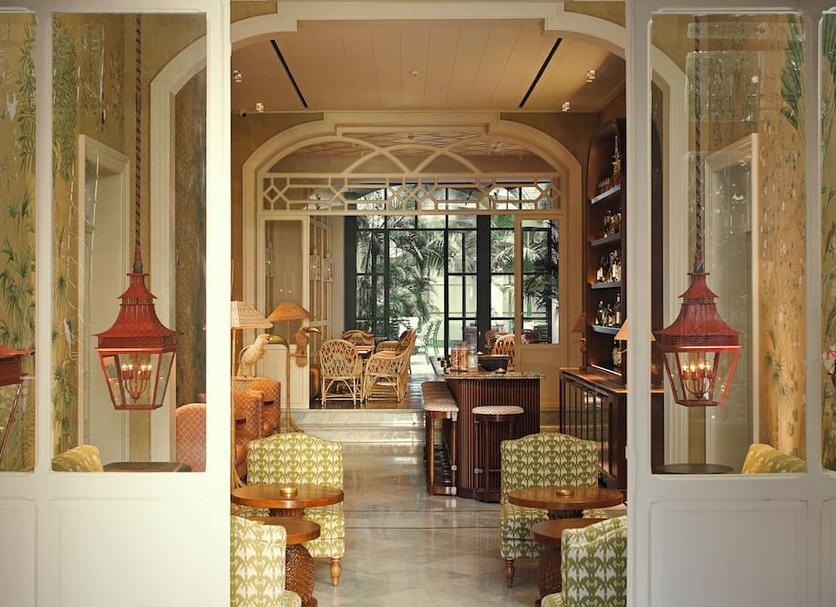
Location: Beirut, Lebanon
Chosen by: Amale Andraos, co-founder of WORKac
What to Know: Originally a 1930s mansion, the Albergo Hotel is located in the historic Achrafieh district. It is designed by Atelier des Architectes Associés and the majority of the interiors are by Lebanese designer Maria Ousseimi.
In Her Own Words: “An adaptive reuse of an old Lebanese house in one of Beirut’s most picturesque streets, the hotel feels like a wonderful mix of epochs. From Ottoman grandeur to Parisian chic, it layers atmospheres and objects collected from around the world to bring you back to a dream-like Orient that inspires you to imagine what Beirut could be again. The rooftop terrace bar is particularly charming, offering an intimate panoramic view of the city.”
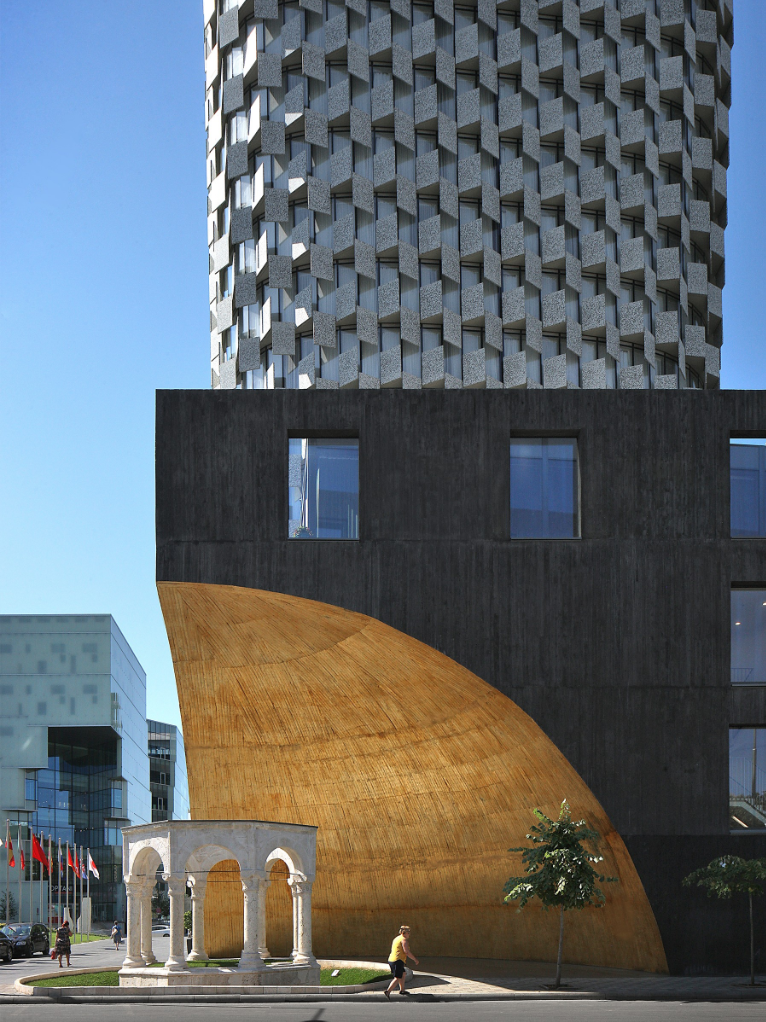
Location: Tirana, Albania
Chosen by: Florian Idenburg, co-founder of SO – IL
What to Know: The 24-floor hotel is located in the center of town. The Belgian architecture firm 51N4E designed a structure on the ground floor that is elliptical; as it rises to the top, it gradually becomes rectangular. A companion structure hollows out a dome recess to accommodate the tomb of Süleyman Pasha, an Ottoman prince.
In His Own Words: “The 51N4E-designed tower is a calm, stoic tower offering expansive views over a city that [Albanian Prime Minister] Edi Rama and his team are rapidly recasting into an unexpected laboratory for architectural ambition.”
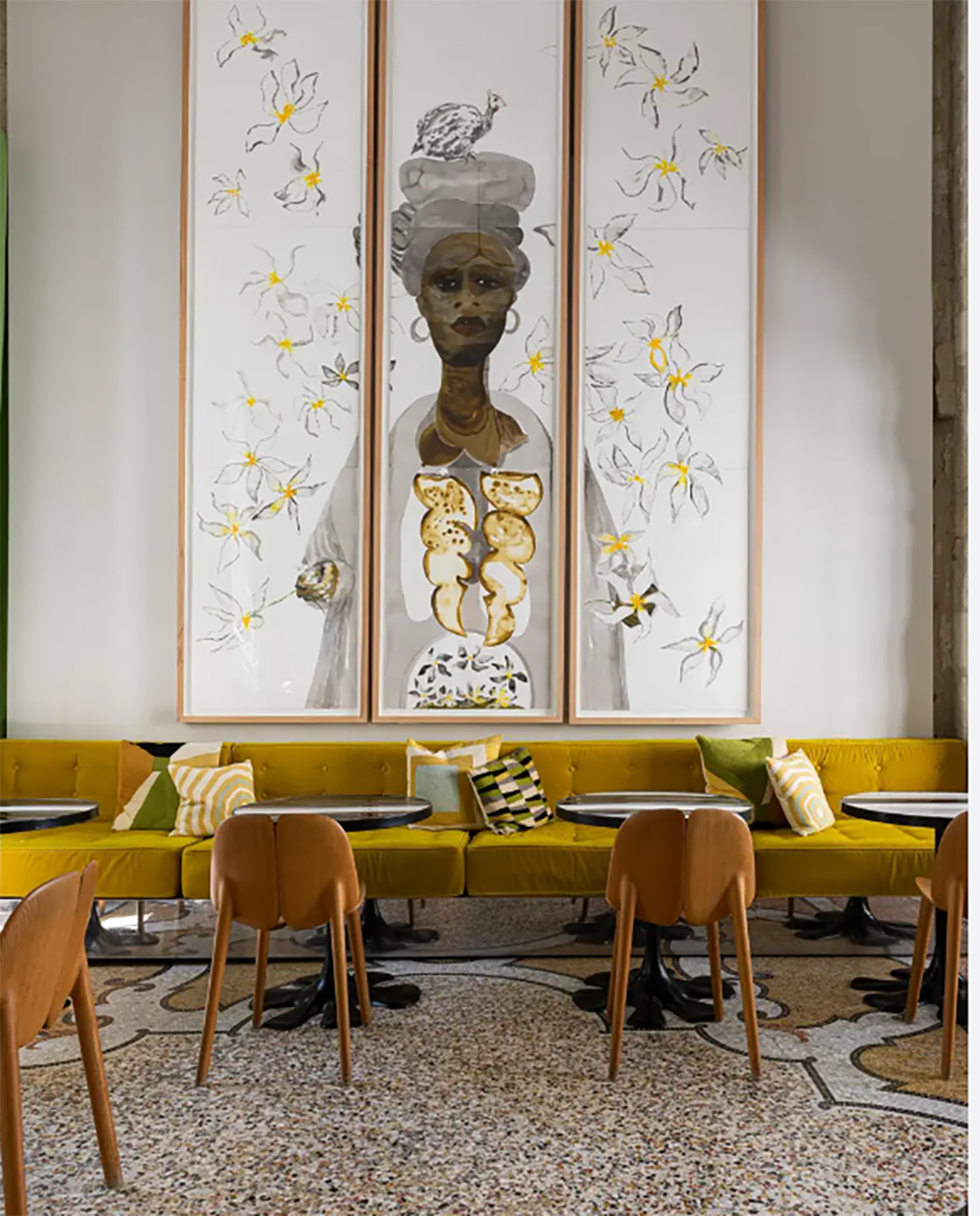
Location: Arles, France
Chosen by: Annabelle Selldorf, founder, Selldorf Architects
What to Know: Sited over the remains of a 12th-century Roman basilica, the townhouse is home to visiting artists and architects to the nearby art campus Luma, created by the Swiss philanthropist and art collector Maja Hoffmann.
In Her Own Words: “Hotel Le Cloitre in Arles is one of Maja Hoffmann’s hotels, cleverly and innovatively designed by [French architect] India Mahdavi in the heart of the old town. Every room is different yet comfortable, and the individual qualities are held together by the same materiality and the range of furnishings, all designed by Mahdavi. The service is generous and unpretentious. Writing about it makes me miss spending time in Arles.”
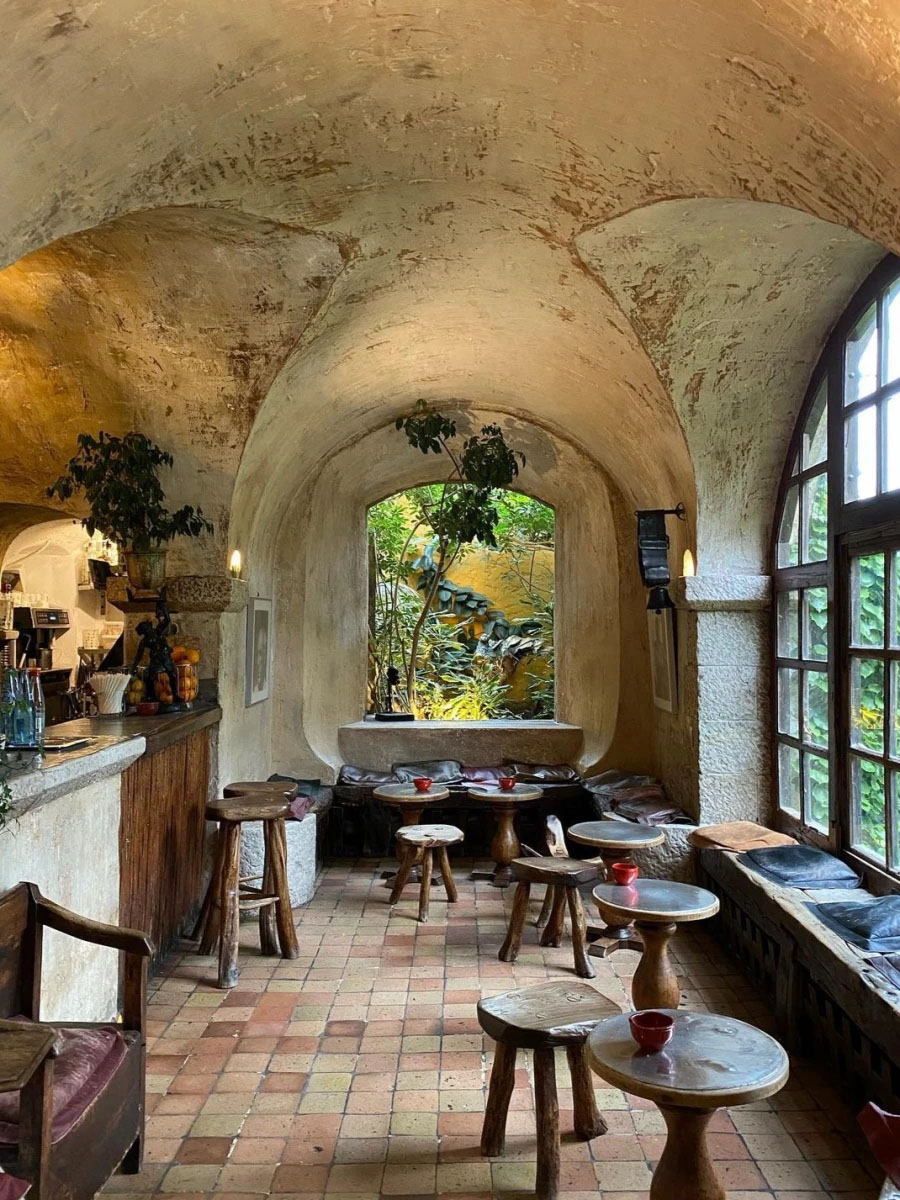
Location: Saint Paul de Vence, France
Chosen by: Dominic Leong, founding partner, Leong Leong
What to Know: In 1920, Paul Roux opened the café-bar Chez Robinson, which evolved into a legendary hotel where artists (Léger, Matisse, Braque, Chagall) bartered their work in exchange for rooms and meals. The Roux family continues to operate this beloved inn and lovingly maintains its traditional Provençal architecture.
In His Own Words: “Although it was a hotel, it offered all the essential elements of an ideal artist residency—history, seclusion, intimacy, and community—a restorative sanctuary in a stunning setting.”
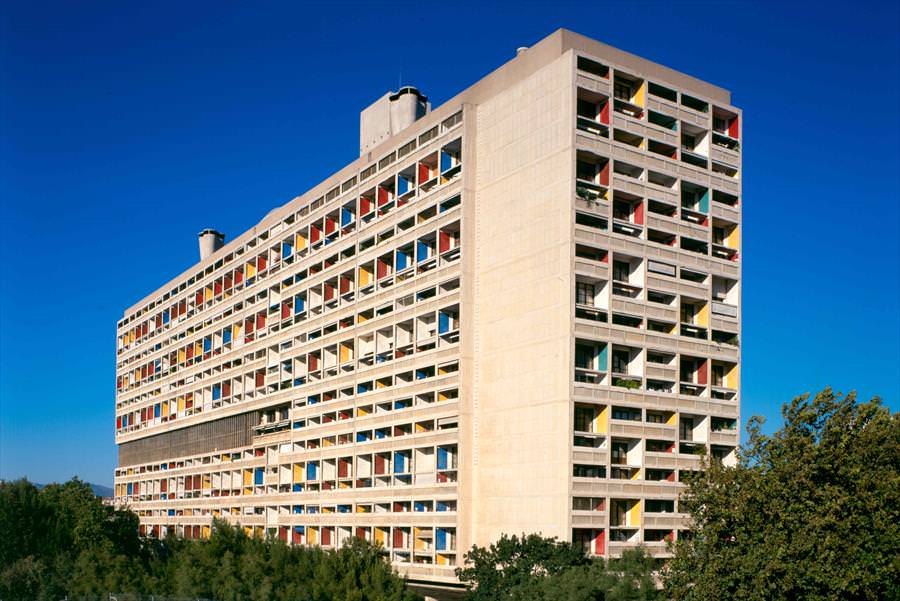
Location: Marseille, France
Chosen by: Zeina Koreitem, co-founder, MILLIØNS
What to Know: Unité D’habitation by Le Corbusier is a modernist concept of a housing development consisting of 330 units and collective spaces. Although not officially a hotel, a lucky few may have the chance to stay as guests.
In Her Own Words: “I’ve stayed at the Unité d’Habitation several times, and it was remarkable to get to know local residents who have been living there since the project was completed in 1952. I spoke with retired public school teachers, an electrician, and an épicier in their 80s. Listening to their stories was heart-warming. They spoke of their communal experience: raising their children with their neighbors; hosting cultural events like plays, concerts and collective meals. They spoke openly of their experience as working-class citizens with a good quality of life and a community that cared for their families.”


 in your life?