It was around 2010 that Boomer culture, dwarfed by the progressive optimism of the early Obama era, gave way to Millennial culture. TV—not to mention music, food, movies, fashion, and politics—entered the era of intentionality. Americans wanted guilty pleasures in forms they didn’t have to feel bad about: Sweetgreen instead of McDonald’s, yoga instead of vegging out, Obama instead of Bush, Bon Iver instead of Creed.
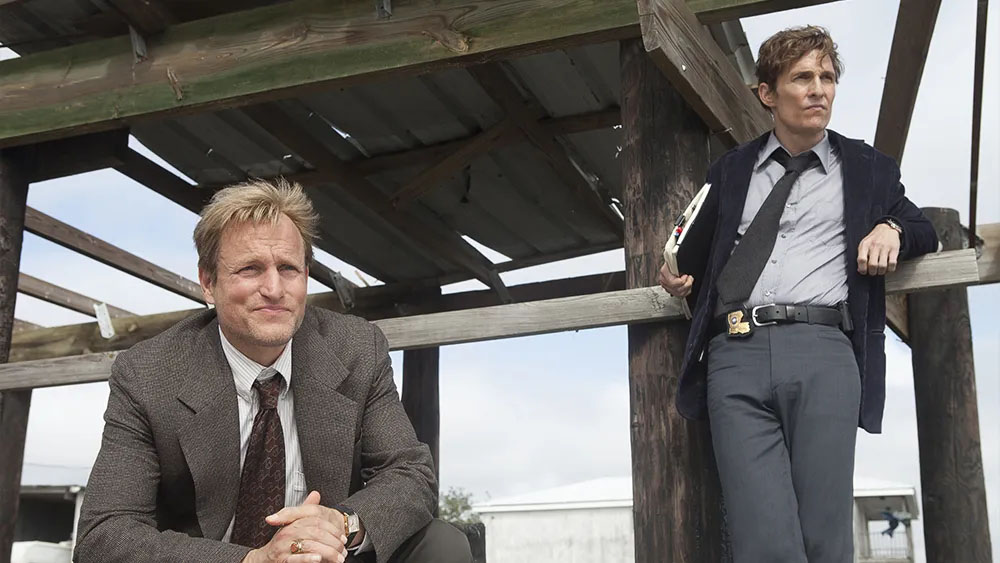
Prestige TV—a 21st-century vestige of 20th-century American monoculture reflecting the millennial emphasis on ideological coherence, narrative heft, and novelistic dimension—was one of the organizing principles of the 2010s. Among the spoils of this ebullient period was a wave of great series: Game of Thrones, Girls, Boardwalk Empire, Breaking Bad, Mad Men, The Walking Dead, House of Cards, Orange Is the New Black, Downton Abbey, Homeland, True Detective. These prestige dramas reflected a collective faith in TV as a culture-unifying apparatus and a pressure-release valve for our anxieties—about politics (House of Cards, Game of Thrones), terrorism and American dominance (Homeland), modern romance (Girls), abject consumerism (Mad Men), the opioid epidemic (The Walking Dead, Breaking Bad), and technological and spiritual dread (Westworld, True Detective). The richness of these worlds—and the writing and acting that ushered them to life—seemed to say, “America may be declining, but American culture is thriving.”
Now, just 15 years later, American television has come to embody that decline more than its salvation. Some of the most-watched new series of 2024 were reboots, spinoffs, and IP extensions (Squid Game, Matlock) and the last genuinely era-defining drama, Succession, ended its run in 2023 without a clear heir apparent (the cultural impact of Severance and The White Lotus was muted by comparison). There are many reasons for the downfall of prestige TV. For one thing, a growing percentage of American viewers now watch partly on their phones (over six percent watch exclusively on their phones) and an even greater percentage are scrolling on an additional device while they do it. The visual and linguistic density of the programming we watch is shrinking to meet us where we are.
But perhaps the most damning reason—and I know this from experience, having pitched and sold shows to studios over the last four years—is that the industry’s algorithm-choked and decision-by-committee approval structure, more entrenched as the streaming wars picked up over the last 10 years, promotes copycats and risk aversion. I’ve had several pitch meetings with creative executives where I’ve been told that the data doesn’t support the kind of show I’m envisioning. (In one, I was told that audiences these days were interested in lighter material; in another, I learned that they only wanted darker fare. In every meeting, I was informed that nobody wants shows set in Los Angeles or New York.) I got the sense that these executives sit down with me out of nostalgia for a time when they could just hire playwrights away from the stage because they had a gift for dialogue. Of course, the quality of the writing matters enough to get you into the room, but today, the industry is looking for writers who are ready to follow trends rather than spark them.
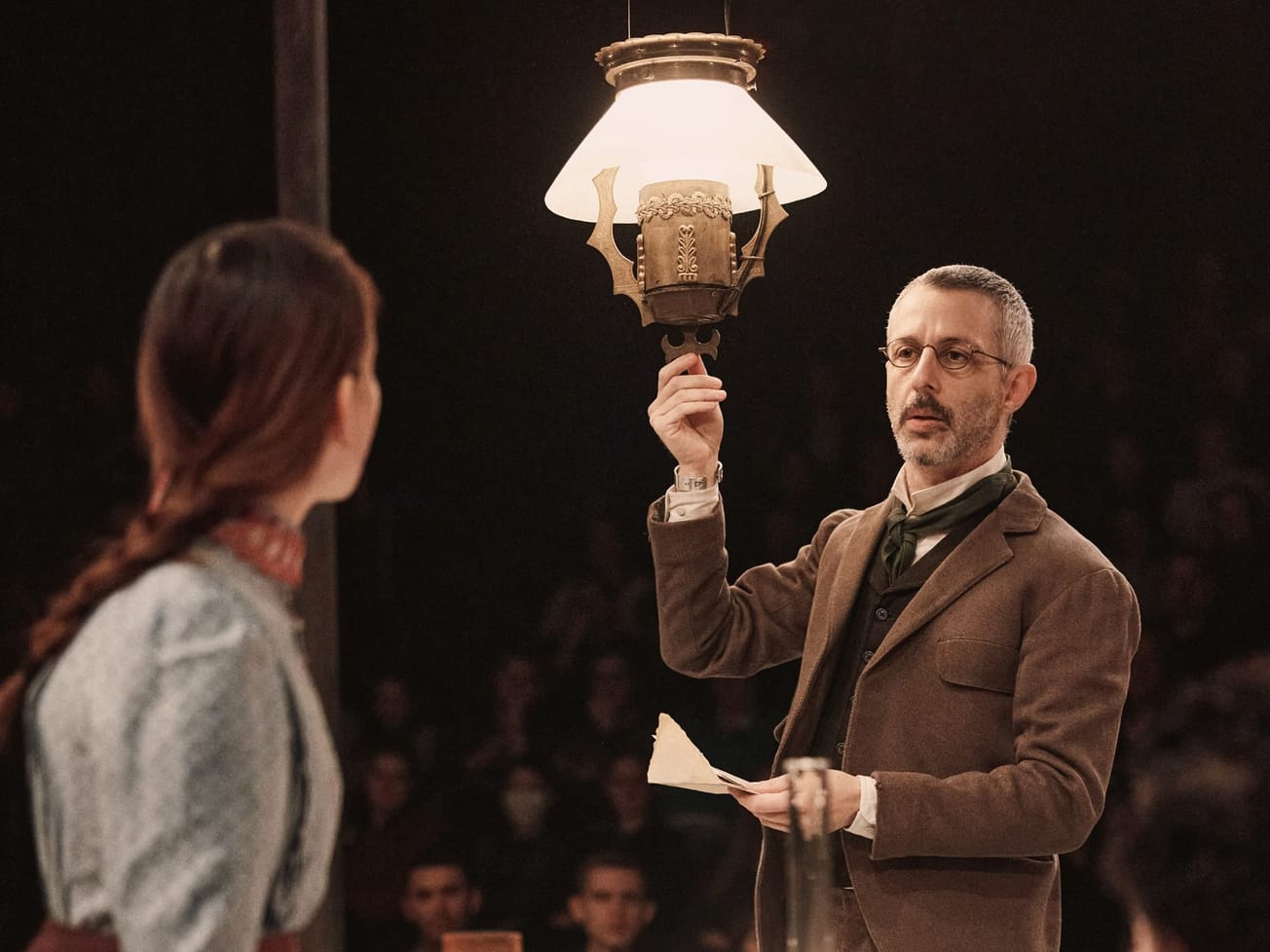
But all that prestige has to go somewhere. I would argue that, since the pandemic, it has migrated steadily onto the stage. Look at who wants in: Hugh Jackman started his own small theater company. A24 bought Cherry Lane. Robert Downey Jr. chose McNeal for his Broadway debut last year (a play, ironically, about A.I.); Sarah Paulson and Jessica Lange earned Tony nods in thorny family dramas; Steve Carell attempted Uncle Vanya; Rachel McAdams starred in Mary Jane; Jeremy Strong took on Ibsen in An Enemy of the People; this year, Keanu Reeves took a turn in Waiting for Godot; and Kit Connor and Rachel Zegler appeared in a Zoomer Romeo and Juliet. A list of heavyweights at their commercial peaks, who could land any multi-million-dollar deal under the sun, deliberately choosing eight shows a week.
Of course, the theatre has always been a prestigious institution—it’s the crucible of the acting profession. But until recently, its renown had been largely emeritus—the entertainment-world equivalent of studying Latin. What is changing now is that writing for the theater is no longer a waystation on the path to a lucrative career in screenwriting, but an end in itself—a meaningful outlet for writers, especially younger ones, who recognize the inaccessibility of today’s film and TV industry.
“There’s a term you hear often now,” Mark Ruffalo, who attended a performance of my play Dimes Square in Greenpoint last winter, told me recently. “[TV audiences] want something ‘sticky.’ Stories that feel familiar are very easy to get stuck on. I’ve noticed [that studios are] steering away from things that are ‘issue’-based, overtly political, too ‘challenging’ … Everyone is playing it safe.” The Emmy-winning and Tony-nominated actor, who starred in HBO’s small-town thriller miniseries Task this fall, got his first big break in the 1996 Kenneth Lonergan play This Is Our Youth, and has kept a toe in the theater ever since. Ruffalo added that the success of unwieldy original scripts like Anora and The Brutalist are a sign that audiences—if not their studio gatekeepers—still thrill to the riskiness that prestige TV once offered.
Because of production costs and the sheer byzantine nature of the TV industry, there’s no real prospect of disruption from within. Television has no indie world, no festival circuit in which to nurture an Anora. Instead, it’s locked in a deadly battle with the most impactful cultural products of the decade: TikTok, YouTube, X, Reels, OnlyFans. There’s more talent bubbling on the Internet than in most writers’ rooms, and much of the talent that remains is shackled to preexisting intellectual property.
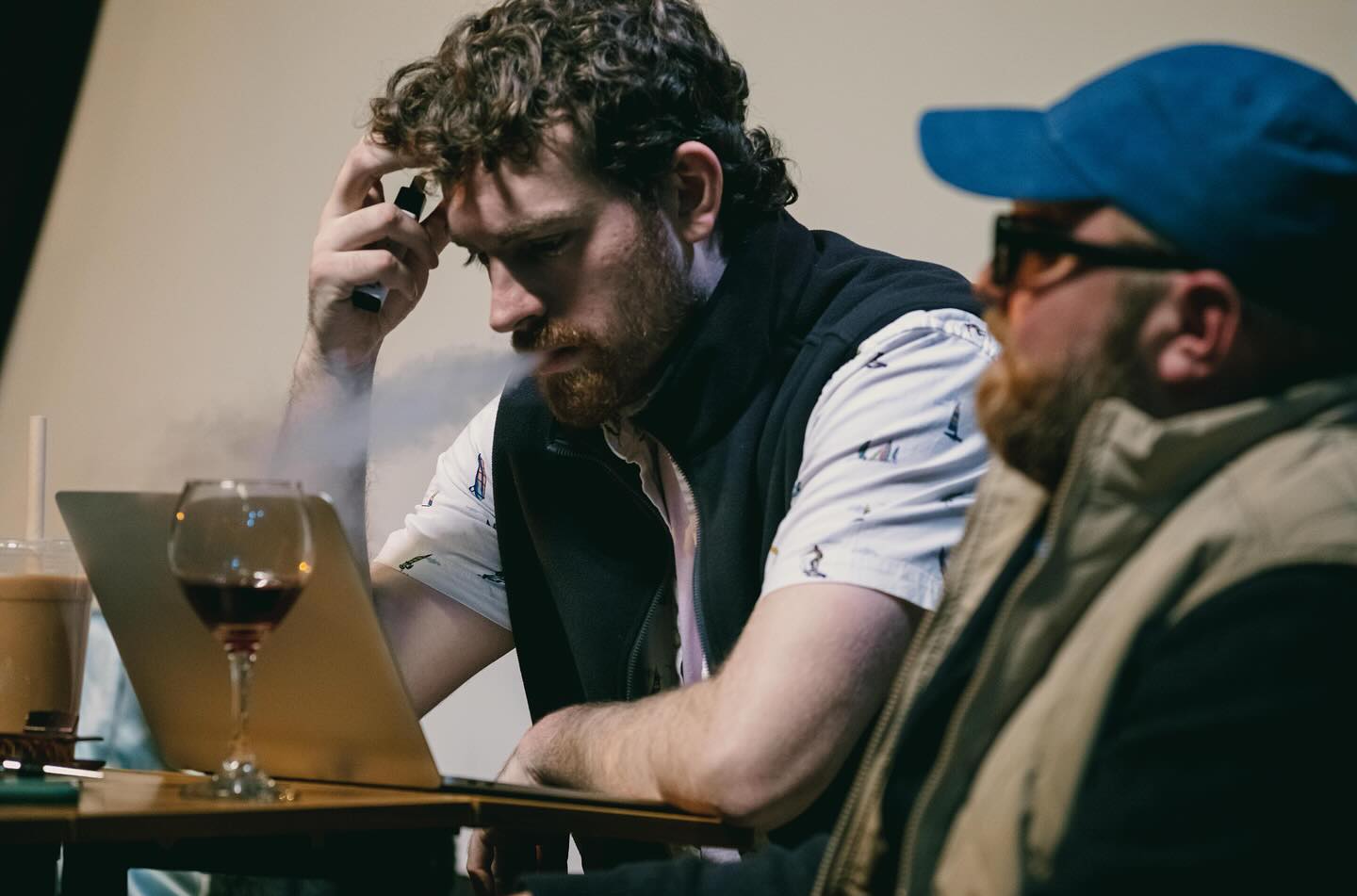
When I opened the Brooklyn Center for Theatre Research in Greenpoint in 2023, after years of doing theater in borrowed lofts and townhouses, I wanted to prove that a full-time DIY theater could sustain itself. And—though not without endless time and effort—it has. Theater’s rise to prominence can be traced to a few factors. For one thing, small-scale, intimate theater—assuming the material is grounded in text and not special effects, and actors are willing to perform with minimal rehearsal time—is cheap and repeatable and fun. My most visible, most produced play, Doomers, had an original total overhead of around $10,000 for its New York production. I workshopped it over the course of six months, hosting weekly gatherings with the actors to listen to new drafts in front of live audiences, which subsidized the costs. Eventually, I was able to franchise the chamber theater model and bring Doomers to San Francisco and London, where it also had sold-out runs. If I had written Doomers as a film, I would’ve been lucky to land even a few meetings; ironically, Doomers has a far greater chance (indeed, there’s interest and investment) of becoming a film now that it’s seen multi-city success as a play.
Theater also has a cool factor. Despite their minuscule market share, the artistic allure of the playwright has remained relatively untainted compared to that of many other cultural practitioners; the term playwright still connotes auteur. And while the relatively clued-in urbanite is unlikely to know who penned Succession, many can namedrop the likes of Annie Baker, Jeremy O. Harris, or Suzan-Lori Parks.
There’s also the tech-resistant nature of the form. I have produced enough sub-100-seat plays, from San Francisco to Stockholm, to know that people are willing to pay real money for an encounter with language that’s existential, that isn’t sterilized. Because a play isn’t algorithmically constructed to trigger a dopamine response, there’s room for a broader range of reactions: unwieldy silences, odd turns of phrase, moments of reflection. You can’t open 12 tabs while watching it. “Any sort of challenging art feels somewhat religious … And a theater is a church-like setting,” says Sam Nivola. “You can’t just eat a bowl of pasta and go to bed. You’re forced to communicate, to share your reactions to the art you just saw with your peers.”
For Nivola—the 22-year-old actor who plays the gangly emotional anchor of The White Lotus’s third season, who I also met after he attended a show at BCTR—and so many others his age group who grew digitally native amid a pandemic, theater is a means of discovering communal viewing, a promising antidote to the prevailing loneliness of the screen and screen culture. I remember watching Lost with my friend Doreen every week during my senior year of college. Now, with series dropping in full and clips and memes circulating online almost immediately, there would be nothing worth waiting for.
But perhaps most importantly, the art form puts the power in the audience’s hands—sometimes brutally so. If you think people will respond to a certain text, you can prove it, or you can flop. A live audience provides an unmitigated authentication process for performers too: I saw Kieran Culkin struggle to remember his lines at the opening night of Glengarry Glen Ross. On the same night, I saw Bill Burr give a wooden, nervous performance. I found myself wishing that David Mamet and Patrick Marber had just cast veteran stage actors rather than celebrities. But at the same time, I had to respect those rich and famous guys for risking embarrassment. (I heard from a friend a few weeks later that their performances had gotten much better.)
In our era of slop, the ability to hold a room—as a playwright or performer—to command attention and warp it, feels like a form of magic. I’ve encountered many professional disappointments and have yet to see my work on screen—or a large stage. Running a small theater sucks sometimes. I’m constantly trying to raise money, and I’m lucky to have friends in PR who’ve essentially donated their time. I’ve dealt with stalkers, trolls, watermain breaks, and, in our Greenpoint space, a rave venue upstairs. But there’s a reason that novelists, filmmakers, famous actors, up-and-comers, agents, and executives continue to show up, stick around, and enjoy themselves there. A show changes every night, so there’s something inherently private about the experience—unmediated and fleeting. If art isn’t about life, and doesn’t add to life as it’s lived—what does it actually do?



 in your life?