
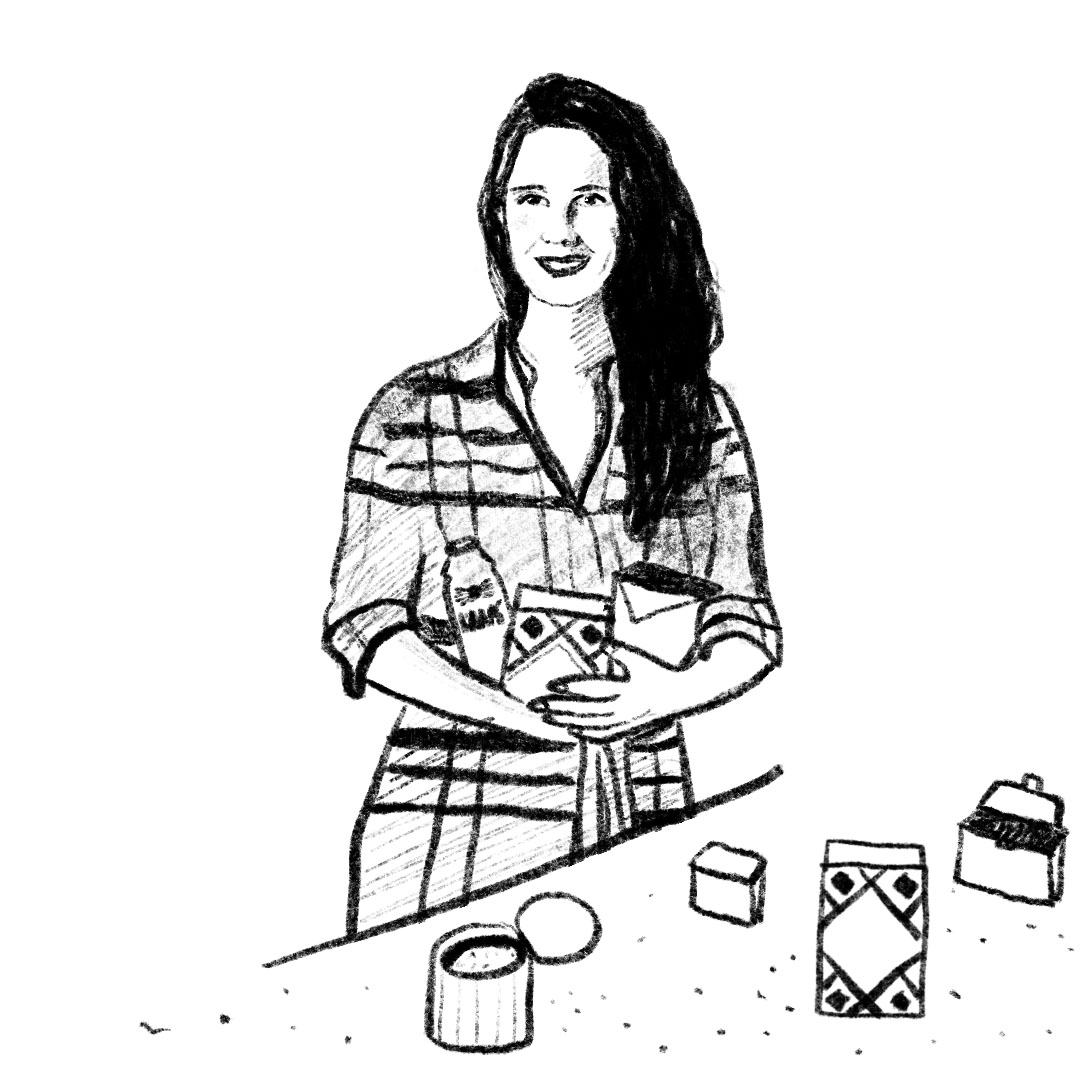
We’re here to talk about salt. Salt is not only the only rock we eat, but also a substance that has influenced everything about civilization as we know it. Salt was our first form of “refrigeration” (in that it preserves meat). It also makes everything we cook tastier. The history of salt is long and interesting, but this article is about how to use and navigate the many different kinds of salt available to us today.
When I first arrived in Athens, where my family moved for the year, I had trouble salting my food. I didn’t have the same access to different types of salt that I did in New York. I couldn’t find kosher salt—the type I use most—anywhere, so I made do with my solitary bottle of iodized Kalas table salt (making sure to use it sparingly, as table salt is very “salty”).
No two salts are the same. They can vary greatly in “saltiness” levels, texture, and, for lack of a better word, “sprinkleability.” Sprinkleability (you heard it here first!) is very important when you are seasoning delicate things such as steak or salad.
Below, you’ll find my guide for how I use salt, the brands I like best (no sponsors), and, as we are approaching the holiday season, some ideas for gifting special salts. (It’s a gift that will never go bad!)
Kosher Salt
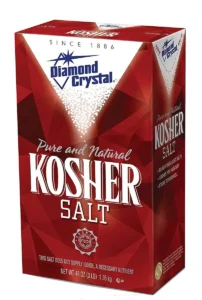
Having worked for years as a chef in New York, I am sure I speak for most kitchen professionals when I say I use kosher salt about 99 percent of the time.
Why, you may ask? Kosher salt is a coarse-grained, large-flake salt that adds a great “crust” to meat-related cooking, and it is also less salty than many other types. That means you have greater control over seasoning your food and are less likely to go overboard. Plus, there are no additives in kosher salt (no iodine or anti-caking agents). It is usually made from underground salt deposits, so the salt grain is more uniform and flaky than other varieties.
My absolute favorite brand is Diamond Crystal Kosher Salt ($13.59 for a three-pound box). It has beautiful flakes that make it very easy to sprinkle and achieve a great texture on anything you are cooking. It offers solid seasoning control when you are seasoning soups and stews—you might be surprised how much you will have to add to achieve proper seasoning.
The ratio of Diamond Crystal to table salt is 2:1. In other words, you need two teaspoons of Diamond Crystal to achieve the same amount of saltiness as one teaspoon of table salt.
I stay away from Morton’s Kosher Salt; the grains are more spherical and it is almost as salty as regular table salt. It’s not fun to sprinkle and has an anti-caking additive.
Sea Salt
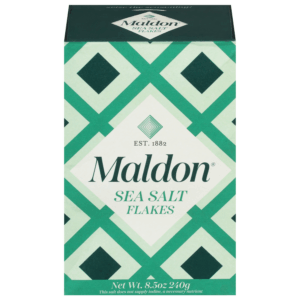
Sea salt is produced by evaporating sea water. It is less processed and retains some trace minerals that could give it some color or texture. I have never been able to tell the flavor difference between standard sea salt and kosher salt, but it is a valid alternative (and additive-free). Just remember it’s saltier, so use less than you would the kosher equivalent.
Sea salt can range from irregular flakes to uniform grains. It is nice to have on the table for those who want to add an extra sprinkle to their food.
I always have a box of Maldon sea salt ($8.99 for an 8.5 oz container) that I like to use when finishing cooked greens, grain and bean dishes. The salt flakes look like pretty gems on top of the food, and add a nice texture and pop of salt when you are eating.
For a finer grain of sea salt, I also love the brand Baleine ($9.99 for 26.5 oz).
Iodized Salt
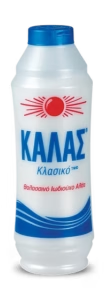
Most often known as table salt, iodized salt is fine-grain salt with a small amount of iodine added to it. The addition dates to the 1920s, when many people suffered from goiter, a preventable thyroid condition. (Iodine, an essential nutrient, helps prevent the condition.) It is still added to table salt today, though usually with anti-caking agents such as calcium silicate. Although all signs seem to point to calcium silicate being a safe food additive, I just figure I’d rather skip it if I can.
My favorite table salt—yup, you guessed it, Greek girl alert—is Kalas ($13.50 for 26.4 oz). Mostly for its kitschy Greek vintage vibes. I would use this salt for fun, on the table, or when I find myself in Greece and can’t find kosher salt. Goiter be gone!
It is also good to know that iodine occurs naturally in the following foods: oysters (the highest source), fish, prawns, eggs, seaweed, and dairy products like milk, yogurt, and cheese.
Himalayan Salt and Other Fancy Salts
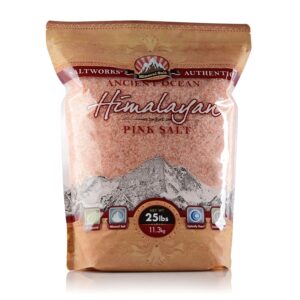
Himalayan salt is a type of rock salt mined from Pakistan. Like most salts that have any kind of color, its pink hue is due to trace minerals present in the salt. I don’t usually buy and use these fancy salts—which also include sel gris and fleur de sel—but some people love them and they are fun to finish food with sometimes. I would use any of them if I received them as a gift.
In Conclusion…
You now have a guide to the different kinds of salt, how to use them, and, more importantly, which ones you actually need (all of which are available at most grocery stores). It’s also fun to buy salts from different parts of the world and offer them at the table or as a gift. The best part, to me, is that salt will never go bad—and it will most certainly never go out of style.








 in your life?