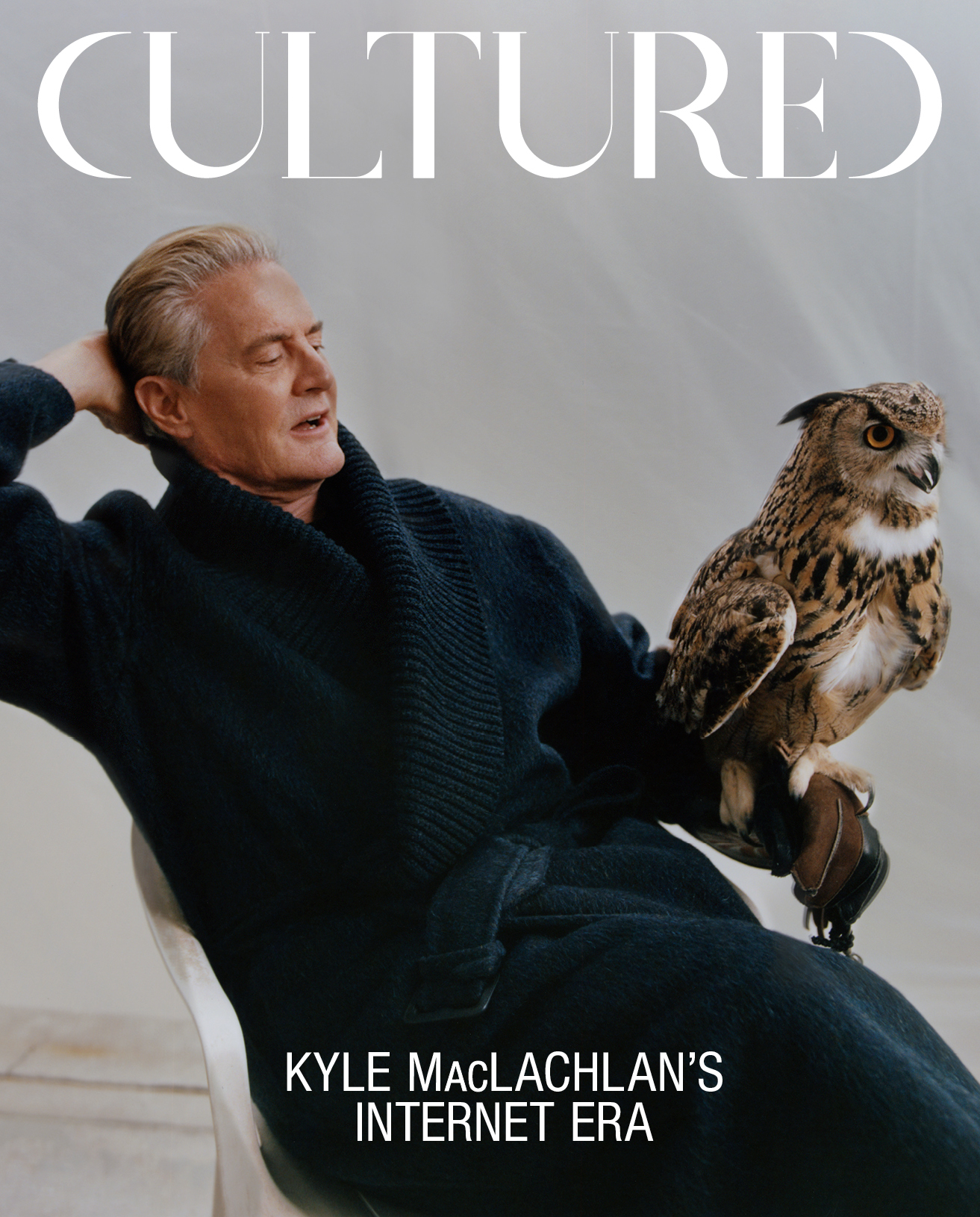
Kyle MacLachlan has had a grip on us for a long time. His name may mean different things to different people, but America knows the 66-year-old actor in its bones. Perhaps it’s because of the enduring lucidity of the Lynchian world he brought to life with projects like Blue Velvet and Twin Peaks, which continue to resonate as portraits of a dissonant American psyche, now more unhinged than ever. Perhaps it’s because of his warm unknowability—the sense that, under the clean-cut proto maledom of his characters, something is “a little detached, a little clinical, with a few screws loose,” as his Artists on Artists interlocutor Julio Torres put it when the pair sat down for this conversation.
This gift for eerie duo-tone performance has served MacLachlan well over a career that spans decades and genres—starting with 1984’s Dune, which catalyzed his relationship with David Lynch and American audiences, through to his memorable 21st-century appearances as Trey MacDougal in Sex and the City and the mayor in Portlandia. MacLachlan’s latest chapter features a turn in the grisly thriller series Fallout, a recently launched podcast (What Are We Even Doing?) spotlighting younger cultural fixtures like Kaia Gerber, Benito Skinner, and Dylan O’Brien, and a social media presence that’s earned him waves of new fans.
As the actor prepared for the release of season two of Fallout, MacLachlan sat down to reflect on his zeitgeist-shifting career with someone he deems worthy of carrying the Lynchian mantle: the filmmaker, comedian, and writer Julio Torres.
Kyle MacLachlan: I’m sorry I’m late, Julio. I was on Google Meet, but you were here on Zoom.
Julio Torres: You were in limbo, which seems appropriate for this conversation.
MacLachlan: And for my whole oeuvre.
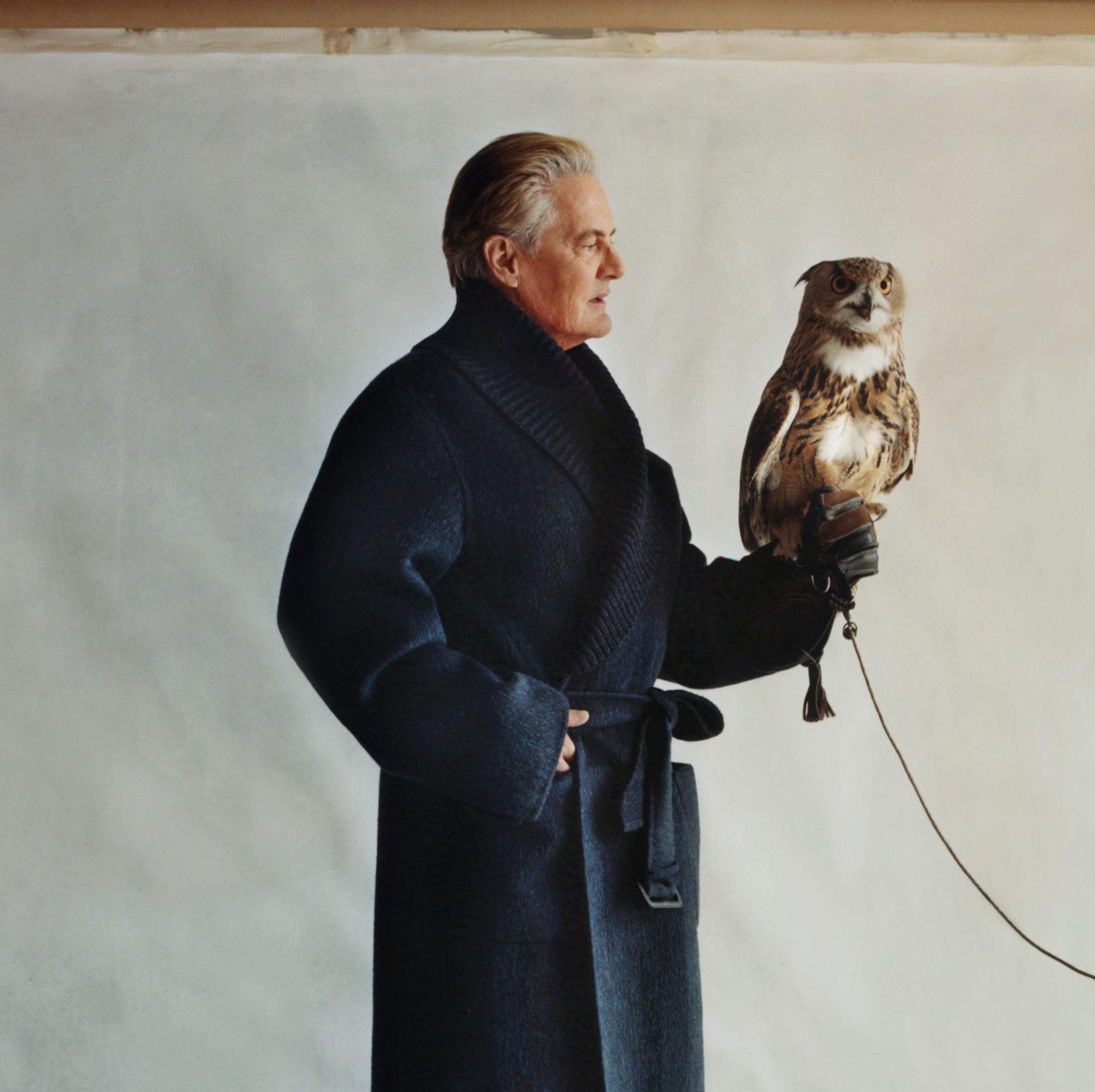
Torres: I heard you were holding an owl at the shoot.
MacLachlan: Yes. It’s rare to see an animal like that so close, you know, literally face-to-face. The owl was really well-behaved. I was not.
Torres: I don’t think I’ve ever seen a real one before—just those statues they have in New York to scare pigeons away. If there were a statue to scare you away from a place, what would that statue be? Who is your predator?
MacLachlan: Oh, everything. Any statue meant to scare me away would transfix me—I would go down a rabbit hole about the craftsmanship, the historical resonance… I would be devoured on the spot. How about you?
Torres: Probably my, like, email inbox.
MacLachlan: Julio, after Los Espookys, I did a deeper dive on you, and I watched Problemista. I was so intrigued and charmed because your voice is singular. You have your own way of telling a story and of looking at the world, which I recognize, of course, from David [Lynch]. Those voices are so rare.
Torres: Oh my God, it’s always a dream to create something that is appreciated by the people you’ve been excited about forever. I first became aware of your work chronologically. By that I mean Dune, Blue Velvet, then Twin Peaks.
MacLachlan: Dune was the first screenplay I ever read—and it’s when I met David Lynch. It was a seven-month shoot, and we became friends. While we were filming, he passed me the script for Blue Velvet.
Torres: It’s crazy that Dune was your first movie. Your first-ever film is this big, big, big project. Then your second is a cultural phenomenon.
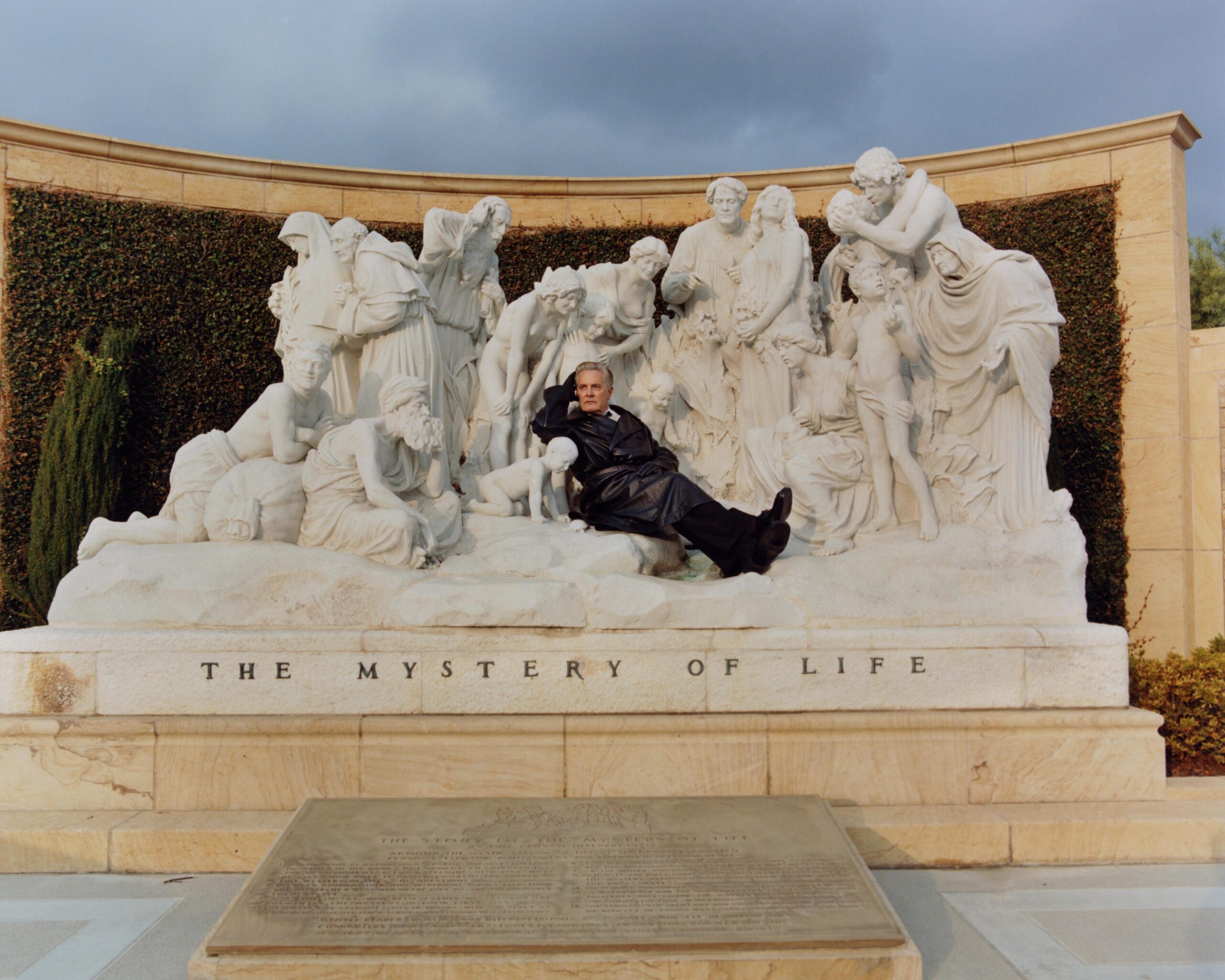
MacLachlan: Same director, completely different feel, obviously. Looking back, it’s very odd how I got to where I am today. With Blue Velvet, I was kind of along for the ride—and also out of my depth with Laura Dern, Isabella Rossellini, and Dennis Hopper. But I was in David Lynch’s world, which was so comfortable. It was wonderful to see him at ease because Dune was very difficult for him.
Torres: It’s wild that a studio saw his first films, Eraserhead and The Elephant Man, and said, “He should make Dune.”
MacLachlan: Of course, the book was adapted by David. It’s a filtering of different visuals and moments from the book through David’s mind, you know? It is so brave to do. It reminds me of your ability to let the creative lead. You don’t—judge isn’t the word—you don’t block a feeling or a path. You follow it.
Torres: But you do the same. Your roles are all very much in line with what I believe to be your voice as an artist. Is that voice compatible with who you are as a person, or have you just become a muse for these characters that you perform well, but don’t feel an emotional connection to?
MacLachlan: In my career, there really hasn’t been a singular genre of movie or type of character. I’ve really been all over the place, and part of that is pure survival.
Torres: I really think of all your roles as Kyle roles. Even with Sex and the City or Desperate Housewives— your character is always a little detached, a little clinical, with a few screws loose. Like, who else would they possibly cast?
MacLachlan: Well, at least it’s been an interesting journey, successful or not.
Torres: You probably have very siloed audiences—a lot of people who recognize you from certain work have maybe not seen all the other work, I bet.
MacLachlan: There are specific fan worlds that have not necessarily crossed over. There is the Sex and the City/Desperate Housewives fan—that’s fairly cohesive. There’s the sci-fi Dune and Portlandia fan. Now there’s a new wave with Fallout. But I think the main difference is age. Some of the things I’ve been associated with have just stayed in the ether, you know? Sex and the City was shot 25 years ago, but my gosh. I was at my son’s homecoming recently, working the Ferris wheel booth. A high school student came up to me—she couldn’t have been more than 15—and said, “Were you in Sex and the City?” Half of me goes, yes, and the other half is like, You shouldn’t be watching Sex and the City. She asked for a selfie. It’s me looking like her grandpa. Like, “Look, mom, I took a picture with Charlotte’s detached first husband.”
Torres: That’s crazy—but also rare. All the work that you’ve done, people are watching and rewatching, and will for generations.
MacLachlan: Listen, there’s plenty along the way that is forgettable. But some have stuck, and as I’ve gotten older, the gratitude level for that goes way up. It allows me to have this conduit to a younger generation. That comes with responsibility, of course, but it’s also fun. I love interacting with people.
Torres: I even wonder if a filmmaker’s desire to work with you goes hand in hand with their desire to put their work in the lineage of what you’ve done. I mean, I don’t know how detectable this is, but I do feel that Twin Peaks and Blue Velvet were an influence on Desperate Housewives.
MacLachlan: You’re absolutely right. Twin Peaks changed what was possible on television. When we signed on to do Twin Peaks, no one in the cast expected it to go beyond a pilot. It was like, “We are going to do a pilot with David Lynch. We’re bringing anarchy to television.” But no one was going to buy it. It would be too weird. Then they did, and we were like, “Whoops, okay.”
Torres: It definitely—for me at least—opened the possibilities of what you can do with tone in television.
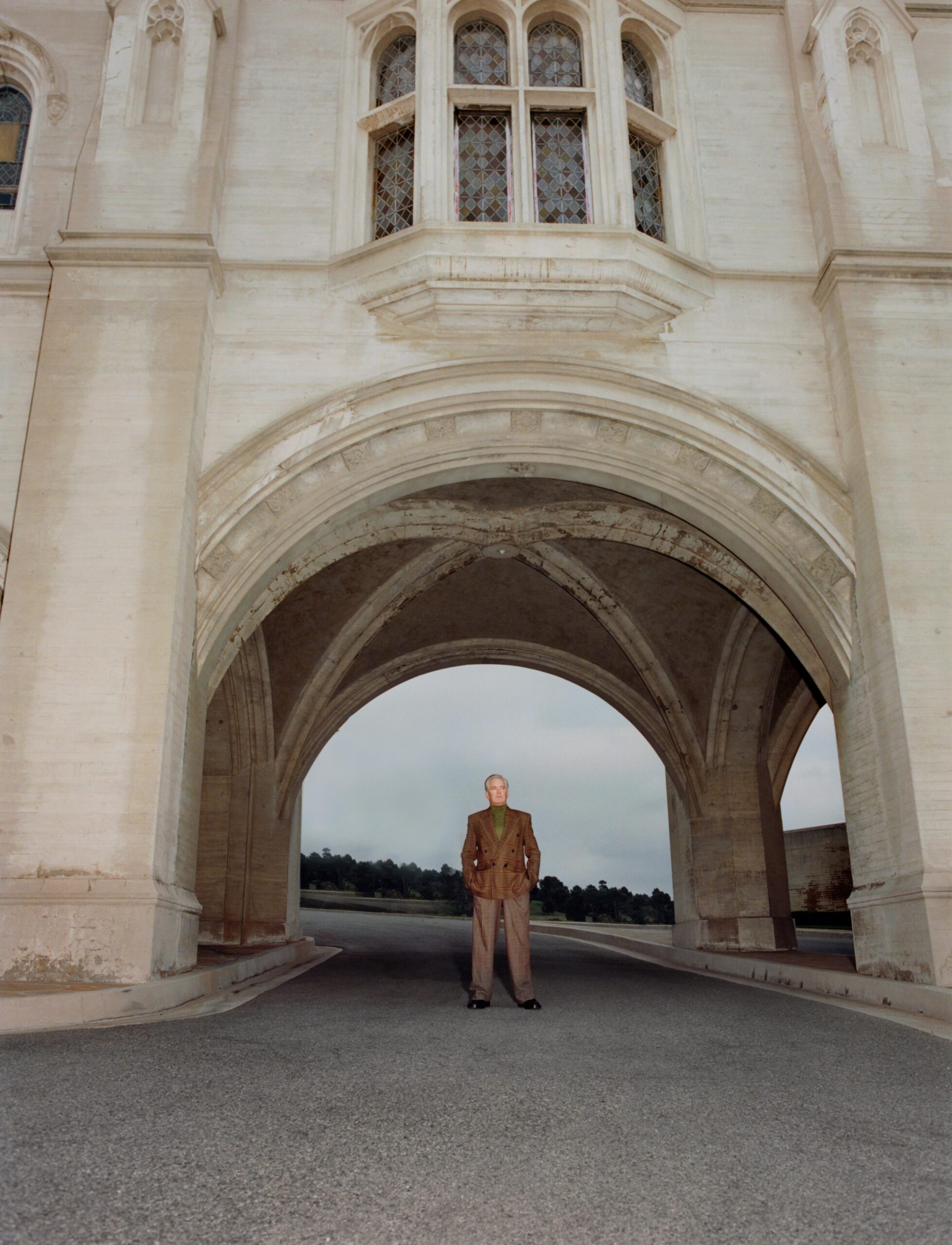
MacLachlan: Twin Peaks was a murder mystery whodunnit, but the music was different. The look was different. The pacing was different. Everything was different about it.
Torres: Is there a genre or world you haven’t entered that is interesting to you? It can be as vague as something with mermaids.
MacLachlan: I don’t need an extremely different world, just one that’s slightly off. I like to carry the audience on my back through it, which is kind of what I did with David. I often think I was a stabilizing force in some of his creativity. Not that he needed stabilizing, but just for the audience to sort of anchor to on the way down. How about you? You seem to really live in this “anything can happen” space, and there’s such a purity to your characters. We’re kind of similar in that way.
Torres: I do think of myself as a guide, but I never intend to deliberately disorient. My struggle, constantly, is to be clear. In my early scripts, everything feels murky—then I work on bringing those things into focus so they become more accessible. If I were to drop you into a different world, you’d be an entity of some kind—not fully human. I don’t know what it is yet. Maybe—are you time?
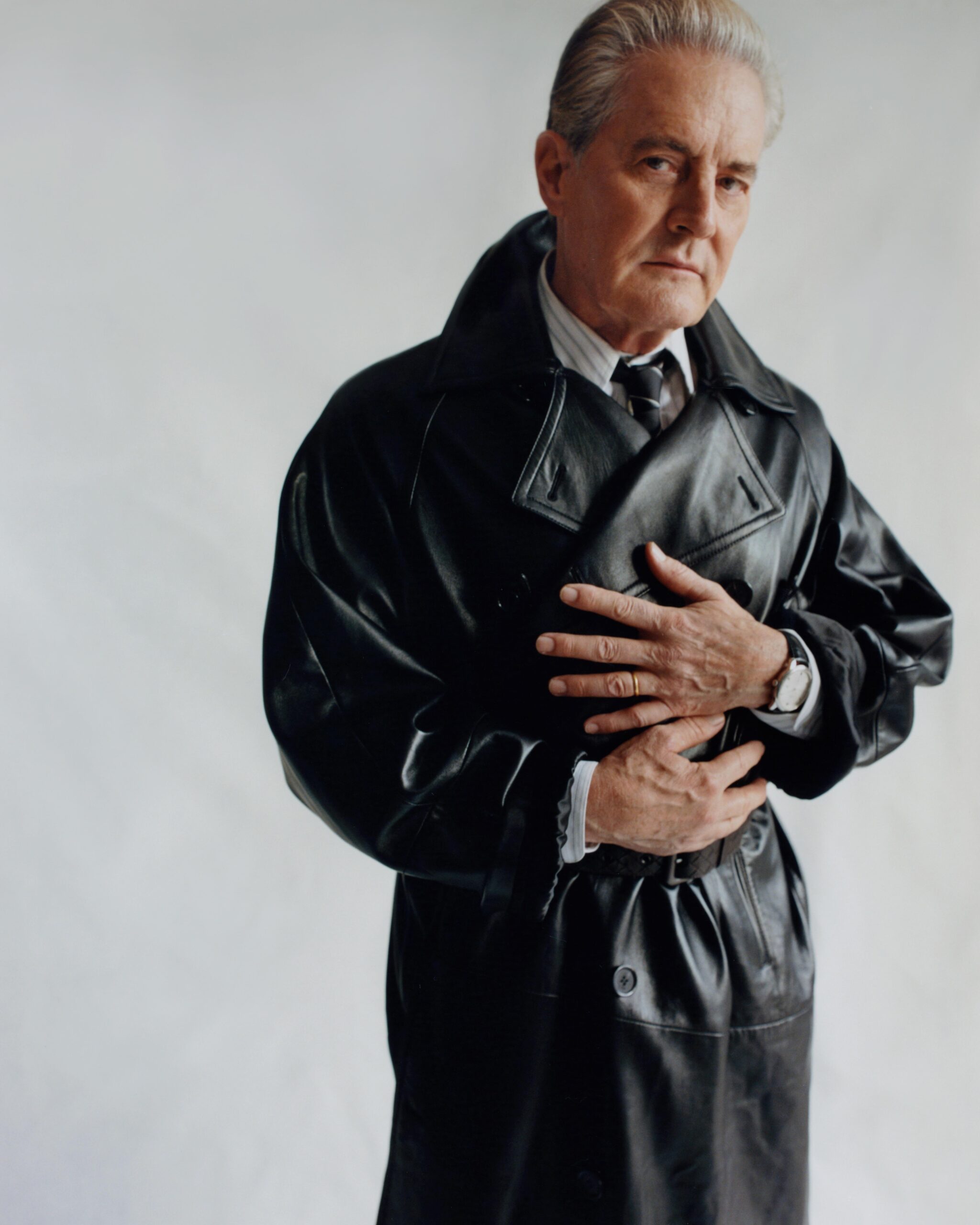
MacLachlan: Oh, interesting.
Torres: And you’d have a verbal tic of saying what time it is.
MacLachlan: And ask all sorts of questions. Are you behind? Are you ahead? Are you where you’re supposed to be?
Torres: Questions, yes.
MacLachlan: His whole struggle is to be in the moment. Or, is he always in the moment?
Torres: [Laughs] He’s just constantly present.
MacLachlan: Our last question is, “What can art do?”
Torres: I mean, you look at your oeuvre, and it’s a list of anomalies, right? That feeling of possibility is very important to me. I hope to continue doing the same as you have—making work that is true to my point of view, and that does not follow the parameters of success or trends.
MacLachlan: I think having many kinds of stories and points of view available goes a long way towards helping us understand and appreciate difference. It’s strange when we pretend that there’s just one way to do things—I don’t even know what that would look like.
For more conversations like this one, order your copy of the Artists on Artists issue here.
Grooming by Livio Angileri
Executive Production by Nicole Prokes
On-Set Production by Blaire Witt
Production Company: Blond
Animal Wrangling by Benay’s Bird & Animal
Photography Assistance by Michael Irwin
Styling Assistance by Kat Cook
Production Assistance by Maxx-Kaitlynn Reiff




 in your life?