Johanna Fateman’s Picks
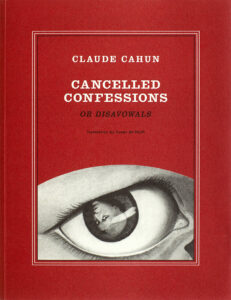
Cancelled Confessions or Disavowals
By Claude Cahun
Siglio Press
In interwar Paris, Claude Cahun worked at sapphic modernism’s sharpest edge, producing the arresting, Surrealist self-portraits that would be hailed some seven decades later as precursors to feminist, queer, and trans photographic investigations of identity. (The menacing wit and elegance of those now often-reproduced images reverberates in work by contemporary photographers as different as Aneta Grzeszykowska and Zanele Muholi.) But Cahun was also a writer, publishing the aphoristic, elliptical anti-memoir Cancelled Confessions or Disavowals in 1930. Siglio Press, creator of reliably breathtaking books, delivered a covetable new edition of Susan de Muth’s out-of-print English translation this year, gorgeously redesigned in homage to the original Éditions du Carrefour volume, illustrated with photomontages by Cahun and partner-collaborator Marcel Moore.
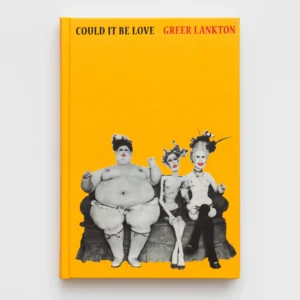
Greer Lankton: Could It Be Love
Edited by Francis Schichtel, Jordan Weitzman, and Nan Goldin; Essay by Hilton Als
Magic Hour Press
It’s hard to believe this is Greer Lankton’s first monograph, so glittering and undisputed is her presence in the canon of the 1980s New York East Village scene. But it’s in the last 10 years or so that the artist, a dollmaker (and doll photographer) of the highest order, has garnered new, posthumous attention—and a new generation of fans—for her deeply moving, sometimes hilarious work. (Lankton died young, at the age of 38, in 1996.) With her variously scaled, occasionally life-size figures, she depicted both celebrities (from Candy Darling to Jackie O.) and self-surrogates, exploring autobiographical themes of trans embodiment as well as fantasy and social critique. Could It Be Love is a gift (and imminently giftable), gathering together the artist’s own images—moody vignettes, raucous group portraits, and exquisite close-ups of her dolls—for a thrillingly intimate experience of her glamorous, tormented, and enchanted worlds.
Blakey Bessire’s Picks
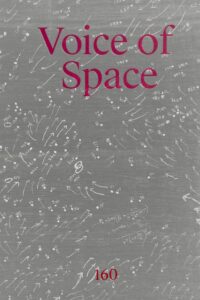
Voice of Space: UFOs and Paranormal Phenomena
Contributors: Laura Hoptman, Olivia Shao, Mark von Schlegell, Paul Chan
The Drawing Center
Borrowing its name from René Magritte’s 1931 painting, Voice of Space extends the Drawing Center exhibition of the same name, assembling historical and contemporary works that contend with UFOs, apparitions, altered states, and other phenomena that unsettle the visible world. The texts explore Irish fairy rings, Adorno’s takes on spirits and totalitarianism, life on Mars, Afrofractalism, and using the paranormal as a tool to understand (non)human experience. Curator Olivia Shao aptly names the capacity of the UFO as mirror in her essay, with each drawing from Pope.L to Trisha Donnelly to Arapaho artist B Henderson offering “a partial glimpse of the whole, limited in perspective but valid in its insight.” Paul Chan writes about the making of a video on UFOs in 1996 standing on a rental car next to Area 51. He names a problem in the research of nonhuman lifeforms: If humans are the paradigm of life itself, how will we know an alien when we see one? (“Voice of Space” is on view at the Drawing Center through February 1, 2026.)

Alice Coltrane, Monument Eternal
Edited with text by Erin Christovale. Foreword by Ann Philbin. Text by Franya J. Berkman. Interviews by Ashley Kahn, Erin Christovale
Hammer Museum and Delmonico Books
Glowing in swamini orange, Monument Eternal explores Alice Coltrane through vibration rather than biography. The Hammer Museum’s catalogue mirrors the artist’s ecstatic rigor, braiding oral histories, archival fragments, ephemera and contemporary artworks to create a cosmology of her sonic and spiritual work. Borrowing its name from Coltrane’s 1977 devotional book, Monument Eternal holds sound as a site of spirituality, liberation, and world-making. For the exhibition, artists responded to Coltrane’s spiritual and cultural voltage. Steven Ellison, Nikita Gale, Leslie Hewitt, Rashid Johnson, Shala Miller, Cauleen Smith, and Martine Syms, among others extend the lineage, with their work presented alongside archival materials ranging from the artist’s 1949 report card at age 12 to early-1980s spiritual initiation notes.
John Vincler’s Picks
David Hammons
Hauser & Wirth
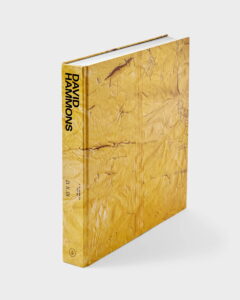
This massive David Hammons tome is my favorite art book of the year, yet it contains no explanatory text by a curator or art critic. There aren’t even page numbers. (It does include a photograph of a crumpled-up fax, with a collector declining to buy a “snowball” because they couldn’t secure insurance.) But it’s a must-have for me, as it comes as close to a retrospective on the artist as we’ve gotten to date. Marketed as a “post-exhibition catalogue” revisiting David Hammons’s 2019 show at Hauser & Wirth Los Angeles that was “created entirely under the artist’s direction,” the exquisitely produced volume documents sculptures, tarp paintings, video stills, spray-painted fur coats, and various other unclassifiable works by one of our most elusive and—I’ll say it—greatest living artists. Maybe too many artists require explanatory texts; here we see that Hammons, left to his own devices, ultimately doesn’t.

Kiss of the Sun
Lee Mary Manning
Canada
I’m on the record as a fan of Manning’s point-and-shoot photographs and photo-assemblages in their signature frames, including my review of the show at Canada gallery that closed in January, upon which this book is based. There is much more to see here in print. The photo book format lets Manning stretch their methods of collage and juxtaposition across page spreads, offering a more panoramic view of the artist’s attention, sense of play, and depicted community (you are likely to spot an artist or location you know within these pages). You can track the continuity or disjunction between pictures, like a snapshot of a stack of chairs next to one of a flight of stairs, or a photo of a silver playground slide placed near a picture of a pillow leaning slightly slumped against a wall. I can’t get enough of seeing alongside Manning’s infinitely curious and attentive gaze.
Slides of a Changing Painting
Robert Gober
Primary Information
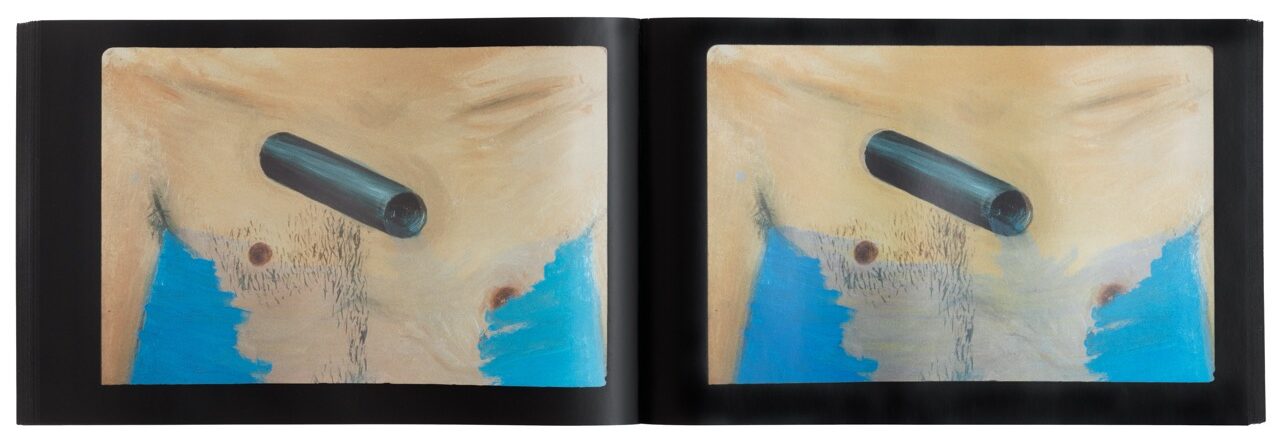
For nearly two decades, Primary Information has published consistently attention-worthy new and archival artists’ books and writing by artists. The obvious choice this year might be their publication of Stay away from nothing documenting the exchange of photographs and correspondence between Peter Hujar and Paul Thek (well-timed with the release of Ira Sachs’s biopic Peter Hujar’s Day). But my favorite Primary Information offering of the year is Slides of a Changing Painting. This artist’s book documents a year-long evolution of a single painting Robert Gober painted (and over-painted) on a single Masonite board in his East 7th Street storefront from 1982 to ’83, then shown as a slide-show installation at Paula Cooper Gallery in 1984. The Hujar/Thek book is fantastic, but the Gober is a standalone work of art excellently and economically realized.
Hilma af Klint: What Stands Behind the Flowers
Edited by Jodi Hauptman. Text by Ewa Lajer-Burcharth, Laura Neufeld, Lena Struwe
MoMA
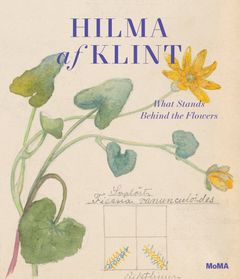
This is the book for the lover of botanical illustrations or the Hilma af Klint completist in your life. Published as the catalogue for one of my favorite museum shows of the year, the book centers on the Swedish artist’s “Nature Studies,” a portfolio of 46 works on paper, made from 1919 to 1920 when af Klint was in her mid-50s, and ultimately acquired by MoMA in 2022. The catalogue charts af Klint’s shifting intellectual concerns, as she moves from recording her radical spiritual visions in large-scale paintings to these careful observations of nature and the spiritual, ecological, and artistic insights therein.







 in your life?