I drove north on the FDR, talking too fast and taking the curves with a similar abandon, one hand on the wheel and the other holding half of a roast beef sandwich. Luckily, the girl in the passenger seat had ridden in an escape vehicle with me before. She’d also managed to concoct this particular sandwich, which she was trying and failing to get a deli to name after her, so the least I could do was chauffeur us to visit the feminist art installations in one piece. As we’ll see, feminism is a practice of failure and fantasy, intimate nourishment and epistemic starvation, playing into (as often as fucking with) ideals around industrialized domesticity and self-construction in a society that likes its girls mired in a permanent mirror stage.
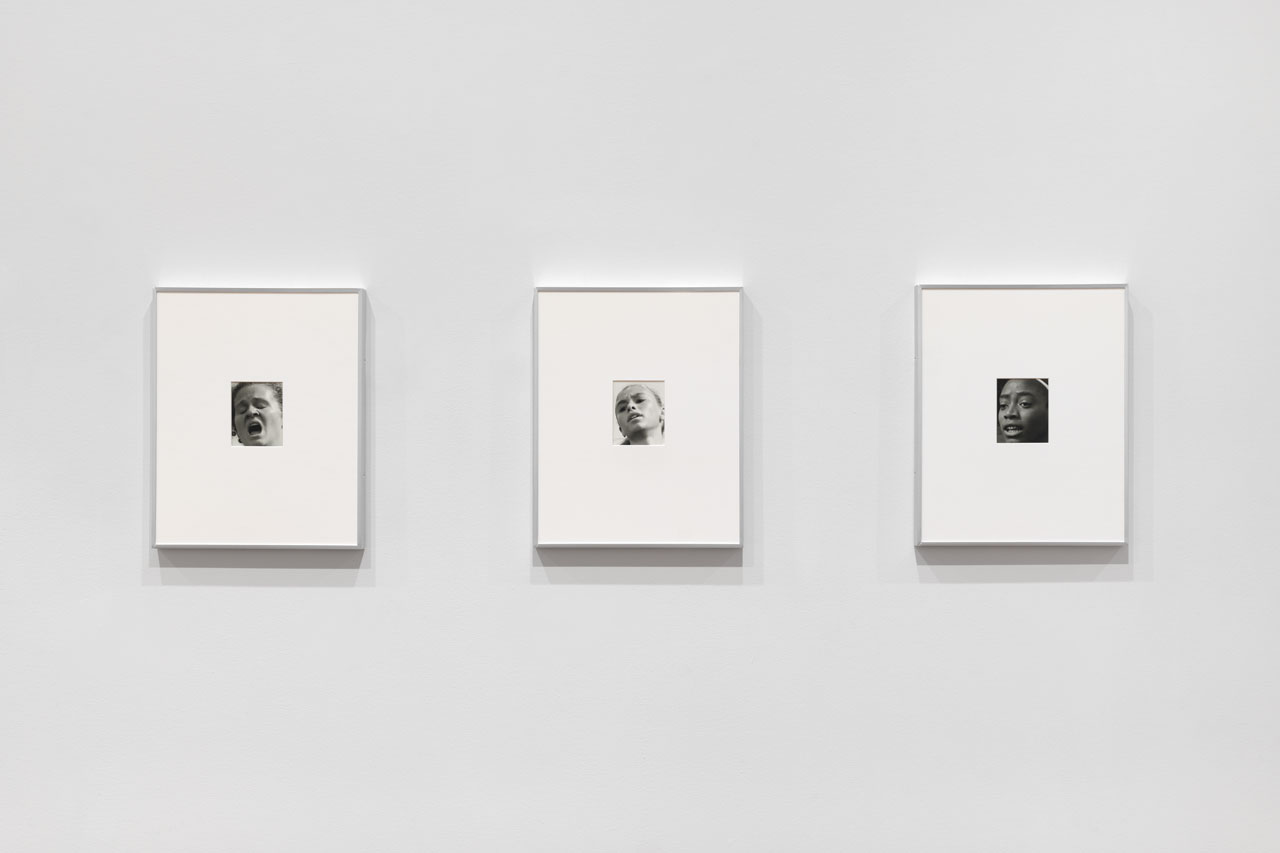
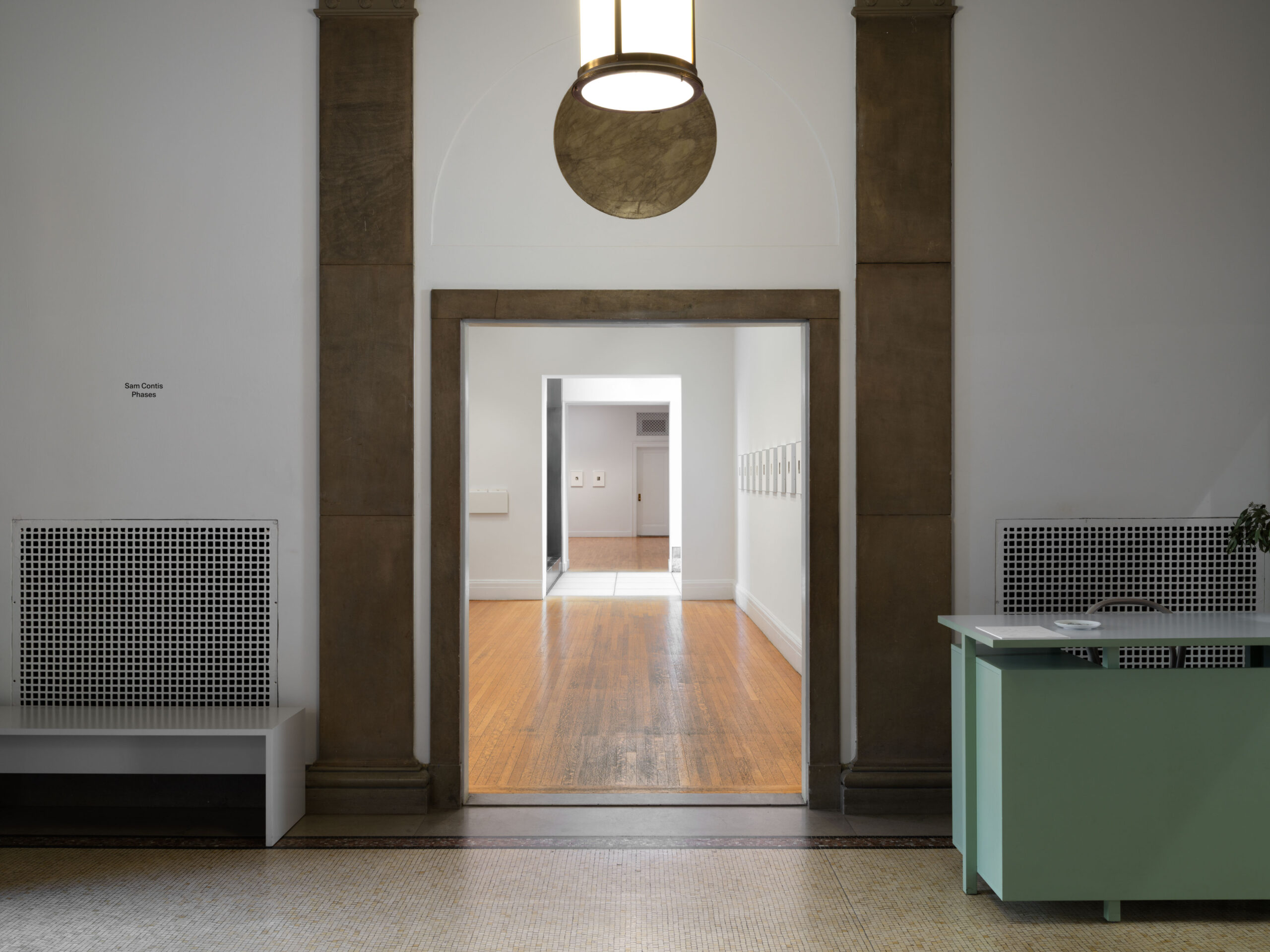
We were headed to the Academy of Arts & Letters to see work by Sam Contis and Diane Simpson. Contis’s show, “Phases,” is an experiment in motion portraiture, a study of the inventive avenues girls find to evade the demands placed on their bodies. Twenty-four black-and-white photos of teenagers’ faces in the moment they finish a race are accompanied by a three-channel film following three of them over the course of a five-kilometer run, from the intake of breath before the starter pistol fires to the heaving sighs and shaking limbs as they cross the finish line.
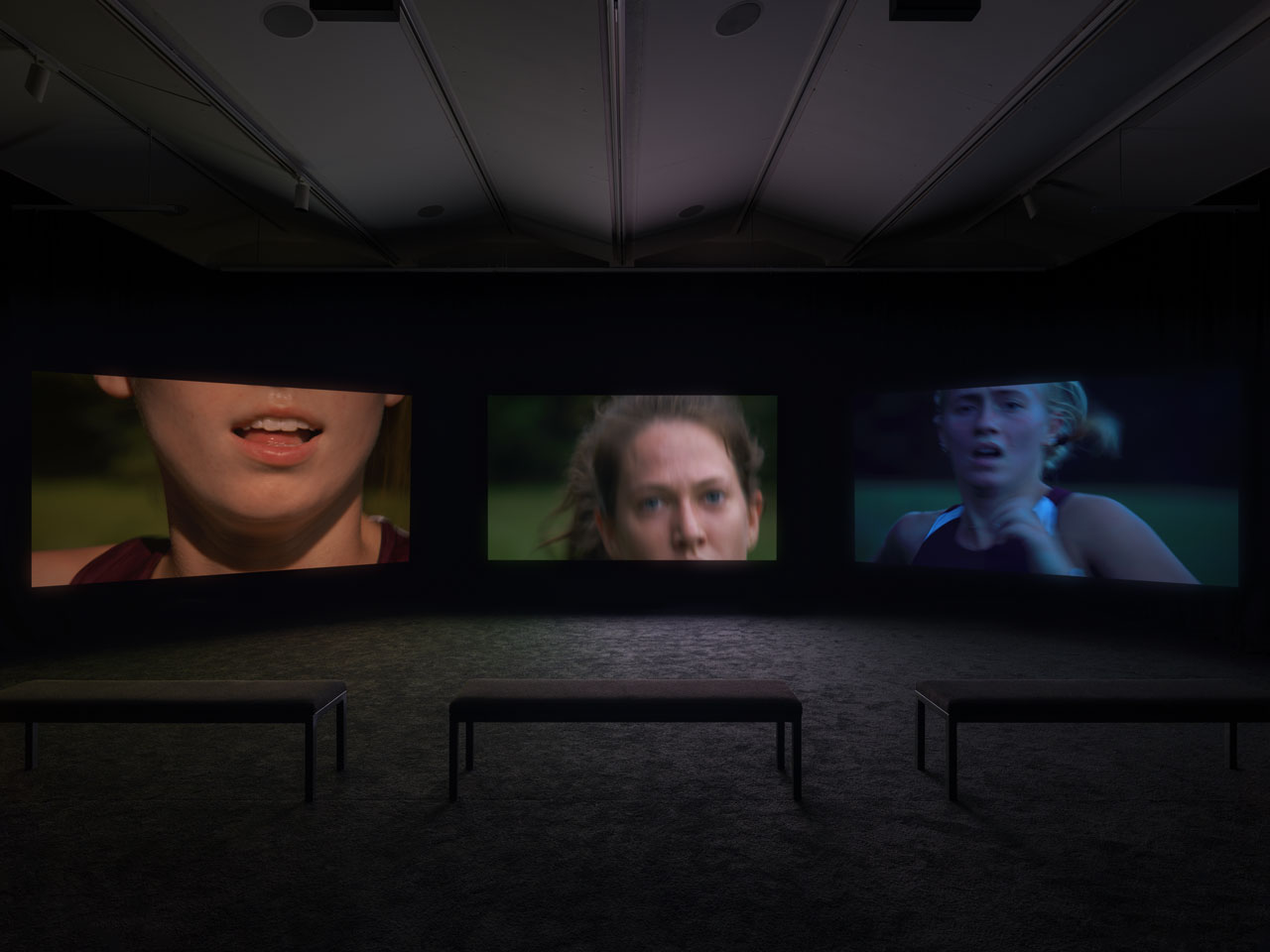
In the film, ponytails bob and come loose, frizz foams off of scalps and necklines. Why do we have hair, my friend whispers to me in the darkest room either of us has ever sat in. I watch the trinity of girls running towards me, each ensconced in her own screen, her face framed in close-up as she darts through fall foliage, somewhere suburban.
Arts & Letters regularly commissions literary accompaniments to their shows—visitors are handed slim, bound volumes of prose as they enter the galleries. Kathryn Scanlan, a novelist renowned for her sculptural fictional pastiches forged from found materials, penned a story to sit beside Contis’s show. The result, a coming-of-age tale told by what Scanlan calls a “first-person choir,” is constructed using quotes from interviews she conducted with the runners. It is a chronicle of girls slipping into uniforms and each other’s identities, of wanting to be another person and finding out who you are in the process. Teenagers are used to being told their efforts at self-construction are “just a phase,” but Scanlan’s story, titled “Your Time is Your Time,” underscores that those phases are, in fact, awe-inducing feats, risky auditions to play the role of yourself. Scanlan and Contis’s portrayals of teenagers reveal the feral interior of femininity.
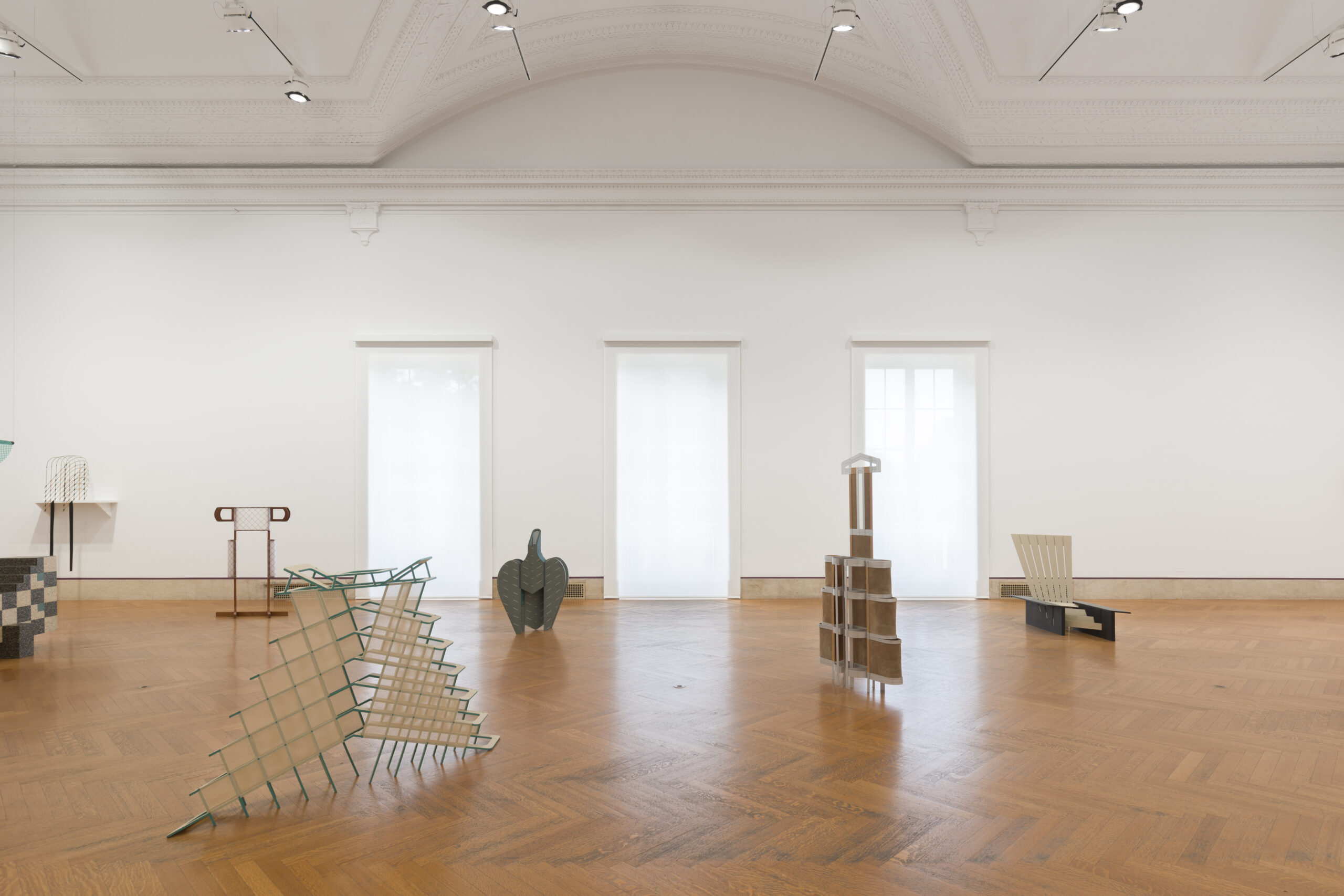
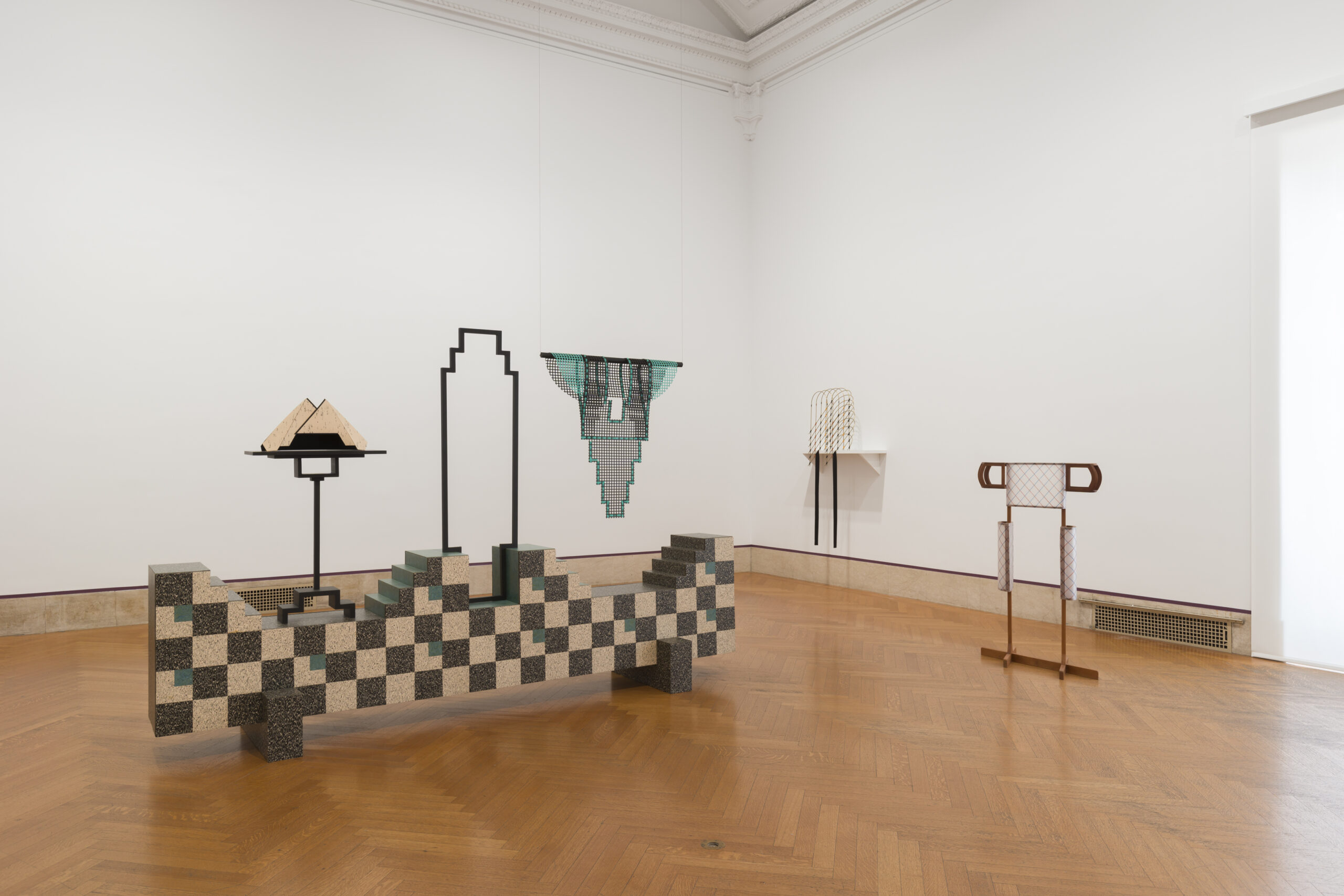
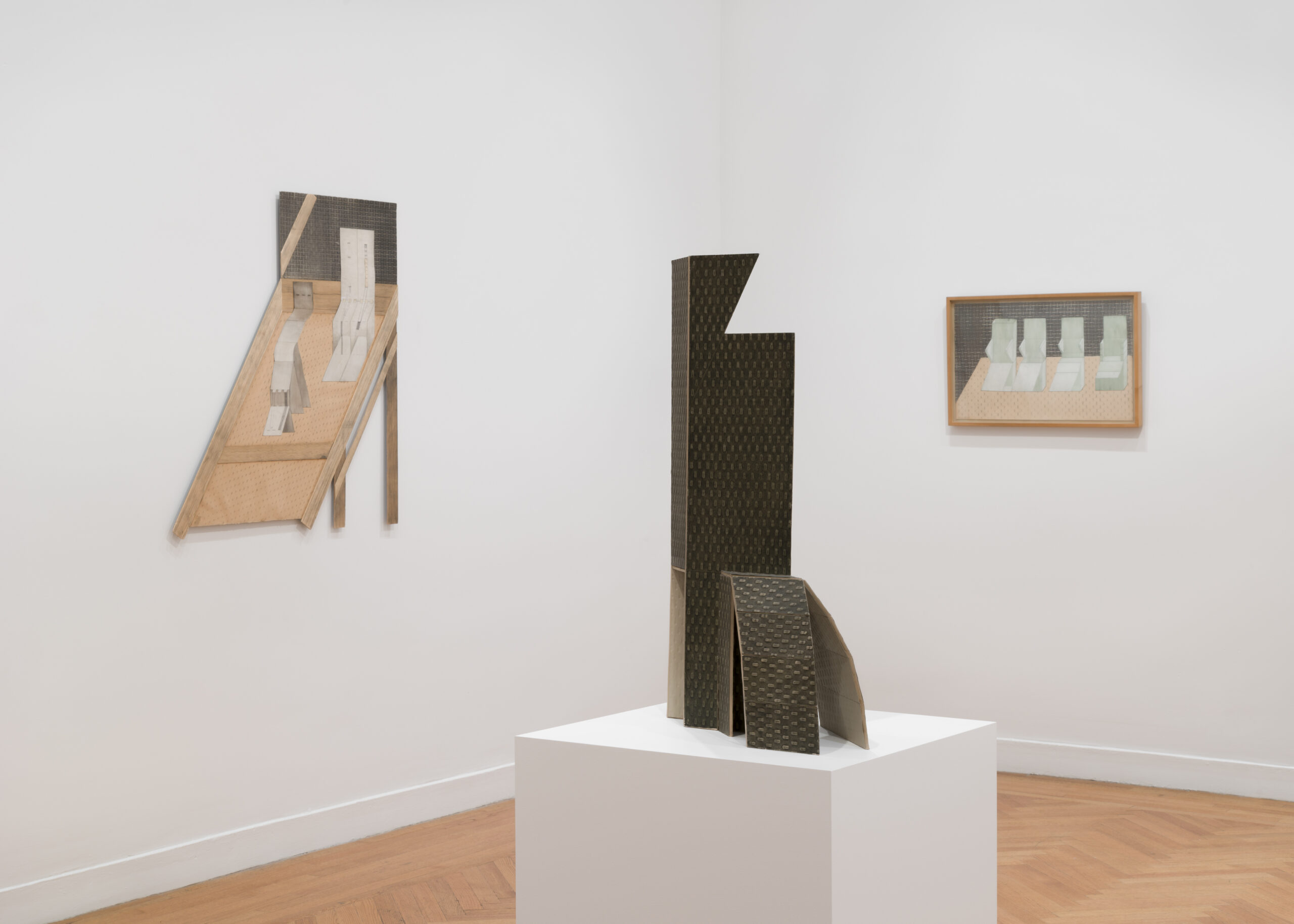
A woman on the verge of collapse might turn to another woman, or she might redirect her gaze to the mirror, armoring herself in an armor-like outfit. In the gallery next to Contis’s exhibit, Diane Simpson’s “Formal Wear” features the artist’s sculptural renditions of femininity’s exoskeletons. Clothing is the scaffolding we rely on for a sense of solidity, offering the solace of containment alongside the thrilling possibility that we sweat through our satin. Construction materials meet kitchen table craftsmanship in Simpson’s sculptures, which use steel, aluminum, brass, corrugated board, and other hardware-store staples to fabricate majestic iterations of domestic, mundane accoutrements of femininity. The gallery features her sculptures alongside a series of framed blueprints, so the viewer watches as dress bodices become imposing buildings and underskirts transform into skyscrapers.
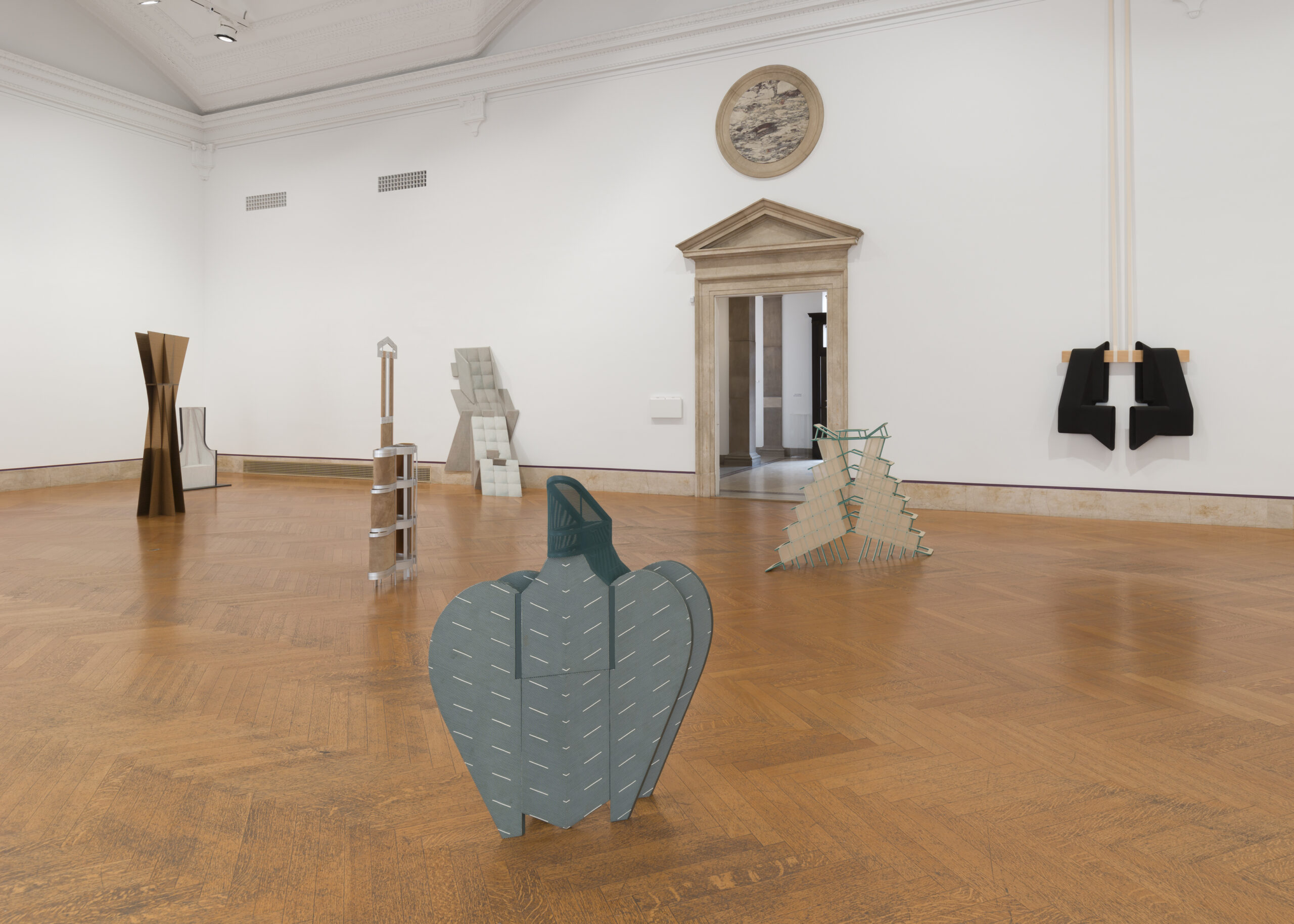
Costumes allow us to “flirt with our edges, our edginess,” trying on different iterations of ourselves, as the critic Audrey Wollen observes in “The Steel Curve of Adornment,” written to accompany Simpson’s show. An electrifying, optimistic examination of objectification and femininity, it is a voluptuous textual reminder that we are only one “architectonic element among many, a roaming shape on a linear plane.” Slipping into something silky melts most bad moods, and an accessory can be a partner in crime. This is a companion text that conspires, giggling, with Simpson’s droll, kitschy translations of the architecture of femininity.
Stuck in traffic on the drive home, my friend and I gossip, coining sly neologisms, until she says, “Not to bring it back to the art, but—” while I cut off another driver and her sentence. We talk about those startlingly Grecian girls exerting themselves, wielding the body like a weapon or filling it like a vessel, as we accuse our acquaintances of succumbing to spiritual lobotomies. I forget to tell her that we’ve been talking about the art all along, that those monumental skirts and the bodies sprinting towards us have fixed the girls we know in a new light.
Earlier this month, I spoke to Wollen and Scanlan about speculation, femininity, time, ventriloquism, vibing out with ghosts, and myriad other girl problems.
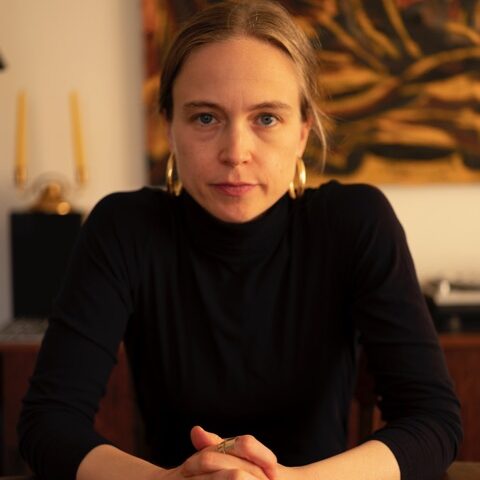
Kathryn Scanlan
Can you speak to the difference between creating a standalone piece in that mode and creating something in response to visual art?
I get commissions for catalogs for visual art—most of the time, they’re asking me to write a piece of fiction. It’s interesting to me to write fiction that sits alongside visual work instead of being about it. For this, I was already working on a couple of stories that happened to be about runners. At first, I pictured three very short stories that could be portraits to sit alongside the three portraits in the film that Sam made, but those ended up not working—they felt like they were trying to be too much about running. After that failed attempt, I did the interviews.
At one point, the narrator says, “I bet it’s what a horse feels like.” I was curious how you see extreme athleticism connecting us to our animal interiors or allowing access to a feral form of femininity.
The photographs and especially the film convey this sense of a really wonderful slippage. The runners are coming at you, so there’s a bit of fearfulness, a sense almost of being chased by an animal, but there’s also a vulnerability there: This person is running from something. I was really delighted when that person said the line about the horse—there were actually a couple of mentions of horses in the interviews. I’ve never been a runner, and it was interesting talking with all of these young women about their experiences with this very intense, extreme endeavor.
The relationship between vulnerability and exertion felt integral to the portion of your story in which the narrator recounts startling rates of eating disorders among her teammates—how do these disorders connect to these questions around agency and animality?
That came up in the first interview I did. Not being from the running world, I wasn’t aware how prevalent it was. I ended up talking to all of them about it—it kept coming up. It’s incredible, the intensity of these disorders. One young woman mentioned a teammate who had such a severe eating disorder that she didn’t develop properly. She was constantly injured. To have that control over your body, literally changing how your bones develop, but then they’re breaking. There’s something so devastating and moving about that. The stronger the control gets, the more brittle you become, the more damage that happens.
There’s a strangely solidaristic orientation towards self-harm impulses like disordered eating in these groups of girls, which felt related to the homogenizing yet competitive relationships fostered on a team. Was the form of your piece—creating one narrator out of many—a way to replicate that?
Most of them talked about how, on a team, the self disappears. So many of the things they were sharing were similar. I really liked the idea of this chorus, but a first-person chorus. It remains this very individual voice while becoming this larger narrative. There’s a collective voice.
Your work is archeological, and involves a ventriloquism of the preexisting material—you’ve used selections from strangers’ diaries, old books, interviews. It makes me think about the word “novel” and finding the new in the old. What was it like bringing that excavatory orientation to this project?
I have always been interested in working with found material, starting with collages as a visual art practice. It’s also related to photography, that impulse to catalog and collect as a way of seeing, framing, and ordering your life. I really like to edit and work with things that already exist.
How do those collecting and collaging impulses interact with temporality in your work? You’ve said that “time is the medium” of Contis’s art.
Time is also the medium of writing. The simplest story is just: Time passes. Right? In this piece, I was really happy with the title Your Time is Your Time, which was a line from one of the runners. Contis started working with them in 2018, so several years ago. They were talking to me about their time in high school, when Contis was documenting them, but also their relationship to running now. Some of them still run, some of them don’t, and they all had this perspective on the people they were in high school. I wanted there to be this sense of compressed time, of being in the moment of the race, but also looking back on it.
The race itself feels like a microcosm of the larger coming-of-age story they’re telling. The idea of love comes in at the end in a very poignant way, especially in light of Contis’s show’s title “Phases,” a word often used condescendingly to describe the heightened affective states teenage girls experience. There are various strains of love in this piece, from the sensual to the sororal. Was that purposeful?
It seems to be central in Sam’s show and in the testimonies that were given to me. It came up again and again—this feeling that your heart is so full, that they’re doing what they’re doing out of love. They’re pushing themselves, their bodies, minds, and hearts, to the limit. It’s not just for themselves. It’s for their teammates and for their coaches and for their families that are cheering them on. Sam’s film is about sex and death. You walk into the gallery see the photos, but you hear the film behind the curtain. It was really intense, surprising, and powerful.
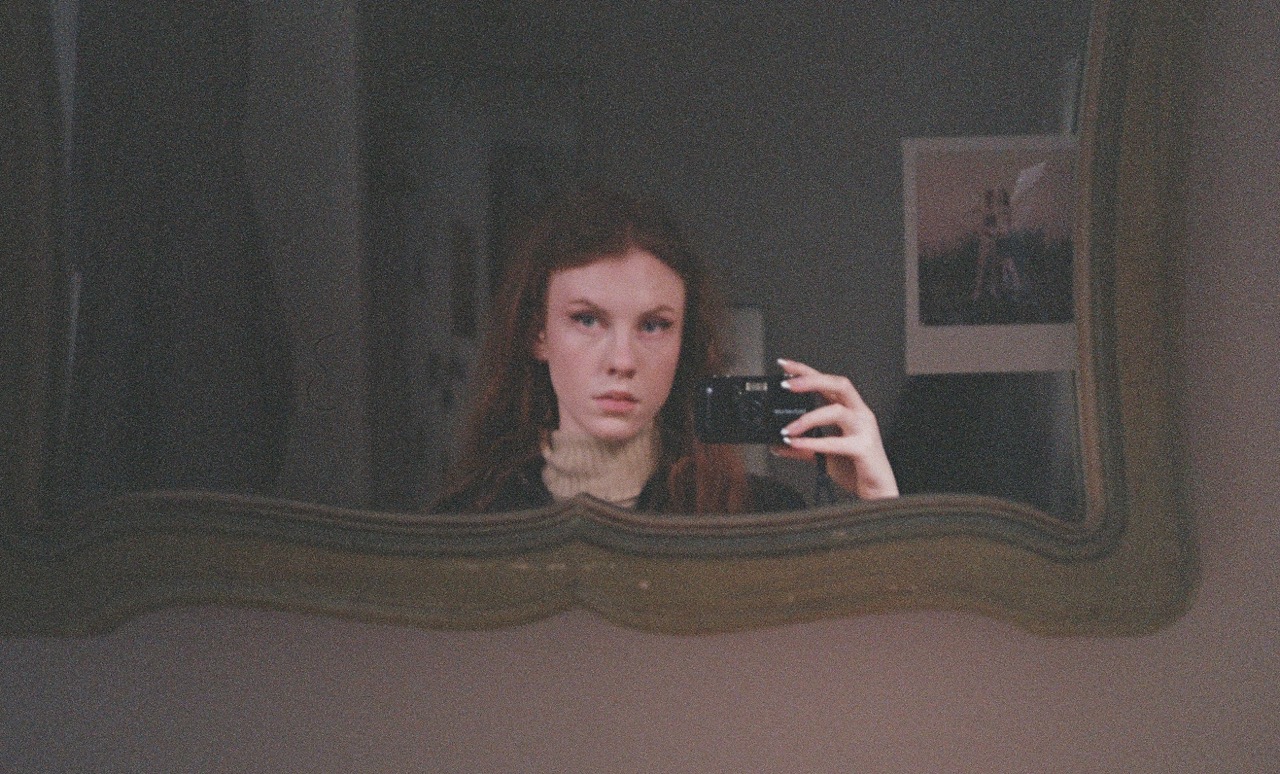
Audrey Wollen
As a critic, you usually write about literature—does it feel different, on a prose level, to mold criticism in response to visual art rather than a text?
I think they’re not that different. I approach the texts I’m writing about as if they’re sculptural aesthetic objects, and it’s nice to approach art objects as if they’re built of things like words. Simpson’s work is so reference- and history-heavy that you can approach it like a text or a map.
Your essay mulls over the thrills and risks of containment, the simultaneous self-construction and self-erasure that comes when a body is held by a dress or a room. How did the idea that your writing would read in the physical space of an exhibit affect your process?
When I was writing, I hadn’t actually been in the room with the work, which is interesting because a lot of the piece is about imagining your body somewhere, or imagining what a fantasy body might feel versus a lived, fleshly experience. I liked that the text and the body of work would collide in a room that I wasn’t privy to until later.
You write about Simpson’s sculptures as exoskeletons for femininity. You bring a cynical yet still optimistic eye to the various ways women play with and play into their objectification, an experience often rendered as an oversimplified tragic story.
I feel really frustrated when objectification, objecthood, and exoskeletons are talked about as inherently negative things. One, they’re so incorporated into every single detail of our lives that if they were inherently tragic, our response would have to be, Let’s just give up. Second, some of my greatest moments of pleasure and self-actualization have been accomplished through exoskeleton-y experiences. Some of my most intellectually exciting confrontations have happened when I have to ask myself, am I a thing or am I a person? Simpson’s artwork had been talked about in an architectural sense often. That’s part of it, but the garment-ness of the work had been deprioritized. The idea of the dress as a type of building seemed really clear and known to me, like something I had experienced. Femininity is so exciting, full, and brilliant. It is an expertise that carries history and community. The building of a body that isn’t your actual body is something we’re all doing every single day, and something we do for each other. That isn’t always a diminishment.
That self-construction is also misinterpreted as a practice of artifice. There’s a whimsy in your and Simpson’s work that perhaps wields kitsch to rebut the tragic allegations femininity often dodges.
I am really into the transvaluation of values—trying to ask, What is this thing that isn’t taken seriously? How can you take it as seriously as possible? Bring the kitsch and the lightness and the play. In a lot of Simpson’s artwork, she’s asking, What if I made that massive? You can go into a very heady, playful place with that, a bit of a counterfactual universe. And that opens up the question: Is femininity a counterfactual space that’s fun to live in? Are you imagining another world or another archive when you get dressed in the morning?
You write about feminizing words and concepts as a child by adding -ella to the end of them, which is a playfully revolutionary critical impulse, in my opinion. How do you bring that speculative, projection-based modus operandi into your professional criticism when you’re engaging with texts and objects that ultimately do literally exist?
I think the feminizing of the world came from a place of childlike entitlement. I always want to go back to that. I’m looking for that sense of grabbiness. Oh, that’s mine. Why not? It can be a delicate, wonky, difficult line because as a critic, you don’t want to barge into someone else’s reality too much. You want to let it live on its own, yet you’re also being called to peek into the room a little bit. I peek in a little bit more than other critics do sometimes, and I think that’s part of wanting to feel a sisterhood with whatever I’m writing about.
Your critical orientation is avowedly relational, and admittedly not objective—which I love, as I think utter objectivity is maybe just the male version of speculative fantastical criticism. We all have a vantage point. Pretending we don’t creates blind spots.
It has haunted criticism in particular. It is supposedly the goal of the critic to be a disembodied judge unattached to a certain personality and experience. A million people have said that’s a problem, but it’s still shocking to me how much that approach is taught. Memoir isn’t the only way to create relationality. I write about my childhood, but that isn’t the only way to put yourself in the room. So much of Simpson’s work is about the way that, from one vantage point the work looks a certain way—then you move, and suddenly you realize, Oh shit, that has edges. That epiphany is what every critic should be aiming for. Oh, there’s a side I can only access when I activate my body.
That emphasis on motion, and circling the object, feels like it’s part of the “grabbiness” you mentioned earlier—taking a gatherer rather than hunter approach to telling a story.
That’s true—Simpson has a gatherer approach. She’s like, Here’s some armor. Here’s a ruffle. Here’s the ’20s. It’s all bouncing around in the same conversation. When you’re writing, you’re forced into this inherently linear structure. That’s a craft question: How can you delinearize something as linear as a sentence and a paragraph? It’s exciting to write about something that does that jumbling for you. And to approach history by finding strange throughlines rather than just consecutive time, which we all know is fake.
The Internet fosters a form of that refusal of timelines in both freeing ways and terrifying, astroturf-y ones. You’ve said that we could look at the role of the Internet in the history of criticism, and literature generally, less nihilistically, and instead notice that it opens up a space where we can abandon traditional formal constraints.
And that’s the gift of A.I.! [Laughs.] A machine can do conventionality; we don’t have to anymore. Obviously, it’s evil and is going to be used for evil, but if you sidebar the evil, you can also see that you don’t have to write sentences like that anymore. I think the Internet has told us, Good luck trying to make a hierarchy of anything, it’s all next to each other, it’s all just a tab. Everything you ever write is just gonna be a tab—and that’s if you’re fucking lucky, so have some fun.
Can you elaborate a bit about how that playful perspective, that childlike entitlement, informs your feminism, especially in a moment when much of the left seems to see feminism as, if not a tragedy, at least an embarrassment?
One thing about feminism is that it’s a practice of failure. Because it’s up against thousands of years of history, it feels doomed. But failure can be a site of fertility, excitement: Wow, this is a puzzle we haven’t solved. We’re deeply at the draft level of this problem. You may as well take a stab … For me, feminism was a really open and weird way to access existential questions about what a person is, because women have always been faced, to varying degrees, with skepticism as to whether or not they were people. That grey area is a passageway to questions that people take really seriously.
That feels related to this speculative, communal epistemological approach. You have a baseline skepticism around objectivity when you’re constantly objectified.
You have this built-in body of knowledge: You did some research without even trying. It’s also important to stress that playfulness is always collective. Inherently, with criticism, you’re never doing it all by yourself.
Sam Contis, “Phases” and Diane Simpson, “Formal Wear” are on view through February 8, 2026, at the American Academy of Arts and Letters in New York.






 in your life?