AGE: 26
BASED IN: Tucson
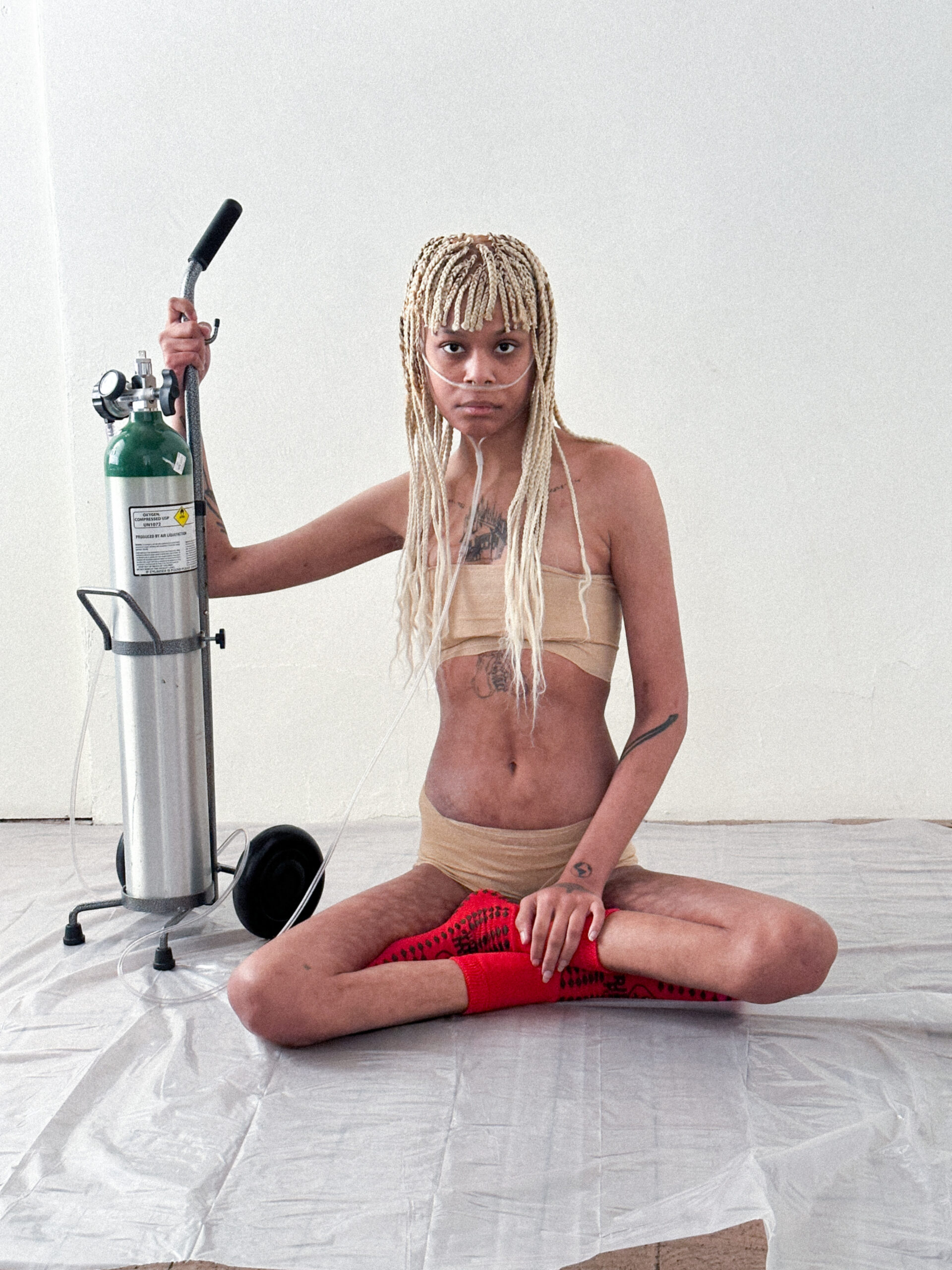
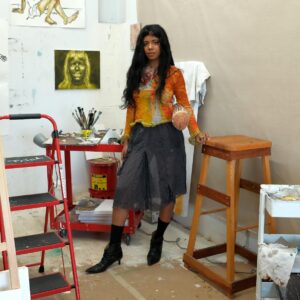
The work of Panteha Abareshi asks urgent questions: What does it mean to have a body? What does it mean to care for—or fetishize—a body? How does the medical system treat certain bodies differently? The Canadian-born artist’s performances, videos, sculptures, and installations explore their experience as a disabled and chronically ill person, often including elements considered too taboo to touch. Their recent solo exhibition at Human Resources in Los Angeles included a screening of pornography followed by a discussion about the disabled body’s representation in fetish materials.
Describe one work you’ve made that captures who you are as an artist.
I would say CAREGIVING, which is incredibly special to me. It depicts a hand held with one finger pulled back by a string that is nailed into its own wrist, a pulse oximeter on its tip—a figure of the violence and painful balance in medical care and caregiving itself, whether in the domestic space or hospital space. I cast a silicone hand and mounted it onto the wooden block, nailing through the soft wrist to hold it in place. It’s a poignant articulation of power-imbalanced relationships. I am constantly examining within my work how the sick, disabled body is so often expected to hold the most painful of positions under the justification of its own care and management. The piece is tender yet cruel, violent yet soft.
Imagine someone gives you $150,000 to make anything you want—no strings. What are you making?
I would make a hospital set that would serve as an installation—a space mixing work with actual medical staging of beds, IVs, medical equipment that are sculptures in and of themselves; an unsettling and uncanny facsimile of the medical space pushed to an aesthetic extreme. I’d also incorporate all sorts of sensory input—from the olfactory to the auditory.
What’s an underrated studio tool you can’t live without?
I have a large collection of medical-supply ephemera; it’s my studio’s holy grail.
Is there a studio rule you live by?
I’ve had to become better about setting boundaries to protect my own health and my body as I navigate my disability and my studio practice. So, I guess my studio rule is that it’s okay to take the time I need to make the work. Rest is as necessary and valuable to my practice as actively working in the studio is. I have to remind myself of this—my instinct is to work myself to the bone and then pay the severe consequences of it with my illness and exhaustion, which can lead to health complications.
See CULTURED’s full 2025 Young Artists list and access other individual artist profiles here.


 in your life?