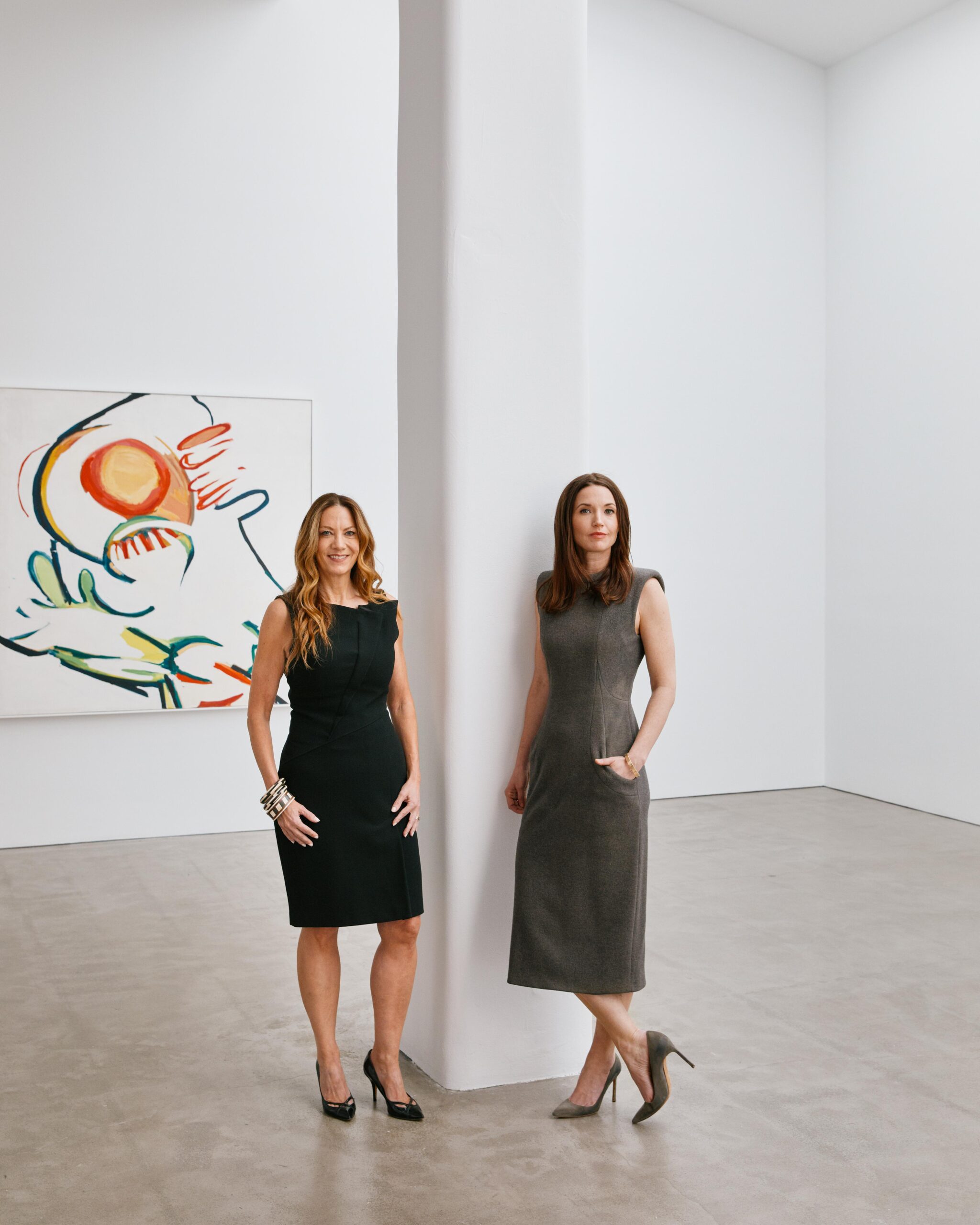
Ethel Schwabacher, Judith Godwin, Bernice Bing, Lynne Drexler—gallerists Christine Berry and Martha Campbell have spent the last 13 years scouring attics and archives, interviewing relatives, and reassembling the narratives of these artists’ careers. Some, like 13-time Whitney Annual participant Schwabacher, were once widely celebrated. Others, like Drexler, were elusive during their lifetime but have broken auction records in 2025.
Berry and Campbell’s approach is simple: work with their estate to present their work holistically, not just the slice that made it into the art history books or group exhibitions. The focus on female artists was unintentional—thanks to the challenges that many female artists faced in the 20th century (and today), there’s a font of unsung creativity just waiting to be contextualized. (Berry Campbell also represents a cross-section of lesser-known contemporary voices like Beverly McIver and Nanette Carter.)
The dealer duo concocted the plan for Berry Campbell when they were still working under Ira Spanierman, of the eponymous gallery, who empowered them to trust their taste and ability to create a market armed with facts, access, and no small dose of resolve. Since striking out on their own in 2013, the art world has slowly—then surely as the 2020s approached—caught up. (The record-breaking sale of Drexler’s Unicorn at Christie’s just a few weeks ago proves the niche the pair have carved out has staying power, even in a shakier market climate.)
There’s no better place to witness this seismic surge in collector interest than at Art Basel Miami Beach. After their debut last year, Berry Campbell is returning to the Convention Center with works by Schwabacher, Godwin, Drexler, and more in tow. Ahead of the fair’s opening, the duo behind it all sat down with CULTURED to discuss how they take an artist’s work from secrecy to stardom.
CULTURED: We’re speaking ahead of Thanksgiving, when most of the world slows down, but the art world gears up ahead of Miami Art Week. Berry Campbell is presenting at Art Basel Miami Beach for the second time. What has everything leading up to this looked like?
Christine Berry: This started in January; we were writing graduate-level art history essays just to get into the fair. You’re making a three-dimensional booth and mocking up what you’re going to bring, and you don’t even necessarily know what inventory you’ll have. If you get accepted, you hustle to get your best stuff together.
Martha Campbell: You have to keep hustling until the very end to continue to get the best stuff in. The second you get a good painting, the second it’s going to sell. We have been working for 10 months to get to this point, and the checklist still is changing up until right now. You don’t want to get down there and have everything you’re hanging already sold.
Berry: These are good problems. For example, we just did a 1970s Lynne Drexler show, but we really wanted to show a 1960s Lynne Drexler at the fair. We landed a major 1968 Lynne Drexler, which will be the centerpiece of our booth. Art Basel is using it in their advertising—it’s an incredible painting. At the Modern and Contemporary auctions a few weeks ago Lynne Drexler just broke a record-hitting $2 million, and we are bringing a painting that is comparable to that one. But it was only two weeks ago that we were able to get that!
CULTURED: What did you take away from the ABMB experience last year, and how did it affect your conception of the booth this year?
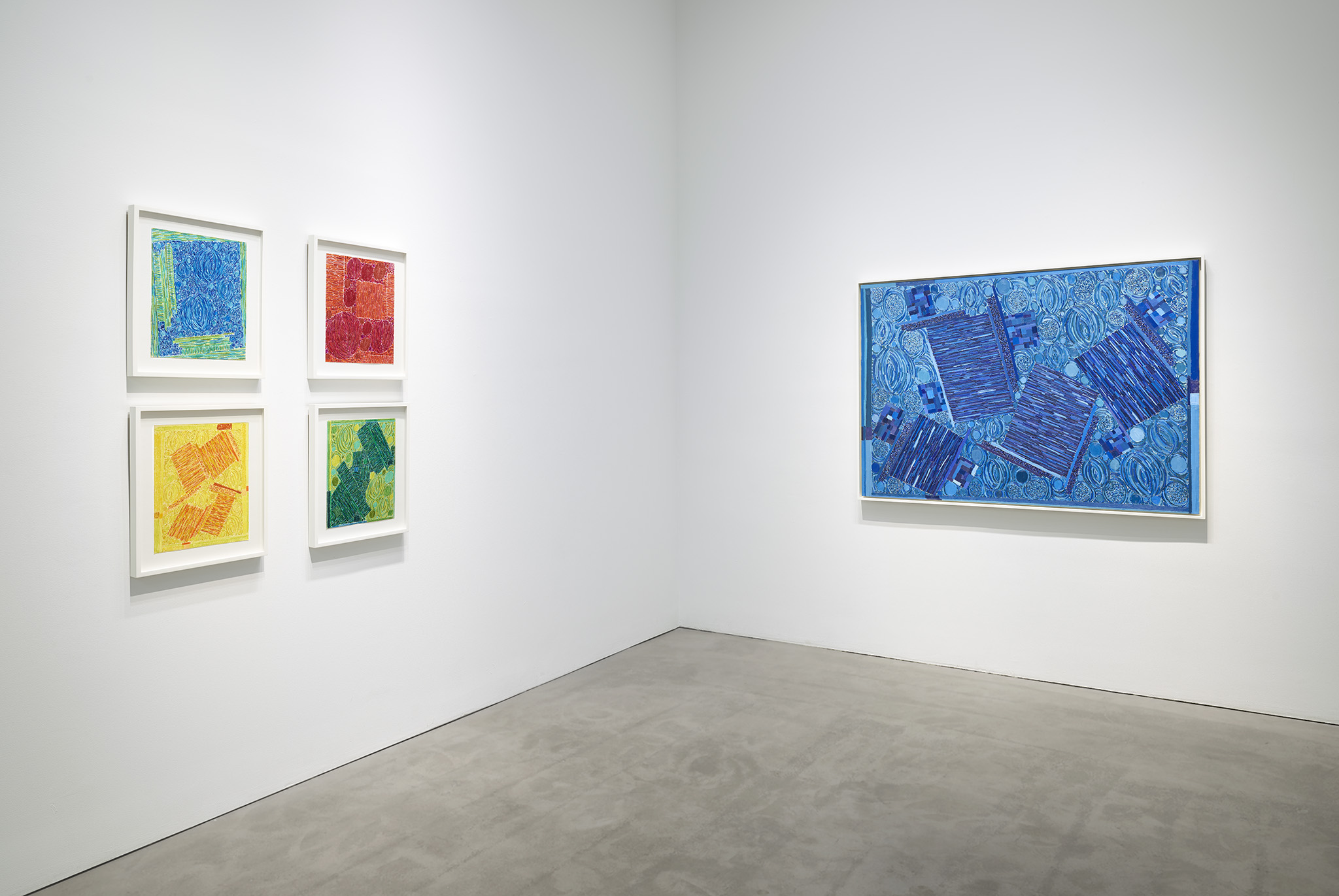
Campbell: It’s been really rewarding because we have been showing these underrecognized artists, especially women artists, for so long, and it’s really only been in the last 10 years that people have been willing to take that risk, learn more, and dig a little bit deeper beneath the surface. I think Art Basel has this reputation of name-brand artists only, but we did really well with these women artists. For instance, Ethel Schwabacher, who had five shows with Betty Parsons in the 1950s, was in 13 Whitney Annuals between 1948 and 1961, yet you wouldn’t have ever heard of her. But the painting we brought was museum quality.
Berry: And we sold it. We brought big, colorful, important paintings. We wanted to make a good first impression, and I felt like we did. We know that our specialty is this time period with overlooked artists from the ’50s and ’60s, and so we are continuing that.
Campbell: We’ve taken on a few more estates this year. We’re looking outside of Abstract Expressionism a little bit, like with Louisa Chase, who was a Neo-Expressionist and really big during the 1980s and was very good friends with Elizabeth Murray.
Berry: We use this time to develop our markets as well. You put a piece out at Art Basel Miami Beach and see what the response is. We represent these artists’ whole estates, so we have all of their work in our possession. That’s how we can move and raise these markets but also curate a number of shows and figure out, Is this the best period to start with? Do we do a mini retrospective? Art Basel allows us a chance to put our feelers out.
Campbell: I like it too because if you’re presenting a new artist and talking about their work to a client, it’s a good gauge of how they react to what you’re saying. When I talked about this artist in that way, how did the client respond? Should we change our approach? Should we change the way we write the catalog essay?
Berry: Ten years ago we were doing this, and nobody cared. We knew in our hearts it was good, but it was hard when you could not get anyone to review your show. Fortunately we kept up the quality level and doing one good show after the next. We knew eventually people would catch on—and, boy, did they.
Campbell: We love the artists. As Christine was saying, we take on the entire artist’s estate, and my God, you end up feeling like you know them from beginning to end because you’re surrounded by a lifetime of their work.
Berry: We become champions. We feel it is our job to carry on the voice. They were famous in their day. Or maybe, like Lynne Drexler, they were not, but we now have the voice to say, “Look at this work. This woman painted every single day of her life. These paintings are incredibly good, and you should pay attention.”
CULTURED: You both come from museum backgrounds in DC and Fort Worth respectively. You met working at Spanierman Gallery in New York. When did the idea to focus on overlooked women, mostly of Abstract Expressionism, emerge? And how did you find your artists?
Berry: I will hand it to Ira Spanierman, who was our old boss: He developed markets. He worked with a lot of 19th-century American paintings, but he had no fear about collecting or showing artists that were unknown. He gave us a lot of confidence to trust in our eye and trust in what we felt.
Campbell: When we were starting our gallery, what we both loved was Abstract Expressionism, one of the richest periods in American art. We went down to the Archives of American Art. We went up to Buffalo to look at Martha Jackson’s archives.
Berry: Straight up boring research. It’s all right there for you to find. Sometimes art dealers are in a rush and quick to make a sale, and they don’t take the time to really figure out who needs to be excavated and uncovered.
Campbell: As we were going through and developing our list, it never occurred to us for a second that we were showing more women than men. We believed we were going to have a really strong gallery because there were all these fabulous, unrepresented artists with rich estates full of remarkable work. Then, maybe two years in, we realized all these great artists are available just because they’re women, and no one was showing them simply because they were women.
Berry: We often do shows knowing that it might be a reintroduction; it may not be a market success at that moment because it takes time to put someone’s name back out into the world. But we’re not in a rush here; we’re playing the long game, and it’s paying off.
Campbell: We also don’t want some of these shows to sell out. There’s a finite amount of these works, and our goal is to raise these markets. So actually if they don’t sell out, it’s great because we’ll make more money later.
Berry: Our current show is Ibram Lassaw. He was a major—like the major—sculptor of the Abstract Expressionist period, along with David Smith. And people don’t even know his name anymore. The 8th Street Club was formed around his kitchen table. He was the center of it, along with Pollock and Krasner and everybody. It’s funny how we sort of have to remind people—he’s on view at MoMA, but maybe no one else knows at this point.
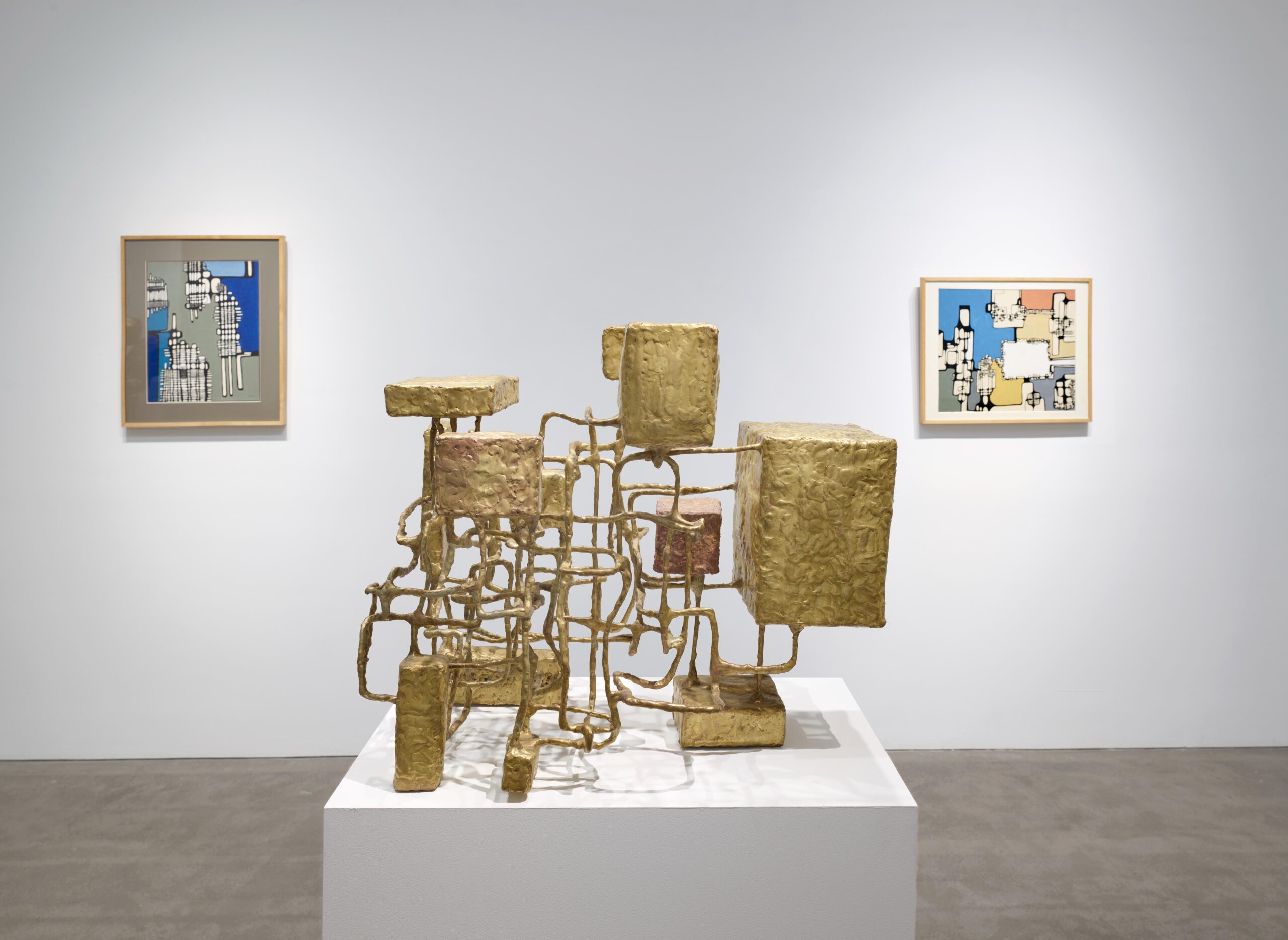
CULTURED: The positioning and context for these artists is so crucial too, which you afford them with the catalogs you put together. Tell me about the scholarship and research that goes into those.
Berry: Sometimes I joke that we’re in the book business. We’re so old school. Even when we first opened the gallery, even if we couldn’t publish a catalog, we published something. If it was a folding brochure, we handed it to every person that walked in for free because we wanted to get the information out. And often for many of our artists who were pre-digital, they didn’t even have a CV queued up in a Word document. We’ve literally had to go back and do the research. Now, our CVs and some of our biographies are the basis for other research. The Bernice Bing book from our show is now being sold in several museums. It’s the only book on Bernice Bing.
Campbell: These artists are written about in the history books, and they’re in the archives of Betty Parsons or Martha Jackson, but nobody ever wrote their biographies. We feel it’s our job to go back, actually do that primary research, and set the record straight. We came from an old school gallery world, and it didn’t occur to us not to do it like this. When we had no money, we were printing postcards…
Berry: Like $5,000 per postcard because we knew the quality would set us apart. [Laughs]
CULTURED: How have you seen your audience evolve since founding the gallery in 2013?
Campbell: It’s gotten a lot younger. Before anybody cared, before 2016, 2017, the people who were buying before were in their 60s, 70s, and 80s—people who grew up with Abstract Expressionism and were willing to dig beneath the surface. Now it’s young people; it’s couples in their 40s. There’s this market aspect too: When the market has been flat over the past few years, the women Abstract Expressionists have continued to climb at extraordinary paces.
Berry: Over the 20 plus years I’ve been selling paintings, it used to be couples coming in, and the decisions often came from the man. I can tell you 100 percent that that has shifted. It’s probably shifted 75 percent more towards the women making the decision about art. I have this theory. Betty Parsons, who was a woman art dealer, showed Judith Godwin and Ethel Schwabacher. Were they selling things? At that time the buying power was with the men, and men were not buying the women artists because you really didn’t see a woman as a professional painter. They were a Sunday painter. This is why Willem de Kooning and the men were probably selling more. If women have more buying power, you don’t look at women artists as second rate. A woman can have a successful professional career as an artist and be equally as good as a man.
CULTURED: Over the past few years, a lot of alarm bells have gone off about the market, the art world, gallery closings… How are you seeing this evolution affect how you see Berry Campbell? You took a big swing and opened a 9,000 square-foot gallery in Chelsea in 2022.
Campbell: 2022 was a blockbuster year for all of us. We all killed it. A lot of people thought this was gonna last forever. We kinda figured that things were a little crazy, and that we would all come back down to earth. Our spending didn’t change during 2022. We made this decision to move into this 9,000 square foot gallery space based on what we were selling pre-pandemic in 2019, and we didn’t hire any more staff members. Every single person who works for us works incredibly hard. We contract out with researchers and photographers and art handlers, but our spending hasn’t really changed a great deal besides our rent.
Berry: We were more conservative in our approach from the beginning. We’ve also chosen where we want to spend money, like books. We know that’s an expense that’s going to help us in the long term.
Campbell: We keep spending money on publications because at the end of the day you can keep raising these markets, but, if you don’t have the facts behind why these markets should be raised, these markets are just full of hot air.
Berry: Martha and I do work very independently. While we are at Art Basel and Frieze Masters, we are really nose-to-the ground focusing on what we’re doing. We’re probably not at the coolest parties. We studied art history, but I can tell you it’s not realistic for us to do 22 art fairs a year.
Campbell: Is it realistic to open up in LA? In Palm Beach? How big really is this art world for every small-to-medium sized gallery out there? We do a lot of collaborations with other galleries like White Cube, and that’s how we get our artists out internationally.
CULTURED: And what can we look forward to from Berry Campbell in 2026?
Campbell: We’ve really been promoting Judith Godwin and her work. We’re getting ready for a museum exhibition at the Muscarelle in the fall. People have been focusing quite a bit on her 1950s works, but we’re going to do a show of the later paintings here at the gallery which are really true in spirit to her. She was always influenced by Martha Graham, so they combine these sweeping gestures with this really luxurious color. We’re excited to show that. And there has not been a Perle Fine retrospective in decades.
Berry: She’s one of the [landmark Abstract Expressionism exhibition] 9th Street women. I always joke that she was not wild, she was not at parties, she wasn’t screwing anyone, she was happily married and making paintings, but she was part of that scene. She doesn’t get a chapter in the book sometimes, but she deserves it. She was one of only three women who could vote in the club. So we’re doing the first major monograph on Perle Fine to accompany a show next fall. The only other thing out there is a small catalog with black-and-white photos. Louisa Chase, the new estate we’re working with, will have a show this spring. And we always talk about the vintage program, but our contemporary program builds on what we’re doing with the vintage artists. Jill Nathanson has a show coming up at a museum in Florida. Beverly McIver is in several group exhibitions. We’ve got a lot to look forward to!


 in your life?