

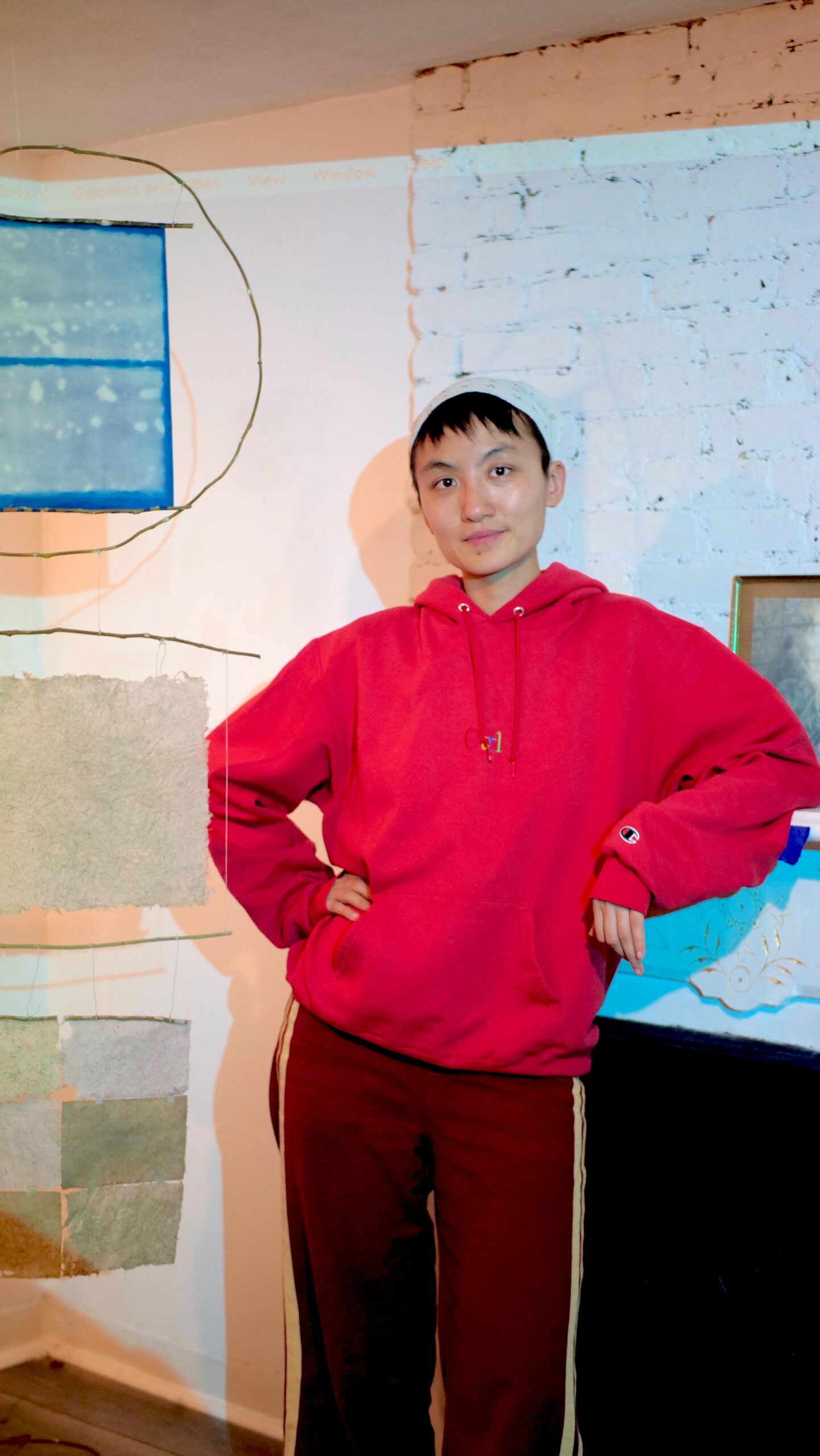
AGE: 30
BASED IN: New York
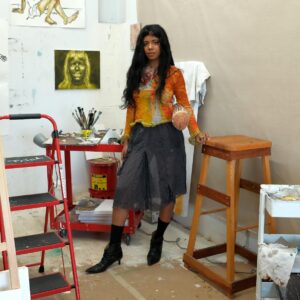
If Cherrie Yu sees you moving out in the world and likes what they see, they might just ask you to collaborate. The artist—who grew up in Xi’an and Wuxi, China— makes videos, performances, and prints that explore the relationship between everyday movement, dance, labor, and play. In Trisha and Homer, 2018, they juxtapose a 1986 solo by choreographer Trisha Brown with the movement of a mopping maintenance worker named Homero Muñoz. Their recent work places the balletic, athletic, and highly specialized subcultures of ping-pong players and dancers side-by-side.
Tell us about a teacher who changed the way you think about art.
My friend and mentor Bryan Saner. Bryan was not my teacher at the Art Institute of Chicago, but I was introduced to him through my teachers Lin Hixson and Matthew Goulish. Bryan is an amazing woodworker, sculptor, performer, and dancer, and I did an apprenticeship with him for a number of years when I lived in Chicago. He taught me so much about the laboring body as the dancing body—not through lecturing but through working alongside him and observing how he moved through the world and alongside objects and materials. I have such fond memories of us doing things together, like caning an old chair, setting bathroom tiles, putting in floorboards, or washing out window screens at a Frank Lloyd Wright house in Oak Park. You might say, “Oh Cherrie, that’s so different from the work you do now.” But I really believe that the things on the periphery of what we do as artists are the things that mold us.
Describe one work you’ve made that captures who you are as an artist.
In 2017 when I started grad school I made my first piece of video art called Wrestling Study. I thought of it as a performance for the camera and an experiment at the same time—a friend and I learned to reenact 30 seconds of a wrestling match in the moving traffic on Michigan Avenue in Chicago. I always think of it as a sort of key that opened up a lot of possibilities for projects to come, and I often return to it as an idea, a building block, or a tool in my repertoire and history of thinking.
What’s an underrated studio tool you can’t live without?
I have been really obsessed with saving all my coffee-cup sleeves since 2022. I have a box of them in my studio. I used them for a number of things, and I kept finding new uses for them. I had to make masks for characters for a performance in 2023, and I used them as a part of the masks because it was very sturdy and also flexible and soft. I recently used them as a part of the paste-paper process for bookmaking. In general, I am obsessed with cardboard texture materials.
See CULTURED’s full 2025 Young Artists list and access other individual artist profiles here.




 in your life?