The 2025 edition of Art Basel Miami Beach will see the arrival of a whopping 49 new galleries on the convention center floor. Among those debuting this year are well-loved Miami standbys Nina Johnson, Voloshyn Gallery, and El Apartamento—a testament to the city’s ongoing creative tranfsormation. “Miami is in a moment: new spaces opening, institutions leveling up, and conversations across art, design, tech, music, and sport happening in real time,” fair director Bridget Finn says. “It feels like everything is firing at once—and evolving right under your feet.”
Before the doors open, CULTURED spoke with four committed collectors—Dr. Charles Boyd, Malcolm Jenkins, and Danielle and Matthew Greenblatt—about the pieces that move them, the players that have already caught their attention, and the surprises that keep them returning to Miami year after year.
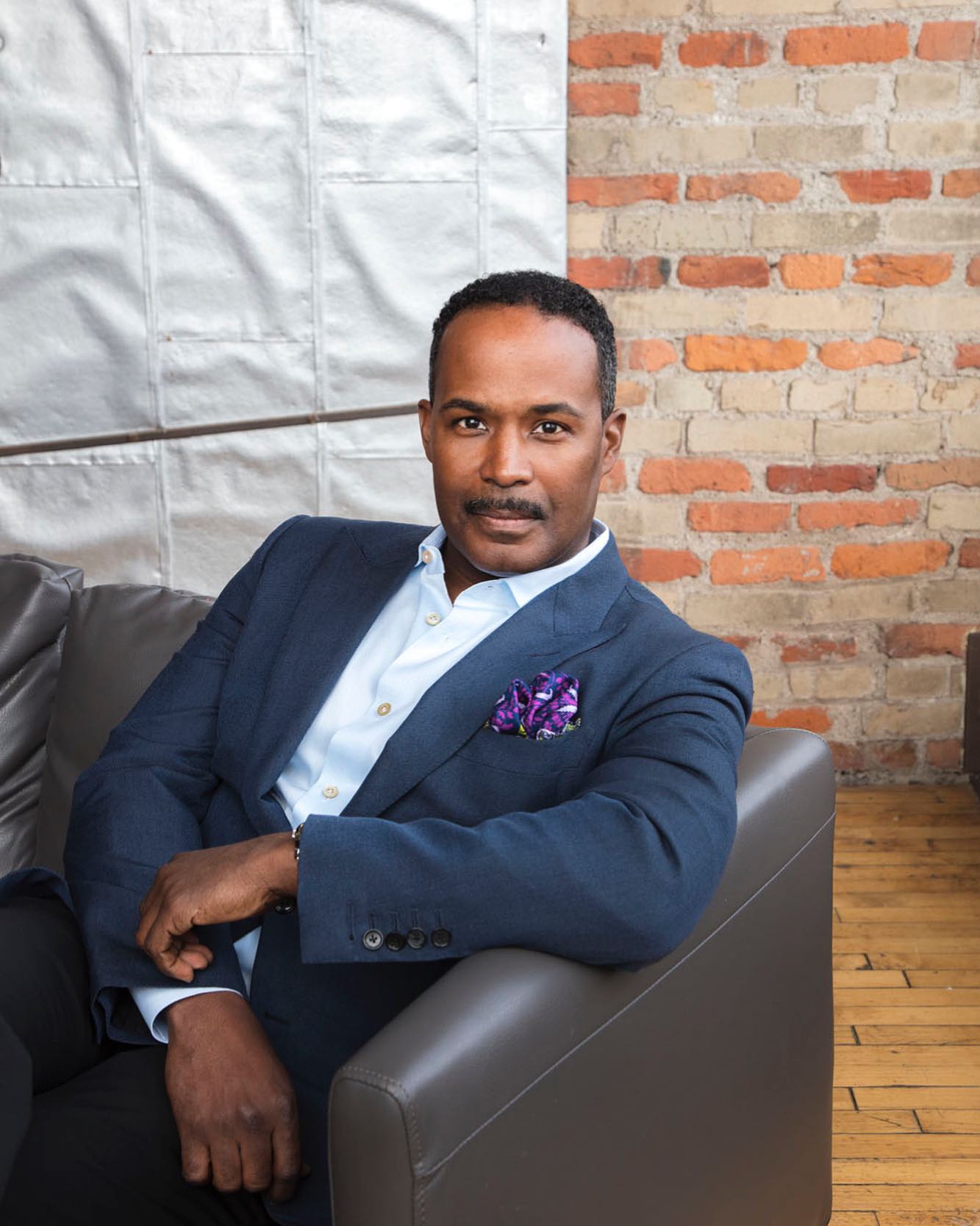
Dr. Charles Boyd
A longtime patron of emerging artists, Dr. Charles Boyd seeks out talents who push materials to their limits and expand the visual lexicon of their generation. A Detroit-based plastic surgeon, he currently serves as the chair of the board at the Museum of Contemporary Art Detroit and on the board of the Detroit Institute of Arts. For Boyd, collecting is about emphasizing aesthetic rigor and cultural insight, with an emphasis on artists from the African and Afro-Caribbean diasporas.
What are you hoping to discover—or rediscover—at the fair this year?
Charles Boyd: Every year, I’m searching for what—and who—feels genuinely new. I’m drawn to young artists who are pushing their practice forward, whether through material experimentation or a fresh way of interpreting their world. I love those moments of discovery when you immediately sense an artist is opening a new path.
Which emerging artists or galleries are on your radar?
Boyd: There are so many. That’s part of what makes Art Basel Miami so special. Recently, I’ve been watching Sydney Cain, among others. Also, I’m excited to see the work by Titus Kaphar and Kennedy Yanko at the fair.
What’s a memorable negotiation, acquisition, or near-miss from a past Basel that still sticks with you?
Boyd: One of my most memorable acquisitions was in 2014 when I purchased a work from a young artist, sight unseen. The artist was Titus Kaphar, and it is one of my most important works. It’s a reminder that instinct, when guided by experience, can lead to something remarkable.
Is there a type of work—material, scale, medium—you’re especially drawn to (or avoiding) right now?
Boyd: I’m always cautious with materials that are difficult to preserve or maintain. That said, if a work moves me deeply, I’m willing to make an exception. Art isn’t always meant to be easy.
What’s one work you hope you might find this year, even if it feels like a long shot?
Boyd: There are several historical artists I’m hoping to bring into my collection. I was deeply moved by the Wifredo Lam exhibition at MoMA. Lam and other artists from the Afro-Caribbean diaspora are always on my radar.
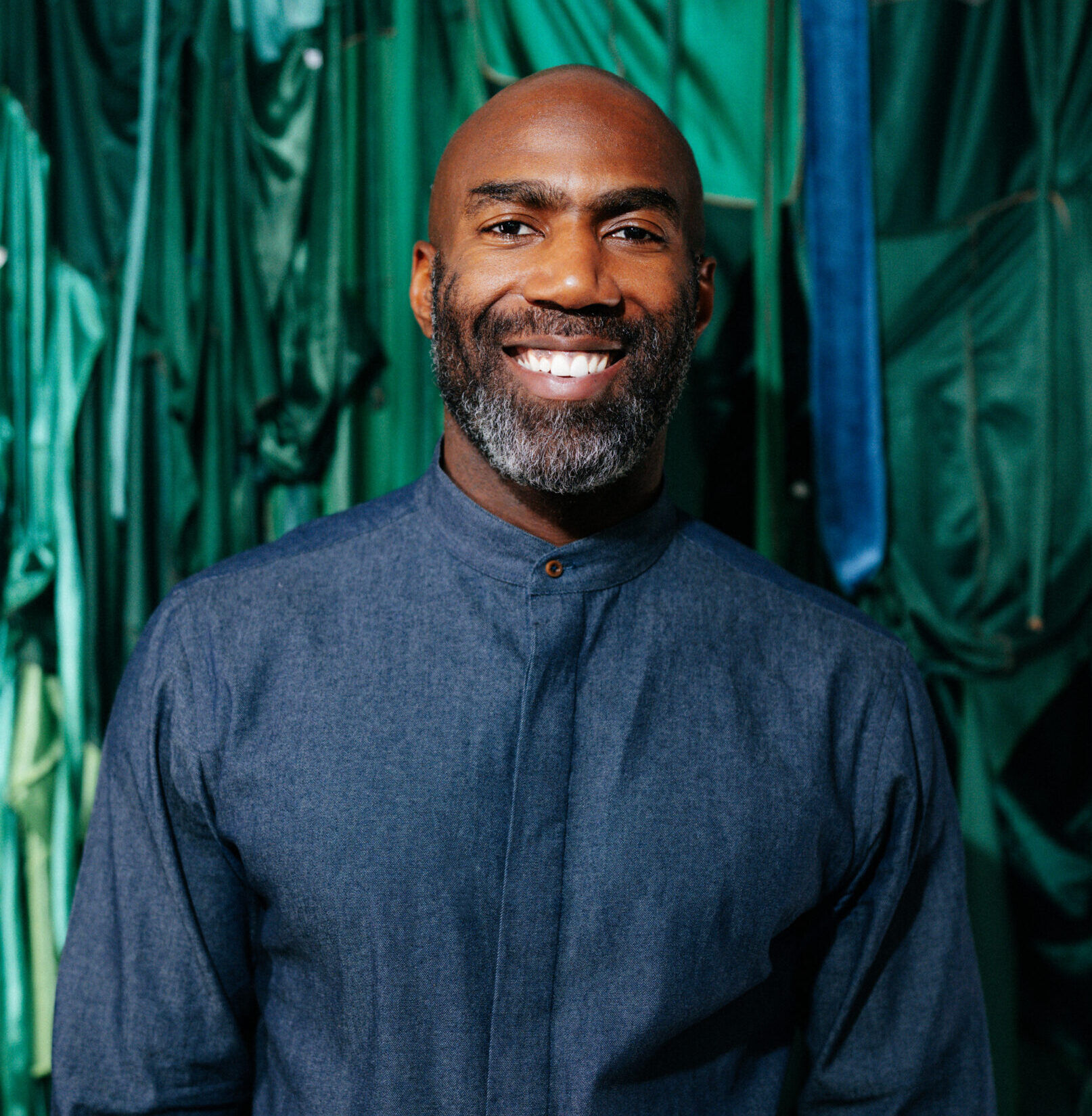
Malcolm Jenkins
Two-time Super Bowl champion Malcolm Jenkins has charted a second path as a collector. His approach is rooted in relationship-building, and investing in artists over the course of a career. With a growing collection that includes work by Lauren Halsey, Alteronce Gumby, and Dominic Chambers, Jenkins is playing a long game.
What are you hoping to discover—or rediscover—at the fair this year?
Malcolm Jenkins: I’m always looking to discover and learn about new artists. That’s what I love about fairs. I’m still a young collector who is learning what’s out there. Basel is a great opportunity to see a lot.
Where in the fair do you usually begin your browsing, and why?
Jenkins: There is no method to the madness. I like to walk the whole fair, stopping at the galleries I know and at the art that catches my eye.
Has your collecting philosophy shifted in the past year?
Jenkins: The more time I spend with artists, the more I understand the importance of building relationships and going beyond the transaction. My collection reflects the relationships I’m building.
What’s a memorable negotiation, acquisition, or near-miss from a past Basel that still sticks with you?
Jenkins: I’m still fairly new to the fair, but last year I saw a work by Alteronce Gumby and knew exactly where it would go in my house. I had to have it. It was a pleasant surprise as I wasn’t planning to purchase any works, but when the spirit moves you, you have to go with it.
Is there a type of work—material, scale, medium—you’re especially drawn to (or avoiding) right now?
Jenkins: I am actually looking for smaller-scale works to round out my collection. It turns out that wall space quickly becomes an issue when you acquire large-scale pieces. Who knew?
What’s one work you hope you might find this year, even if it feels like a long shot?
Jenkins: I have more interest in the artists themselves. I love a good work of art, but I enjoy it more when I personally know the artist. It gives me a story to attach to the work and in my opinion, that’s where the value is.
Do you have a go-to fair uniform?
Jenkins: Comfortable shoes are a must!
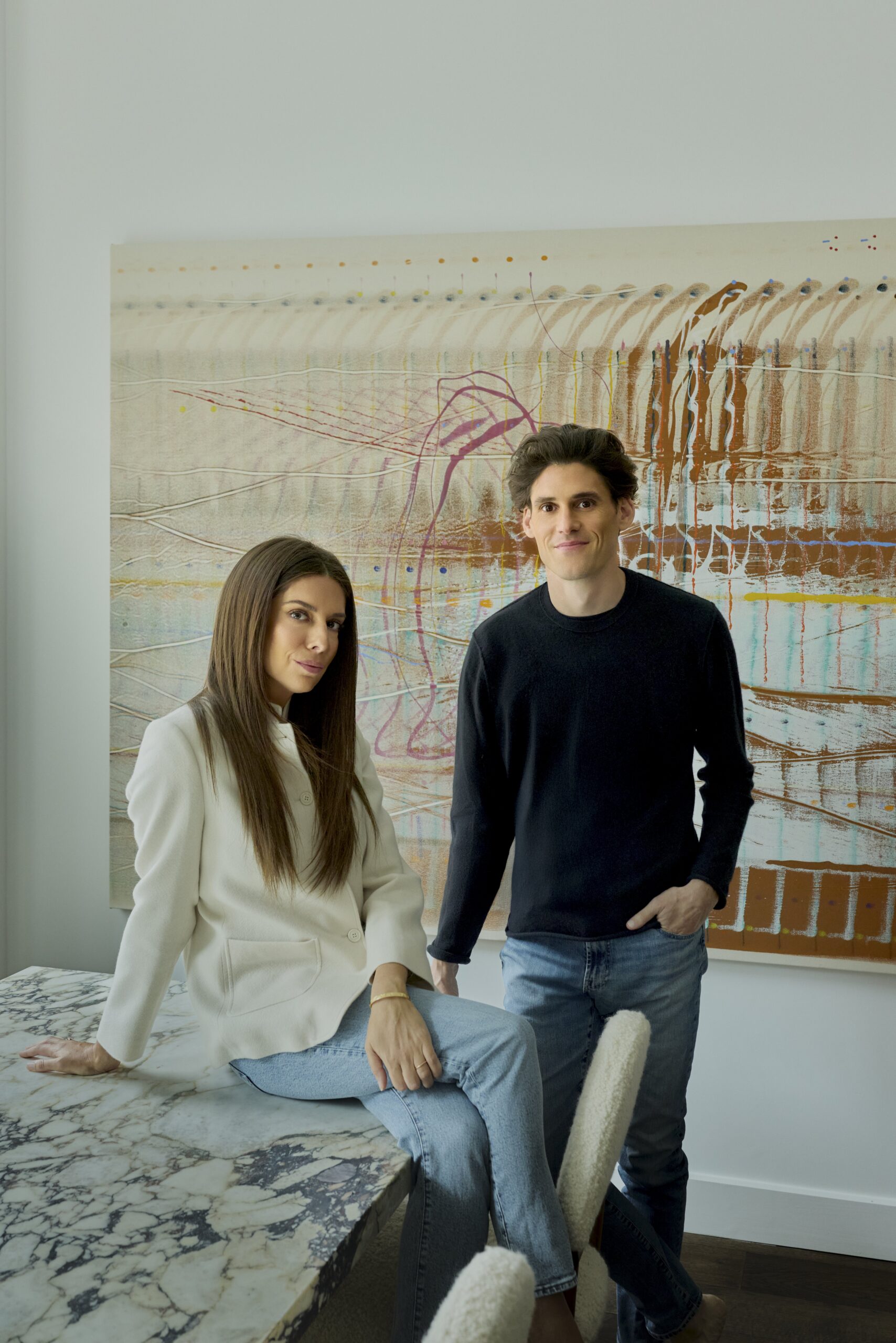
Danielle and Matthew Greenblatt
Collectors Danielle and Matthew Greenblatt bring curiosity and discipline to their collecting. The couple collects slowly (with the exception of one exciting gut purchase), waiting to ensure a work’s emotional resonance before acquiring it. Recently, they’ve begun expanding their horizons to include historical pieces that deepen the heft of their collection.
What are you hoping to discover—or rediscover—at the fair this year?
Danielle Greenblatt: Fairs are where we stumble on the unexpected and see familiar things with fresh eyes. We like to arrive with a mix of curiosity and openness, ready for whatever catches our attention. Matt is the more diligent one when it comes to previews; he combs through everything ahead of time to make sure we don’t overlook artists or pieces on our list. I take the opposite approach: I try not to look too much beforehand so there’s still room for those spontaneous moments that make fairs fun—the surprise encounter with a new artist, or seeing a work in-person that shifts how I feel about it entirely. That mix of planning and surprise is what we love about fairs, and hopefully this one gives us a little of that magic too.
Where in the fair do you usually begin your browsing, and why?
Matthew Greenblatt: If we have something on reserve, we begin at that gallery. Otherwise, we try to approach the fair systematically and move row by row. After all these years, we’ve never managed to “stick to the plan.” Something invariably catches our eye from a distance and screws it all up. That’s what keeps it exciting though, and it’s why we always go back on Day 2.
Which emerging artists or galleries are on your personal radar going into the week?
Matthew: We’re very excited to see Emily Kraus and Julio Galán’s solo presentations at Luhring Augustine. Michael Werner’s program is exceptional, and we are always curious to see what they bring. And after seeing Gala Porras-Kim’s presentation at Commonwealth and Council at Art Basel Paris, we’re looking forward to seeing more of the work in Miami.
Has your collecting philosophy shifted in the past year? If so, how is that influencing what you’re hunting for at the fair?
Matthew: We’ve become increasingly interested in the idea of adding a few older artists or historical works. Not as a shift away from what we care about, but as a way of creating more context around the works we already live with. There’s something appealing about adding pieces that broaden the dialogue or highlight the connections across generations. We’re not trying to reinvent the way we collect, but we are becoming more aware of how a couple of well-chosen older works might deepen the story our collection is telling. It feels less like changing course and more like expanding the ecosystem.
What’s a memorable negotiation, acquisition, or near-miss from a past Basel that still sticks with you?
Danielle: In 2019, we were offered a really special Rashid Johnson work on paper through Hauser & Wirth. It had so many of Rashid’s iconic hallmarks: an “Anxious Man,” hints of escape collage, and that raw kinetic energy that makes it so identifiably Rashid. Matt was in a meeting when it was offered to us and it was the first time I committed to acquiring something without jointly saying yes, because it was just that good.
Is there a type of work—material, scale, medium—you’re especially drawn to (or avoiding) right now?
Matthew: We’re medium-agnostic, but our collection is largely painting and sculpture today. Since we don’t buy for walls, what really matters is the work’s impact and its ability to elevate and expand the collection. A piece can be traditional or experimental, large or intimate, and if it resonates on the right level, we’ll give it serious consideration.
Do you have a go-to fair uniform?
Danielle: Matt wears the same thing every day, so his go-to Basel uniform is also his go-to life uniform—jeans with a cashmere sweater or blazer and sneakers. I don’t really have a uniform, but I tend to wear more color in Miami than anywhere else—usually a cool Dries van Noten skirt, and always a mix of good gold jewelry.





 in your life?