Rian Johnson has built a film career by subverting familiar genres. There was Brick, a send up of ’40s noirs set in a California high school. There was Looper, which blended an assassination action flick with a time travel head trip. And then there was his Star Wars entry The Last Jedi, which—well, I’m sure you remember the discourse that spawned.
Lately, though, Rian Johnson has been all mystery, all the time, thanks to the first two installments of the wildly entertaining Knives Out series and his Columbo-inspired TV series Poker Face. Johnson’s narrative puzzles have you guessing until the last minute, but it’s the characters’ dramas, motivations, and follies that stick with you for weeks after. Knives Out, set in 2019 in the shadow of Trump 1.0, stuck an aging mystery novelist, his beleaguered nurse, his squabbling family, and a debonair detective named Benoit Blanc with a Foghorn Leghorn drawl in a Massachusetts mansion and threw away the key. Glass Onion took Blanc to a Greek island owned by a tech billionaire at the height of Covid alongside the governor of Connecticut, a manosphere Twitch streamer, and a hedonistic, aging supermodel.
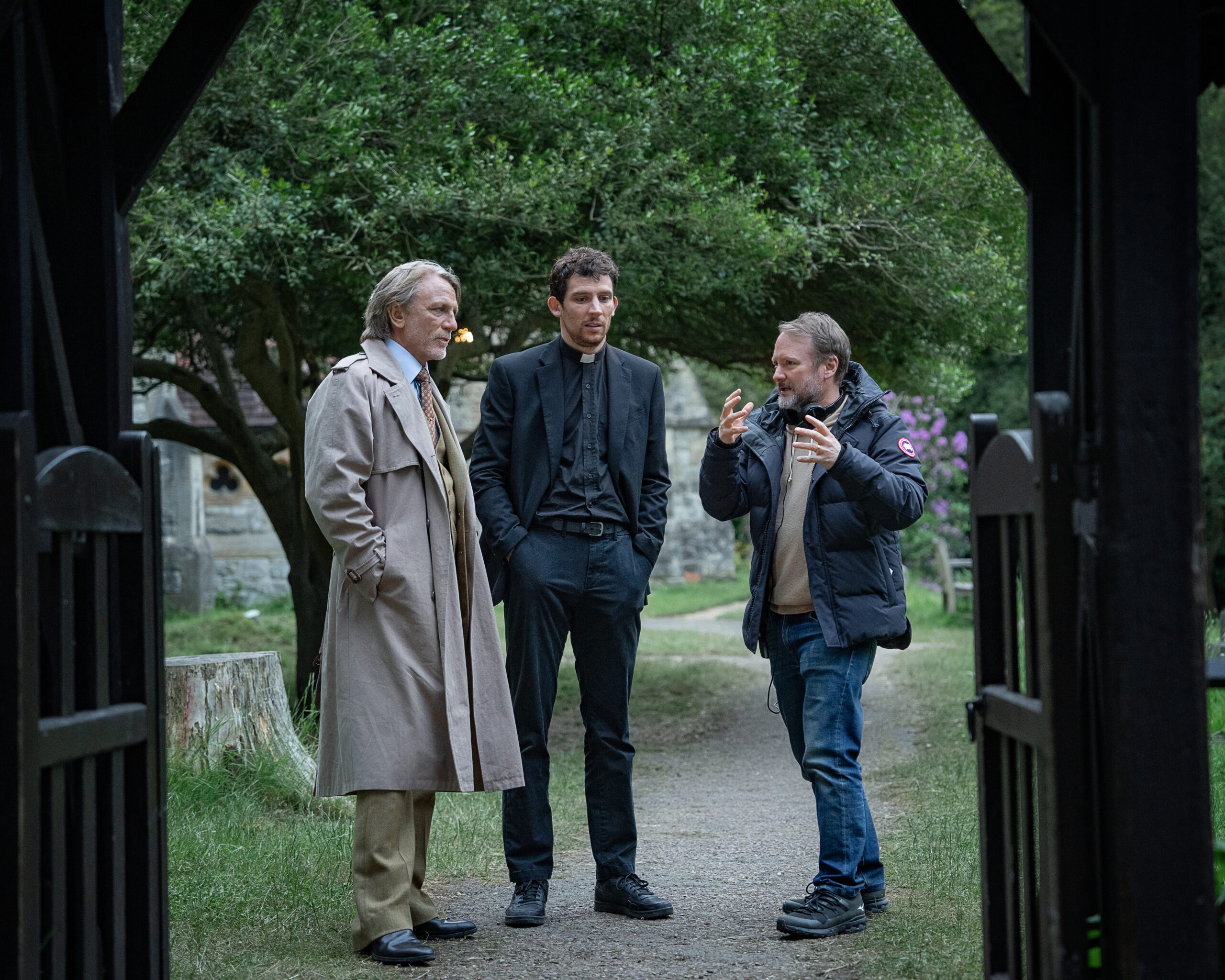
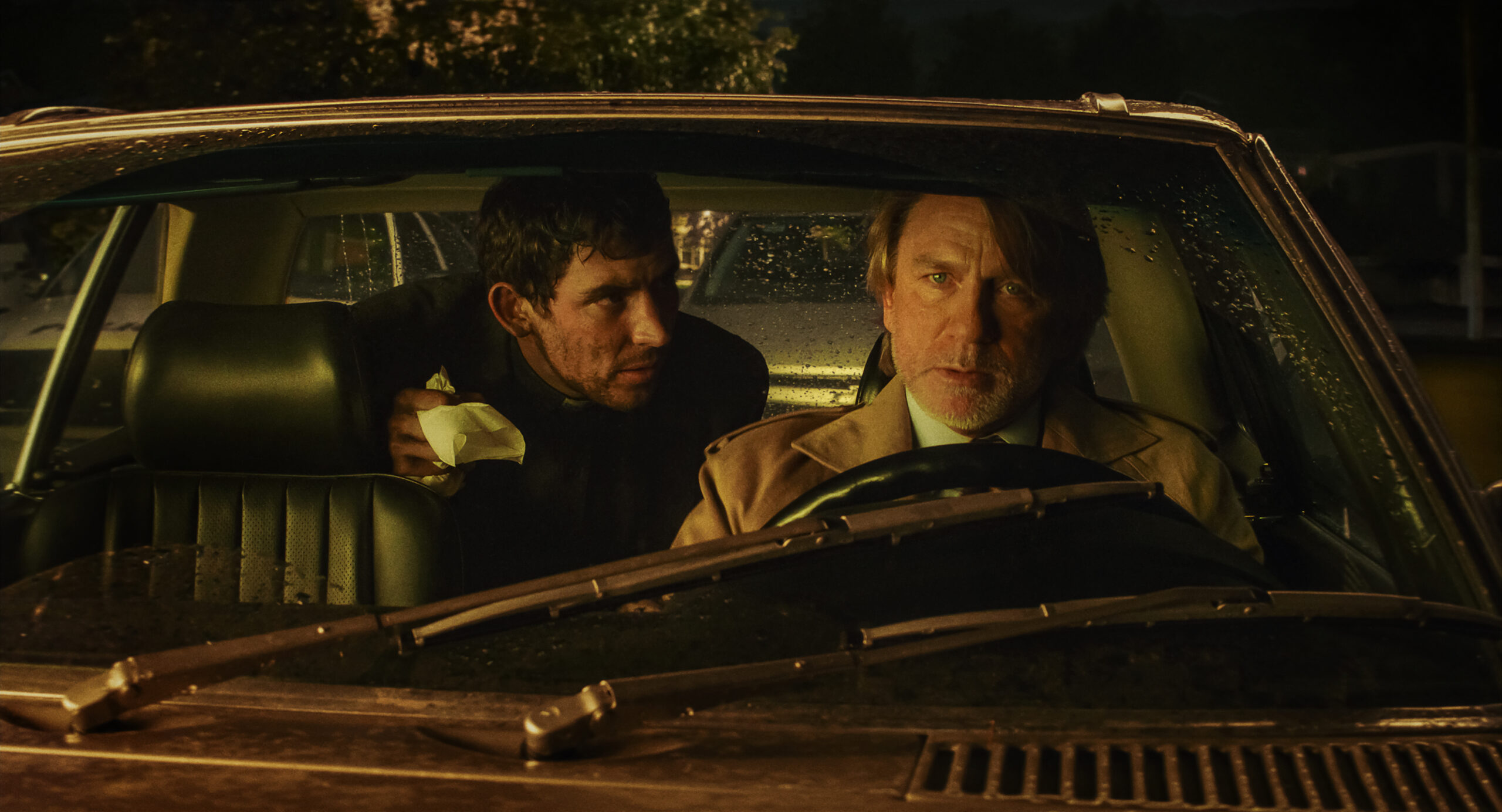
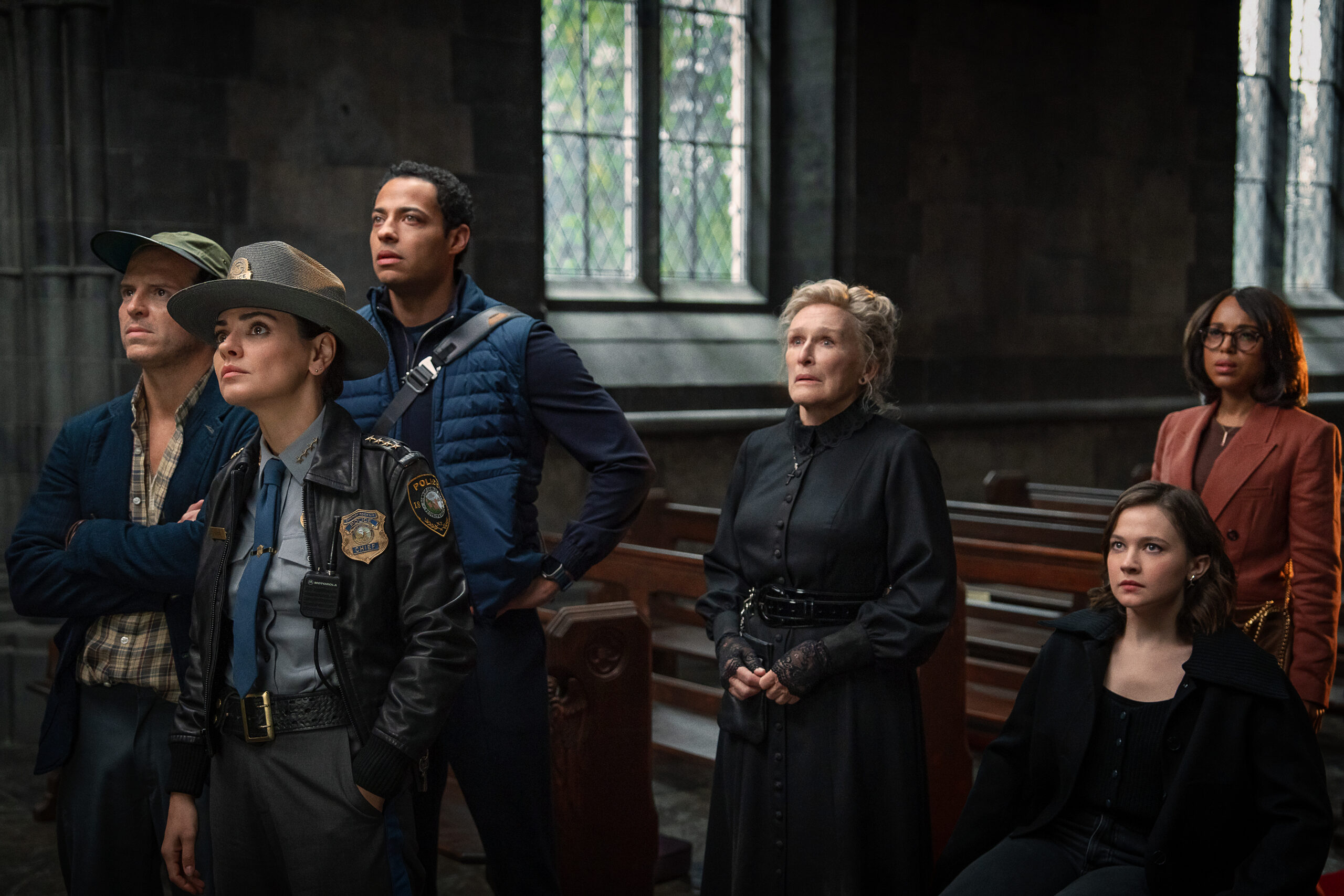
His latest? A gothic conundrum set in the world of the Catholic Church. Wake Up Dead Man is just as star-studded as his previous two Benoit Blanc films: The cast this time around includes Josh O’Connor as a boxer-turned-priest, Glenn Close as a true believer, Josh Brolin as a fiery clergy member, and Andrew Scott, not as a hot priest, but as a sci-fi author who’s gone dark. If the atmosphere of the film is moodier than the previous two, it’s because it hits close to home. Wake Up Dead Man might just be Johnson’s most personal project yet.
With the Knives Out series on ice (for now), Johnson is turning to a familiar spot for the next spark of inspiration: his bookshelf. Whether it’s historical novels about German silent film directors or tomes about art forgery, Johnson doesn’t mind a daunting read. It’s just another puzzle to solve.
You’re a very busy director. Where and when do you actually get the time to read?
Anytime I can. When I am not in the thick of production or post-production, my recharging place is to pick up books again and read. Before I wrote this movie, I was very much trying to delve into mystery writers that I hadn’t read before.
Knives Out is a distinctly literary series. What books inspired Wake Up Dead Man?
I name check him in the movie: John Dickson Carr was by far the biggest influence on this film. First of all, he’s famously the master of the impossible crime or the locked door mystery: these little chess puzzles which are such an interesting cul-de-sac of the mystery world. It’s something that is very hard to do on film, so the challenge was to do that.
But the bigger thing with Carr is the tone of his writing. He writes many of his books in this tinged with gothic horror style, and he is wonderful at creating a sense of atmosphere and dread. His books very often feint towards the supernatural even. Hag’s Nook was one of the first ones that really hit me over the head. That book is so rich and so scary, and until you get to the solution, you find yourself genuinely thinking maybe there is a supernatural answer to this.
And there are others. I read the Father Brown Mysteries by G.K. Chesterton [about a Catholic priest and amateur detective], and I loved those. I loved particularly how Father Brown is a good detective, not because he understands the holy and the divine, but because he understands the sinful and human.
When you’re writing, what comes first: the puzzle, the atmosphere, or the characters?
This is another thing that reading Carr was very instructive with: attempting an impossible crime. Because it is this fussy little puzzle, the solution to the mystery, even in Carr’s best books, is always going to be a little bit like revealing to someone how a card trick is done. It’s always gonna be essentially unsatisfying. There’s only so many solutions to these types of things. Carr understands that, so he’s building character and theme and tone underneath all of that. And he’ll land it in a place that has a resolution that is actually a story resolution and not just an information reveal of how the puzzle was done.
That was really important for me with this movie. That’s where I start: with the story. Who is the protagonist? What do they want? Why can’t they get it? The basic DNA of what makes any story tick—that’s gotta be the spine the whole thing is built on.
Something that made Knives Out so resonant with audiences when it came out was that it really captured the political and social atmosphere after the 2016 election without putting too fine a point on it. Glass Onion tackled tech in the age of Covid. What kind of power dynamics are you engaging with in this story?
This one’s about religion and faith, and it’s set in a Catholic church. I grew up very Christian, evangelical Protestant. The Catholic church has the best production design, but the story itself is very much about the evangelical church that I grew up in.
That’s part of why Wake Up Dead Man was such a difficult script to write. I wanted it to be about faith, and I wanted it to reflect my experience with faith. I’m no longer a believer now, so I have a complex relationship with it. And I wanted it to not just try and not offend anybody. I wanted to actually talk about faith in Christianity in America and in society and in politics in 2025. But I also wanted the movie to have a generous spirit to it. I didn’t want it to just be wagging its finger at one side or the other. To do all of that in a big entertaining murder mystery was a challenge.
It sounds like it’s a little more personal than the other two films.
It’s very personal. The first one may be more than the second one, but they’ve all been personal in their way. This one was a real deep dive for me, intentionally.
How were the other two films personal for you?
The first one, like you said, is set in the wake of the 2016 election, and it’s partially about the then-new breed of culture war and politics entering into a family unit. More than that, though, fundamentally it’s about money. It’s about what happens when money enters and poisons family relationships.
My family is nothing like the family in Knives Out. I have a wonderful family. I have a great relationship with them. But maybe like all of us, I’ve experienced things in the wake of that election with family members who were on the opposite side of the fence as me politically. So that was a very personal thing. And then the second film was more for me about wealth and friendship and how those two things are possibly incompatible. Or not incompatible—that’s dark. But how they can sometimes work to cross purposes.
The mystery novel is so central to the American literary canon: Agatha Christie, Edgar Allan Poe, Raymond Chandler. Do you think of these movies as Americana in any way?
I absolutely do. The notion for me was to firmly set these movies in the present moment in the United States and be unapologetic about that. To me, they are very American films.
This is the end of your film deal with Netflix. Did you set out to make something that felt like a conclusion, or are you leaving the door open for more Knives Out mysteries?
I’m hoping every one of these feels like a conclusion in its way. I don’t think of these as a series of films. I think of each one of them as a novel on the shelf. I want each of them to be satisfying and complete in and of itself. After making this one, I feel genuinely energized. I feel excited by the notion of, Okay, what other crazy things should I talk about in this weird genre?
What kind of books do you gravitate towards?
I tend to read a really wide variety of stuff. I recently read and loved J R by William Gaddis. I had read The Recognitions, which is his big classic. It’s about art and art forgery and the New York art scene. It’s a fantastic book.
J R is a famously “difficult book” because the whole thing—it’s over 700 pages long—is told in unattributed dialogue. So when you read it, it’s just conversations between characters and you have to figure out who’s talking when and what their voice is. Then he’ll do things where suddenly someone will be having a phone conversation with someone and the dialogue will be that. And then when the conversation ends, we’re then in the room with the other person and they start talking to someone else there.
It’s an incredibly funny book. Once you get in the flow of it, it’s like watching a movie. It’s the most cinematic experience. And it’s also poignant and it’s also emotional and it’s hilarious. It’s so entertaining. It was something I had been daunted by for a long time, but I really had a great time reading it.
In some ways that must be helpful for you as a filmmaker, thinking about dialogue and voice.
It’s helpful just to get inspired. When I read a great book, I don’t think of it necessarily in terms of translating it to film because to me, it’s just something to be inspired by. I read a book called The Director by Daniel Kehlmann. It’s a historic novel about [leftist Weimar republic filmmaker] G. W. Pabst who was pulled back into Nazi Germany. It’s about culpability. It’s about a lot of things.
I’m reading another one of his books right now called Tyll. That’s a really interesting, weird fictionalized folk story set during the Thirty Years’ War. That’s very fascinating. I’m a big Thomas Pynchon fan too. I’ve read all of Pynchon’s books, except Shadow Ticket, which I have lined up. I also read Hopscotch by Julio Cortázar. It’s a novel that’s told out of order. It’s almost like a choose your own adventure book. You can skip to this or that but also read it straight through if you want. I love a good, difficult book; it’s my favorite type of read.
Aside from mysteries, what sort of books do you gravitate towards?
My wife [film historian and podcaster Karina Longworth] reads a lot of new fiction. I don’t actually read that much newer stuff. This book on Pabst and the Tyll book are two of the newer books I’ve read. If I’m going to read a book, I’m usually gonna be reading something that I probably should have read in college. It’s like I’m reconstructing a lit major world for myself.
If you wanted someone to understand who you are as a person, what book would you give them?
It’s a tricky question. It’s like recommending a song to somebody because what that song evokes in you is not necessarily what it’s going to in them. But in terms of a book that was deeply formative, I would have to say Moby Dick. It’s hard for me to conceive of not loving everything about this book. That’s one of my favorite novels. I know it’s something that everyone talks about, but the reality is since I first read Moby Dick, I’ve come back and reread it multiple times. Every time I pick up a book, part of me just wishes I was reading Moby Dick again. It’s funny. It’s weird. It’s abstract. It’s emotional. It’s deeply human. It’s poetic. It’s Shakespearean. It’s like the Beethoven’s Ninth of novels. It’s just everything a book can possibly be for me.
Rian Johnson’s Required Reading
1. Hag’s Nook by John Dickson Carr, 1933 (Amazon)
2. J R by William Gaddis, 1975 (Amazon, Barnes & Noble)
3. The Director by Daniel Kehlmann, 2025 (Amazon, Barnes & Noble)
4. Hopscotch, Blow-Up, We Love Glenda So Much by Julio Cortázar, 1963 (Amazon, Barnes & Noble)
5. Moby Dick by Herman Melville, 1851 (Amazon, Barnes & Noble)





 in your life?