Neil Patrick Harris and David Burtka collect to unsettle. Their first acquisition, one of Robert Longo’s “Wave” studies, marked the beginning of a collection full of often mischievous works that spark manifold reactions from visitors at their Hamptons and New York homes. Patrick Jacobs‘s hidden peepholes shrink viewers into miniature worlds. Andy Warhol‘s party photography lines the walls. There’s a Banksy smashed in the fireplace, for goodness’ sake.
After years spent throwing intimate to-dos and sprawling festivities among the works, Harris and Burtka distilled their hosting ethos into Both Sides of the Glass, a cocktail cookbook published earlier this fall. The guide pairs 35 cocktails (à la Harris) with 35 equally cheeky mocktails (à la Burtka, who is sober) for all manner of possible merriment.
To further cement their hosting bona fides, the couple let CULTURED into their homes for a two-part tour, where they reflected on the most provocative works in their collection, sourcing pieces from Instagram DMs, and the work they definitely couldn’t hang in front of the kids.
Where does the story of your personal collection begin?
David Burtka: When we were living in Los Angeles, Neil and I would go to galleries. There was one day when we went to Margo Leavin’s gallery in West Hollywood. It was a Robert Longo show and our friend Tom said, “You should buy one of those pieces.” It was the first piece that we ever bought, and the beginning of our collection.
Which work in your home provokes the most conversation from visitors?
Burtka: We have these peepholes from Pierogi Gallery by Patrick Jacobs which look into these dioramas of giant worlds. People love those pieces.
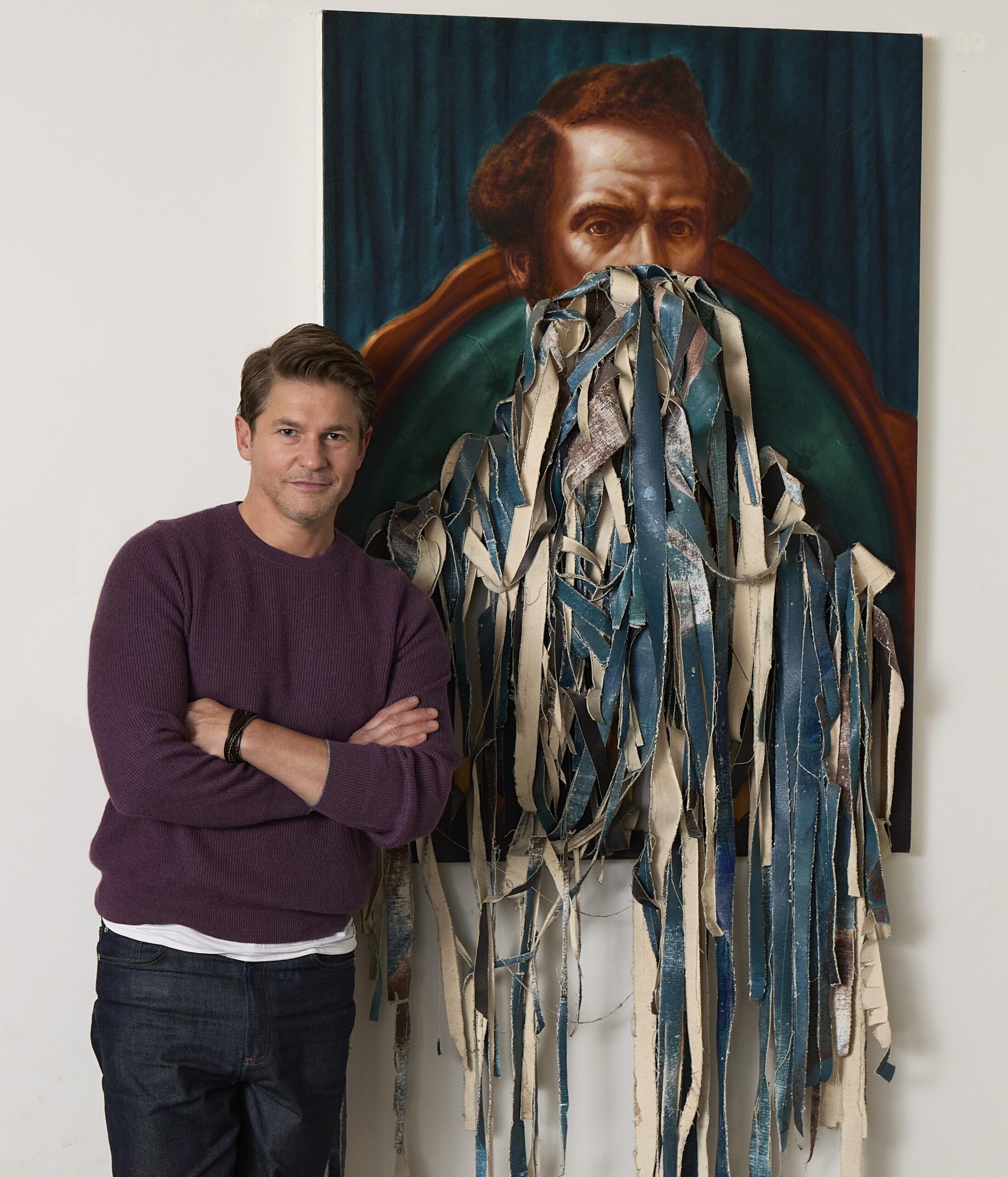
Neil Patrick Harris: There’s the Titus Kaphar piece All We Know of Our Father. The bottom half is shredded strips of the portrait, and that elicits a lot of conversation, because you want to know why it’s shredded and who’s face is the portrait. We also have this Banksy that’s smashed into a fireplace downstairs.
Burtka: It’s interesting that the portrait is made up of his mother, his father, his aunt, and his uncle. I believe the nose, eyes, and the ears are all from different members of his family.
What factors do you consider when expanding your art collection?
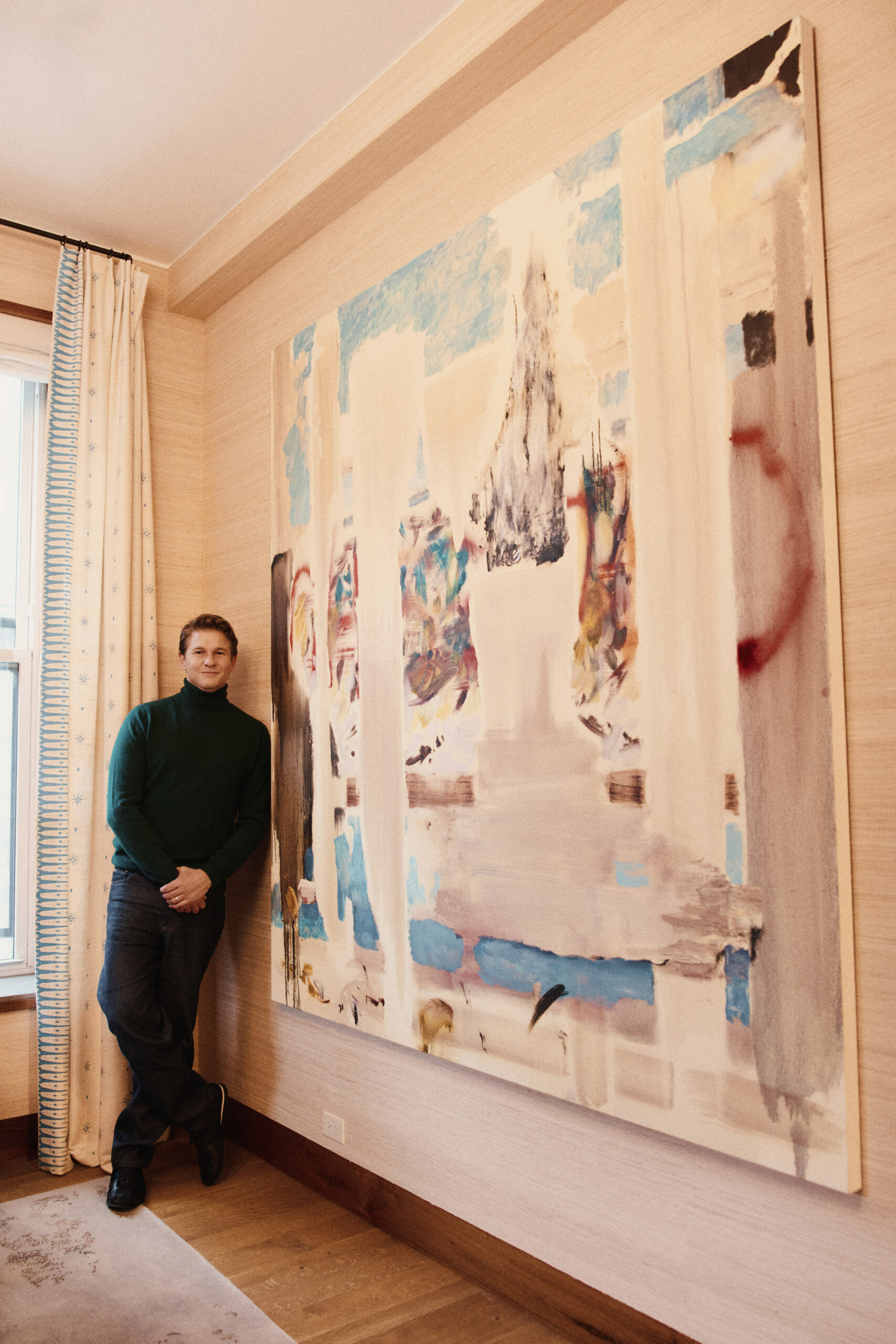
Burtka: One common thread in all of our pieces is that there’s always something hidden behind them—either a detail or story that is more refined than just an abstract piece of art. You have to look a little closer in order to find a mystery unsolved with a lot of our pieces.
Harris: We like to have art where, at a passing glance, it’s impressive on one level, but when you stop and really get up close, you don’t have to be told. You can quickly realize that there’s an entirely new micro-level to the piece.
How does the work assortment differ in each of your homes?
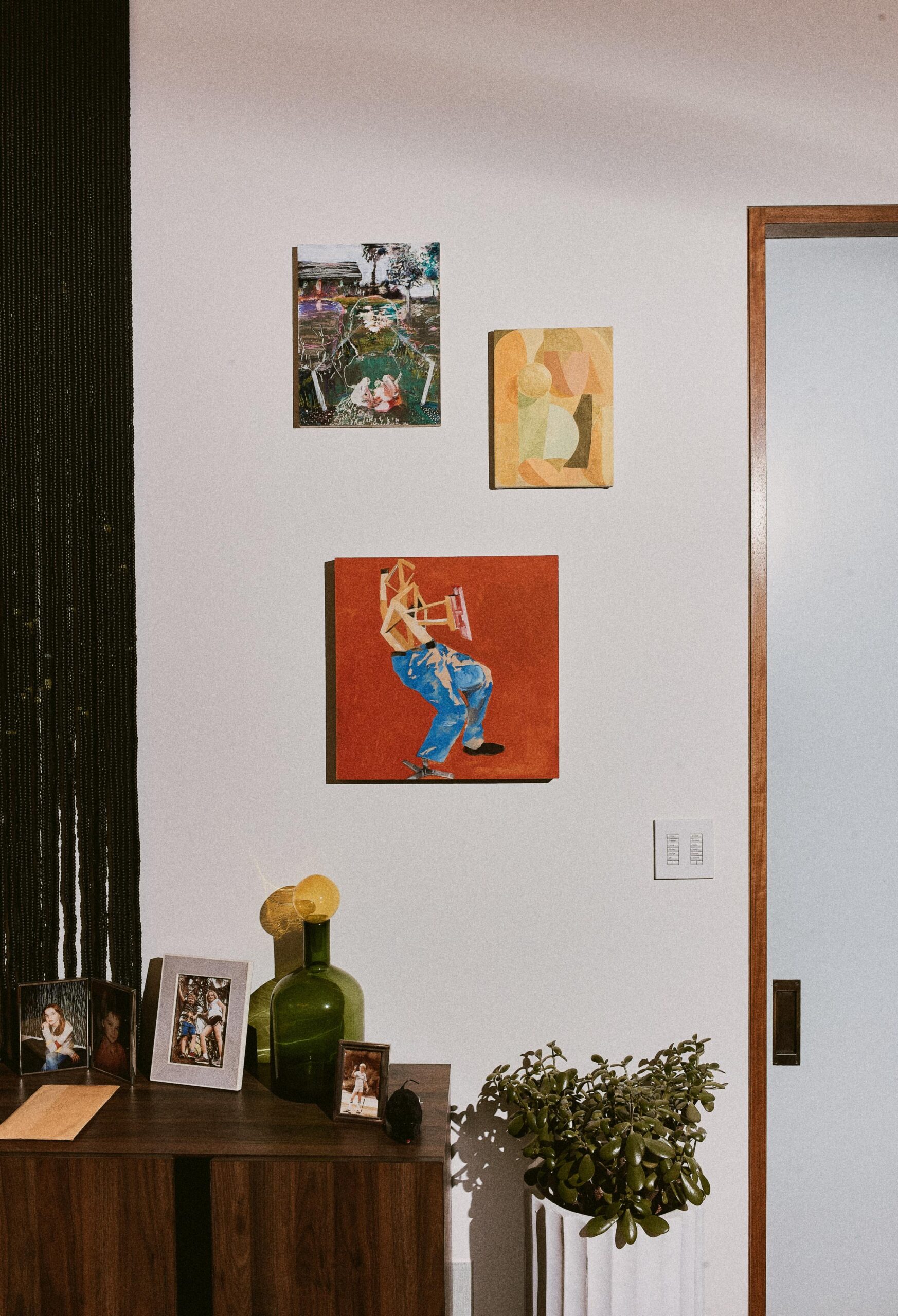
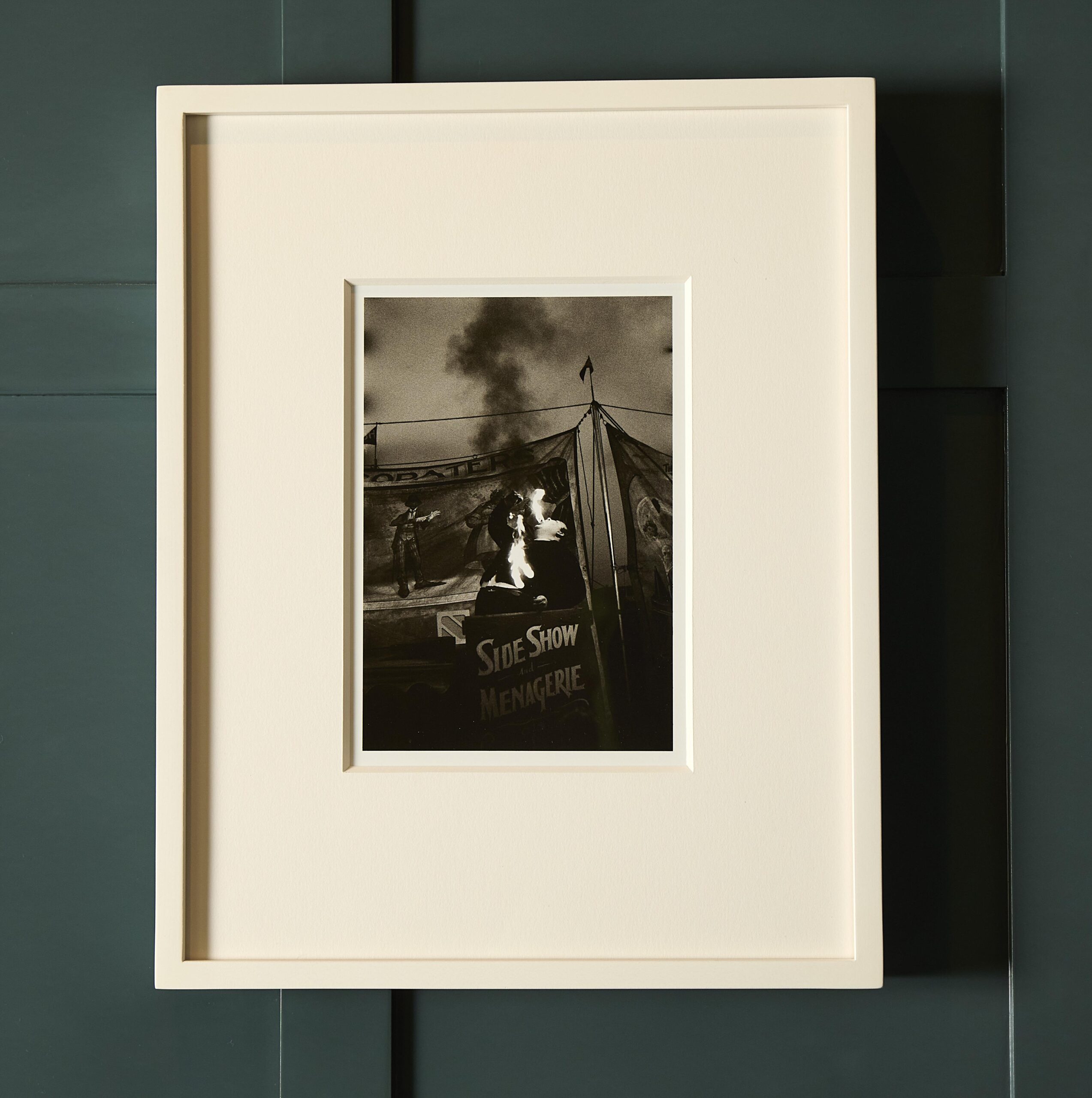
Burtka: In the Hamptons, there are a lot of things that deal with the circus, sideshow, and macabre—a little darker in style. Whereas the New York flat is a lot more bright, with oranges, blues, and things that are more poppy, mid-century, and contemporary.
Do you both share the same taste in art, or do you divert in certain areas?
Harris: You’re a bit more avant-garde than I am.
Burtka: I tend to be a little more avant-garde. We will not buy a piece unless we’re completely 100 percent in agreement on it. But I remember that there was an Annie Lapin piece that I wanted to buy, of two kids peeing on a piece of art, and Neil wouldn’t have it.
Harris: Wouldn’t have it? Nice phrase. I just thought since we had young children at the time, that they would question what it meant.
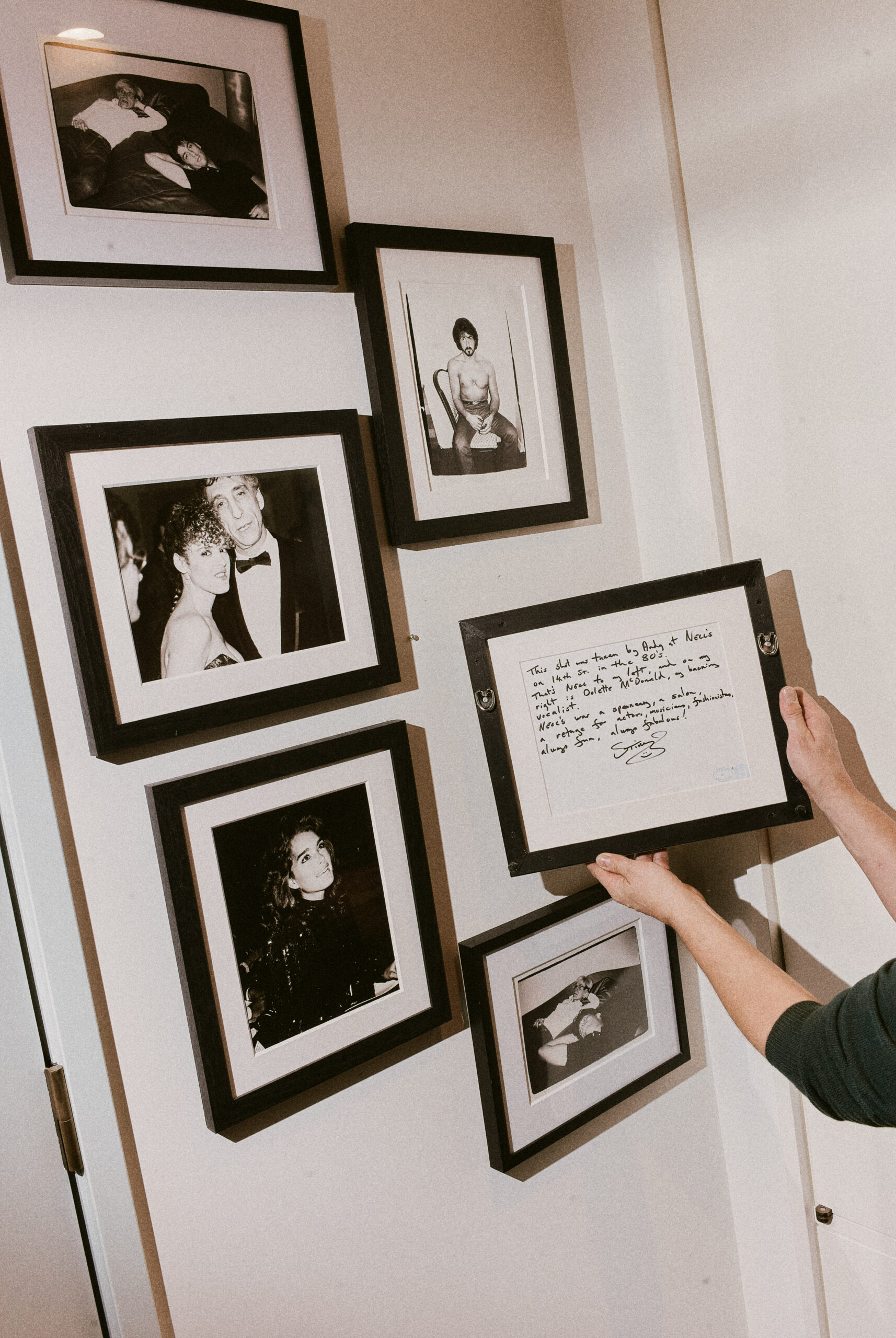
Burtka: A lot of our art is cheeky. There is a Monica Majoli study of a leather man where you really can’t see much, but if you really go closely, you can see a little bit more. We have a photograph of Alan Cumming’s penis, but you don’t know what it looks like. I thought it was a ham and, like, one of those nettings.
Harris: But then once you know what it is, that’s all you can see.
Burtka: It’s hanging in Neil’s dressing room right now, so if you go backstage, you can go see Alan Cumming’s penis.
If you could snap your fingers instantly and own the art collection of anyone else, who would it be and why?
Harris: Magician Derren Brown. He has really good taste in art, and he’s an artist himself. We went to his house once when we were visiting London and got to walk around, and we share a very similar, mysterious vibe.
Burtka: I’d probably have to say Blake Burns. He’s no longer with us, but I used to cater at his house. He had Basquiats and would collect everything, like a giant Tony Oursler eye that would blink and say all these crazy things. That was an incredible piece of art. Anne-Cecilie Engell Speyer’s collection is insane. She has some Kara Walkers that are just mind-numbing. Her taste in art is incredible. She’s the head of the Whitney [Board of Directors] and one of our best friends. Shout out to Anne-Cecilie.
What’s the most exciting place you’ve ever discovered a piece of art?
Burtka: I think Neil’s gonna have to take this one, cause you’ve found some really great pieces on Instagram.
Harris: Yeah, I DM them. There’s a great artist named Ben Ashton that we just got for our anniversary. He makes these amazing classical portraits, but they look like they have a big giant glitch in the middle—not only the image, but the frame itself. So, I found his work very exciting. I have to say, the most exciting place was inside of a mini-mart in Las Vegas. It’s the Meow Wolf installation called Omega Mart, and when you walk in and go down a certain dairy refrigeration aisle, if you push in the right place, it takes you to an entirely different world created by artists.
Which book changed the way you think about art?
Burtka: I recently just read the Peter Beard biography, and the way he collected and collaged was so incredible. He wasn’t really known and no one believed that he was an artist at all, then he ended up becoming one of the biggest photographers of our time with collage. What he did with animal blood, skins, teeth, and his own hair was pretty incredible.
Harris: Any of the books by Andy Goldsworthy. His ability to make lines, fences, perimeters, and art based on using only found artifacts within a location is unprecedented. I was so inspired by his creativity and still hold his aesthetic to a standard like no other.
Burtka: And you’re gonna do that with our Hamptons house, right?
Harris: That’s the dream.
Do you have an art fair or museum-going uniform?
Burtka: I want to look like I have a little bit of money [at a fair], so the gallerists pay attention to me. For museums, I think you want comfortable shoes.
Harris: That explains why you always wear bright-colored tracksuits, gold chains, and white high-tops. I get it now.
Burtka: Yeah, but other than that, no. Neil wears the same thing every day.
Harris: Before I really started collecting—and I still wear it and I probably should change it—it’s black pants, a black tank, black turtleneck, a black beanie, and a black mask so that you can’t see my face very much, and gloves.
Burtka: Very much like a burglar.
Harris: I guess in hindsight, it looks like I might be stealing.
Burtka: You shouldn’t have that big knapsack with the dollar bill sign.






 in your life?