
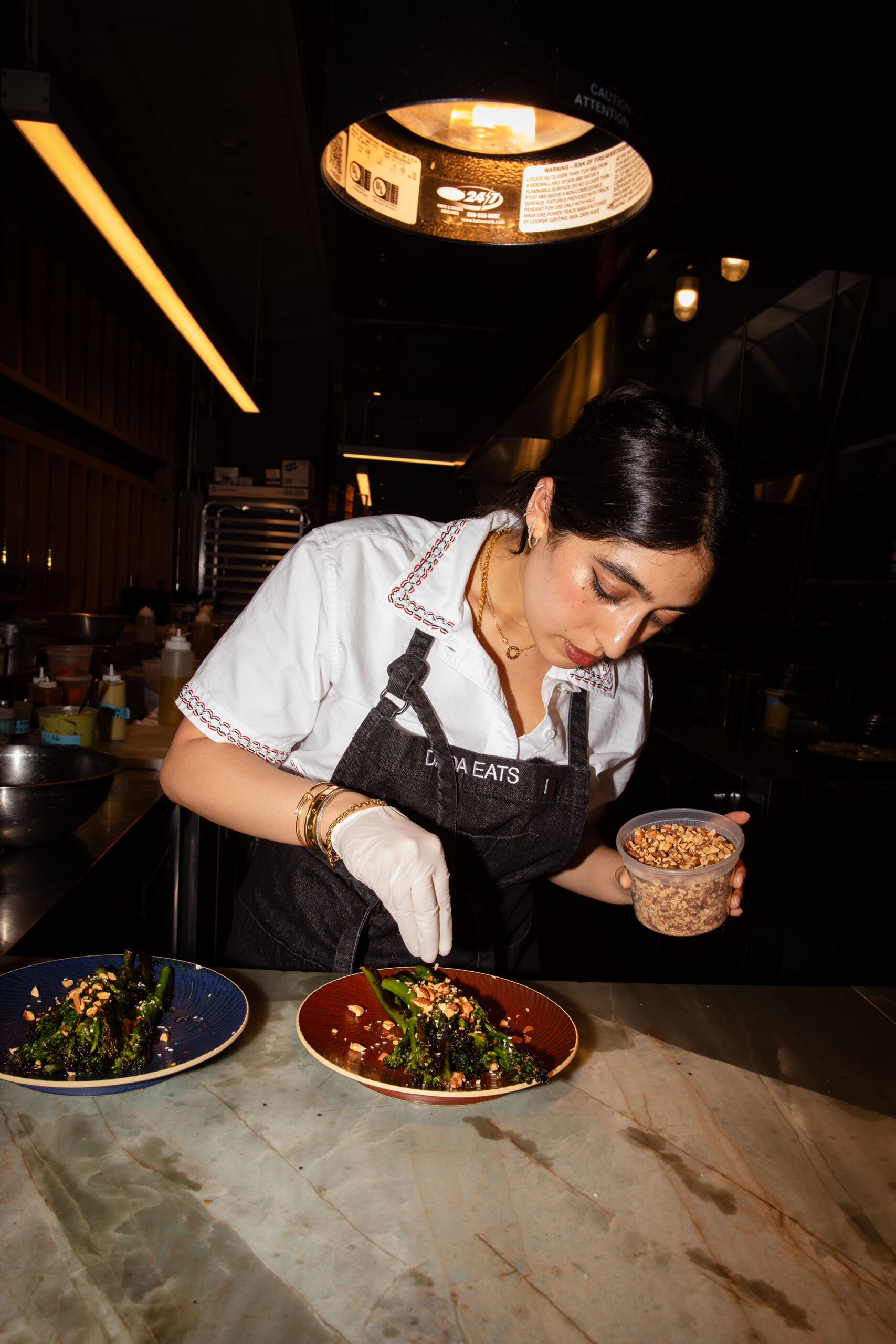
Dear Readers,
If anything can elicit an eye-roll, it’s the proposition of a plant-based Thanksgiving. A turkey-less holiday dinner, if you will. Gasp, I know. But I continue to support this hot take: many (and perhaps I will go as far as to say most) people are not there for the turkey, they are there for the sides. Don’t shoot the messenger—this is a well-documented fact. If it ruffles your feathers, I hope you enjoy your turkey. But the best part about Thanksgiving is the assortment of (often vegetarian) dishes that accompany the big bird.
Growing up in a South Asian household, we generally struggle to hold back on spicing… everything. The mere thought of a steamed, buttered green bean with barely a whisper of salt and pepper is our version of a nightmare. My parents’ assimilation resulted in our taking a stab at these classic (read: bland) sides, and cooking them as “American” as we could, but we quickly learned to compensate with masala stuffing and a vehement omission of cranberry sauce. When I cook my family’s Thanksgiving dinner, I relish in making my vegetarian dishes so delicious that my meat-eating family goes back for more—not because they are “good for vegan or vegetarian food” but because they are good. Period.
I’ve spent my entire career developing plant-based recipes, and teaching people how to make a vegetable dish the star of their tables. I am not advocating that you flip your entire diet to a vegetarian or vegan one. But when you learn how to work with spice, heat, and texture—and invest a little time in making incredible sauces and condiments—the plant-forward dishes will have no trouble standing up to the mains. Who knows, you might even like them more than the turkey. In this installment of Chef’s Orders, I invite you to imagine such a world.
STARTER
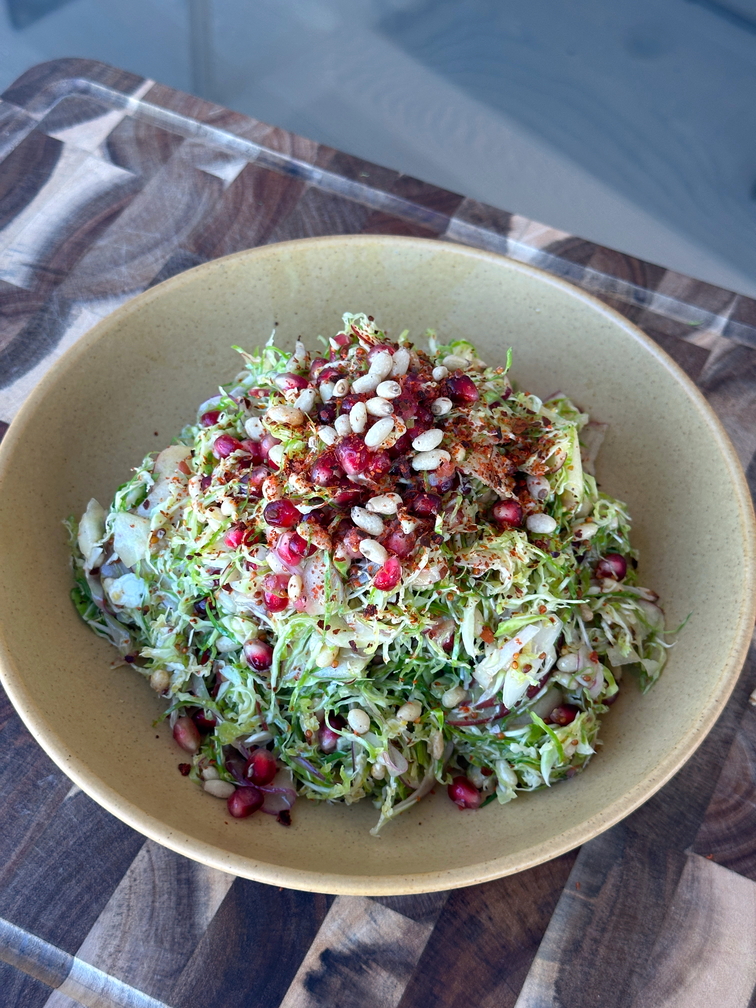
Shaved Brussels Sprouts Salad with Coarse Mustard & Aleppo Dressing
If you haven’t yet gotten behind Brussels sprouts, here’s a preparation that will change your mind. The texture of this salad mimics a slaw because the Brussels are shaved finely using a mandoline. This light and tender texture is accentuated when tossed in a coarse mustard and Aleppo dressing, and complemented by the crunch of pine nuts and pomegranate arils. This salad is bright and fresh, making it an excellent contrast to the heavier items on the table.
Ingredients
Salad
1 lb Brussels sprouts, shaved using a mandoline or sliced thin using a knife
1/2 large apple, shaved (I like Honeycrisp or Cosmic Crisp here)
½ red onion, shaved using a mandoline or sliced thin using a knife
1/3 cup pine nuts, plus extra for garnish
3/4 cup pomegranate arils
Dressing
1/4 cup extra-virgin olive oil
2 tbsp coarse whole-grain old style mustard
1 tbsp apple cider vinegar
1 tbsp maple syrup
1 tsp Aleppo pepper, plus more to taste if desired
Kosher salt to taste
Freshly ground black pepper
Flaky salt
Method
- In a small bowl, whisk together the olive oil, coarse mustard, apple cider vinegar, maple syrup, Aleppo pepper, salt, and black pepper until fully emulsified. Taste and adjust with salt and Aleppo if needed.
- In a large bowl, toss the shaved Brussels sprouts, shaved apple, shaved red onion, pine nuts, and pomegranate arils with the dressing until well mixed.
- Plate and top with more pine nuts and flaky salt. Enjoy.
ENTRÉE
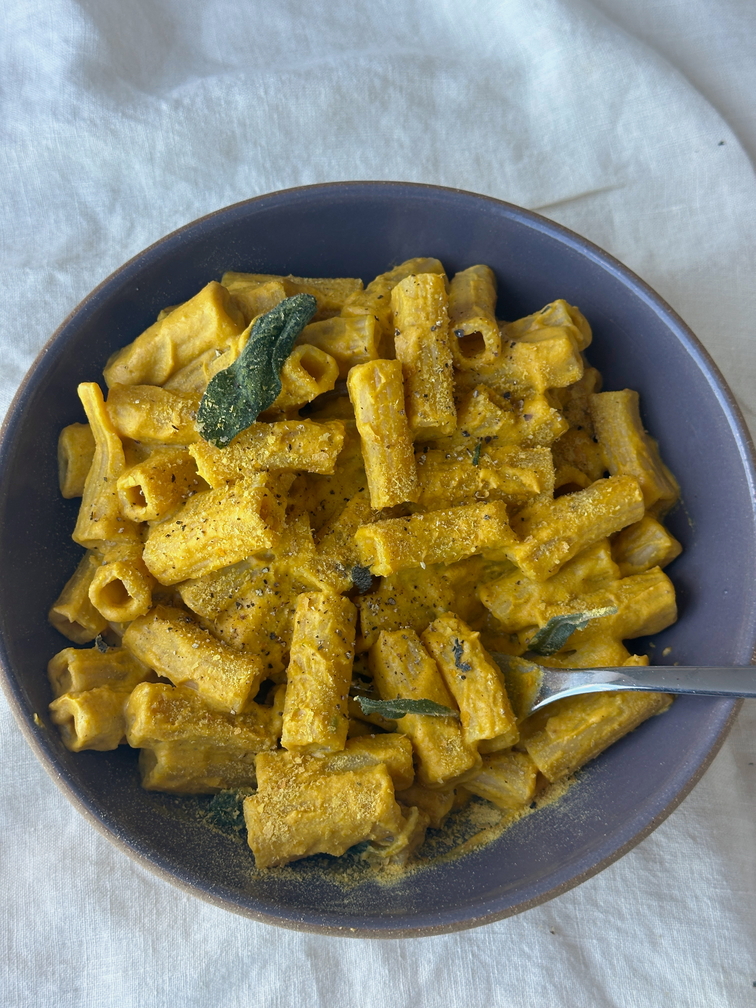
Creamy Miso Pumpkin Alfredo Pasta with Brown Butter-Fried Sage
This pasta is completely vegan, though you’d be surprised at that fact if you tried it. The sauce is creamy and smooth, made possible thanks to raw cashews, which expand and soften after being soaked in water. When these soaked cashews are blended, they create a creamy (yet dairy-free) base for sauces and fillings. Canned pumpkin purée provides sweetness, miso provides umami, and brown butter-fried sage seals the deal for a decadent and plant-based entrée.
Ingredients
3 tbsp extra-virgin olive oil
1 yellow onion, roughly diced
4 garlic cloves, grated
1 tbsp fresh thyme leaves, finely chopped
3 sage leaves, finely chopped
1 cup pumpkin purée
1 13.5 oz can reduced-fat coconut milk
1/2 tsp cayenne pepper (can reduce to ¼ tsp if less spice is preferred)
¼ tsp ground nutmeg
1/2 cup raw cashews, soaked overnight or “flash-soaked” for 1 hour in hot water
1 tbsp white miso paste
3 tbsp nutritional yeast
Kosher salt to taste
Freshly ground black pepper to taste
1 cup vegetable broth plus more to thin to desired, smooth consistency
1 lb pasta of choice (I like rigatoni here)
Garnish
5-6 sage leaves & 2 tbsp vegan butter
Nutritional yeast
Freshly ground black pepper
Method
- Soak cashews overnight or in hot water for one hour. Set aside.
- In a medium saucepan over medium heat, add olive oil. When it shimmers, add in your onion and sauté until tender, translucent, and browning around the edges.
- Add in the garlic, thyme, and sage and sauté for about two to three minutes. Add salt, pepper, nutmeg, and cayenne. Sauté for a minute, and then add the pumpkin purée.
- Stir the pumpkin purée into the onions and spices, then add the coconut milk. Mix and simmer for 5-10 minutes until the sauce has reduced slightly.
- Transfer the mixture to a high-speed blender. Add the soaked cashews, miso paste, and nutritional yeast. Blend until completely smooth. Adjust with salt and pepper to taste. Now add the vegetable broth to thin the sauce. Start with ½ cup and add more to reach desired consistency.
- Cook pasta according to the package instructions. Combine the pasta and the sauce until fully incorporated.
- In a small pan over medium heat, add the vegan butter. Reduce the heat to medium low, and cook, stirring frequently and watching the butter until it starts to bubble and simmer. Once the butter darkens in color, add the sage leaves and fry until golden. Remove from the pan.
- Garnish the pasta with the brown butter-fried sage, nutritional yeast, and freshly ground black pepper. Enjoy immediately.
SIDE
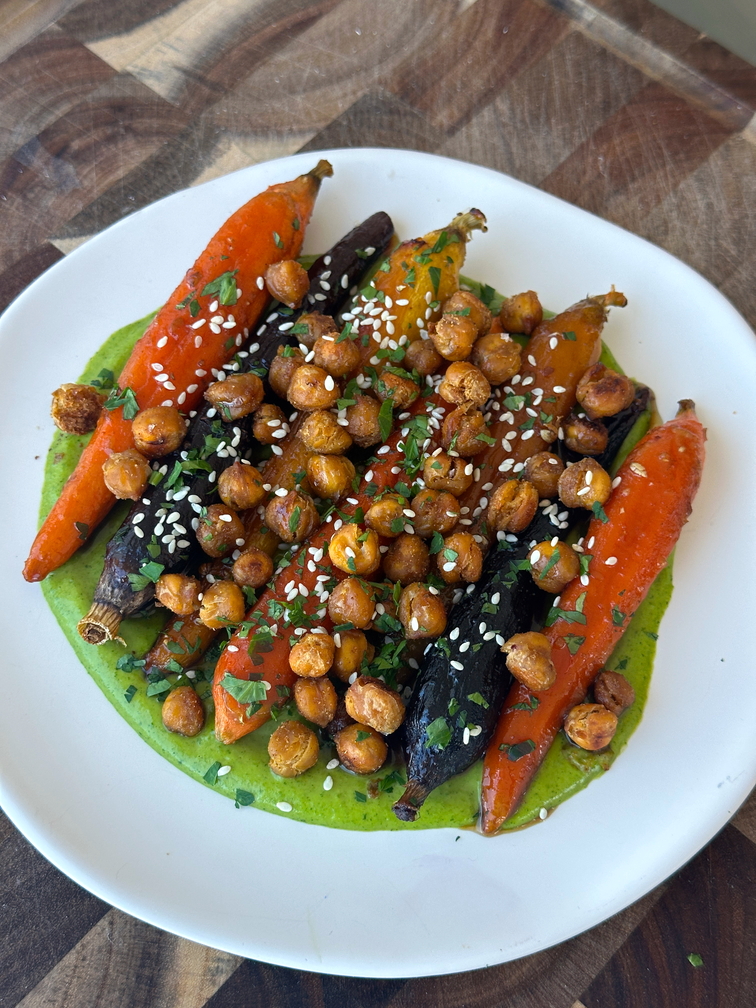
Hot Honey Roasted Carrots with Spiced Chickpeas and Green Tahini
These hot honey roasted carrots are a play on traditional glazed carrots that you’ll often see on a Thanksgiving table, but made with crushed coriander and cumin, roasted to perfection until tender and sweet, then set atop a smooth, herby green tahini. To add a hit of crunch and texture, you have some spiced and roasted chickpeas on top. What’s not to love?
Ingredients
Hot Honey Carrots
1 lb rainbow carrots, peeled
1/4 cup hot honey
1 tsp red pepper flakes
2 tbsp olive oil
1 tsp cumin
1/2 tsp whole coriander seeds, crushed
Kosher salt
Freshly ground black pepper
Chickpeas
1 15.5 oz can chickpeas, rinsed and dried well
2 tbsp olive oil
1 tsp ground cumin
1/2 tsp ground paprika
Salt
Green Tahini
1 cup cilantro leaves and tender stems, packed
1 cup parsley leaves and tender stems, packed
1/3 cup olive oil
1/2 cup tahini
3 cloves garlic
Juice of 1 lemon
Kosher salt to taste
Cold water to thin
Garnish
White sesame seeds, finely chopped parsley, and red pepper flakes
Note: I purchased smaller rainbow carrots as you can see from the photo, but if yours are thick, feel free to halve them so that the roasting time is comparable to what is listed below in the method.
Method
- Preheat oven to 425 degrees.
- In a small bowl combine all ingredients for the marinade. Adjust to taste with salt.
- Toss the carrots in the marinade, or use a pastry brush to brush it on so the carrots are fully coated in the hot honey marinade. Arrange on a tray so that all the carrots have enough personal space!
- In a separate bowl, toss the chickpeas with the olive oil and spices. Arrange the chickpeas on a separate baking sheet lined with parchment paper.
- Place the carrots and the chickpeas in the oven and roast for about 20-30 minutes or until the carrots are lightly browning and fork-tender and the chickpeas are golden and crisp. Rotate the carrots halfway through roasting.
- Make the green tahini by combining all ingredients into a blender except for the cold water. Blend, adding small splashes of the water until a smooth consistency is achieved. Be careful not to add too much water as you don’t want the sauce to be watery! Adjust to taste with salt as needed.
- Assemble by spreading the tahini on a plate, topping with the roasted carrots and chickpeas, and garnishing with sesame, parsley, and a drizzle of hot honey if desired. Enjoy!
DESSERT
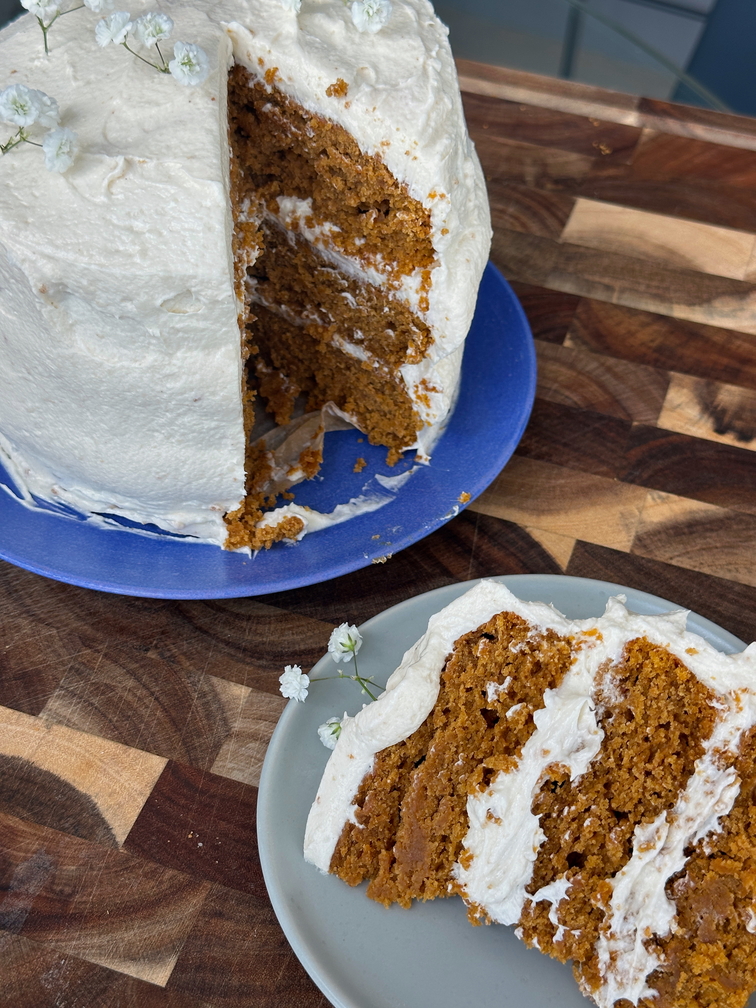
Pumpkin Layer Cake With Vegan Cream Cheese Frosting
Fluffy layers of pumpkin cake are complemented by a smooth, creamy vegan cream cheese frosting that makes for a slightly nontraditional but very welcome dessert addition to the Thanksgiving table. This cake is the m-word (moist) yet both dairy and gluten-free, which will delight those at the table with and without dietary restrictions. Something for everyone!
Ingredients
Cake
2 eggs, best at room temperature
1/4 cup creamy almond butter
1/2 cup maple syrup
1 cup pumpkin purée
3 tbsp coconut oil, melted and cooled
3/4 cup coconut sugar
1 1/4 cups almond flour, packed
1 1/4 cups gluten-free oat flour, packed (I recommend store-bought for this recipe)
1 tsp baking powder
1/2 tsp baking soda
1 tsp pumpkin pie spice
⅓ cup non-dairy milk
Frosting
1 8 oz container vegan cream cheese
1 stick vegan butter, slightly softened to room temperature
2 cups powdered sugar, plus more according to taste
Method
- Preheat your oven to 350 degrees and grease three six-inch round cake pans with coconut oil and/or line with parchment paper.
- In a medium bowl, beat eggs. Add the coconut oil, maple syrup, pumpkin purée, and creamy almond butter. Whisk until smooth.
- Add the coconut sugar and mix thoroughly to combine.
- In a separate bowl, whisk together the almond flour, oat flour, baking powder, baking soda, and pumpkin pie spice until incorporated.
- Combine the wet and dry ingredients. Mix until thoroughly incorporated.
- Transfer equal amounts of the batter into each of the prepared pans, tapping the pan on the counter to ensure the batter is evenly distributed throughout the pan. Bake for 30-40 minutes or until the cake turns golden on the edges and a knife or toothpick inserted in the center comes out clean. Let cool completely.
- Use a stand mixer to beat the vegan butter and vegan cream cheese until smooth and creamy, about two minutes. With the mixer on low, add the powdered sugar ½ a cup at a time, until the frosting is thick and spreadable. Add more sugar to taste if desired.
- Once the cakes have cooled, level the cake layers, i.e., slice the domed tops using a serrated knife until the cake is flat. Using an offset spatula, start by frosting the top of the first layer, then add the second layer upside down right on top of the first layer. This will allow it to sit flush against the first layer. Frost the second layer, then place the last layer right side up on top. Frost the tops and the sides of the cake evenly and smoothly. You can leave the cake naked on the sides, or frost the whole thing. Swirl a touch of extra pumpkin spice on top and garnish with edible flowers if desired.






 in your life?