
Right now, everyone seems to have a take about just how “human” our future will be, but few have spent as much time immersed in this next chapter as Yves Behar. The founder and CEO of product design studio fuseproject and co-founder and chief creative officer of Telo, an all-electric truck company, has long been reshaping how consumers live with technology—merging utility with his own elegant visions. Fuseproject is behind pieces as far-ranging as the much-discussed Samsung Frame TV and Snoo robotic bassinet, not to Moxie’s robot companions for neurodivergent kids or the Kind Humanoid, a friendly robot assistant.
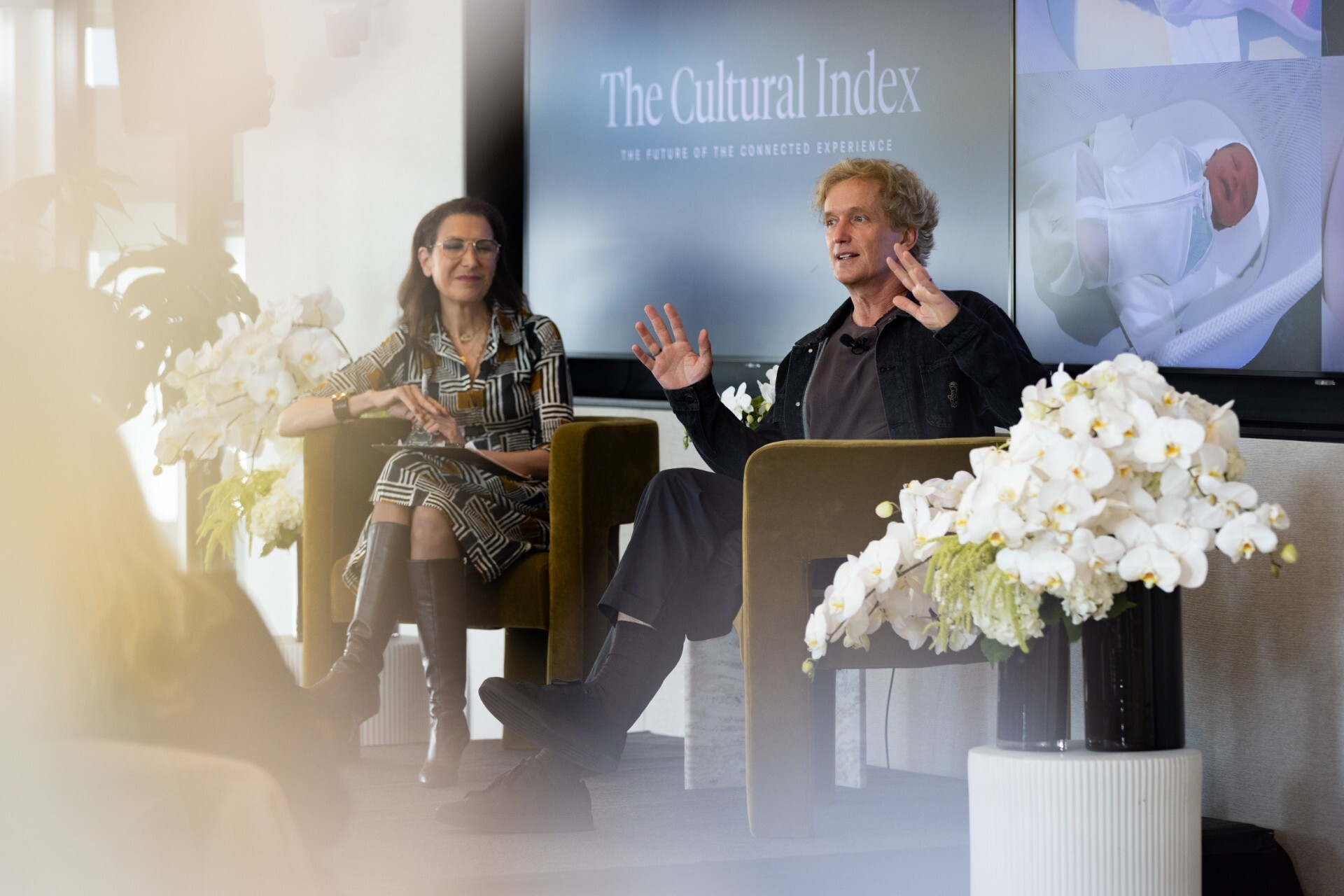
Earlier this week, Behar and entrepreneur Tina Sharkey convened a breakfast salon at Mission Rock in San Francisco, as part of Tishman Speyer‘s new series “The Cultural Index: The Future of the Connected Experience,” in partnership with Genesys, where the two discussed how creativity, design, and A.I. might reimagine urban infrastructure and inspire a new generation of innovators. Following the event, CULTURED sat down with Behar to delve deeper into the philosophy behind his designs, as well as that of his home base, San Francisco.
CULTURED: Which major design choice do you think is most overlooked in our day-to-day lives?
Yves Behar: Being a designer is about editing on a regular basis. Editing is a design skill that is overlooked for most of us, especially in our homes, where accumulation eventually becomes clutter.
CULTURED: How does design help you feel at home?
Behar: What I love about design is that it is practiced in so many different ways, different styles and sensibilities. Unlike most other professions where there is a strong bias towards standards, designers have very varied and often opposite approaches to design. For me, the fact that we design our homes in such personal ways, with inspiration from childhood memories, travels, and discoveries, is what makes a home a home.
CULTURED: How would you describe the design ethos of San Francisco? What sets it apart from any other city?
Behar: San Francisco isn’t shy about being different, colorful, and expressive. I have visited more eclectic, surprising, and downright strange interiors in San Francisco than anywhere else.
CULTURED: Where in San Francisco do you go when you’re in need of inspiration?
Behar: San Francisco has two unique traits that inspire me daily: eclectic people from all backgrounds, and a city surrounded by water. I often say that what inspires my work isn’t style or trends, but rather the idiosyncrasies of modern life, and how we deal with them as humans. At the same time, the ocean is a source of zen and fascination for me, whether I’m surfing or just contemplating.
CULTURED: What are the first questions you ask yourself when starting a project and fine-tuning the direction?
Behar: What I look for early in a project is “the big idea.” Every design challenge has the opportunity to establish a new idea that brings the product and experience closer to our daily lives, that inspires us and makes us smarter. The central notion usually comes from unique insights that we learn directly from speaking to people, as well as the context in which the experience will take place.
CULTURED: Could you point to a project of yours that sums up your personal design ethos?
Behar: It’s hard to pick between the many projects I have worked on, but two experiences do come to mind: the Samsung Frame TV and the Snoo bassinet. Both of these projects were heavily influenced by people’s needs and frustrations with the existing status quo, and both have a deeply human ethos: technology that disappears. The Frame TV delivers art instead of a black screen, a way to hide the television in plain sight while affording people their own taste on the walls of their homes. The Snoo bassinet is a robot that keeps infants asleep for an hour or two every night, while not looking like a robot at all, and fitting in the home like a furniture object.
CULTURED: What’s one thing that you wish more people understood about design?
Behar: I wish people saw and chose design not just for the obvious needs in their homes, but also in their daily consumption choices. It’s not an aesthetic choice, but rather one based on wellness, sustainability, and alignment with brands that are world-positive.
CULTURED: Is there a project that you haven’t worked on, which you would have liked to?
Behar: I do not walk around feeling dissatisfied that the “right” projects don’t come. I have been very lucky throughout my career that challenging projects continue to come my way. Recently, I co-founded the car company Telo Trucks to make the most efficient pickup trucks, an ambitious and exciting re-invention of this staple vehicle of American life.
CULTURED: A.I. is something you’ve worked with in your projects and right now, there’s much debate about where it falls in the creative process. Do you see the technology as a companion to human creativity, a tool to leverage it, or something else entirely?
Behar: The potential of humanistic A.I. is tremendous in the areas of health and wellbeing, education, and transportation. That said, most general A.I. I see isn’t connected to real needs, but rather the ongoing search for eyeballs and trivial engagement. At fuseproject, we have created more embodied A.I. projects than most, while always focusing on supporting humans when they are most in need. Moxie, a learning friend for kids on the spectrum, and ElliQ, a companion for the aging, come to mind.

 in your life?