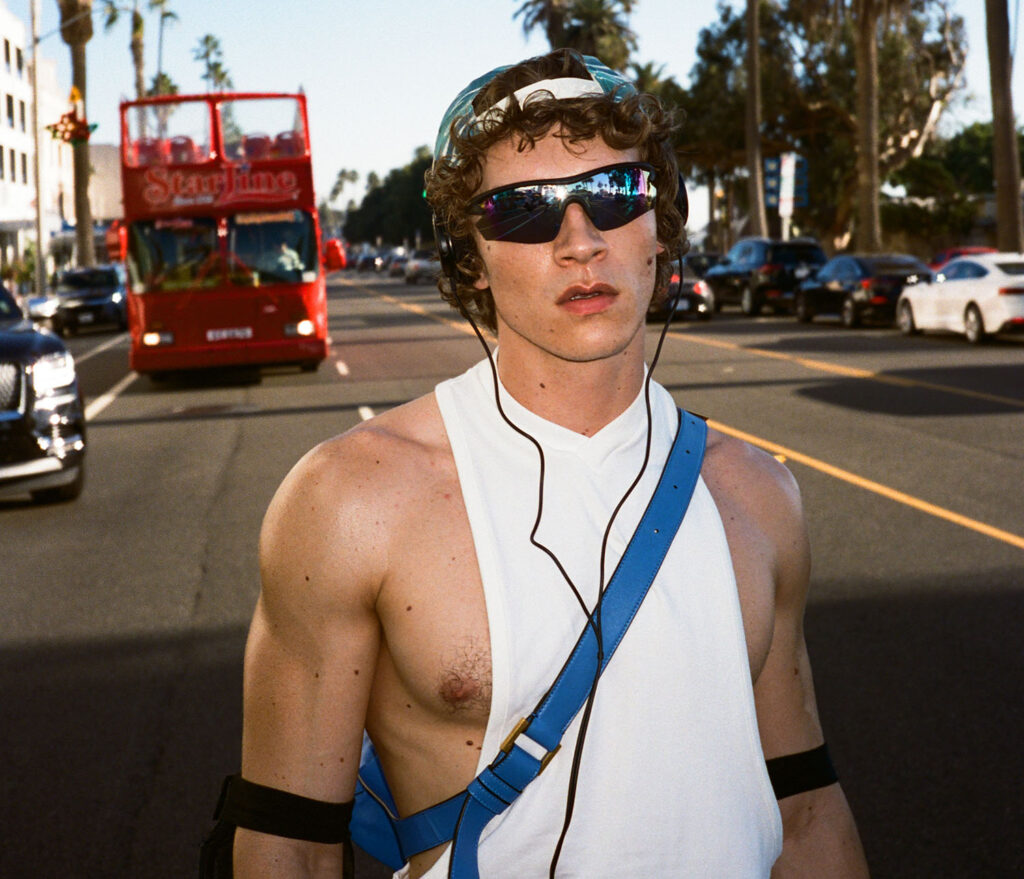

The title says it all. Lurker—not Stalker—isn’t about danger so much as it is about the ambient unease that defines being alive online. The debut feature from Alex Russell (a writer-producer on The Bear and Beef) is a slow-burning thriller that explores the thorniness of fandom in an age when nothing, even a celebrity’s go-to takeout order, remains private. Drawing comparisons to films like Ingrid Goes West, Lurker, now available to stream on MUBI, probes the uneasy intimacy of an era when curiosity tips so easily into surveillance.
At the film’s heart is Matthew (Théodore Pellerin, thoroughly absorbing), a retail clerk at a trendy Los Angeles menswear store who worms his way into the orbit of the mononymous Oliver (Archie Madekwe), an up-and-coming Frank Ocean-esque musician. Mattie’s first move, captured in the opening scenes of the film, is a sleuthy flourish disguised as happenstance. When Oliver shows up at the store where he works, Mattie snatches the aux cord from a coworker and cues up Nile Rodgers—who, he learned on Facebook, is the star’s favorite artist—when he walks through the door. Impressed, Oliver hands over his number. Cut to the same evening: Mattie’s backstage, fumbling his way into a new life.
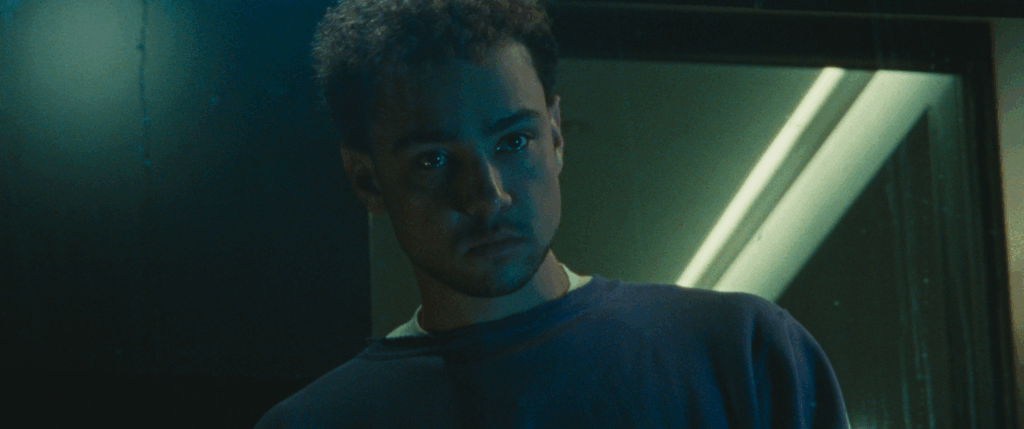
The invitation is just the first of many tests. Now that Mattie’s in, the question is how to stay there—a dilemma that propels the film toward a deeper exploration of male friendship. Mattie, at his core, is a lonely young man yearning for connection, while Oliver sits at the pinnacle of a high school social pecking order transposed to 20-something strivers in the LA music scene: There’s the quietly dominant alpha, the sharp-tongued sidekicks (played by Zach Fox and Wale), and the new kid trying a little too hard to fit in.
Mattie finds his place by feigning ignorance. In that initial scene, he pretends not to know who Oliver is (“I don’t really listen to new music,” he tells him, shrugging). Overt enthusiasm is a faux pas—nonchalance is social currency. Some of Lurker’s funniest and most painful moments come from Mattie’s missteps in this masculine ballet. (Pellerin, all gangly limbs, makes social anxiety palpable.) In another scene, he hovers nearby as the guys play video games, blurting awkward commentary from the sidelines. When they finally hand him the controller, he crushes them—then downplays it. Even competence must be obscured.
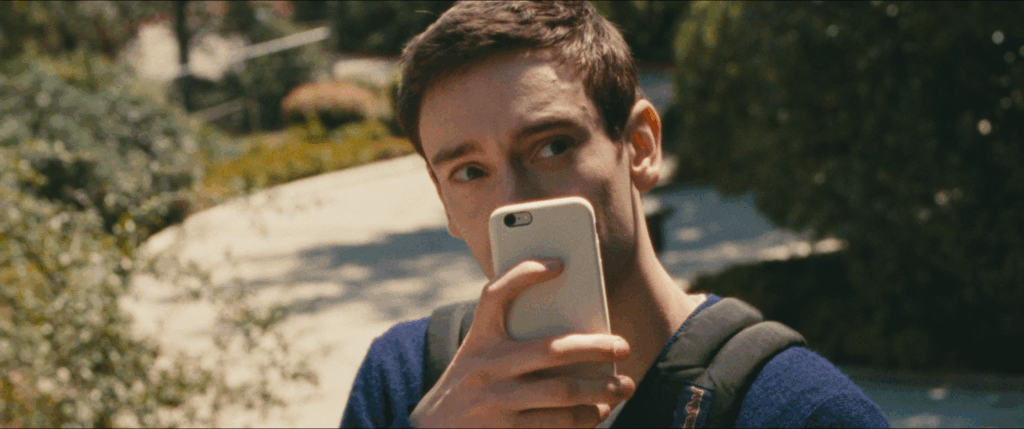
Of course, these manipulations aren’t always innocent. There’s the moment when Mattie “forgets” to bring the group videographer’s DSLR batteries, saving the moment by swooping in with his own camcorder (a minor betrayal that hints at how far he’s willing to go once the stakes rise). He wins praise and, briefly, belonging. When his retail coworker Jamie (Sunny Suljic, of Mid90s) catches Oliver’s attention with the handmade sweater he’s wearing, Mattie feels the same panic his own arrival once inspired in others, the friendship cycle of need and displacement perpetuating itself.
Lurker shows how intimacy between men is often transposed into something resembling a brand collaboration—an arrangement maintained through mutual image management and micro-performances of cool. That instinct is reflected in Russell’s approach to fame in the film, too: visibility as a source of validation, proximity as a marker of success. Mattie’s fleeting cameos in Oliver’s Instagram stories make him recognizable to fans who clamor to determine what exactly his role is. He claims he’s making a movie, which is a fitting answer: He’s proven adept at crafting a performance and shaping perception.

If Lurker begins as a story about one man’s fixation, it ends up holding a mirror to our eerie parasocial age, in which closeness feels elusive and access feels like a right. By the end of the film, Mattie has not just insinuated himself into Oliver’s life but into his work. It’s any fan’s dream made manifest: to know an artist better than they know themself, to grow close, and ultimately, to take the reins.
CULTURED readers can exclusively watch Lurker, and a host of other must-see films, for 30 days free on MUBI at this link.






 in your life?