From afar, Anemone—the debut feature from Ronan Day-Lewis—could be the result of a lot of therapy.
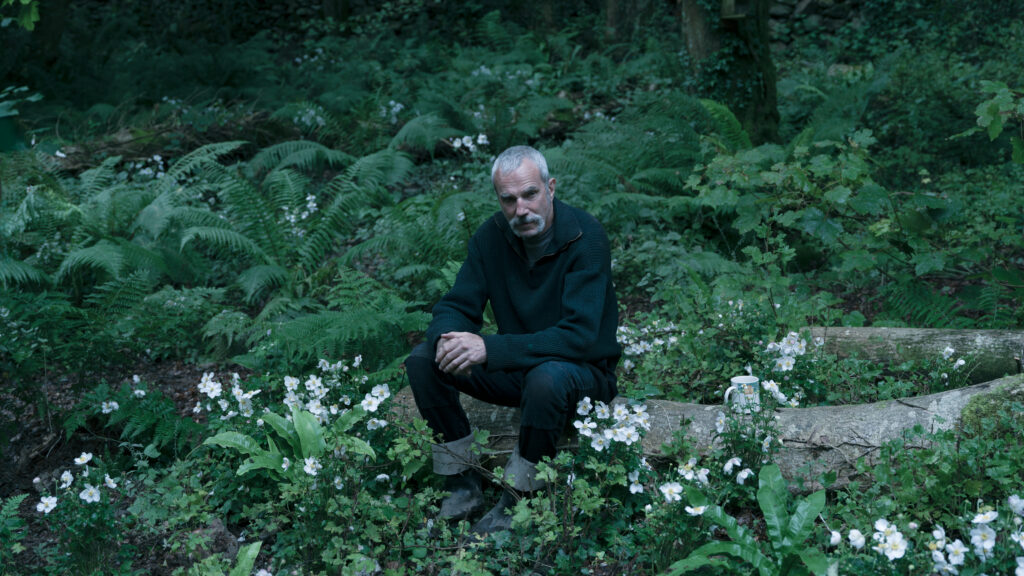
For a film directed by the son of a living Hollywood legend, the narrative of a child reckoning with the presence of a looming, inaccessible father fits neatly enough: A traumatized veteran abandons his pregnant wife for an ascetic life in the woods, facing down his abandoned progeny for the first time as the credits roll. But for Ronan, Anemone isn’t about fathers and sons. “It’s a movie about brotherhood, really,” he says over Zoom from his Williamsburg apartment. “And the silence that can exist in brotherhood, which can mean so many different things.”
The film, set in Northern England in the wake of the Irish Troubles, in a recently premiered at the New York Film Festival, and sees the elder Day-Lewis (looking wiry and haunted after an eight-year acting hiatus) living in self-exile. His estranged brother arrives out of the blue, triggering a reckoning that kicks up sparks of magic realism—long, feral dance scenes, eerie orbs of hovering light that interrupt come-to-Jesus moments—as the pair process. The film is shot through with charged scenes of fraternal intimacy and rage, a raw-nerve quality that no one conjures quite like DDL. Anemone sees Ronan finding his way as well: “My background as a painter gave me a lot of confidence in terms of the visual world I wanted to create,” he director says. “That reassured me in my ability to step into this world and steer the ship.” (A show of his paintings is on at Megan Mulrooney gallery in Los Angeles through the end of the month.)
Anemone is the fruit of a five-year collaboration between father and son (more of a partnership than the baton-pass that one might expect)—that transformed Ronan’s writing process and added a new dimension to the pair’s relationship. But, of course, no shoot is a cake walk. Here, Ronan tells us about the origins of Anemone, the kitchen table moments where the film took shape, and the on-set tiffs with his father that got him the perfect shot.
CULTURED: Daniel Day-Lewis announced his retirement from acting in 2017. What changed? Tell us about the conversations you had with your father that led to this movie.
Day-Lewis: I was developing the idea for this movie independently for a long time. I wanted to do something about brotherhood, but I couldn’t find a way in. After he retired, my dad told me that one of his regrets was that I would go on to make films and that we would never get a chance to collaborate. It started with that conversation.
CULTURED: And how did it evolve?
Day-Lewis: We started bouncing ideas back and forth in 2020. I was initially thinking of it as more of a coming-of-age story, but it took us a while to land on something that we both connected with. It turned out that he independently had a fascination with the silence that can exist in brotherhood, which can mean so many different things. The first kernel was this idea of a man living in a state of self-exile, estranged from his brother, then that brother knocks on his door after 20 years. From there, we would just sit at the kitchen table and talk, with me taking notes on my laptop. We weren’t sure if it would ever materialize into a full script.
CULTURED: How would you describe that writing process?
Day-Lewis: The dialogue was in his domain—especially because he had grown up in England and was more familiar with the Northern English dialect. I was focused on channeling that and figuring out that drip of information that you get throughout the film.
CULTURED: What did you learn from directing your dad that you didn’t learn from watching him work throughout your upbringing?
Day-Lewis: I grew up so fascinated with his process—it always felt veiled to me, hidden somehow. It felt surreal to write with him—I was seeing him from a completely different vantage point. It made me grow a lot as a writer, because I’m used to writing an exact idea of where I’m going. With my dad, there was tons of improvisation—he would talk to me as Ray, and I would prompt him in different directions.
CULTURED: And what do you think he learned from you?
Day-Lewis: There were so many aspects of filmmaking that I was really inexperienced with, but my background as a painter gave me a lot of confidence in terms of the visual world I wanted to create. That reassured me in my ability to step into this world and steer the ship. I think he recognized and trusted that.

CULTURED: Were there any on-set tiffs?
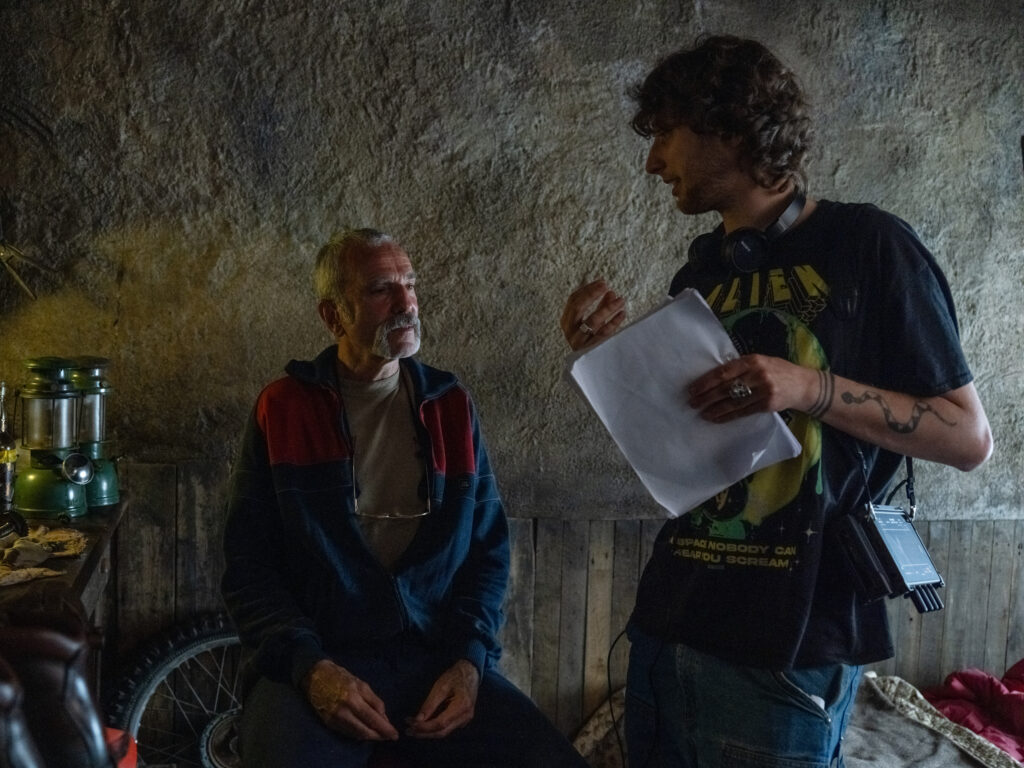
Day-Lewis: Inevitably. A big thing for my dad is talking through the shot list every day. He likes to visit the next day’s location and talk through the space, how we block it. Typically, I’d explain how I planned to shoot the scene, and then adapt that to, you know, his instincts about the character. But there was one day when we didn’t do that. We were shooting this one-r conversation scene—the shot would start really wide and push in close on Ray and Jim. I’d laid all this track which dictated where he had to sit. He was really thrown off by that—and he felt like I created a situation where he wasn’t able to arrive prepared. That was tricky. On the one hand, I was like, “I’ve let you down in this moment, I’ve forced you into these constraints when I shouldn’t have.” But on the other hand, it ended up being one of my favorite scenes in the film. Worth it.



 in your life?