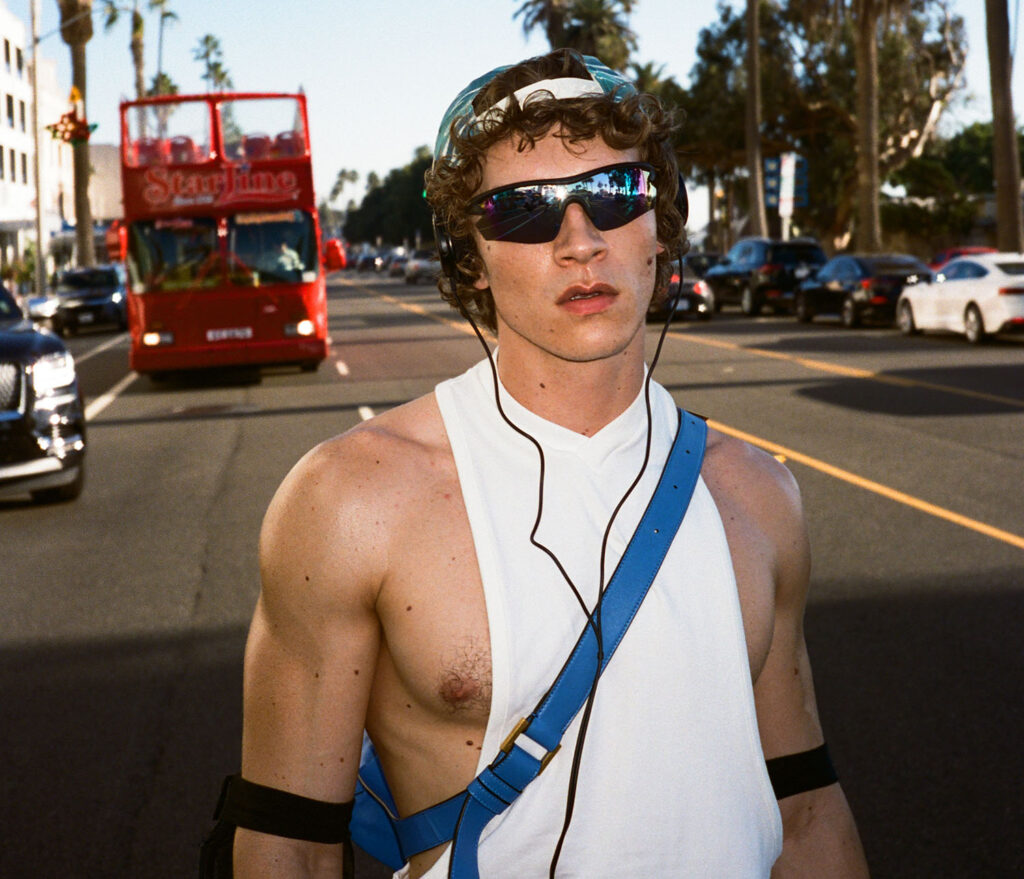
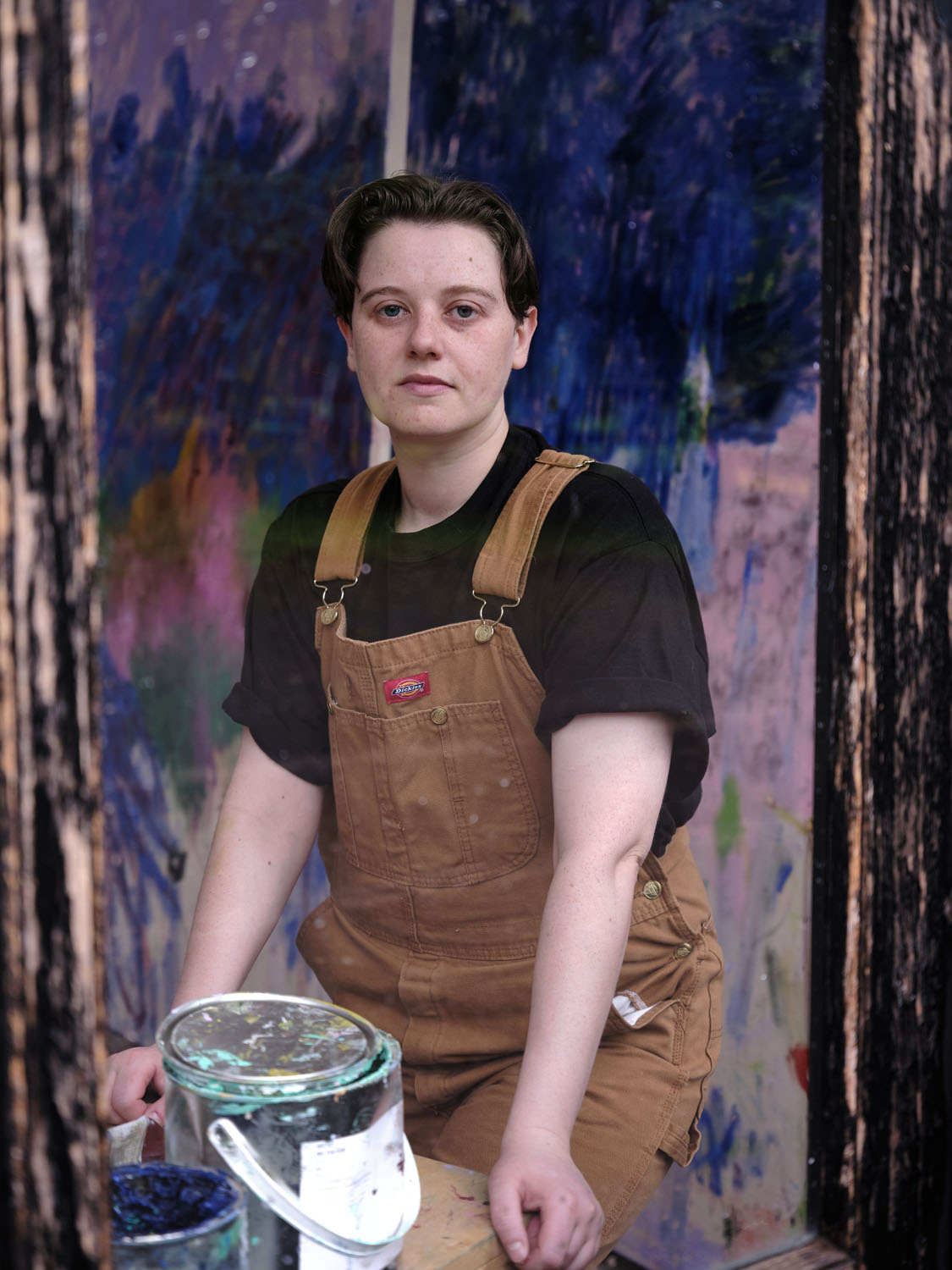
Six years ago, Elle magazine dubbed the then-26-year-old painter Daisy Parris an “IBA”: Instagram British Artist.
The moniker is a play on the “YBAs” (Young British Artists), who dominated the contemporary art scene—and the British tabloids—in the 1990s, thanks in large part to their confessional art and overt self-promotion.
But while Parris owes their early success to Instagram, they post much less frequently these days. Instead, like many of their peers who hit it big during the pandemic-era art market boom, the 32-year-old is trying to figure out how to avoid burning so brightly that they flame out. One of their massive paintings sold at Phillips last September for $254,000—more than eight times its high estimate.
Parris has determined that the best way forward is to pursue impractical experimentation in addition to, if not in lieu of, the work that made them successful in the first place. Over the years, they have come to realize that “what I’m doing in secret is the most honest, important work.” So they told themself, “That’s what you should be focusing on.”
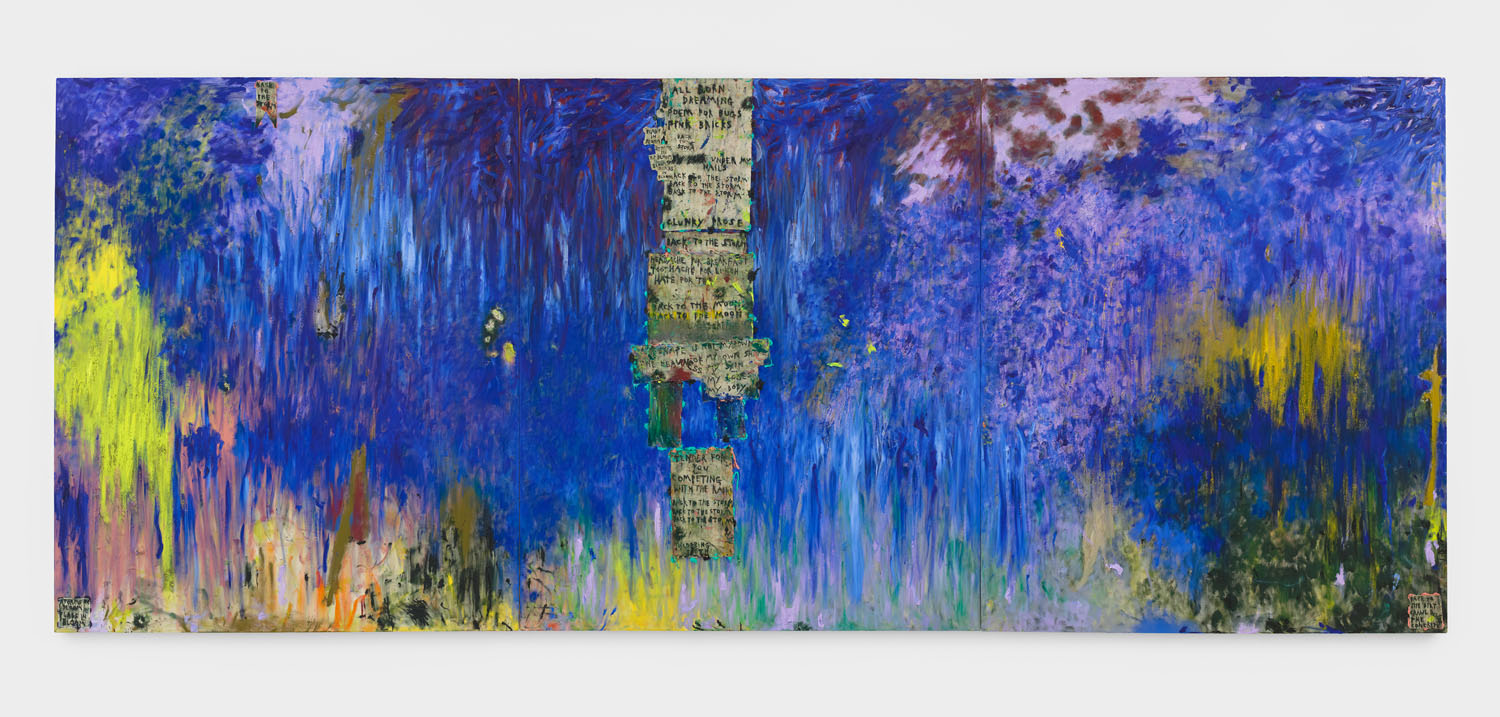
To coincide with Frieze London, Parris will debut one of their most ambitious works to date in an entirely new medium for the artist. Over the past year and a half, they have been working to convert their distinctive painting style into a giant textile. The fruits of their labor—made in collaboration with Textorial, a new initiative from Artwise Curators that invites artists to develop new work in textile—will be on view at the Royal College of Physicians in Regent’s Park from Oct. 14–16.
The hand-knotted wool textile, Kiss the Storm, is more than 16 feet wide, with scraps of painted canvas and snippets of text in the artist’s handwriting embroidered into the surface. “I’m doing all the things you shouldn’t be doing,” says Parris, who grew up sewing with their grandmother’s thread and needles. “I’m using some of the same techniques you use in painting—maybe I need thicker paint here, or to carve paint off.” To create the work, Parris met regularly with Textorials’s team in London; designed an elaborate cartoon; manipulated the stitching, painting and collage; and FaceTimed with the workshop in Varanasi, India, which produced part of the work to their specifications.
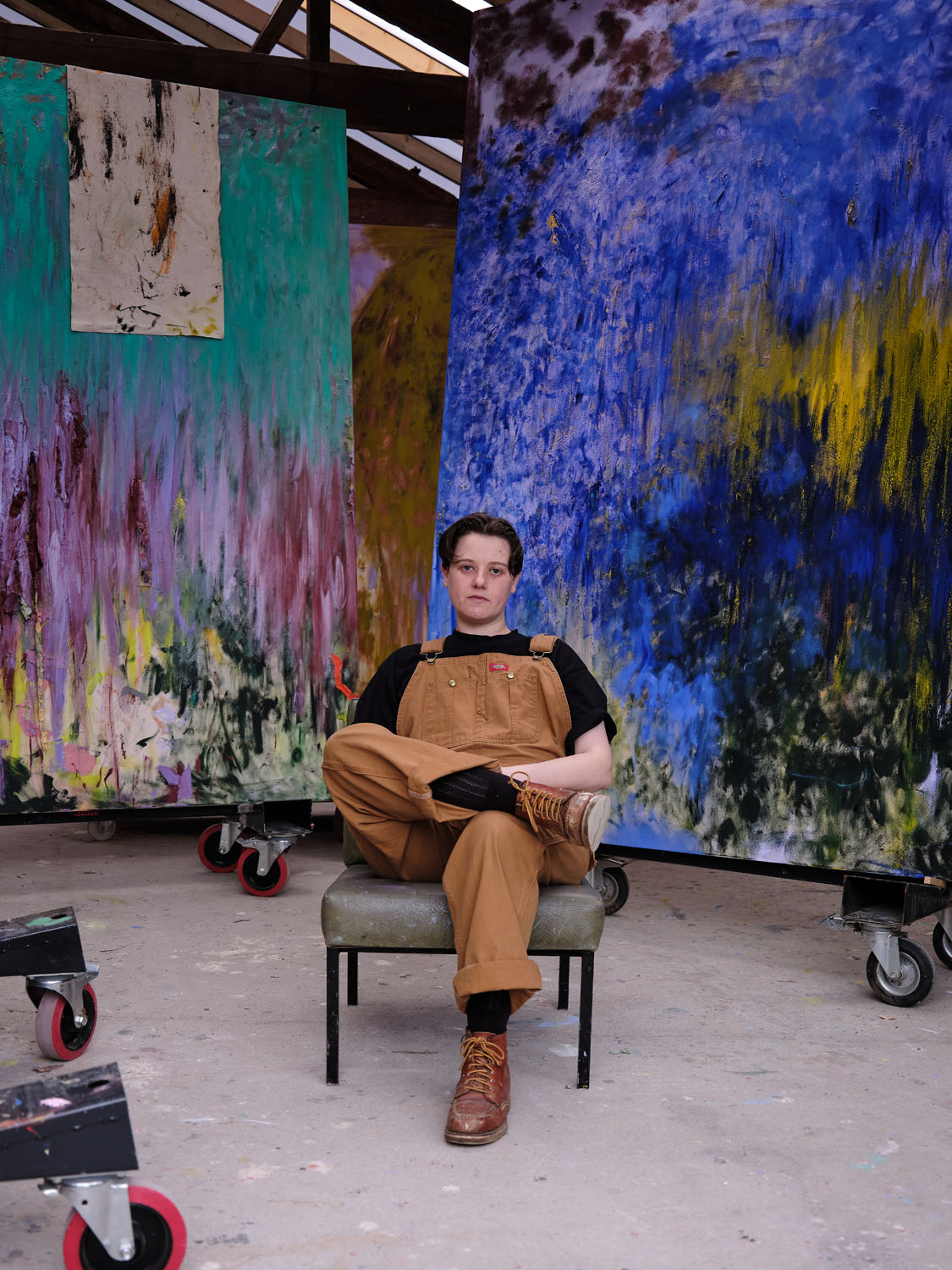
Parris rose to prominence in the early 2020s with dizzyingly marked canvases the size of billboards. They often combine tangles of brushstrokes that recall Joan Mitchell or late Philip Guston, with lines of text pulled from their journals that evoke ’90s zines. (Examples: “Sadness comes and goes throughout the day” and “Poem for death / Poem for a dream.”) Sometimes, Parris affixes fabric or fake fur appliques to the surface—a hint at the deeper engagement with the medium to come. These works will be reproduced in Parris’s first monograph, which will be published alongside the unveiling of Kiss the Storm.
Writing for The New Yorker, CULTURED’s co-chief art critic Johanna Fateman identified “a startling top note of something like teenage angst” in Parris’s 2022 exhibition at James Fuentes. Some of the work is so earnest and immediate-feeling that it could be tempting for cynics to dismiss, if only the execution weren’t so skilled.
When Parris and I met on Zoom in September, they were sitting in the corner of a brightly lit studio in Scotland, where they were participating in the Roberts Institute of Art Residency. After growing up in rural Kent, where expressionist painting was celebrated, Parris had a rude awakening upon arriving at Goldsmiths for art school, where conceptual work was all the rage in 2011. They recall thinking, Nobody cares about painting here.
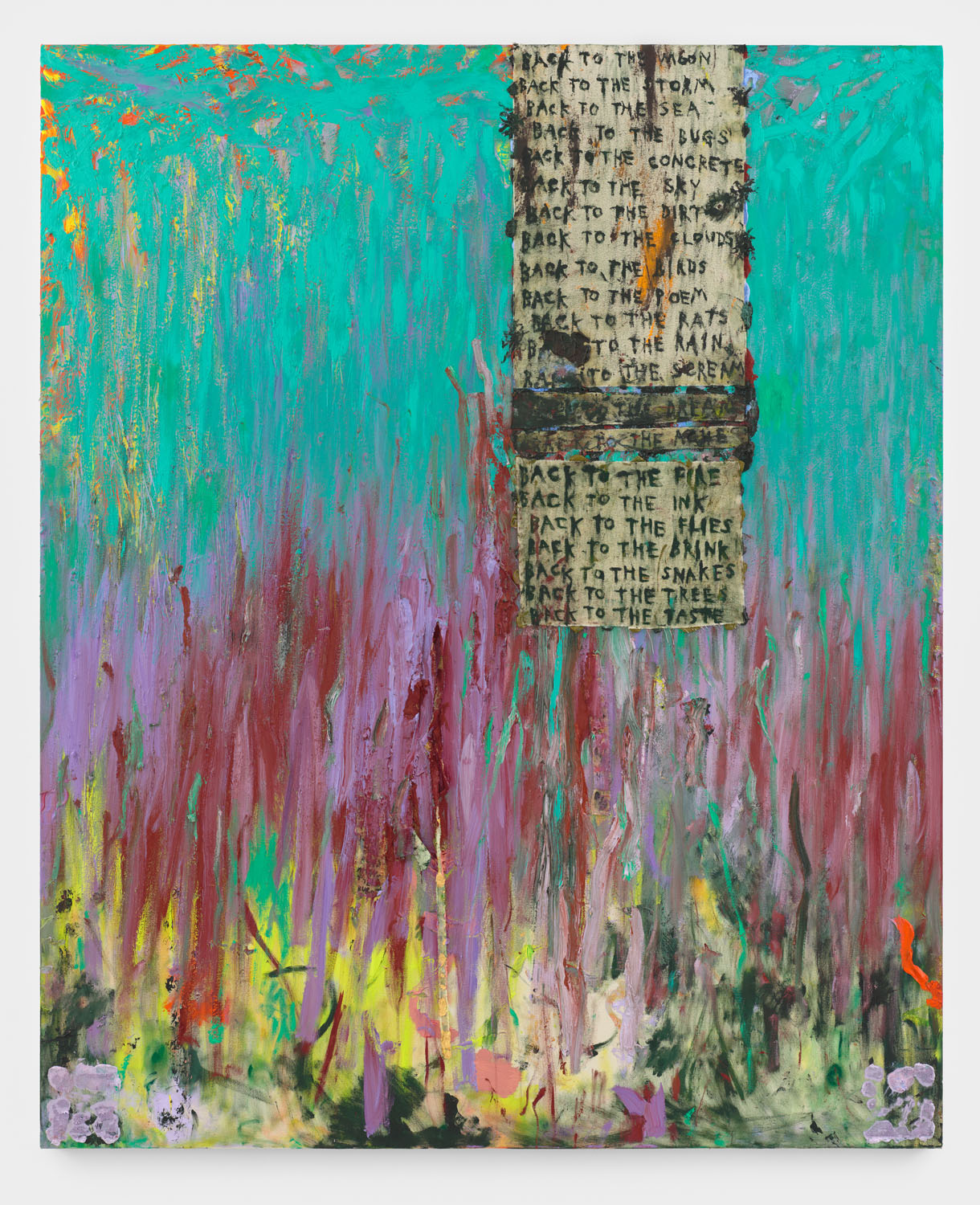
But they stuck with it, supporting themselves after graduation by working in a movie theater and as a pizza chef. Slowly, they began finding fans of their work on Instagram. When the pandemic interrupted plans for their first solo show at the London gallery Sim Smith, they decided together to pivot and put it online. The response was more intense than they ever anticipated. Solo shows at James Fuentes in New York and Hauser & Wirth in Somerset, where Parris has lived since in 2022, followed.
How have Parris and Smith navigated the market’s recent turbulence? “We don’t get greedy,” the artist says. “We are quite sensible and considered and therefore we can survive if there are lows and highs.”
Then, of course, there is the experimentation. Lately, Parris has been asking themself again to consider what work they are making in secret that might be ready to see the light of day. At the Scotland residency, they’ve been taking photographs. They also dream of showing drawings composed exclusively of text. “Good, honest work will never fade away,” Parris says. “I don’t care about the highs and lows in the auctions now—I’m here for life and after life.”




 in your life?