

Across Victoria Harbour’s beryl waters, Hong Kong Island looks both hypermodern and ancient: skyscrapers pierce the haze against a backdrop of jagged green slopes like a rip in the film between the heavens and terra firma. I.M. Pei’s Bank of China Tower, an angular symbol of 1980s corporate grandesse, is prominent in this vignette, as are the fringe of bungalows along “The Peak,” a ridge of mountain where Hong Kong’s wealthiest reside. For all the temporal juxtaposition, the island makes a fitting setting for an anniversary fête—Audemars Piguet’s 150th, to be precise—and is the ideal place for the Le Brassus, Switzerland-based watchmaker to reveal its latest models.
Why debut new triumphs of craftsmanship in East Asia, and not on the house’s home continent? For an anniversary year as auspicious as this one, the watchmaker has pulled out all the stops with a grand tour of global activations. What’s more, Hong Kong—key market for the horlogerie specialists—is host to not one but two luxuriously appointed “AP Houses” which welcome, and woo, clients (one on the Island, and one on the rooftop of Kowloon’s premium K11 Musea development). Last month, Audemars Piguet gathered guests from across the world to preview and celebrate the latest timepieces, and to keep the party going.
About those new timepieces: Audemars Piguet introduced a trio of Perpetual Calendars, and a stone-dialed trinity of Selfwinding Flying Tourbillons under the house’s Code 11.59 distinction.
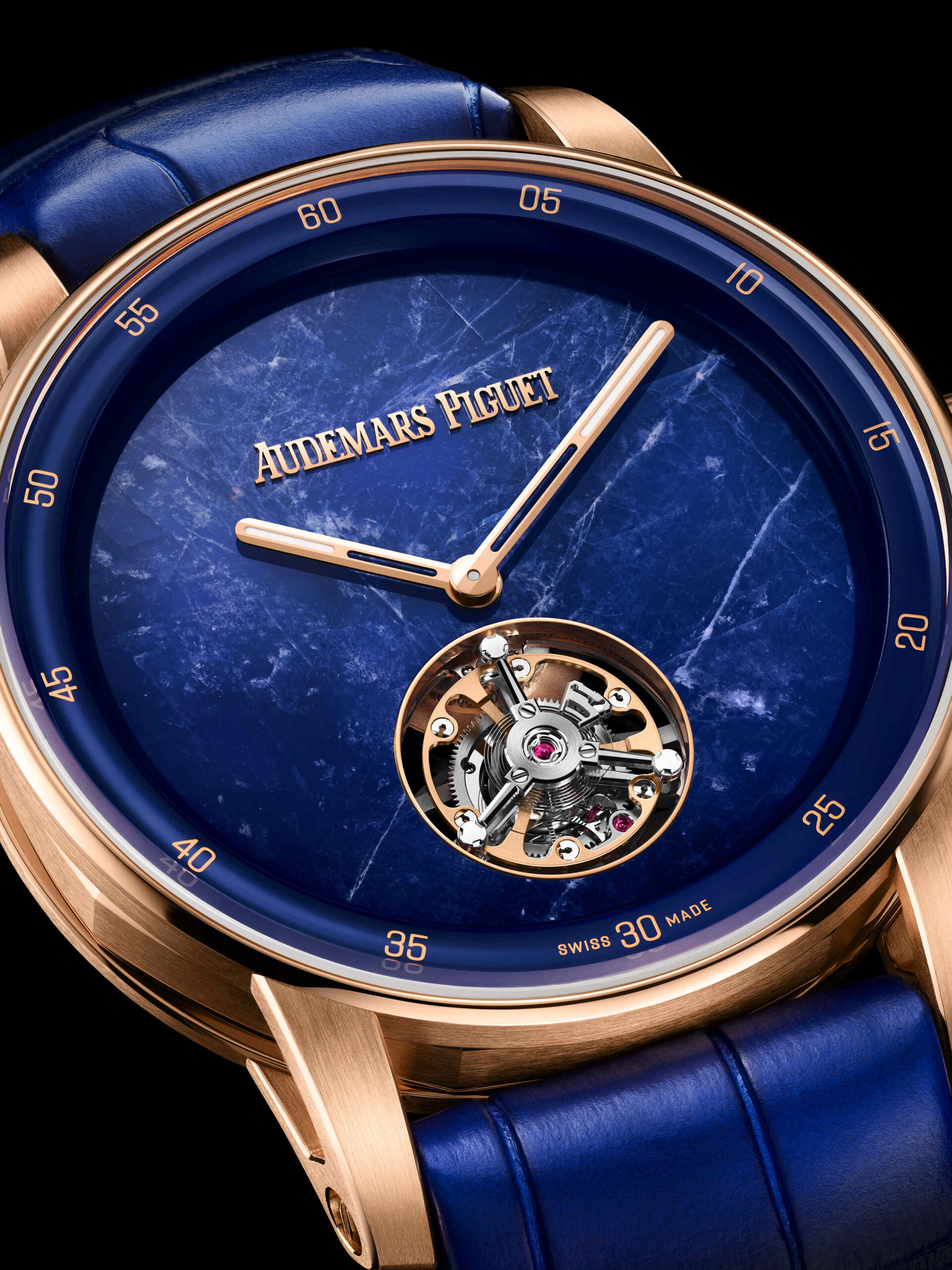
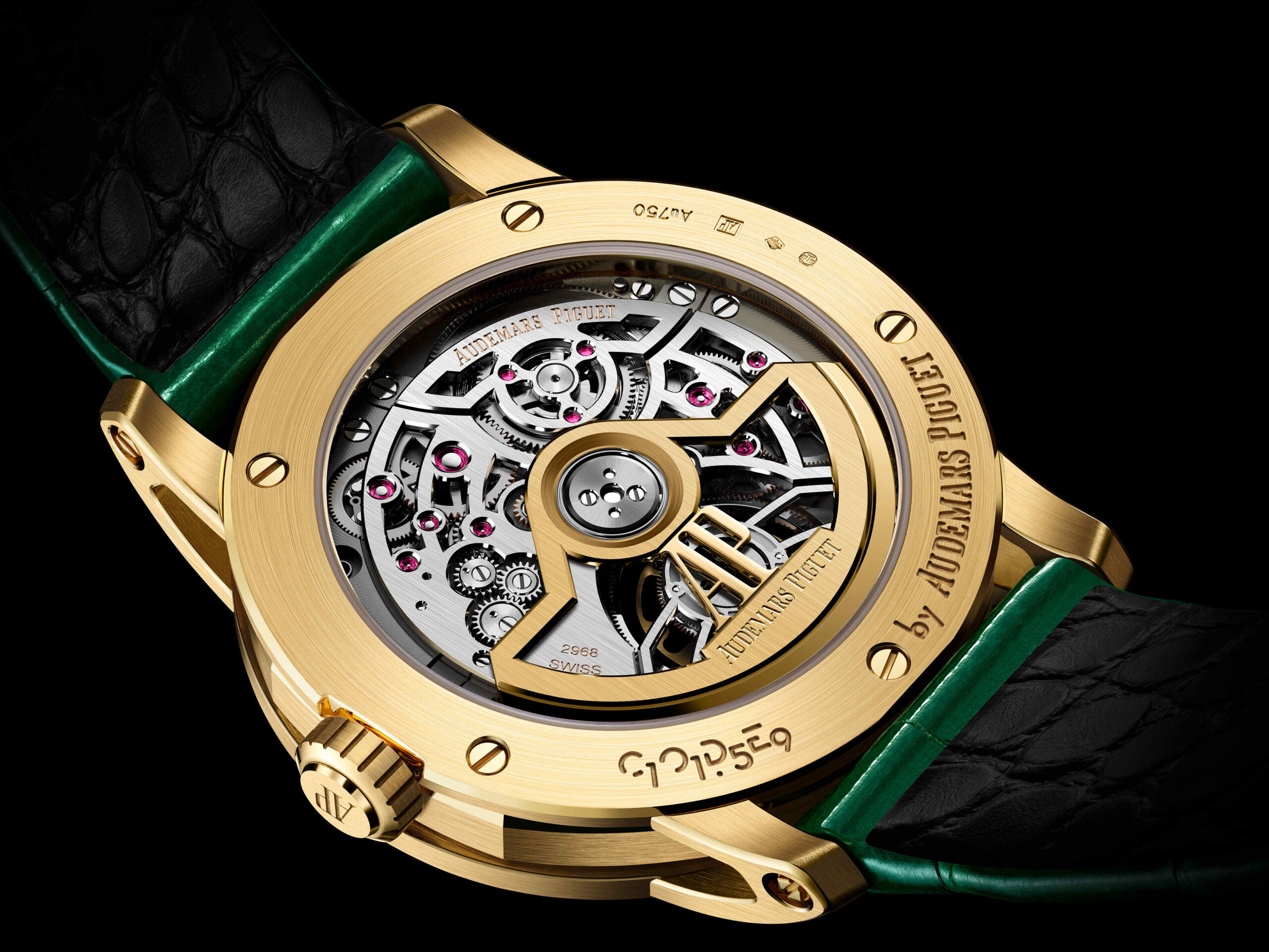
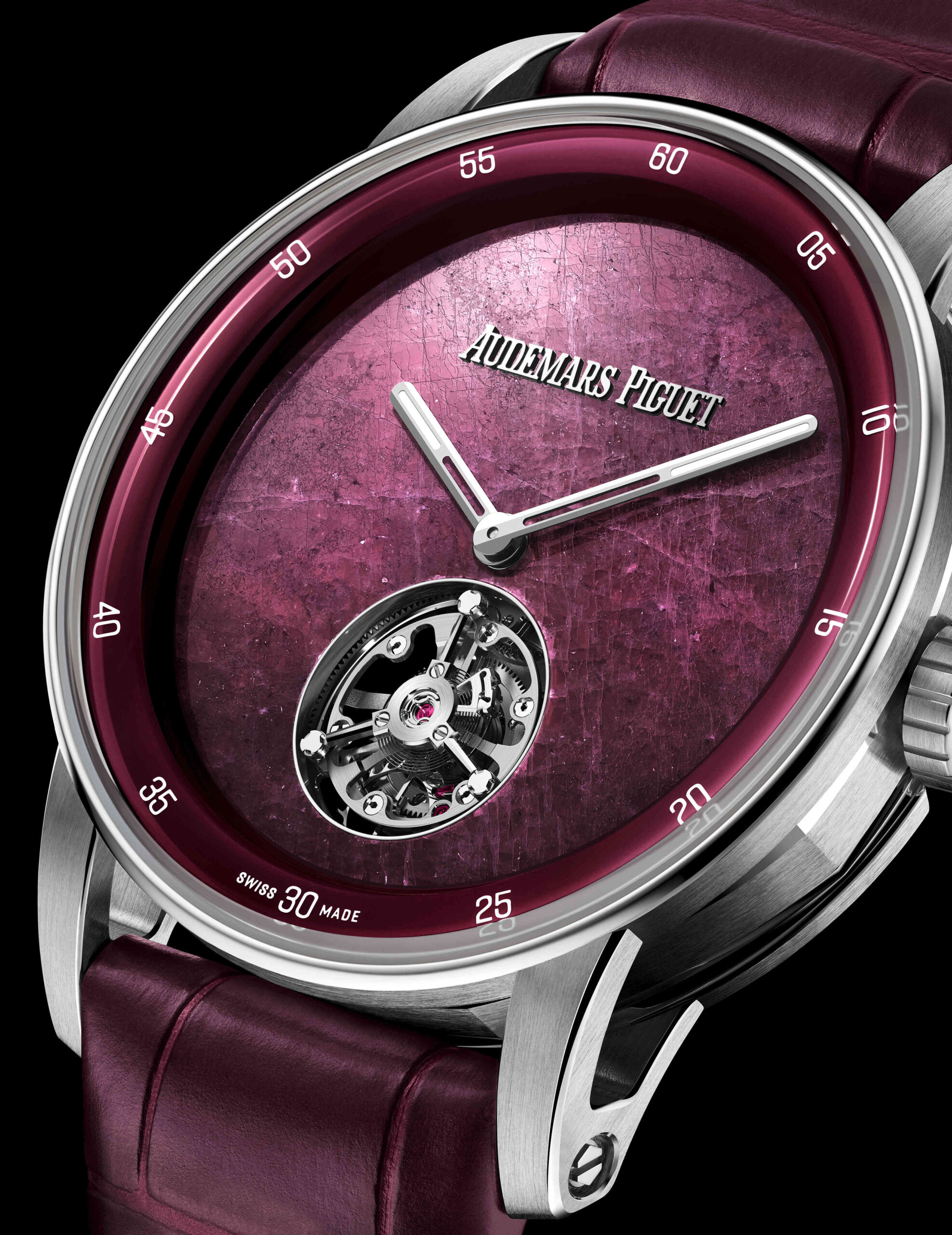
The Tourbillons in particular are exceptional, with natural mineral dials in radiant hues that retain an almost visually magnetic quality. There’s ruby root from Tanzania, deepest ocean blue sodalite from Brazil, and mesmerizing, riverine malachite from Zambia. These gemstones, believed to embody vitality, clarity, and transformation, are cut millimeters-thin—no easy feat, considering these stones can be quite fragile when manipulated—and no two dials are alike. Each dial is framed by a gold case (white, pink, or yellow), with polished and satin-brushed contrasts that further highlight Audemars Piguet’s robust craftsmanship in complement to beauty.
For the first time, the Perpetual Calendar is offered in a 38 mm case (as opposed to a time-honored 41 mm). These are procured in either the Royal Oak or, here too, Code 11.59 collections, and they carry the same “celestial precision” as their predecessors, albeit in a smaller and arguably more wearable proportion. (Plus, smaller watches are currently trending.) The Code 11.59 pairs 18-carat pink gold with a hand-guilloché green dial and matching strap, while the Royal Oak has two variants: stainless steel with a sky-blue Grande Tapisserie dial, and 18-carat pink gold with a warm gridded beige face punctuated by a vivid blue moon phase. These anniversary editions are further distinguished by vintage signatures and a “150” engraving.

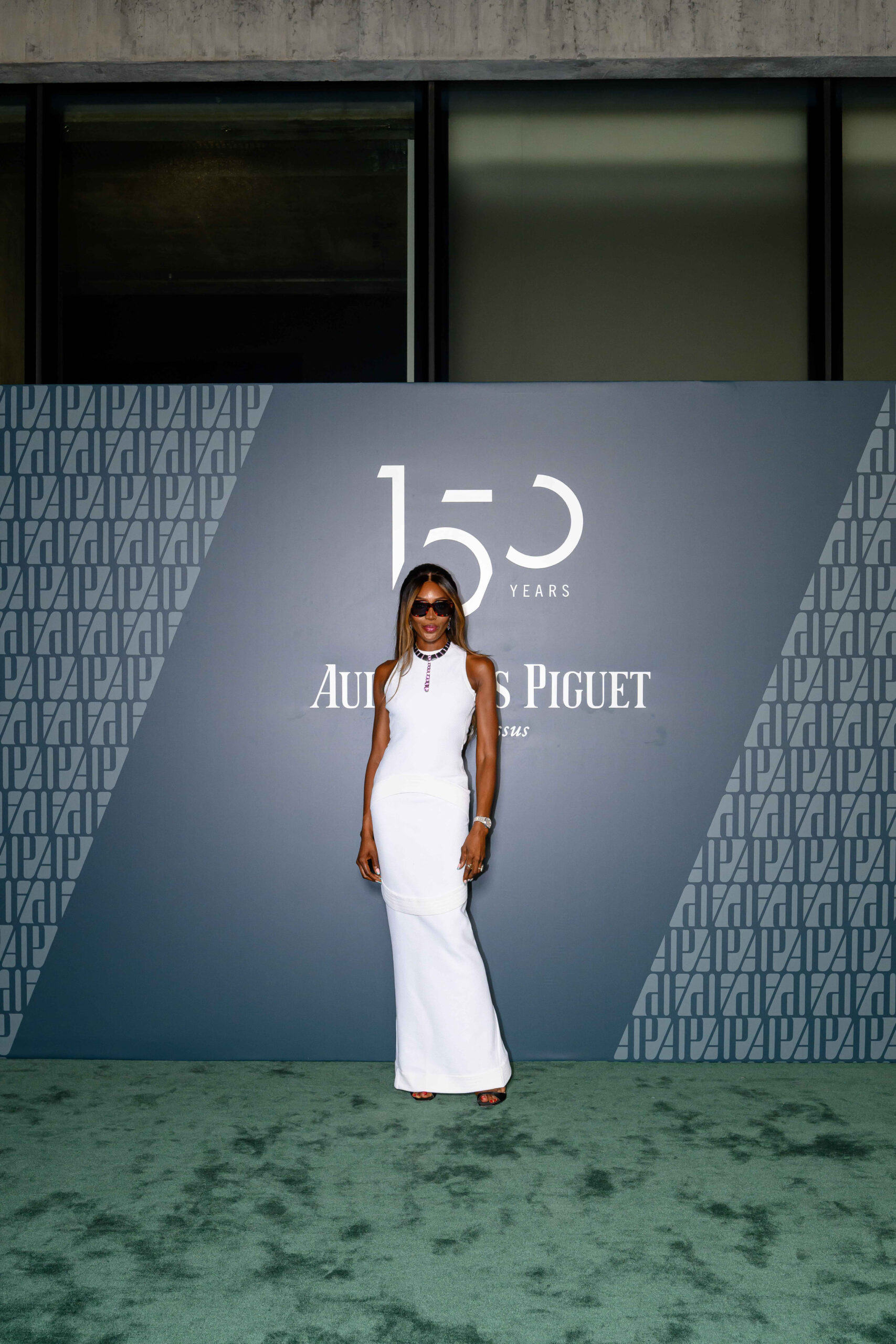

Audemars Piguet hosted a gathering–attended by Olympic gold medal-winning gymnast Simone Biles, models Naomi Campbell and Winnie Harlow, and more—to celebrate, but the festivities felt somewhat beside the point. In fact, a truer sense of celebration could be felt in just taking in the watches themselves; the dazzle of paper-thin gemstone faces, light bouncing off the Royal Oak’s signature rivets. That’s a party worth continuing for another 150 years—and more.







 in your life?