A film set can be a dangerous place for a girl.
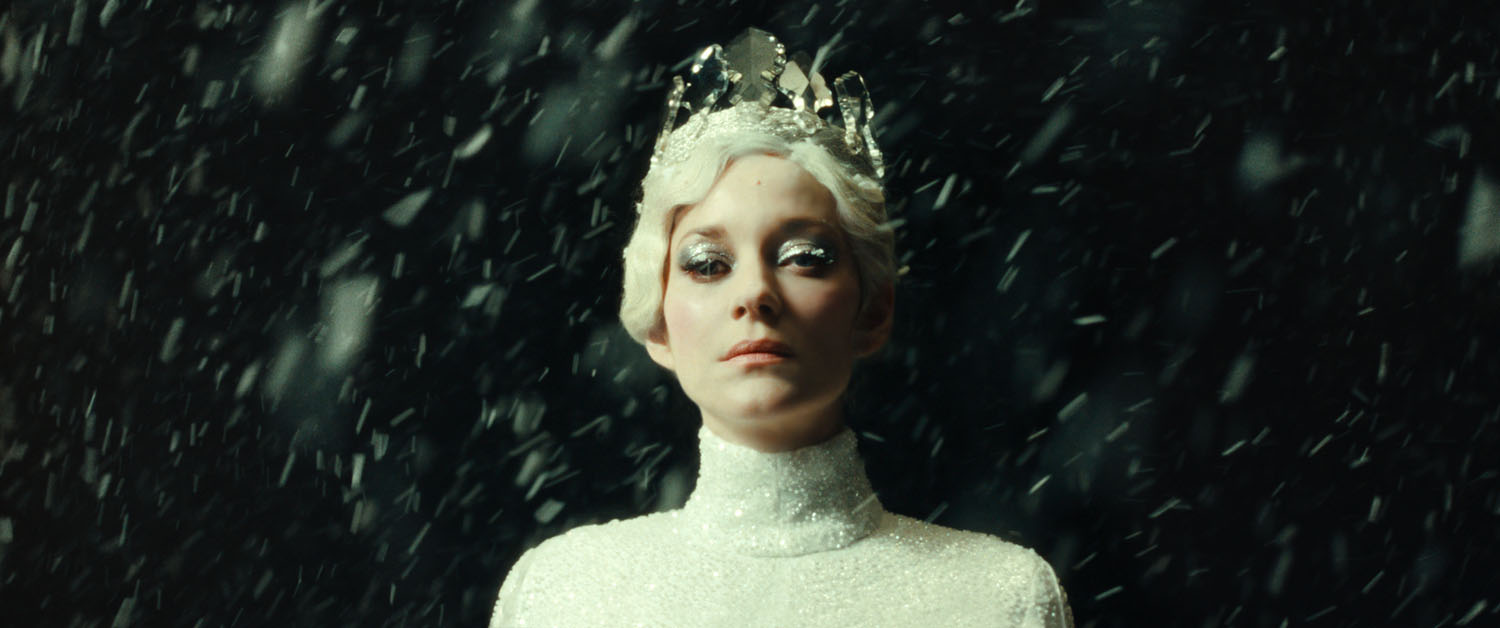
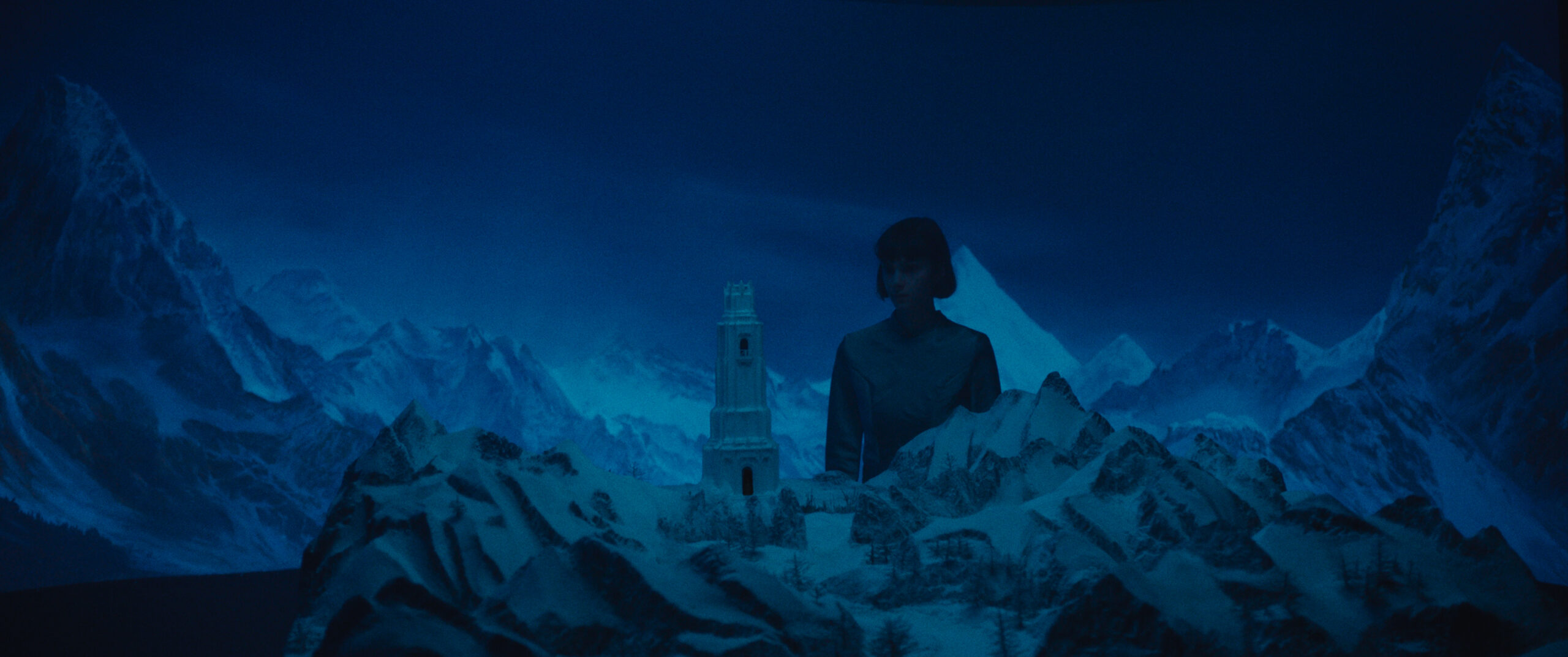
This is the premise of The Ice Tower, the latest frigid fairytale from director Lucile Hadžihalilović, whose dreamlike fables follow children as they become inured to the confounding and sometimes painful rituals of the adult world. After losing her mother, isolated teen orphan Jeanne (played by newcomer Clara Pacini) filters her grief through Hans Christian Andersen’s The Snow Queen, and yearns to skate with the local teenagers at a nearby ice rink. One day, she steals away from her remote foster home in a snow-swept, 1970s French alpine town and stumbles upon a sound stage where a film crew is adapting, of course, The Snow Queen. The production stars Cristina (Marion Cotillard), an elegant but emotionally withholding diva, and takes Jeanne on as an extra. As the film’s louche director (played in cameo by Hadžihalilović’s partner Gaspar Noé) sets the cameras rolling, the two women’s identities become intertwined in a Hitchcockian tale of doubling and obsession.
The Ice Tower unites Hadžihalilović and Cotillard for the second time, following 2004’s Innocence, set in an otherworldly school for girls where Cotillard played a ballet instructor. She served as a mentor both on and off camera for a room full of girls, most of whom were on a film set for the first time. The Ice Tower dramatizes this fraught moment when a girl becomes aware of the way she moves through the world—and the demands of the eyes and cameras that follow her. In conversation for CULTURED, Hadžihalilović and Cotillard continued to pull this thread loose in one more meeting of the minds before the film’s American release.
Lucile Hadžihalilović: We met more than 20 years ago when I was preparing my first feature, Innocence, in 2004. I had seen you in a film called Les Jolies Choses [Pretty Things], and I felt you had such a presence. You were the type of young woman I was looking for. I remember you were honest that you didn’t really understand everything in the script, but that you loved it. I discovered later that the film ended up being very enigmatic to many people, but you were quite daring because you nevertheless agreed to be part of the adventure.
Marion Cotillard: I remember I was taken by the atmosphere of the story when I read the script for Innocence. I could feel that the atmosphere was something that I could fit in. I was acting alongside 60 little girls. For most of them, it was their first time on a movie set. I had very strong connections with some of them, and it was beautiful to see a movie set through the eyes of those girls because I had done some movies by that time, and the freshness of their experience created something very special.
Hadžihalilović: How was it working with Clara Pacini, your co-star in The Ice Tower?
Cotillard: I was glad that she was not a teenager because she really looks like a teenager. The relationship that my character, Cristina, and her character, Jeanne, have in this movie is totally twisted and disturbing. I remember the first time I met Clara was at my house. I was very shy because I was thinking of all the things we would experience together. I remember I could barely look at her. I kept thinking, Oh my God, I’m gonna have to be violent with this person onscreen.
It was her first movie, so I wanted to take care of her, but at the same time, I didn’t want to create this intimacy. I’m not a method actor at all, but sometimes with my co-stars, I need to not be too familiar so we can keep that kind of mystery. It’s interesting to use the mystery that is there when you meet someone for the first time—you could easily break it by just having dinner. I remember I did this movie with a French director called Brother and Sister. Obviously, those two people have known each other since day one. But in the story, they hadn’t seen each other for years, so I didn’t want to see the actor. I was hiding when he was there, and I didn’t explain because I didn’t even want to explain, but I felt inside that I needed to stay away from him.
But Clara is very charismatic. She has this very special beauty and this intensity and depth. She’s very tall. There’s this energy about her that is very touching. When she entered my house, I was impressed. I knew you would find the perfect actress for this role.

Hadžihalilović: It’s true what you say about the mystery. It’s not even conscious, but I’m trying to do the same thing with my actors. I want to be close, but, at the same time, I want to keep the mystery to discover, to be surprised. There was only this one encounter between Clara, you, and me. You invited us to come see you. It was snowing, which is rare in Paris. She came with a chauffeur in a car, so it was already like in the film. It was a wonderful moment for me seeing you two together. It was like being in the film already.
Cotillard: The beauty of cinema is living something fictional and that could be super violent and, at the same time, the actresses wanting to take care of each other. That creates even more depth to have this combination, the fictional violence and the real love.
Hadžihalilović: Were you surprised by anything on set?
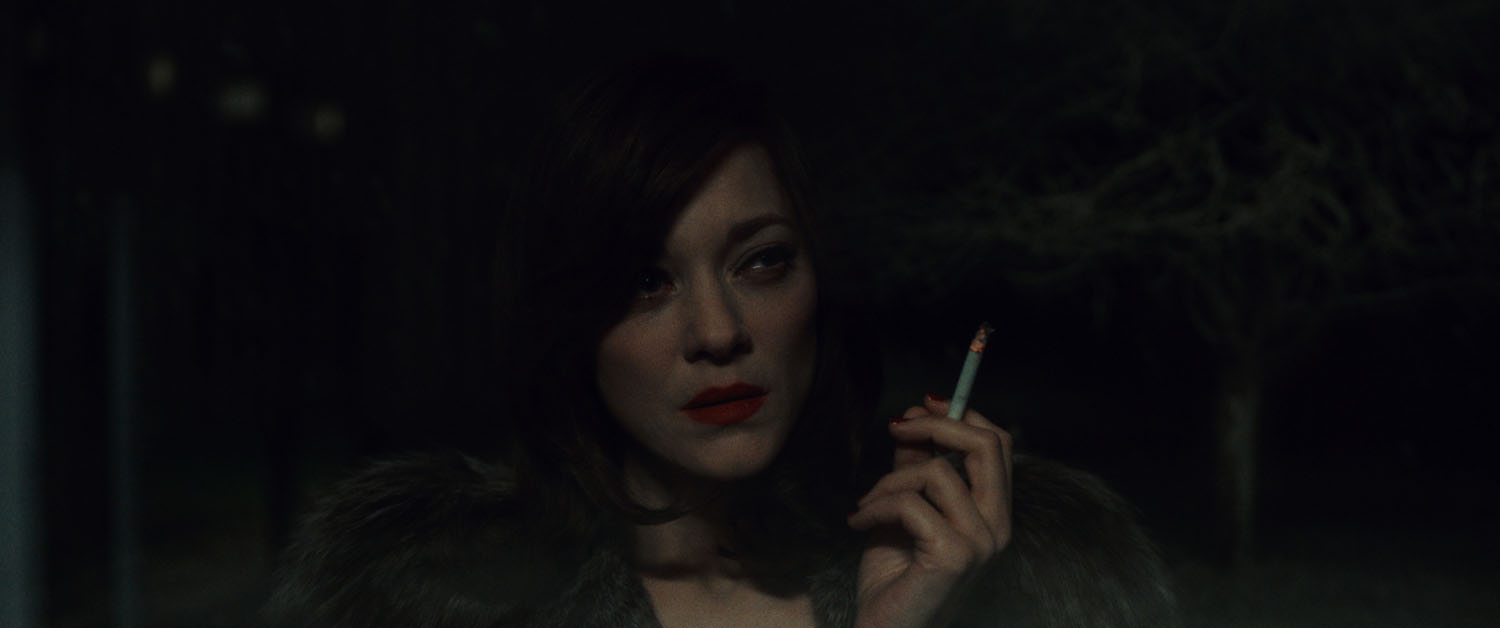
Cotillard: We shot the exteriors in a studio, so there was this sense of a closed world, like a snow globe. It felt like this suffocating atmosphere that was so important to have in this movie. One day, we shot the scene where Christina gets very emotional, and you don’t know why. The audience will never know why. That day, I had created my own story because I needed a trigger to get to this emotion. I was inside in front of this big window where I could see the snow, and it was as if I was trapped outside the snow globe.
For me, it says a lot about the atmosphere that you can create in your world of cinema. My work as an actress is to feed the character with my imagination. You just told me to come to the window, light the cigarettes, and get very emotional—I didn’t even feel like asking you why. It’s a very enigmatic world. It’s one of my favorite things to figure out how I’m going to get to an intense emotion.
Hadžihalilović: That was one of the strongest moments on set for me also.
Cotillard: Sometimes, too much explanation takes away from the emotion. I hate it when a poet or a singer explains one of their pieces. We’re often asked, “What do you want the audience to take away from this film?” And I will never, ever answer this question. I don’t want to answer this question because your relationship to a movie is so intimate. What you’re gonna take away, especially in a movie like The Ice Tower, is going to change based on who you are inside. I understand the desire to give more, but sometimes it spoils the final piece of art in a way.
Hadžihalilović: Less is more. The master of this is, of course, David Lynch. It’s wonderful how he managed to never over-explain in interviews. A film is image and sound. It’s an experience in a theater. Why should we put words to that?
Cotillard: The magic of cinema is that it touches a very intimate part of you as a viewer, and that very special connection is what makes movies so important. When you have the feeling that a movie talks to you, talks about you, even when the people who made this movie didn’t know you personally, you realize, someone understands me. I think it’s really intense, strong, and beautiful.
Hadžihalilović: You told me when you were going to watch The Ice Tower for the first time, the most painful thing was to watch yourself. I know some actors never watch themselves.
Cotillard: I think I’m reaching that point of not watching the movies I’m in at all. Right now, I watch the movies out of respect for the director, but it’s so painful. It’s terrible. I get sick like a week before I watch a movie. I never watch dailies, so I don’t even know what I look like in a movie. I never know if what I gave is going to work, so I’m super anxious. I’m a very hard judge. I’m very hard on myself, and that’s okay. I remember I called you because the problem is that the first time I watch a movie, I hate it. And it’s not rational. For example, Leos Carax’s movie, Annette: I hated it at first, and today it’s one of my favorite movies I’m in.
Hadžihalilović: It’s very interesting regarding what you said a moment ago about the scene in The Ice Tower when you had to find your reason to cry. I had this feeling on set that you were very open but that while you let go, you’re still very much in control. That was a complexity or a contradiction, which was quite fascinating to watch because you were so precise, so technical, so professional. It’s lovely to talk to you about these things we have never talked about before.




 in your life?