
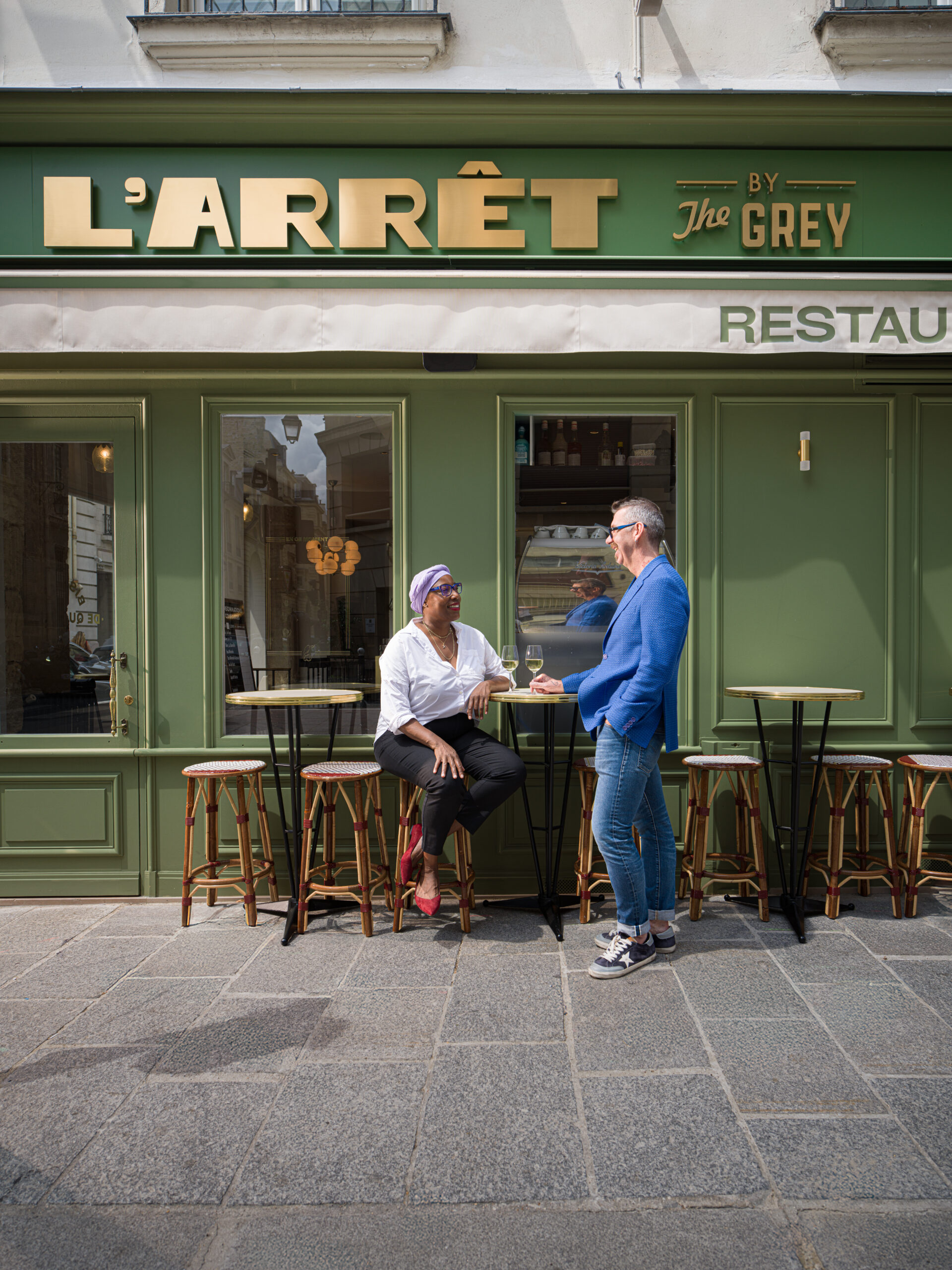
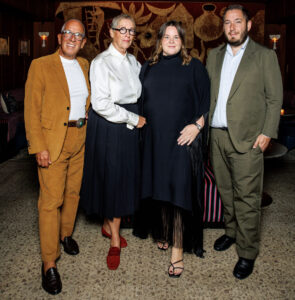
Mashama Bailey and Johno Morisano, the power duo behind the Grey, which has reigned over a renovated Greyhound Bus terminal in Savannah since 2014, are bringing a dose of Southern hospitality to Paris. The pair’s Left Bank venture, L’Arrêt by the Grey, offers a menu rooted in seasonal French cuisine while incorporating the Southern American flavors that have made the Grey one of the most celebrated restaurants in the United States.
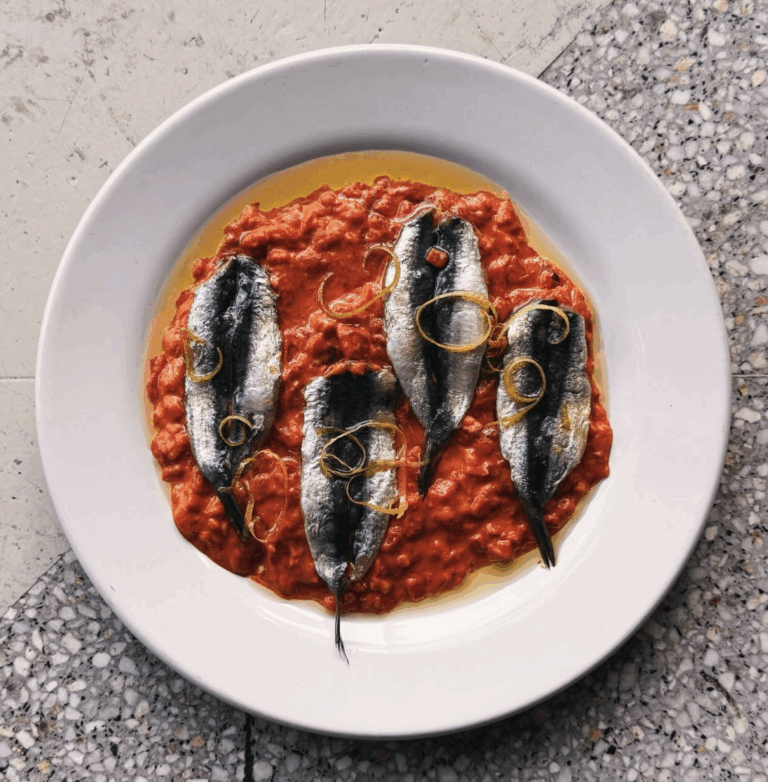
“The food in Paris is very seasonal and straightforward,” Bailey shares. “It’s clean and clear, and I strive for that. When I was in training in Burgundy, my aha moment was seeing ingredients that I would normally see in the South on the plate in Paris.” This fusion is reflected in the menu of L’Arrêt through dishes like pickled eggs with anchovies, the Grey Market burger with a comeback sauce, mac and cheese made with coquillettes (small elbow pasta), braised lima beans, and cornbread made from cornmeal direct from the farm.
CULTURED’s food editor Mina Stone sat down with Bailey and Morisano to discuss how being a restaurateur takes a ridiculously positive attitude and what it means to bring the past into the present with their new international venture.
Can you both tell me what is in your system this morning?
Mashama Bailey: I had a bag of potato chips at like 2 a.m., so…
Johno Morisano: Tyrell’s mature cheddar & chive?
Bailey: Yes.
Morisano: I had a board meeting for a non-profit that I’m involved in called The Current, which is a newspaper for coastal Georgia, until 1 a.m. last night and ate leftover cassoulet. Mashama and I took her family to a place in the 14th [arrondissement] called L’Assiette, which makes the best cassoulet in Paris.
Tell me about your new restaurant project, L’Arrêt. Am I pronouncing it correctly?
Morisano: It is L’Arr-AY. I lived in Paris in my 20s, and my wife and I started dating while I was living here. So Paris became a spot that we always came back to. I always felt that Mashama’s food felt very European, and French in particular, which was no accident because she studied French cooking. She lived in Burgundy for a while. So even though we are firmly a low country port city Southern restaurant in Savannah, the food has a foundation in French technique. I always said to Mashama, half-jokingly, that we should open a place in Paris. “I think we would resonate there.”
Can you tell me about the name of the restaurant?
Morisano: L’Arrêt by the Grey rhymes in French, and l‘arrêt literally means “the stop,” like a bus stop. That ties back to the Grey in Savannah being a Greyhound Bus terminal.
Bailey: What we’re doing is elevating Southern food and African American food. For example, I’ve been struggling to find cornmeal here. They have corn flour and they have polenta, but they don’t actually have cornmeal in order to make corn bread. Someone suggested I look for someone who grows corn and ask them to process cornmeal for me. I thought that was such a simple and direct answer. That’s exactly what we do in Savannah—we work directly with a local mill. So why wouldn’t I do that in Paris?
How does the past continue to inform your work? How are you bringing that to Paris?
Bailey: We have a dish on the menu and we call it a “Mac and Cheese,” but it’s not exactly. It’s coquillettes, the small elbow pastas. I thought it would be interesting to do that with a classic Mornay sauce—a sauce that’s a spin-off of a béchamel, which is a French mother sauce. This dish directly relates to me growing up as a Black woman and us currently being in Paris.
Some other examples in the menu are a mayonnaise that is turned into a comeback sauce by adding relish, ketchup, mustard, and garlic. That’s something that we put on our burger, that’s a little bit different than most places.
We have pickled eggs that we’re serving. The egg is pickled and the mayonnaise has a little anchovy in it. We use a lot of fish in our food in Savannah, and we also do a lot of pickling in the South. I keep the circle revolving and I keep the South connected to the menu here.
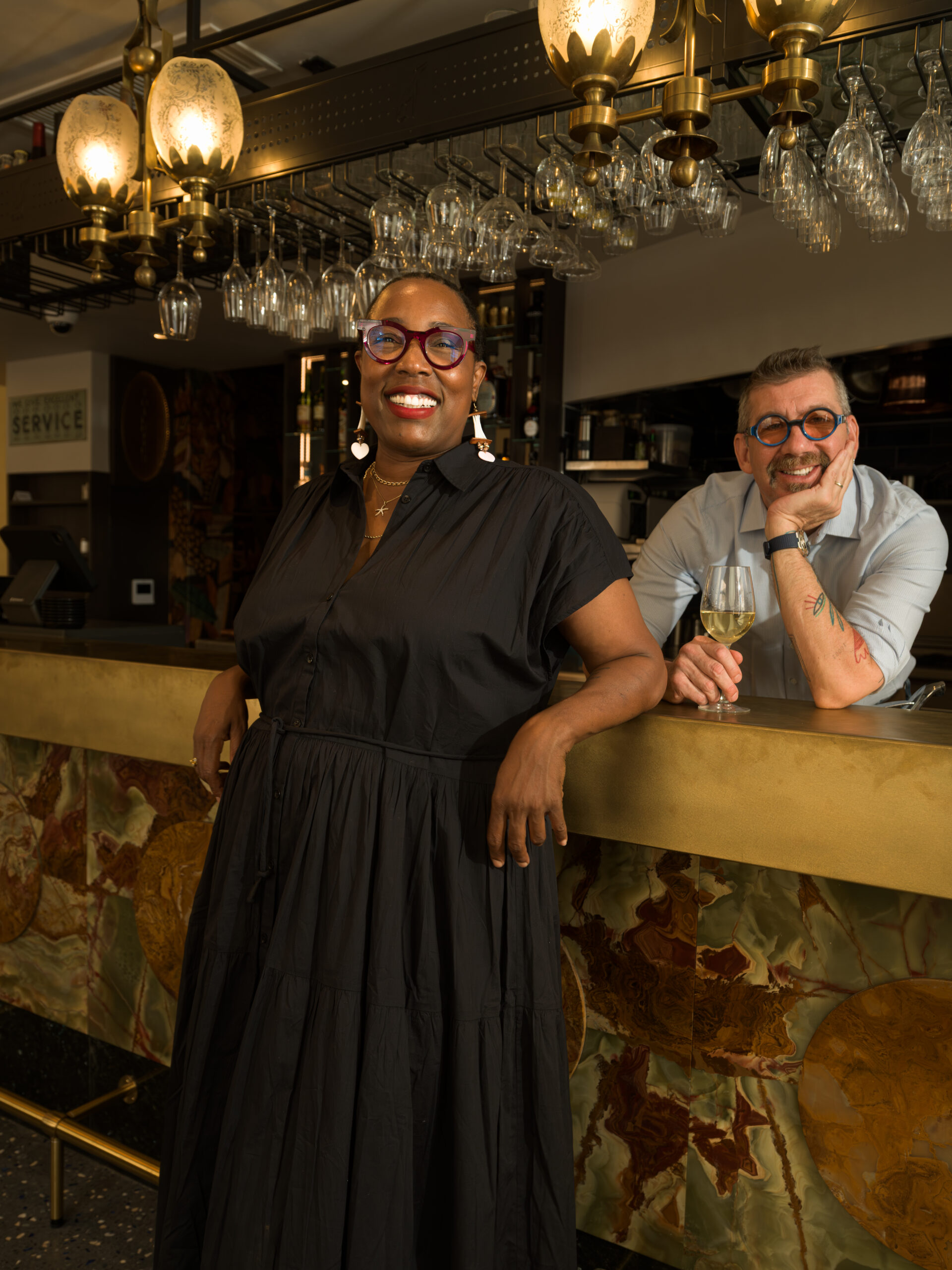
Johno, what brought you to hospitality?
Morisano: I think violence brought me to hospitality. I grew up in Staten Island in a really crazy house with a father who had issues. My dad was a fireman and all the folks in my neighborhood shared these kinds of stories of growing up. Dad was always pissed off, didn’t make enough money, and had too many kids, so life was crazy. Respite from all of that was my grandmother’s house on a Sunday afternoon and everybody getting together and eating. In my childhood, those are the happiest memories.
At 58, I am exploring the connection between a childhood of insanity and then wanting to make people happy through hosting and feeding them. That’s the first time I’ve ever said any of that out loud.
I think that’s beautiful—it is important to talk about how people come to cooking and hospitality attempting to heal a form of trauma. You’re fixing things that as a kid you didn’t have control over, but you do now. What is the overarching idea of L’Arrêt?
Morisano: L’Arrêt is a version of us. It’s Mashama and I, our growth as restaurateurs, and our developing voice.
Time for the rapid-fire portion of our interview. What is a kitchen etiquette rule you live by?
Bailey: Cut the tape, label, date.
Breakfast, lunch, or dinner, and why?
Bailey: Lunch. Because you can go either way—you can have a light lunch, sandwiches. Or you can have a long boozy lunch, and it can last for hours and you still can get to bed at a good time and wake up decent the next day.
Morisano: I was always a dinner guy. My wife and I, we’ve always worked so hard, so that was our time to come together. We’ve never had children, so we’ve eaten out almost every single night for the last 30 years.
A kitchen utensil or tool you use the most?
Bailey: I use a big spoon the most. I use it to baste, I use it to stir, I use it to flip. You can do a lot with a spoon, so I love a spoon.
Morisano: I don’t cook professionally, obviously, but my favorite is a wooden spoon.
Can you draw a parallel between your relationship to cooking and hospitality and a way of looking at the world? Is there a similarity between being in the kitchen and daily life?
Morisano: You have to be an optimist to do this and you have to see the world with rose colored glasses.
Bailey: Yeah, that’s my way of life, actually. I’m always like, ‘It’s half full, let’s go!’


 in your life?