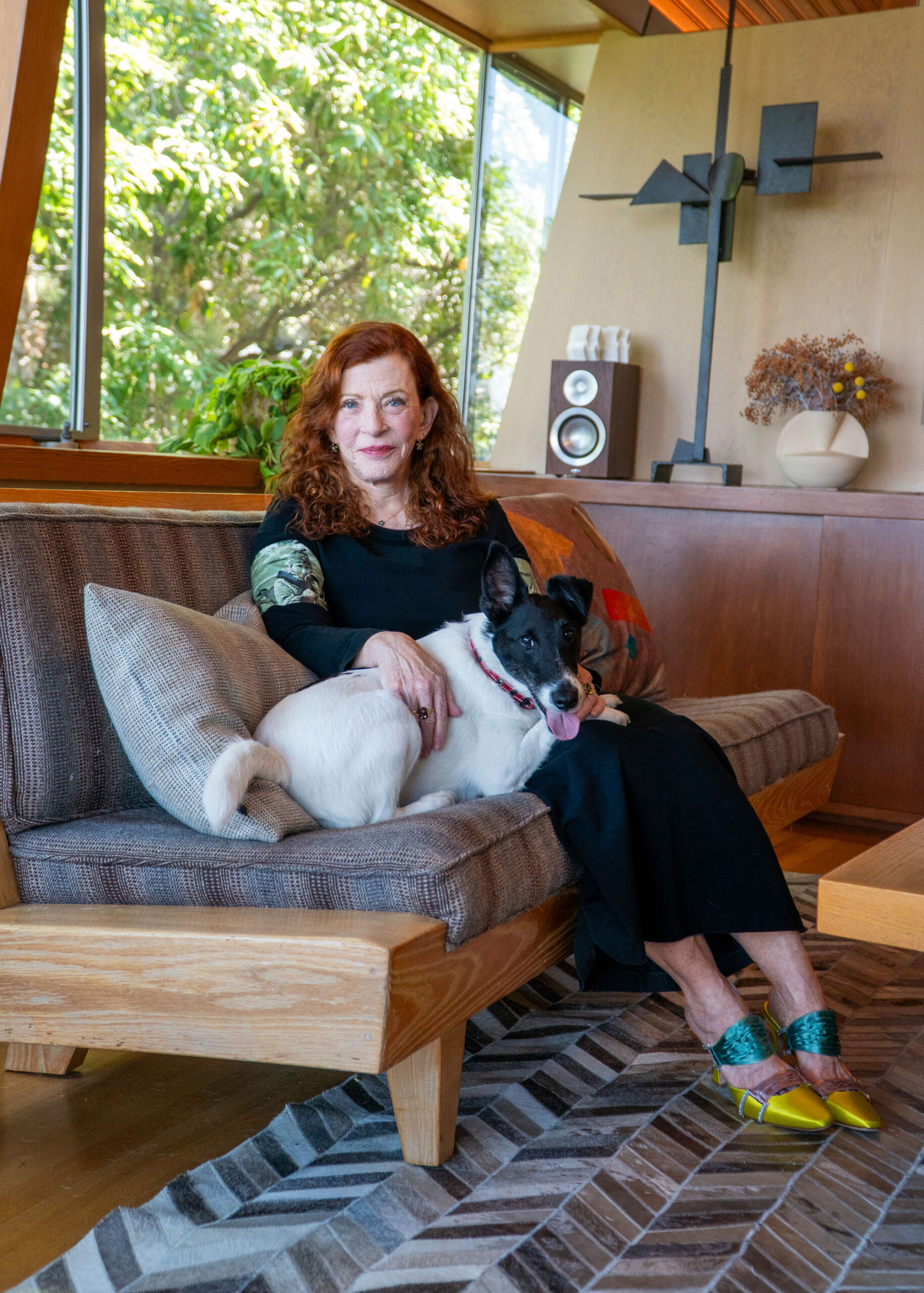
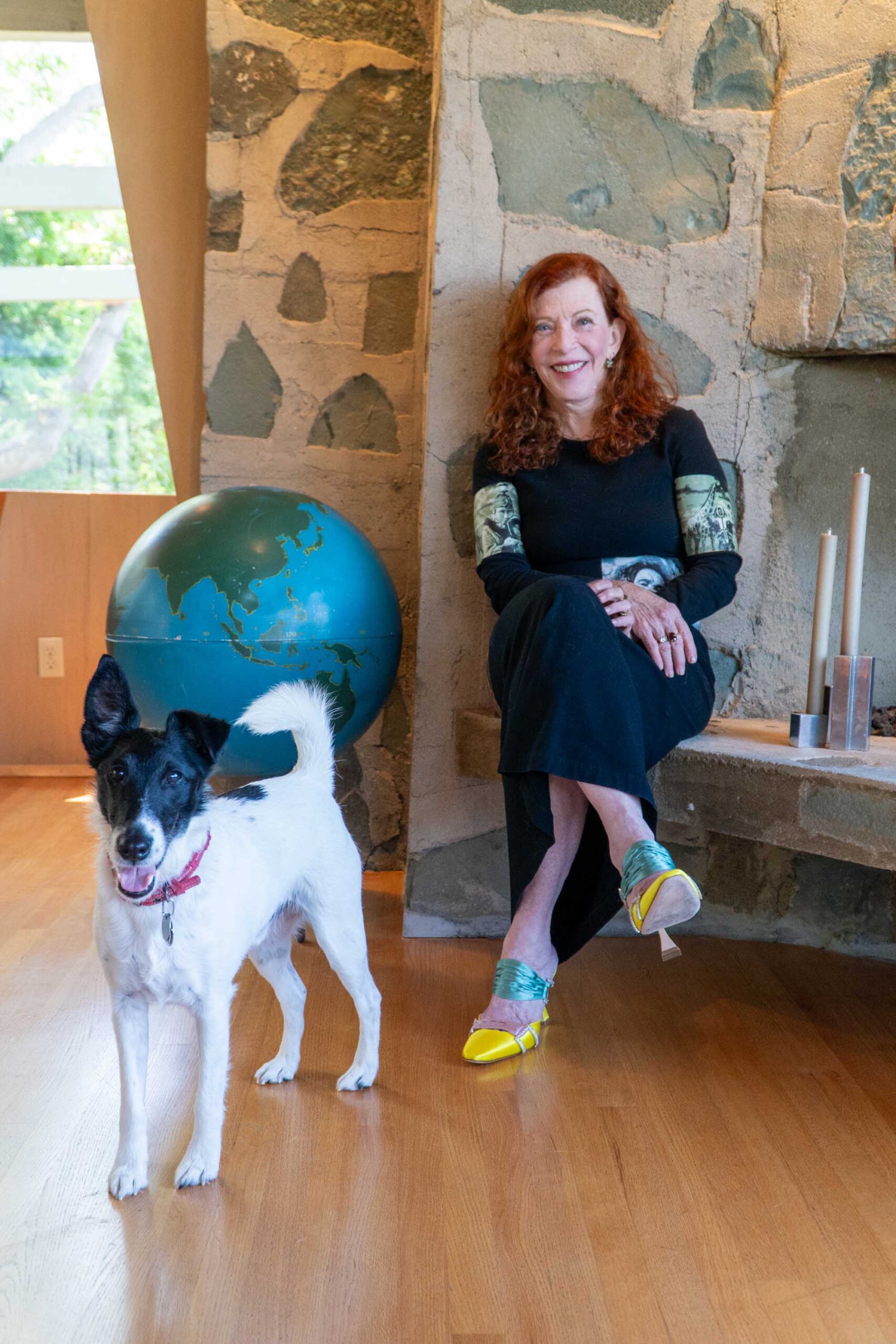
“I had to really convince myself that there was any reason anyone would want to read this,” Susan Orlean says across the screen. “To suddenly be looking at myself, I felt like, Yeah, but so what?”
The veteran journalist is speaking to me for the first in what will inevitably be a marathon of interviews ahead of the publication of her first memoir, Joyride, in October. You might accuse someone who’s been a New Yorker staff writer since 1992, seen two of her stories become cult films (Adaptation and Blue Crush, with Meryl Streep playing a fictionalized version of Orlean in the former), and witnessed many of her other contributions to the field of journalism cemented in the canon, of a little bit of false humility. But she’s also right: Many writers who dedicate their lives to documenting interesting people don’t have time to have interesting lives themselves, so why bother with memoir?
Orlean, however, has grabbed life by the metaphorical horns, and Joyride revels as willfully in her personal ups and downs (be they romantic or professional) as the stories she spent the rest of her time reporting. Expect a frank account of someone watching her marriage disintegrate as her career takes off, rebounding in Bhutan of all places, and being won over with an exotic (as in exotic animal) Valentine’s Day surprise. Beyond these adventures of the heart and no shortage of reporting capers chronicled, I must say I felt the most engrossed when I read Orlean write about writing. She relates the agony and ecstasy of the perpetually new task with the pep of someone who committed to this path for life, not just a living, and knows she chose right. Her boundless enthusiasm, in a world that’s tired and cynical, is no small balm.
The logline of sorts for your new memoir Joyride is this quote: “The story of my life is the story of my stories.” Which of your stories feels particularly evocative to you at this moment?
“The American Man at Age Ten,” because in so many ways it embodies my interests and my principles as a writer. I was asked to do a celebrity profile of Macaulay Culkin [for Esquire], and I said, “I don’t think a profile of a 10-year-old actor is go be very meaningful.” I asked to do this story of this ordinary boy. I wrote that story a million years ago [1992], but it resurfaced in the last year with the show Adolescence. There is new interest in the question of what exactly is happening to men. The boy I wrote about was not toxically masculine in any way, but the attention on young boys has become a preoccupation because of these issues of toxic masculinity and incel mentality as embodied by the Trump administration—a certain kind of exaggerated, bullying masculinity. Where does this sense of bravado and dominance emerge? Ten happens to be an age that’s extremely formative.
Your reporting has taken you into pretty extreme situations over the years. What does your everyday as a writer look like?
My office is a hundred feet from my house and where I do all of my work. Writing is a really interesting mix of magic and routine, and you need the routine to be able to conjure the magic. My writing metabolism is pretty consistent. I usually start at about 11 a.m., and I try to write a 1,000 words a day. When I was a runner, I would say, “I’m gonna run five miles.” I did not run four and a half miles or four and three-quarters miles. Same with 1,000 words.
What’s your relationship to showing people your work, or reading other people’s work while you’re writing?
I rely very much on my husband [to read my work]. I can tell if he’s saying it’s not quite there. And if he says to me, “I love it,” I trust that as well. It used to be that I’d only show things to my editor when I thought they were literally ready to print. In the case of this memoir, because it’s a new form for me, I showed it to him when I was maybe a third or a quarter of the way done. I just needed to hear him say, “I get it. You’re doing it right. Don’t worry.” Depending on what I’m working on, besides what I’m reading for research, I do look at work that is analogous. That shows me how it’s done well. I have a couple of books that I keep at my left hand all the time, the same few books that, when I get stuck, I flip through.
One is Calvin Trillin’s book Killings. One is Ian Frazier’s book Great Plains. The White Album by Joan Didion, of course. Then there are a couple of journalism collections that have a bunch of really great stories—The Literary Journalists and Literary Journalism. I go back to the same books all the time. I practically don’t need to even open them anymore because these have been my guides for so long, but they’re always helpful.
The way that we write has changed so much since you came onto the scene—from the inescapability of email to the rise of Substack to how much we write about ourselves now.
It’s true that when I look back at the great writers that inspired me, they were present in their writing, but it was rarely about them. I have a Substack; I use it to write these little first-person essays. I never reject life moving forward. I’m not somebody who goes, “It used to be real journalism.” People’s appetites change—I’ve never found that frightening. But my commitment to the kinds of stories I want to do hasn’t changed. I feel like there is still an appetite to learn about the world and other people and other subcultures and circumstances and slices of forgotten history. It’s just not being practiced as much. And frankly, the number of magazines running those kinds of stories has shrunk enormously, as I’m sure the opportunity to publish those kinds of things has diminished.
In many ways, I am the transitional generation. When I came to The New Yorker, they barely had bylines. Nobody knew what a single writer at The New Yorker looked like. The bylines on the huge features were at the end of the story in tiny type. There was no index. There were no contributors’ notes. The New Yorker went out of its way more than any other magazine to shield the writers from any sort of public persona. I came to the magazine as that was slightly changing. In the beginning, I felt that there were people there that thought I must not be a good writer because I’m a little too public. I do think that kind of false backgrounding of the writer is a little exaggerated and pointless. Like, why shouldn’t you know who wrote the story? But now we’ve gone a bit overboard. I’m not that interested in seeing Writer X in a video talk about the thing that Writer X just wrote. I can just go read it.




 in your life?