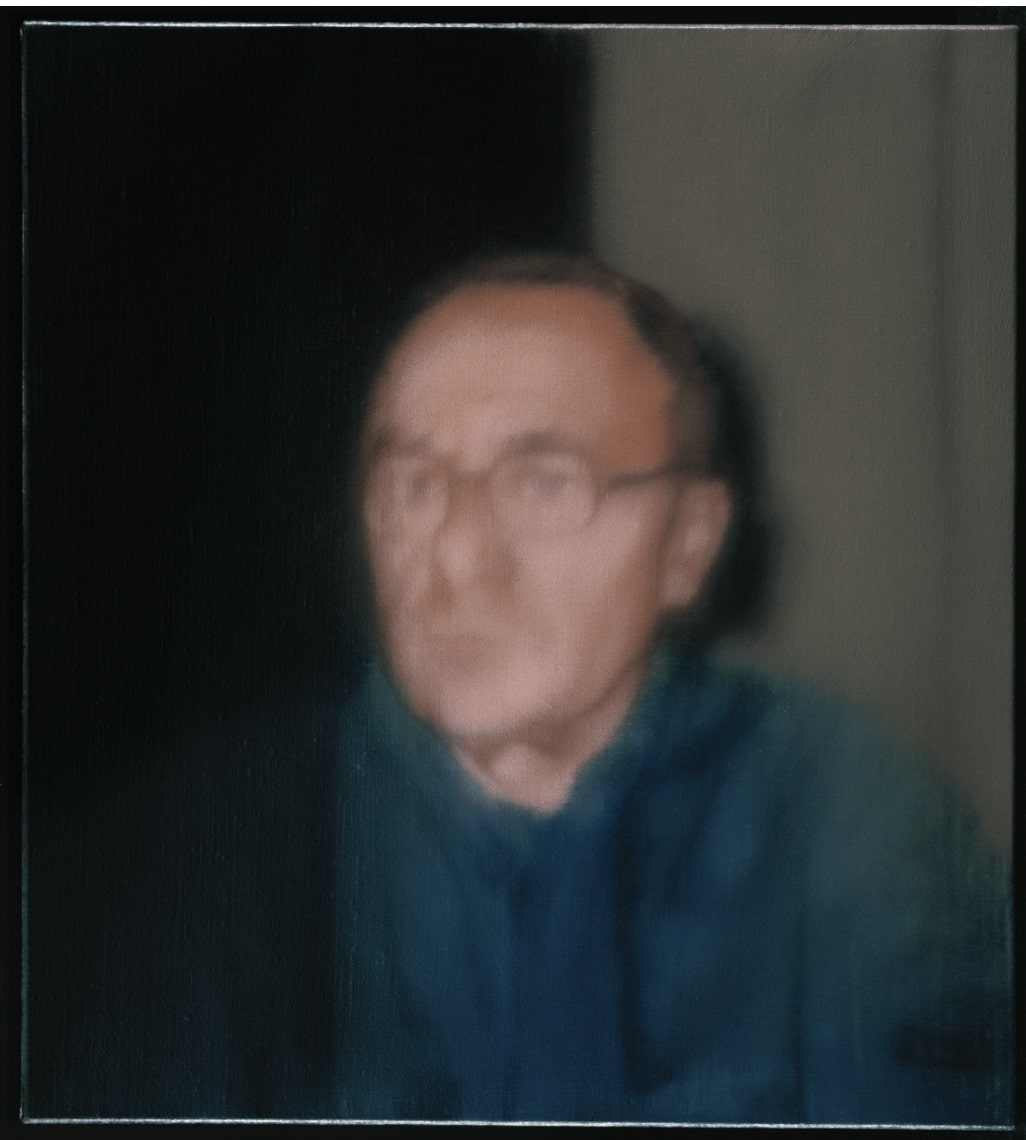
Richter never spoke publicly of Marianne. What once seemed like a simple rendering from a family album revealed itself as an image freighted with grief. This is characteristic of Richter’s art: intimate yet anonymous, personal yet political, testing the ground between memory and representation, seeing if it might give way.
![Gerhard Richter, Tante Marianne [Aunt Marianne], 1965.](https://culturedmag.nyc3.digitaloceanspaces.com/uploads/2025/09/29171128/gerhard-richter.jpg)
The artist’s dealer, David Zwirner, says Richter needed some convincing to proceed with the project. “At his age, he hadn’t travelled in a while, and I had to do a bit of hand-holding,” Zwirner admits. “I told him how fantastic the Fondation’s exhibitions have been and how extraordinary the spaces are. Once it was settled that Serota and Schwarz were curating, he was very happy to entrust it to them.” Zwirner’s Paris gallery will stage a companion show of Richter’s more recent painted works, from the 1990s and 2010s, as well as drawings made in his studio over the past few years.
Born in Dresden in 1932, Richter grew up under Nazism and later studied Socialist Realism at the Dresden Academy of Fine Arts. In 1961, just before the Berlin Wall was erected, he defected to the West and effectively began again in Cologne, where he still lives today. “The starting point for the show was Tisch (Table), the first work in his catalogue raisonné,” Serota notes, referring to a simple image of a dining table, its surface scraped and blurred almost into erasure—an early gesture, he says, of the artist rejecting certainty in favor of an elusive meaning. “It’s critically important as a harbinger of what was to come.”
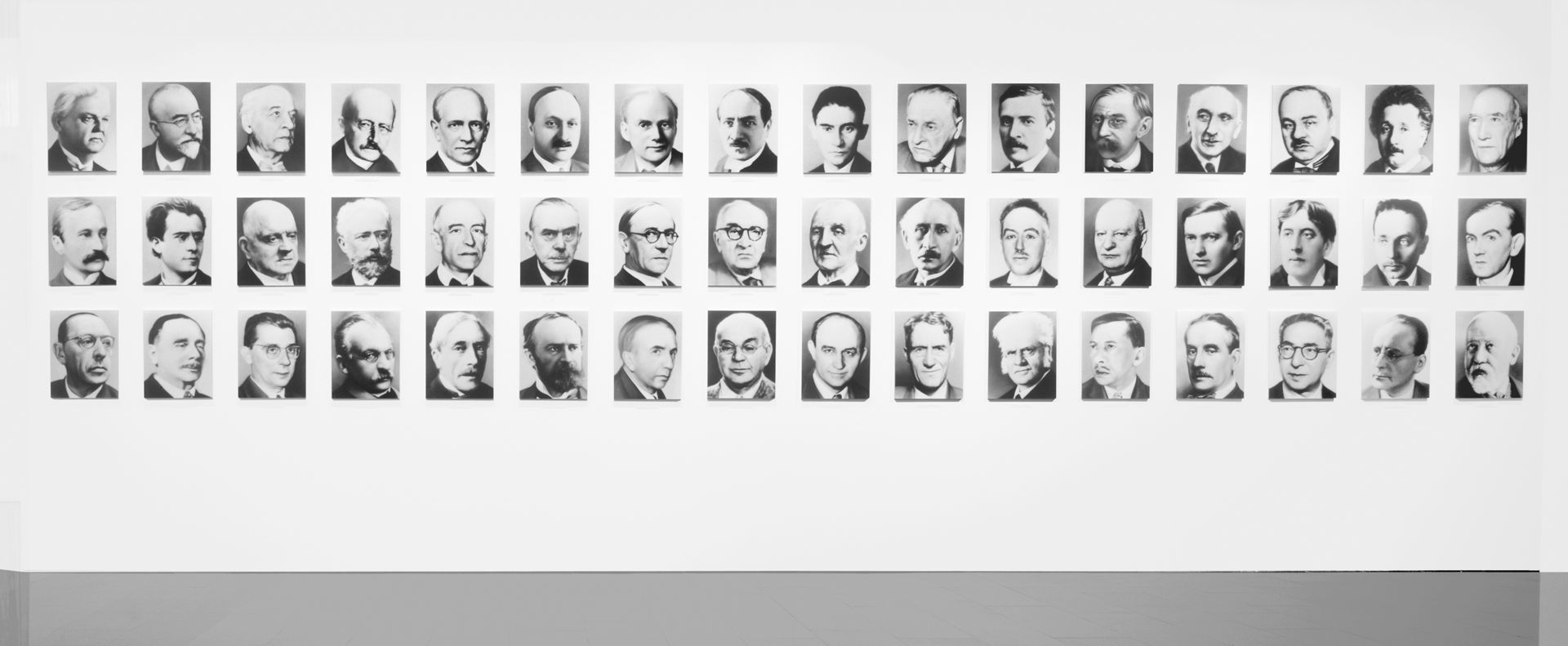
The retrospective unfolds decade by decade and spans important figurative works like 48 Portraits, 1972, a grid of black-and-white paintings of male cultural figures drawn from encyclopedias, to monumental squeegeed compositions like Birkenau, 2014, where Richter confronted the Holocaust by transforming secret Auschwitz photographs into large abstractions. “There are rooms where an idea would have been enough for an artist to make an entire career,” Zwirner says.
Richter’s work is often based on the premise of reproduction—whether photographic or mechanical—as a filter for experience. “He doesn’t paint from still life or from the model,” Serota says. “He always works from a flat image, often from photographs he has taken himself and set aside for years.”
Although Richter’s paintings are some of the most expensive by a living artist—his auction record of $46.3 million was set in 2015—his practice is rooted in modest daily work. “There’s this huge aura around him internationally,” Zwirner adds, “but then you meet him in the studio and he’s simply sitting in a room, creating something out of nothing. It’s very humbling. He is an extraordinarily earnest and humble man.”
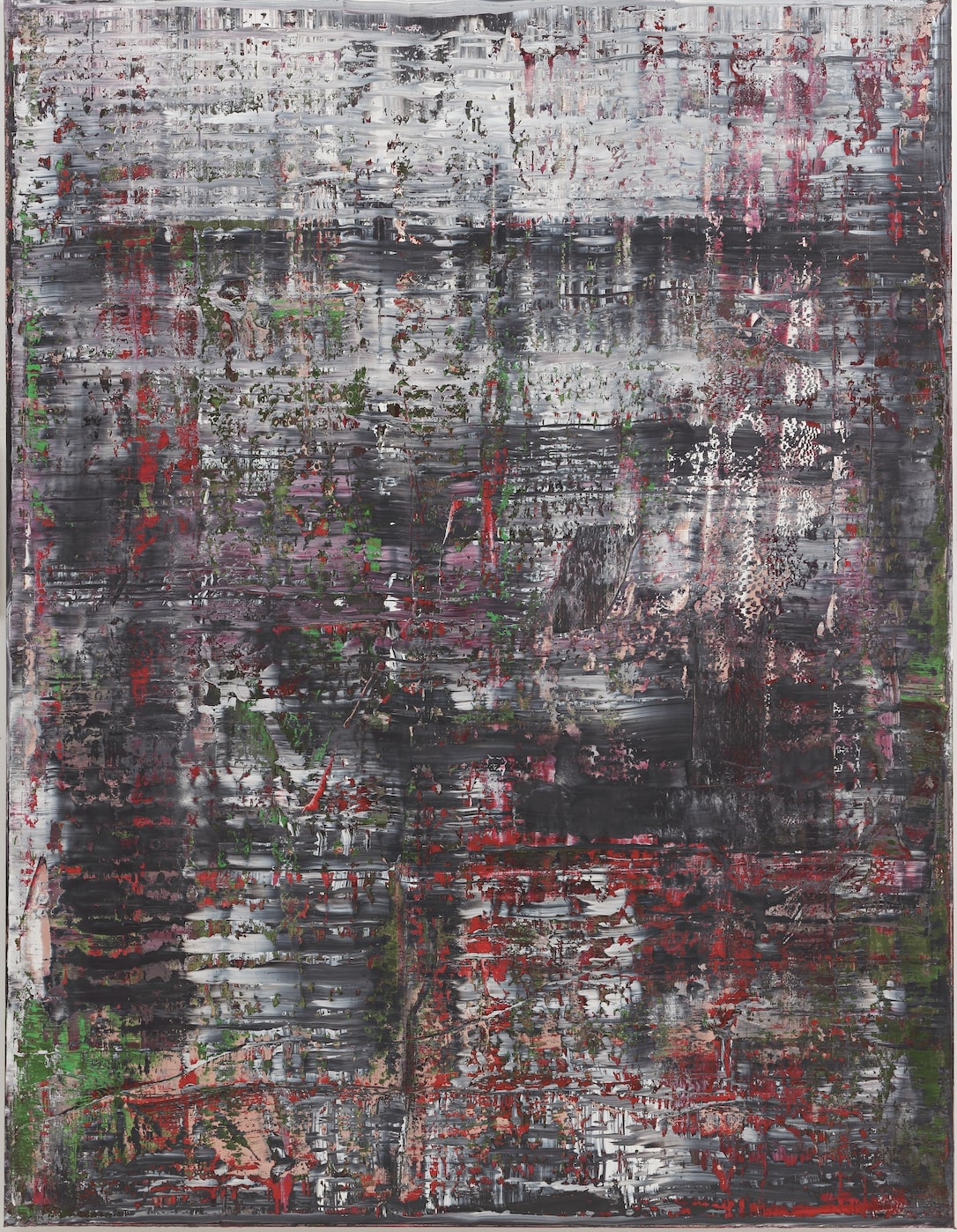
That humility also shapes his art. While some critics have found Richter’s paintings cold, Serota insists on their emotional depth: “People who may have found the work impenetrable will, I think, find enormous feeling within it.”
The Paris exhibition is aimed at newcomers. “If I were talking to a taxi driver who didn’t know anything about contemporary art,” the gallerist concludes, “I’d say, ‘I’ve got the perfect show for you. You’ll understand the major currents of the 20th century, the need for artists to free themselves of the image and create works that are abstract, non-representational, but yet are connected to works that were made centuries prior.’”
Seen together, Richter’s career offers less of a single narrative than a series of questions: about truth, memory, history, and painting’s ability to hold them all. Richter lost Marianne in the most appalling of conditions. But we have all lost people who once felt like the center of the world. They now live in our minds, or in momentary flashes of light caught by a mechanical chamber. How does memory change? How does it survive? Do we recall them as they were, or has something else been formed? Some answers may lie at the Fondation Louis Vuitton.





 in your life?