
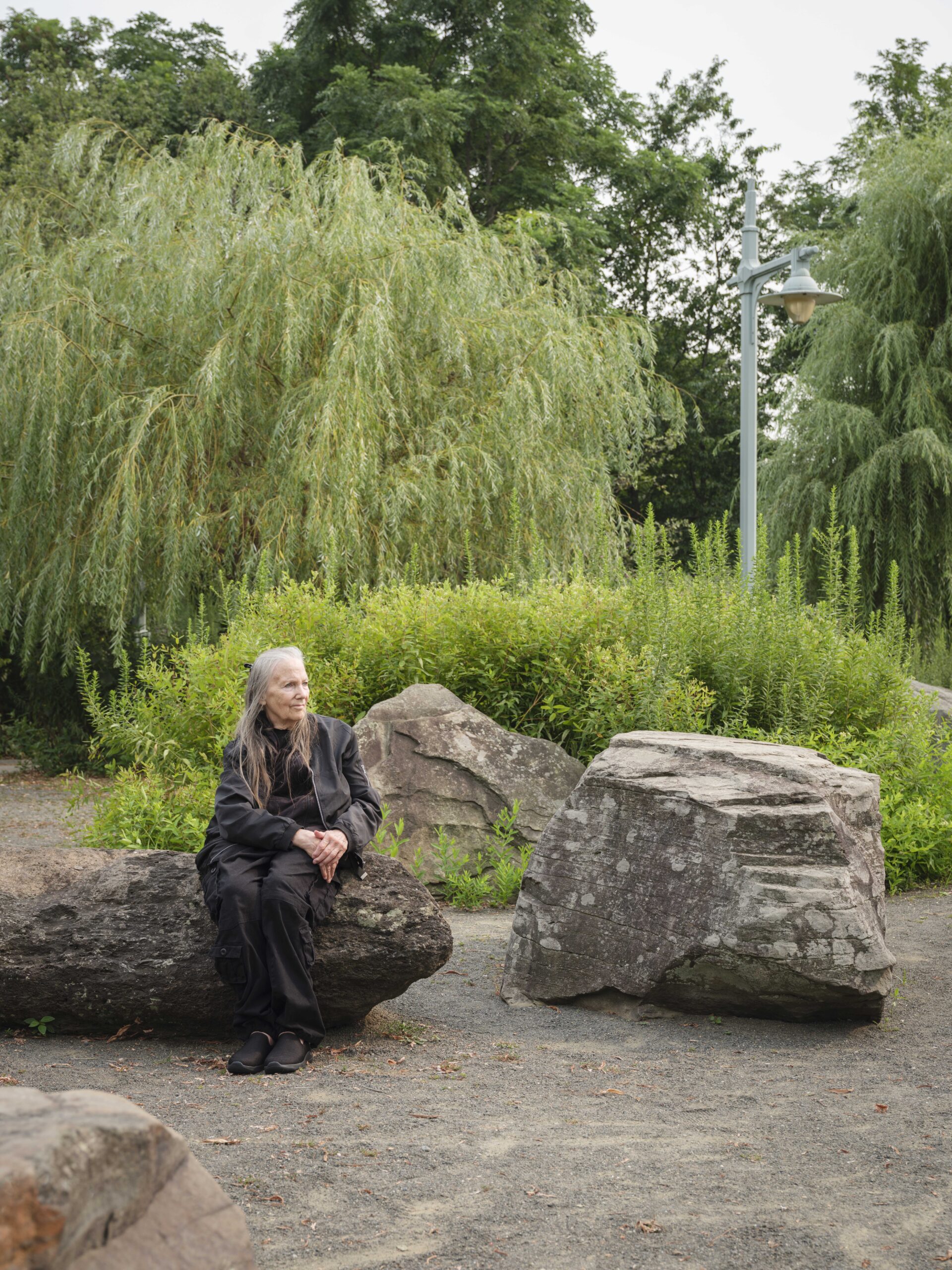
When I met artist Meg Webster on a muggy Manhattan afternoon in July, I’d just returned from a Land-art pilgrimage to Michael Heizer’s magnum opus City. The more-than-mile-long concrete behemoth in the remote Southern Nevada desert took 50 years and an estimated $40 million to build. Webster, now 80, worked as Heizer’s studio assistant in her late 30s. But she has made her own career as a Land artist in a very different kind of terrain: the concrete and chrome of downtown Manhattan.
Since moving to New York in 1979, Webster has created potent sculptures out of moss, beeswax, and salt that use smell, scale, and texture to invite city dwellers and country folk alike to consider their relationship to the natural world anew. This spring, nine of her sculptures went on long-term view at Dia Beacon, a temple to minimalism, conceptual practice, and Land art in Upstate New York.
For decades, Land art has been considered a specially macho form, as much about mastering the unruly earth as communing with it. Touchstones of the movement include Robert Smithson’s black basalt rock coiling 1,500 feet into the Great Salt Lake and Walter De Maria’s 400 steel rods conjuring lightning in New Mexico’s high desert. With few exceptions, female land artists like Webster have been given short shrift. In recent years, however, several exhibitions have attempted to right the imbalance. At the Nasher Sculpture Center in Dallas, curator Leigh Arnold mounted “Groundswell: Women of Land Art” in 2023, featuring work by Webster and contemporaries like Agnes Denes, Alice Aycock, and Nancy Holt.
The Nasher show also upended the myth that Land art is made only in wide-open, remote landscapes. “Increasingly, the attitude of scholarship [is] that a lot of Land art occurred within very dense urban contexts,” Arnold says. “Getting away from this idea of a pilgrimage to a place to have this once-in-a-lifetime experience, Land art could occur just outside the artist’s studio if they were living in Manhattan.”

Webster’s story—and the place it occupies in art history—will receive yet another overdue revision in October, when she features prominently in a group exhibition dedicated to Minimal art at the Bourse de Commerce in Paris. Alongside Donald Judd and Carl Andre—and Lynda Benglis, Eva Hesse, and Anne Truitt—Minimalism is another movement where Webster is a pioneer. Her use of natural materials like salt and beeswax infuses Minimalism’s geometric forms and sharp angles with a warmth and aliveness not found in the fluorescent bulbs of Dan Flavin or the plywood sheets of Judd. (She also belongs in surveys of performance art: Her pared-down stainless steel Bench for Two Backs Leaning, in which two people sit back-to-back to activate the sculpture, evokes Marina Abramović.)
Since she received her MFA at Yale in 1983, Webster has sculpted mud, sand, and sticks as a tender and primal response to the environment. “I’ve done some pieces that are biggish,” she says. “But I’ve been dragging soil and forming it inside as well. It’s not about the monumental, although this [Dia] work is definitely monumental, beautiful, and inspiring.” Among my favorites is her “Moss Bed” series: large, spongy-verdant cushions that smell like a dank forest (Moss Bed, King is currently at Dia, as is Webster’s Wall of Wax, a globby, 24-foot-long curved beeswax wall that looks like an organic take on Richard Serra, and Cono di Sale (Salt Cone), a 92-inch-high crystalline tower, first shown at the 1988 Venice Biennale.) Webster’s interest in Land art began in the early ’80s, when the survival of the planet felt exceedingly fragile. “My professor David Von Schlegell, a wonderful man, read an important text in The New Yorker about nuclear war and that was shocking,” she recalls. “We were right at the edge of having a serious Earth problem. So that started why I was making earth forms.” In 1984, Donald Judd invited Webster to show her work on the ground floor of his Spring Street studio. “I ended up putting a giant mound of salt on the floor to symbolize the end of the Earth” after nuclear winter, she says.
Just a short walk from Judd’s studio, Walter De Maria’s Earth Room, a loft packed with 250 cubic yards of dirt in the heart of SoHo’s bustle, continues to inspire Webster. (“I have definitely been reacting to his work,” she emails several hours after our interview. “I strived to add plants and ecology, wanting to bring people to the joys of the planet and its creatures.”) In 2016, Webster brought similar magic to Chelsea when she bathed Paula Cooper Gallery in a futuristic pink glow for the installation Solar Grow Room. The four raised wooden flower and vegetable planters, powered by an off-grid solar electrical system, felt both ominous and beautiful.
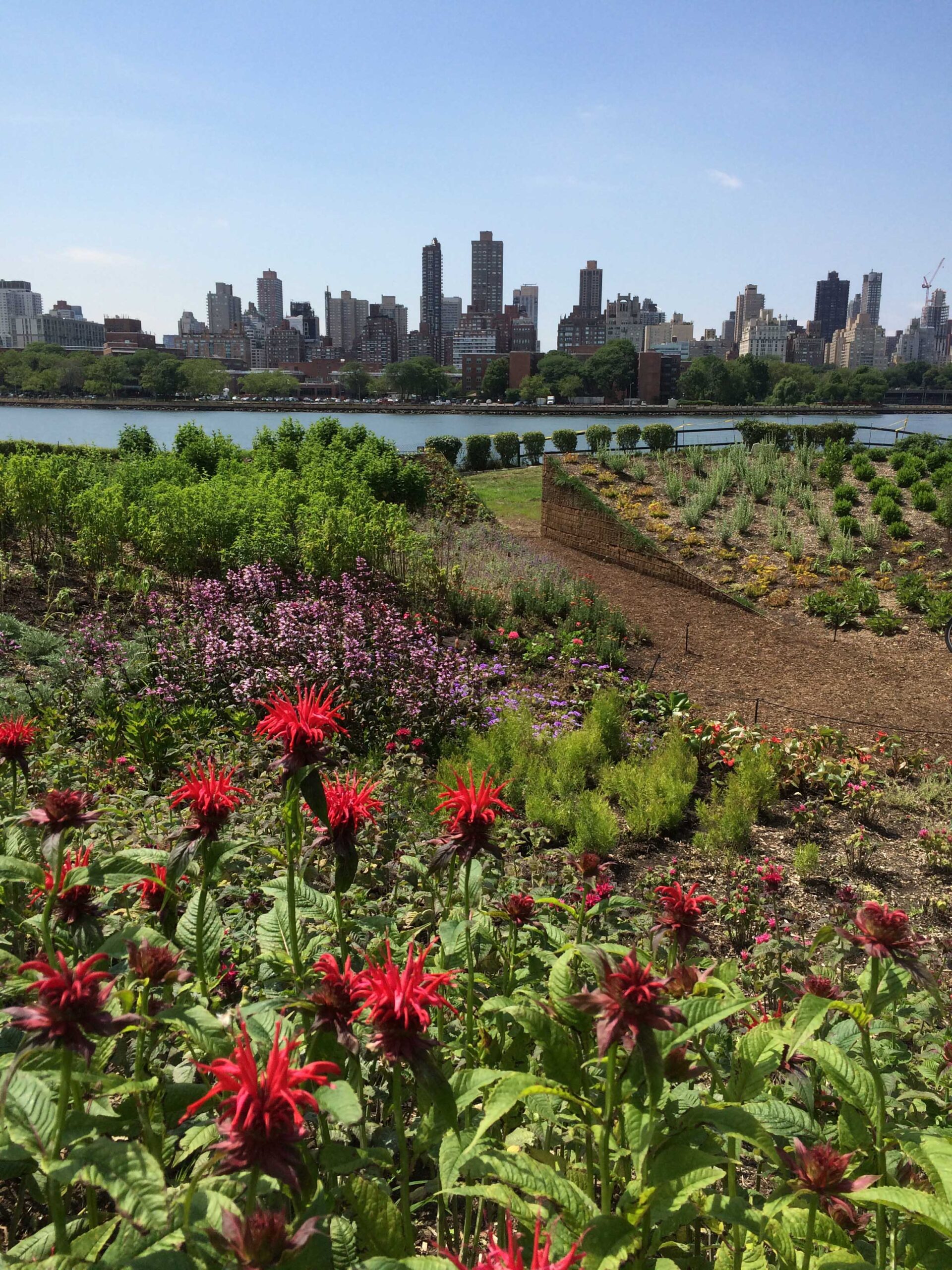
This is not to say that Webster foregoes the great outdoors. That same year, Webster constructed Concave Room for Bees at Socrates Sculpture Park, a visceral living sculpture of flowers and herbs designed to attract the pollinators. Webster’s installation felt like a breathing, botanical take on Donald Judd’s first outdoor artwork in concrete, the 1971 circle at Philip Johnson’s Glass House. I remember walking my young son through the pungent air—he was captivated by the buzzing—looking out at the East River and the skyline. “People are not taught about ecology in schools,” Webster reflects on the piece. “They don’t know that they need bugs.”
This is truer now than ever. In an era of extreme weather (Webster and I meet three days after the catastrophic floods in Texas), climate policy rollbacks, and cuts to scientific research, I fear the Land art I’ve treasured hasn’t achieved what its makers had hoped. Here in the U.S., we have yet to train our collective gaze on the majesty of the natural world, nor shift our attention to the toll we’ve taken on our fragile ecosystem. If anything, a half-century after the Land art movement began, we’ve resoundingly turned our back on both.
Against this backdrop, what exactly can Land art do today? “We’ve got many major problems,” Webster responds. “There’s a giant political crisis. Trump is just horrible. And there’s an environmental crisis, thanks to him partly. We’re in meltdown. And you can’t just get back from that.” At the same time, she explains, “it doesn’t work to just scream and yell and create awful feelings.” The works at Dia are meant to register, but at a delicate frequency. Indeed, Webster is the rare legacy artist who vibrates with a soulfulness of unbridled optimism. “Certainly, people are calmed by the Dia show,” says Webster. “There’s a hopefulness to it, but also an urgency: Look at this and think for a minute.”





 in your life?