Foundation for American Art.
Did you know that Chicago, with its sprawling public greenery and deep-set rows of houses, was once named the “city in a garden”? The phrase, in Latin, was made the Midwestern city’s official motto in 1837: urbs in horto. This summer, the Museum of Contemporary Art Chicago brought together the work of more than 30 artists under this creed in a decade-spanning review of queer art and activism.
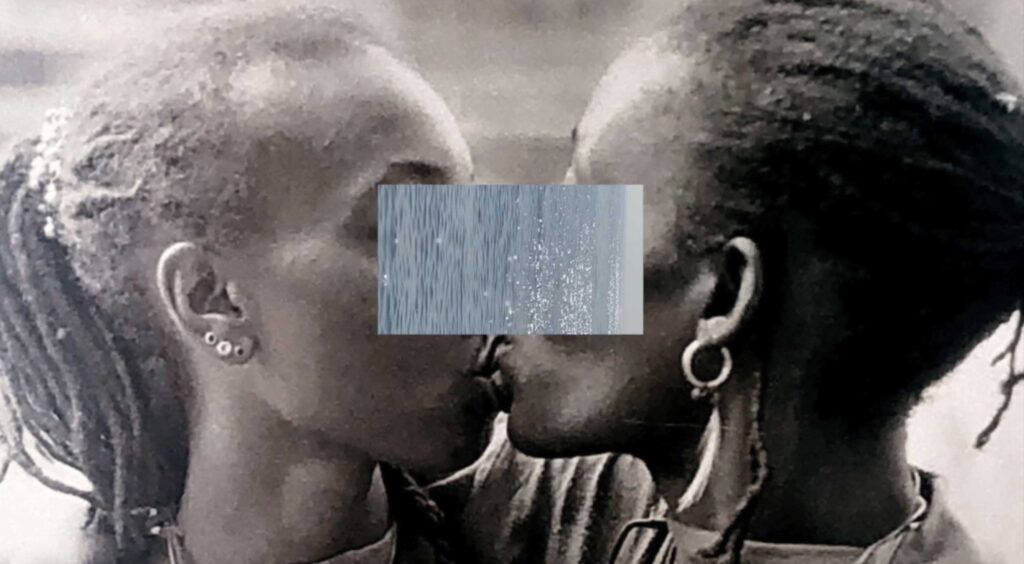
“To share a garden is a beautiful idea,” says Guanyu Xu, a Chicago-based artist whose collage work appears in the show. “We definitely would love gardens to be public and to have resources for everyone.” Here, the garden is positioned as a refuge, an activation site, and a signifier of community. The included works span pieces made in Chicago from the 1980s to today, acting as a visual archive of queer artistic expression. The MCA goes back to a time when the city was overtaken by protests against the government’s inadequate AIDS response and up to contemporary movements.

There’s Brendan Fernandes’s vividly sensual installations, animated by the physicality of performance artists. Of course, Nick Cave’s humanoid “Sound Suits” are included, as well as Mary Patten’s historical banners and archival materials from the inaugural Dyke March. This multimedia experience—much like a photo album filled with handwritten notes, drawings, and evocative sketches—captures the defining moment when the word “queer” became a token of power and resistance.
Doug Ischar, whose documentary photography series, “Marginal Waters,” captured the authenticity and truth of such areas in the ’80s, recognizes the show’s political heft in a moment when troubling narratives have reawakened, far beyond the borders of the city. “The exhibition serves to mark this moment in time as both a moment of inspired remembrance and also a moment of inspired hope for the future,” he says, “and determination to survive and thrive as a community and as a people.”




 in your life?