
DATE

SHARE

Twitter
LinkedIn
Facebook
Email

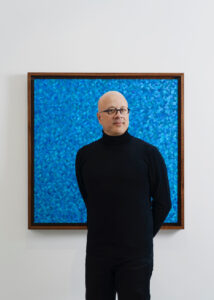
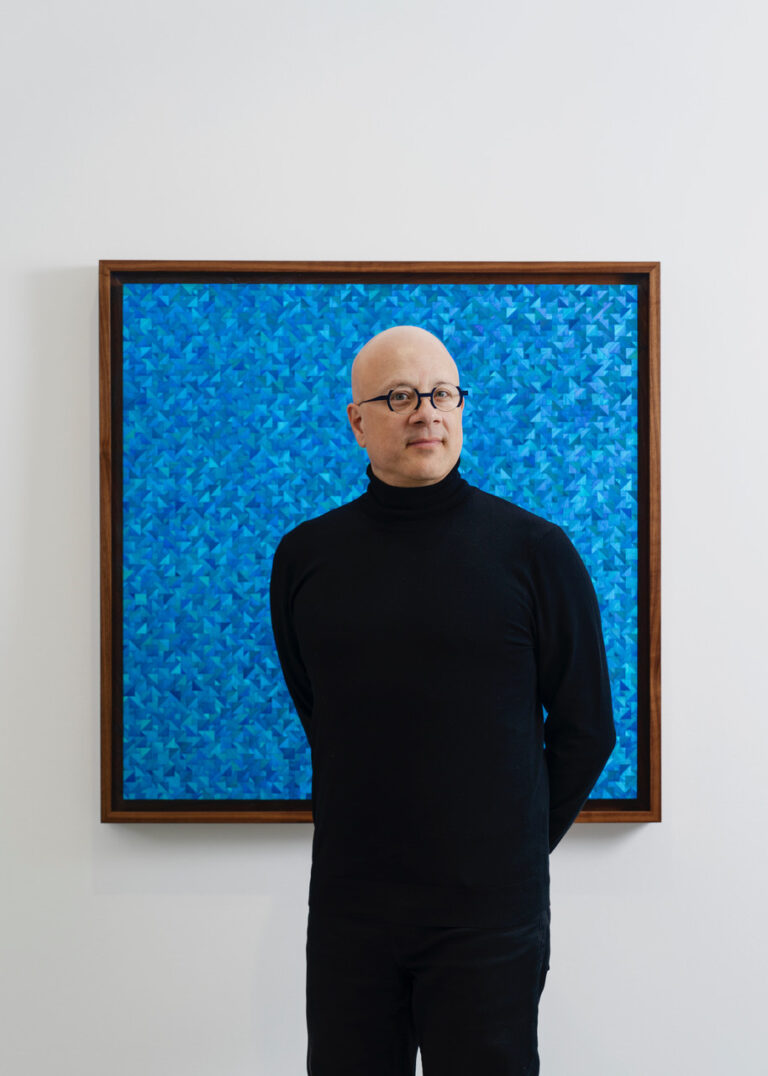
Jim Jarmusch. Photography courtesy of Anthology Editions.

What attracts you to newsprint as a medium?

Jim Jarmusch: I remember as a kid I received a microscope for my birthday. The first thing I examined through its lenses was a tiny scrap of torn newspaper. I was astounded. Instead of a single, solid, sheet-like material, it was in fact a tangled mass of threadlike fibers, a chaotic jungle of microscopic pulp. Fascinated, I then checked other types of papers, and some fabrics, which were also interesting and even unexpected—but nothing was quite like the texture of a newsprint. Ever since, the fragility and inherently temporary nature of this particular, and now nearly obsolete, material has attracted me.

And collage?

JJ: For years now I’ve been constructing these small, very minimal collages. I use only newsprint for their sources, and most involve only the removal and/or replacement of heads—possibly the most minimal way of reorganizing visual information. Faces and heads become masks for me, and I can change or switch identities, details and even species. The reproduction on newsprint of a drawn or painted head can replace a photographic one, or vice versa. I never use sharp cutting tools, like scissors or X-Acto knives, always preferring rougher, partially torn edges. This preserves that particular texture I first observed through my little microscope.

Craving more culture? Sign up to receive the Cultured newsletter, a biweekly guide to what’s new and what’s next in art, architecture, design and more.
We’ve Waited All Year For This…

Our 10th annual Young Artist list is here, comprised of 27 names you need to know ahead of 2026.

You’ve almost hit your limit.

You’re approaching your limit of complimentary articles. For expanded access, become a digital subscriber for less than $2 a week.
You’re approaching your limit of complementary articles. For expanded access, become a digital subscriber for less than $2 a week.

Already a Subscriber? Sign in Here

You’re approaching your limit of complementary articles. For expanded access, become a digital subscriber for less than $2 a week.

GET ACCESS

Already a Subscriber? Sign in Here

Want more in your life?

For less than the price of a cocktail, you can help independent journalism thrive.

Pop-Up-1_c
Already a Subscriber? Sign in Here
Pop-Up-1_c

Already a Subscriber? Sign in Here

Want more in your life?

For less than the price of a cocktail, you can help independent journalism thrive.

Pop-Up-1_c
Already a Subscriber? Sign in Here
Pop-Up-1_c

Already a Subscriber? Sign in Here

You’ve almost hit your limit.

You’re approaching your limit of complimentary articles. For expanded access, become a digital subscriber for less than $2 a week.

You’re approaching your limit of complementary articles. For expanded access, become a digital subscriber for less than $2 a week.
Already a Subscriber? Sign in Here
You’re approaching your limit of complementary articles. For expanded access, become a digital subscriber for less than $2 a week.

Already a Subscriber? Sign in Here

This is a Critics' Table subscriber exclusive.

Subscribe to keep reading and support independent art criticism.

Already a Subscriber? Sign in Here

Want more in your life?

For less than the price of a cocktail, you can help independent journalism thrive.

Pop-Up-1_c

Already a Subscriber? Sign in Here

Pop-Up-1_c

Already a Subscriber? Sign in Here

You’ve reached your limit.

Sign up for a digital subscription, starting at less than $2 a week.

Already a Subscriber? Sign in Here

Want a seat at the table? To continue reading this article, sign up today.

Support independent criticism for $10/month (or just $110/year).

Already a subscriber? Log in.